

Kirjailija
Charlotte Perkins Gilman
Kirjat ja teokset yhdessä paikassa: 508 kirjaa, julkaisuja vuosilta 1892–2026, suosituimpiin kuuluu Förfärande kvinnor : gotisk skräck från Brontë till Gilman i urval och översättning av KG Johansson. Vertaile teosten hintoja ja tarkista saatavuus suomalaisista kirjakaupoista.
Nimi esiintyy myös muodoissa: Charlotte Perkins-Gilman
508 kirjaa
Kirjojen julkaisuvuodet: 1892–2026.
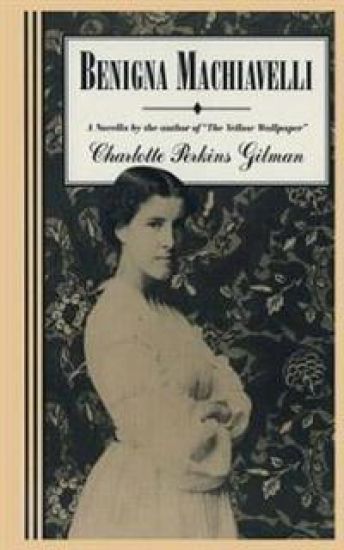
Benigna Machiavelli has never before been published in its entirety in book form. It was first published by Charlotte Perkins Gilman in The Forerunner (Vol. 5, 1914), a magazine which she wrote, edited, and produced every month from 1906 to 1916. The novella was serialized a chapter an issue. The Forerunner cost $1.00 per issue, and was in a 7" x 10", 28-page format. The circulation averaged 1,500 subscribers a year, including many in Europe, also some in India and Australia. Gilman stated she did not "aim in the least at literary virtuosity," she was interested in ideas. The main idea expressed in Benigna is the story of a benign Machiavellian girl/woman, a "good villain," as Benigna phrases it. Having noted in the stories she read as a child that the villains exerted their intellects to accomplish their goals, while the heroes were "mostly very stupid" and practiced passive virtues, Benigna decides to apply her precocious mind to become this "good villain"-all for everyone's good, of course, at least as Benigna sees it. She responds to the sometimes onerous and perplexing life circumstances she observes herself to be in by deciding to take control of her life in highly creative (and manipulative) ways- at a time when women, and especially children, had very little control. Benigna is an intensely insightful child, as was no doubt Gilman herself. How much of this story is based on her own life experiences is difficult to say; however there are many similarities. In her autobiography, The Living of Charlotte Perkins Gilman, she recounts the anecdote of the experiment to see what would happen if she broke the oppressive silence of her schoolroom, just as Benigna does (and with the same results). It's likely that much of Benigna's character is based on her own, doubtless with some amount of wishful thinking that she had as successfully taken as much control of her own life. The family portrayed bears little resemblance to Gilman's, with the exception of the mother. Gilman had one sibling, a brother, Thomas A. Perkins, 14 months her senior, with whom she was not close. Her father, Frederick Beecher Perkins, left the family when Gilman was an infant and was infrequently in contact with them. However, her mother, Mary Wescott Perkins, described by Gilman as "absolutely loyal, as loving as a spaniel which no ill treatment can alienate," accurately describes Benigna's mother as well. Also similarly, Mary Wescott Perkins was intensely interested in "child culture," and had studied the Kindergarten method of child raising. Another direct parallel to Gilman's life is Benigna's happily-ever-after ending, her marriage to her cousin. Gilman married her first cousin, George Houghton Gilman, seven years her junior. Unlike Benigna, this was her second marriage and, by her account, finally a happy one. In her autobiography she wrote, "We were married... and lived happily ever after. If this were a novel, now, here's the happy ending." Although at present best known for her short story "The Yellow Wallpaper," a fictionalized account of her devastating first marriage, in her time Charlotte Perkins Gilman was known internationally as a lecturer and author of Women and Economics: The Economic Relation Between Men and Women as a Factor in Social Evolution, that went through nine printings from 1898 to 1920. William Dean Howells said of her: "The best brains and best profile of any woman in America." As a follow-up to this book, Aurora Leigh by Elizabeth Barrett Browning tells the tale of an orphaned half-Italian girl who rejects marriage to a rich cousin whom she likes very much, in order to make her own way in the world, and does successfully. (www.createspace.com/3812489)
The Living of Charlotte Perkins Gilman - An Autobiography
Charlotte Perkins Gilman
Read Books
2013
pokkari
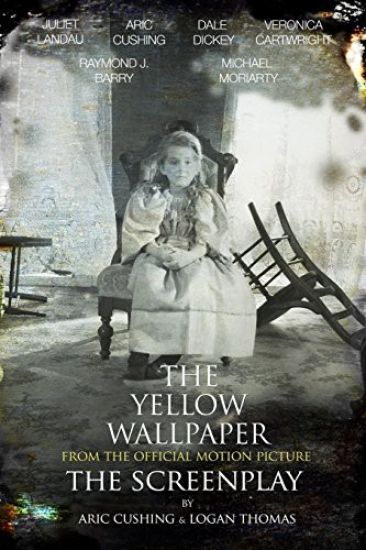
The Yellow Wallpaper The Screenplay
Logan Thomas; Charlotte Perkins Gilman; Aric Cushing
Ascent Agencyhing Plc
2013
nidottu
The Official Motion Picture Screenplay with film stills.
His Religion and Hers - A Study of the Faith of Our Fathers and the Work of Our Mothers
Charlotte Perkins Gilman
Read Books
2013
pokkari
Charlotte Perkins Gilman: -Selected Works
Charlotte Perkins Gilman
Createspace Independent Publishing Platform
2012
nidottu

The Yellow Wallpaper and other stories: The Complete Gothic Collection
Charlotte Perkins Gilman
Aric Cushing
2012
nidottu
Specialty Film Release Series. Contains two stories, 'The Unwatched Door' and 'Clifford's Tower'--stories unpublished since 1894. This Gothic Collection includes all of Charlotte Perkins Gilman's gothic stories, as well as poetry. This film release book is a different cover, but the same contents as the other Complete Gothic Collection edited by Aric Cushing.

The Yellow Wallpaper and Other Stories: The Complete Gothic Collection
Charlotte Perkins Gilman
Ascent Agencyhing Plc
2012
nidottu




The Yellow WallpaperBy Charlotte Perkins Gilman

Charlotte Perkins Gilman's 1892 short story, "The Yellow Wallpaper" is a valuable piece of American feminist literature that reveals attitudes toward the psychological health of women in the nineteenth century. Diagnosed with "temporary nervous depression - a slight hysterical tendency" by her physician husband, a woman is confined to an upstairs bedroom. Descending into psychosis at the complete lack of stimulation, she starts obsessing over the room's yellow wallpaper: "It is the strangest yellow, that wall-paper It makes me think of all the yellow things I ever saw - not beautiful ones like buttercups, but old foul, bad yellow things. But there is something else about that paper - the smell ... The only thing I can think of that it is like is the color of the paper A yellow smell."

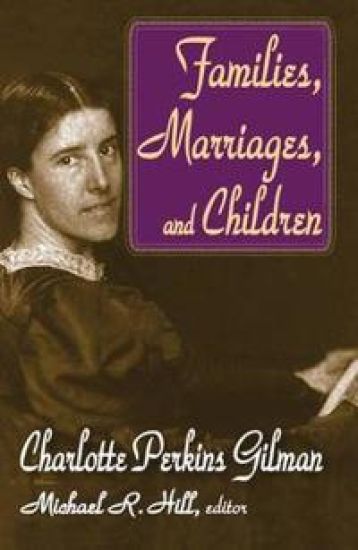
Charlotte Perkins Gilman (1860-1935) was a pioneering sociologist, feminist pragmatist, author, and lecturer. A skilled and perceptive writer, she explained sociological concepts and principles clearly and concisely to popular audiences. This volume presents a focused and provocative set of Gilman's penetrating analyses of marriage, motherhood, and family relationships. Generally unavailable, except in archives and special libraries, the lion's share of the analyses are drawn directly from Gilman's quintessentially unique self-published journal, The Forerunner. Transcending her era, Gilman speaks with wit, insight, and candor to twenty-first century readers about many controversial aspects of family and family life. She believes deeply that women's values—regeneration, cooperation, and compassion—make for better societies. Men's values, she concludes, are destructive, competitive, and often violent. Families produce double standards and inequalities between husbands and wives, resulting in inferior mothers and, as a direct consequence, in substandard children. To improve society, Gilman argues, we need healthy, happy children. This requires well-trained, competent mothers, widespread social parenting, and enlightened, non-patriarchal marriages. Largely self-taught, Gilman supported herself through writing and lecturing. She was at one time a settlement house leader and an active member of the American Sociological Society. Her wide sociological circle included lasting friendships with Jane Addams, Edward A. Ross, and Lester F. Ward.