
Kirjailija
Chris McNab
Kirjat ja teokset yhdessä paikassa: 132 kirjaa, julkaisuja vuosilta 2001–2026, suosituimpiin kuuluu Slagene som endret historien. Vertaile teosten hintoja ja tarkista saatavuus suomalaisista kirjakaupoista.
132 kirjaa
Kirjojen julkaisuvuodet: 2001–2026.
Etter første verdenskrig stod Tyskland uten et forsvar. Hitler igangsatte en gigantisk opprusting av alle de tre forsvarsgrenene. Dette er histoorien om Hitlers arméer fra pperiooden 19918 og fram til kampene i Nord-Affrika og på Balkan ble avsluttet i 1942-43.
The tactics and technologies of modern air assault – vertical deployment of troops by helicopter or similar means – emerged properly during the 1950s in Korea and Algeria. Yet it was during the Vietnam War that helicopter air assault truly came of age and by 1965 the United States had established fully airmobile battalions, brigades, and divisions, including the 1st Cavalry Division (Airmobile). This division brought to Vietnam a revolutionary new speed and dexterity in battlefield tactics, using massed helicopters to liberate its soldiers from traditional overland methods of combat manoeuvre. However, the communist troops adjusted their own thinking to handle airmobile assaults. Specializing in ambush, harassment, infiltration attacks, and small-scale attrition, the North Vietnamese operated with light logistics and a deep familiarity with the terrain. They optimized their defensive tactics to make landing zones as hostile as possible for assaulting US troops, and from 1966 worked to draw them into ‘Hill Traps’, extensive kill zones specially prepared for defence-in-depth. By the time the 1st Cavalry Division (Airmobile) withdrew from Vietnam in 1972, it had suffered more casualties than any other US Army division. Featuring specially commissioned artwork, archive photographs, and full-colour battle maps, this study charts the evolution of US airmobile tactics pitted against North Vietnamese countermeasures. The two sides are analysed in detail, including training, logistics, weaponry, and organization.
US Super Carrier
Chris McNab; Patrick Bunce
J H Haynes Co Ltd
2020
sidottu
Halvin toimitettuna 38,00 €
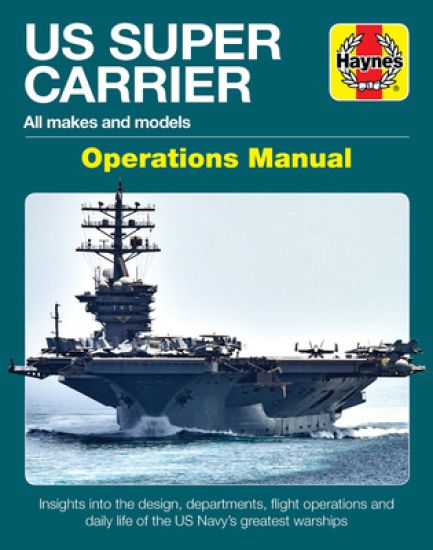
Author Chris McNab and photographer Patrick Bunce go above and below deck to discover how a supercarrier is built, examining its structure, systems, departments, flight deck and hangar deck. With the full cooperation of the US Navy, they join the USS Dwight D. Eisenhower (CVN-69) to discover how a supercarrier operates, looking at flight operations, logistics and life onboard. Commissioned in 1977, this awesome carrier has a complement of more than 6,000 crew and an embarked air wing of anything up to 90 aircraft, together capable of delivering more than 150 combat sorties per day.|Few manmade objects in the modern world represent power projection as emphatically as the supercarriers of the US Navy. Emerging in the aftermath of the Second World War in the Forrestal and Enterprise classes, the supercarrier concept has become most potently embodied in the great Nimitz-class vessels, ten of which have been commissioned since 1975. It is these warships, plus the now emerging supercarriers of the Gerald R. Ford class, that form the lethal heart of the US Navy’s Carrier Strike Groups (CSGs), previously known as Carrier Battle Groups (CBGs). Author Chris McNab and photographer Patrick Bunce go above and below deck to discover how a supercarrier is built, examining its structure, systems, departments, flight deck and hangar deck. With the full cooperation of the US Navy, they join the USS Dwight D. Eisenhower (CVN-69) to discover how a supercarrier operates, looking at flight operations, logistics and life onboard. Commissioned in 1977, this awesome carrier has a complement of more than 6,000 crew and an embarked air wing of anything up to 90 aircraft, together capable of delivering more than 150 combat sorties per day. Illustrated with more than 250 photographs, many taken specially for this manual aboard the Dwight D. Eisenhower by internationally respected photographer Patrick Bunce, the Haynes Supercarrier Manual offers an unrivalled look at the greatest warships afloat in the 21st century.|• Published with full cooperation of the US Navy. • Features super carrier USS Dwight D. Eisenhower. • Insights into how a US super carrier operates and the working lives of its crew. • Fully illustrated with specially commissioned photography.|The Haynes Super Carrier Manual offers unrivalled insights into understanding how a modern US nuclear-powered aircraft carrier is operated. Published with the cooperation of the US Navy, authors Chris McNab and Patrick Bunce take readers inside a super carrier to reveal how and why they are at the heart of global American military force. |The Haynes Super Carrier Manual offers unrivalled insights into understanding how a modern US nuclear-powered aircraft carrier is operated. |Chris McNab is an author and editor specialising in military history and military technology. He has published more than 40 books, including several for Haynes. He lives and works in South Wales. Patrick Bunce is a US-based photographer who has contributed to a wide range of military book and magazine publications.|Introduction Chapter 1 History of the supercarrier Chapter 2 Structure, major systems and departments Chapter 3 Flight deck, hangar deck and key flight personnel Chapter 4 Flight operations Chapter 5 Major electronic and defensive systems Chapter 6 Carrier logistics Chapter 7 Daily life and operations Bibliography and further reading

"One side of me says, I'd like to talk to her, date her. The other side of me says, I wonder what her head would look like on a stick?" Edmund Kemper (1948-), 'the Co-ed Killer' This gripping, fully illustrated true crime book explores a range of serial murderers in an innovative new format, using timelines both of the murderers' lives but also precise hour-by-hour timelines of the crimes. Tracking a Serial Killer tells the story of 25 serial killers, from the nineteenth century right up to the present day. It enables the reader to understand some of the thinking of men such as Ted Bundy, who stalked university dorms, or Andrei Chikatilo, whose killings happened at similar intervals, to Randy Kraft who murdered hitchhikers along California freeways over several years, to Volker Eckert, a German lorry driver who murdered prostitutes across western Europe across three decades. The timeline approach offers a visual overview of the major developments of the murderer's life, both before the killing began and covering killing sprees, trials, incarcerations, escapes, releases and repeat offences, up to their deaths. The second timeline takes the reader into the events of one particular murder, showing how events developed in the twenty-four hours around the murder, how close they were to being caught, how the factors came into place for the murder, and how they managed to escape capture.
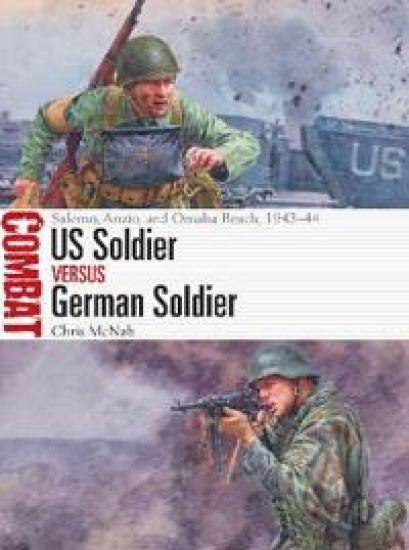
During World War II, the US Army and its allies faced a formidable challenge: the need to assault Hitler’s ‘Fortress Europe’ from the sea. As a result, during 1941–45, the US Army had to add amphibious assault to its list of combat capabilities. Officers and troops from across the US Armed Forces had to develop the techniques and technologies to assault the coasts of Axis-occupied Europe, from logistics to beach assault and beachhead consolidation, and more. In order to win and hold a contested beachhead in the face of bitter enemy resistance, the amphibious-warfare specialists played a variety of essential battlefield roles; if the US troops could not establish a beachhead quickly, they risked being thrown back into the sea. For their part, the Germans had to devise a practical defensive doctrine that made the most of the limited resources and troops available and the terrain. The German infantry defenders immediately around the landing areas had to be able to call upon support from nearby artillery, mechanized troops, and armoured forces to have a chance of containing the enemy beachhead. This illustrated study analyses the specialist beach-landing troops involved in three key battles – the Allied amphibious landings at Salerno and Anzio in Italy, and Omaha Beach in Normandy – focusing upon the US Army’s various types of beach-assault specialists and their German opponents, whose combat experience and effectiveness varied considerably. Each of the three featured battles is then examined in detail, exploring how the Germans made defensive preparations; how the US troops planned to overcome them; and the immediate actions undertaken by the US amphibious specialists and their German opponents both during and following the main assault landings.

World’s Worst Military Disasters examines some of the worst battle defeats in military history from ancient times through to the present day, including some of the most famous battles in history. The accounts range from remarkable stories of how the world’s great powers met military defeat at the unlikely hands of ill-equipped native peoples, such as the events at Little Big Horn, to embarrassing technical failures and miscommunication evidenced during Operation Eagle Claw. World’s Worst Military Disasters investigates military catastrophes originating from all kinds of circumstances. Each fascinating account gives a full and detailed analysis of the events leading up to the disaster, followed by studies of the strategies used during the manoeuvres and the reasons for their failure. Learn about the blunders at Pearl Harbor, the attack at Stirling Bridge and find out the reasons for thousands of people dying at the siege and fall of Jerusalem. Each story is highly illustrated bringing every battle and military mishap to life, plus key facts outline the most important information and allows the reader the see facts at a glance. Whether the result of enemy action or pure human error, World’s Worst Military Disasters offers an educational and riveting read.

World’s Worst Historical Disasters examines some of the most significant natural and man-made disasters in world history, from those almost lost in the mists of time, such as the plague in Athens which killed 75 per cent of the population and the earthquake in Corinth that left 45,000 people dead to modern day catastrophes such as the New Delhi air collision and the Samastipur train disaster which both cost hundreds of lives. All kinds of horrendous disasters are covered including plagues, earthquakes, volcanoes, genocides, floods, train crashes and aeroplane crashes. Each fascinating account gives a full and detailed analysis of the events leading up to the disaster, the actual disaster itself and then the extent of the damage and the dreadful aftermath. Learn about the massacre at Milan, the great fire of London and the historic San Francisco earthquake. Each story is highly illustrated bringing every disaster to life, plus key facts outline the most important information and allows the reader the see facts at a glance. Whether the result of mankind or an inevitable and uncontrollable act of nature, World’s Worst Historical Disasters will provide an educational and riveting read.
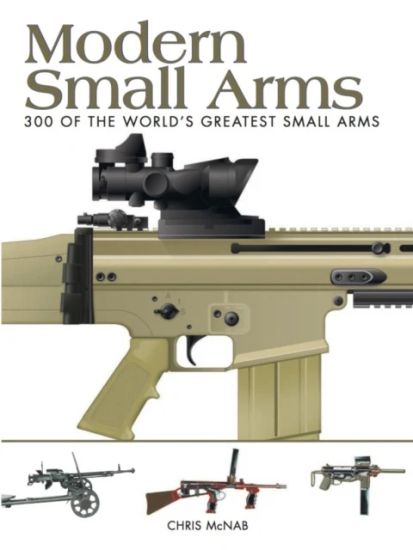
Modern Small Arms looks in detail at 300 of the most widely used pistols, rifles, submachine guns, machine guns and other small arms of the last 100 years. It includes famous small arms such as the AK-47, the M16, the SA80, the Lee Enfield, the MP40, the MG42, the Browning Hi Power, the M60, the Thompson sub-machine gun, the Colt .45, the Sten and the L115A3 sniper rifle. Arranged by type, each small arm is illustrated by a full colour artwork and accompanied by a detailed specifications table giving the country of origin and the technical details of the weapon, including calibre, length, weight, barrel length, rate of fire, muzzle velocity, operation and, where appropriate, magazine capacity. Each entry also contains text summarising the weapon’s development and service history. Presented in a handy, pocket-book format, Modern Small Arms is colourful, packed with information and offers a great insight into the development of weaponry over the past century.

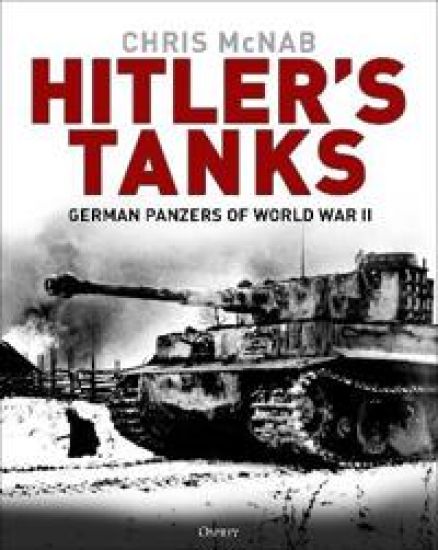
A fully illustrated and expertly researched guide to the tanks of Hitler’s formidable war machine. The Panzers that rolled over Europe were Germany’s most famous fighting force, and are some of the most enduring symbols of World War II. However, at the start of the war, Germany’s tanks were nothing extraordinary and it was operational encounters such as facing the Soviet T-34 during Operation Barbarossa which prompted their intensive development. Tactical innovation gave them an edge where technological development had not, making Hitler's tanks a formidable enemy. Hitler’s Tanks details the development and operational history of the light Panzer I and II, developed in the 1930s, the medium tanks that were the backbone of the Panzer Divisions, the Tiger, and the formidable King Tiger, the heaviest tank to see combat in World War II. Drawing on Osprey’s unique and extensive armour archive, Chris McNab skilfully weaves together the story of the fearsome tanks that transformed armoured warfare and revolutionised land warfare forever.
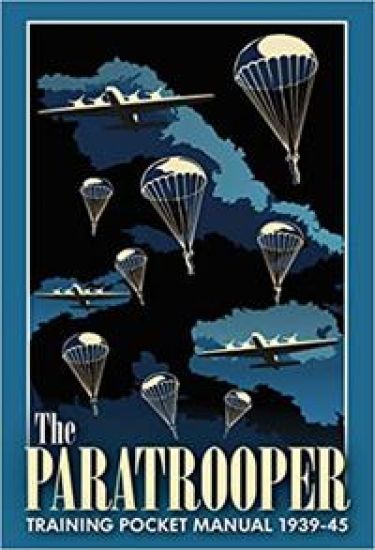
Airborne assault was one of the great innovations of the 1930s and 1940s, adding a new ‘vertical’ dimension to infantry warfare. By the onset of World War II in 1939, Germany, Italy, and Russia were already advanced in their development of paratrooper units. Germany in particular demonstrated the tactical shock of paratroopers in Western Europe in 1940 and, most spectacularly, in Crete in 1941, galvanizing the UK and the United States to expand and train their own airborne forces, which they unleashed in 1943–45. The Allied paratrooper drops on D-Day (6 June 1944) and those of Operation Market Garden (17–25 September 1944) were the stuff of legend, huge in scale and ambition, but both Allied and Axis paratroopers were deployed in numerous other actions, including special forces raids. It quickly became apparent that the physical and tactical demands placed upon paratroopers required men of exceptional stamina, courage and intelligence. To create these soldiers, levels of training were unusually punishing and protracted, and those who came through to take their ‘wings’ were a true elite. The Paratrooper Training Pocket Manual provides an unusually detailed insight into what it took to make a military paratrooper, and how he was then utilized in actions where expected survival might be measured in a matter of days. Using material from British, US, German archives and other primary sources, many never before published, the book explains paratrooper theory, training and practice in detail. The content includes details of the physical training, instruction in static-line parachute deployment, handling the various types of parachutes and harnesses, landing on dangerous terrain, small-arms handling, airborne deployment of heavier combat equipment, landing in hostile drop zones, tactics in the first minutes of landing, radio comms, and much more. Featuring original manual diagrams and illustrations, plus new introductory text explaining the history and context of airborne warfare, The Paratrooper Training Pocket Manual provides a detailed insight into the principles and practice of this unique type of combat soldier.
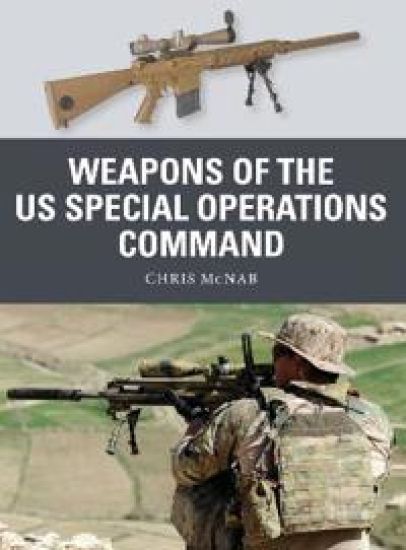
The units and formations of the US Special Operations Command (SOCOM) have privileged access to the finest weaponry in the world’s arsenal. Whether Army, Navy, Air Force, or Marines, the SOCOM troops select weapons that match their mission requirements, but which also sit at the cutting edge of combat technology. This means that, while SOCOM troops frequently use standard-issue weaponry, they also adopt many specialist pieces of kit that are not so accessible to the broader armed services, including sniper rifles, battle rifles, and machine guns, as well as high-tech tactical accessories used to transform standard weaponry into something exceptional. Assessing the technology and capabilities of these combat weapons, as well as how they have been used in modern combat, this fully illustrated study lifts the veil on some of the most distinctive hand-held weapon systems of US special operations forces since 1987.
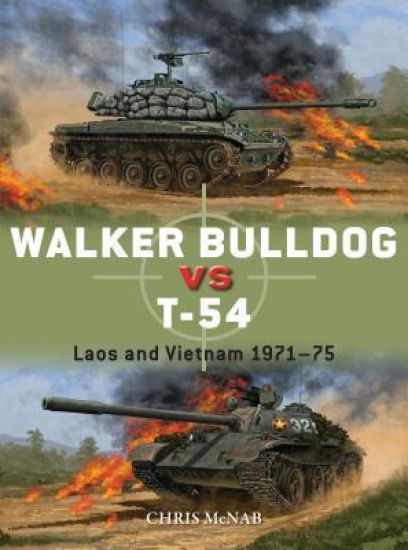
During the Vietnam War, both the United States and the Soviet Union supplied all manner of weapon systems to the opposing sides, including tanks and armoured vehicles. Two tanks in particular took momentary prominence in the later years of the conflict. On the South Vietnamese side, it was the US M41 Walker Bulldog; for the communist North Vietnamese, the Soviet-supplied T-54 main battle tank was the core of their armoured power. In their first major engagement, during Operation Lam Son 719 (February–March 1971), it was the Walker Bulldog in the ascendant, but in later battles the T-54s inflicted heavy losses on their lighter opponents, taking the advantage through their superior manoeuvrability and gunnery. Illustrated with full-colour artwork as well as rare and revealing photographs from both sides, this book studies these two iconic tanks in Vietnamese service, examining how their differing designs and fighting doctrines affected their performance in this unique theatre of combat.

A hotspot in the North Atlantic, Iceland is one of the world’s most unusual countries. It is Europe’s second largest island but its most sparsely populated country. Sitting astride the Mid-Atlantic Ridge, linking the North Atlantic plate with the Eurasian plate, it is closer to Greenland than Europe. It lies just south of the Arctic Circle, but, warmed by Gulf Stream waters, has a temperate climate. It has fiery volcanoes and freezing glaciers, striking black sand beaches and hot geysers – the word geyser itself comes from Icelandic. And a geologically young landmass, Iceland is still taking shape: a volcanic eruption in 1963 caused the formation of the new island of Surtsey. Iceland is a fascinating exploration of this most beautiful island. From volcanoes and lava flows to geysers and geothermal pools, from bird life to whale-watching, from national parks, verdant valleys to inland tundra, and from how waterfalls are used for hydro-electric power to Reykjavik’s city life, the book is packed with 200 spectacular colour photographs. Presented in a landscape format and with captions explaining the story behind each entry, Iceland is a stunning collection of images celebrating the world’s most curious island.
Submarine commanders in WWII dealt with both enormous risk and responsibility; charged with sinking enemy shipping whilst avoiding detection, they had to correctly locate and identify enemy craft, getting close enough to strike whilst attempting to safeguard the lives of their crew. It was a deadly game; the Germans lost over 600 U-boats during the war, and one in five submariners in the US Navy were killed, the highest proportion of any of the services. The Submarine Commander Pocket Manual gives a fascinating insight into life beneath the waves, and what was required to operate a submarine, from diving and surfacing to attack strategies and evading detection. From training manuals to combat reports and first-hand accounts, this volume has collated documents, diagrams and photos from American, British and German archives to demonstrate both the fascinating technical and tactical aspects of running a submarine, and the calm nerves needed to outwit your opponent and live to fight another day in the war at sea.
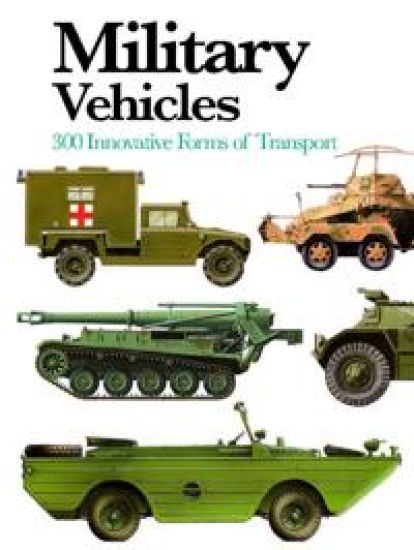
In 300 detailed entries, Military Vehicles explores the combat, transport and utility vehicles that have supported military units from WWI to the present day. Categories include armoured personnel carriers, armoured cars, anti-aircraft vehicles, tank destroyers, trucks, transporters, amphibious vehicles, self-propelled artillery and more.

The Remembrance Poppy is a haunting reminder of the ultimate cost of war. Worn by millions around the world every year, the Poppy compels us to remember war’s dead, wounded and bereaved, regardless of nationality or conflict. As we reflect on the centenary of the First World War, this book charts the history of the Remembrance Poppy, from its origins in the battle-tortured landscape of Flanders in 1915 to its enduring relevance in the present day. It sets the Poppy in its context of tragedy and sacrifice, always acknowledging that our war dead are gone, but not forgotten.
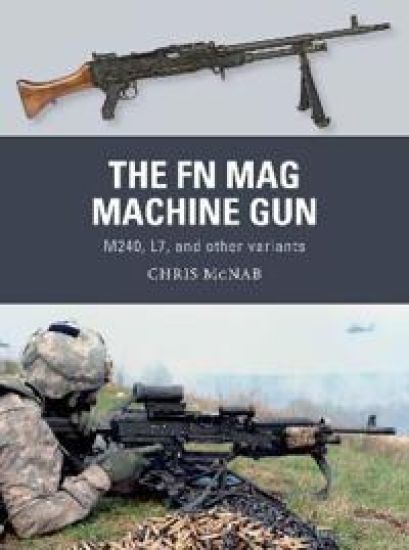
For six decades, the 7.62mm FN MAG has been a dominant general-purpose machine gun (GPMG) in worldwide arsenals. Three qualities have guaranteed this enduring status – reliability, ease of operation, and firepower. Several nations have license-produced the weapon as their standard GPMG, including the British (as the L7) and the Americans (M240), and in total more than 80 nations have adopted the FN MAG. The machine gun has also been modified extensively for vehicular, naval, and aircraft platforms, demonstrating versatility in the air, on sea, and on land. In this book, Chris McNab charts the technical evolution of this extraordinary weapon, created by Belgian company Fabrique Nationale d'Herstal. From the jungles of South East Asia, to the deserts of the Middle East, and the icy battlefields of the Falklands, this study explores the origins, development, combat use, and legacy of the FN MAG machine gun, a dominant weapon in its field for more than a half-century.

This gripping, fully-illustrated true crime book explores a range of 25 serial murderers in an innovative new format, using timelines both of the murderersâ?? lives but also precise hour-by-hour timelines of the crimes that take the reader into the events of a murder, showing the cat-and-mouse game between killer, victim and the police.