Kirjojen hintavertailu – 12 903 725 kirjaa ja 27 kauppaa

Kirjailija

Chris McNab

Kirjat ja teokset yhdessä paikassa: 132 kirjaa, julkaisuja vuosilta 2001–2026, suosituimpiin kuuluu Slagene som endret historien. Vertaile teosten hintoja ja tarkista saatavuus suomalaisista kirjakaupoista.

132 kirjaa

Kirjojen julkaisuvuodet: 2001–2026.

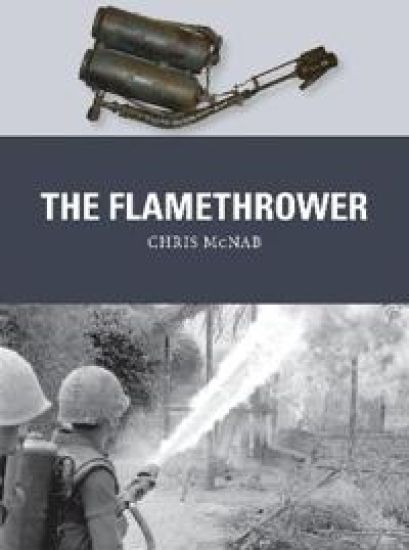
The Flamethrower

The Flamethrower

Chris McNab

Osprey Publishing
2015
nidottu
The focus of this book is a weapon that has literally placed the power of fire in human hands – the man-portable flamethrower. This formidable weapon first saw battlefield use in the hands of German troops during World War I, and went on to arm the forces of many countries in World War II and beyond. Capable of inflicting horrific injuries – or of using up the oxygen supply inside a building, causing the occupants to suffocate – it projected a stream of flammable liquid, which could be ‘bounced’ off the interior surfaces of tunnels, buildings and other defended structures to reach deep inside a fortification. From its combat debut to its deployment in Vietnam, Chechnya and elsewhere, the flamethrower has proven to be devastatingly effective, not least because of its huge psychological impact on enemy troops. Yet despite this, the weapon and its operators have always been vulnerable, suffering from a very particular set of limitations, all of which are explored here. Featuring expert analysis, first-hand accounts and a startling array of illustrations and photographs, this is the definitive guide to an extraordinary chapter in the history of military technology.
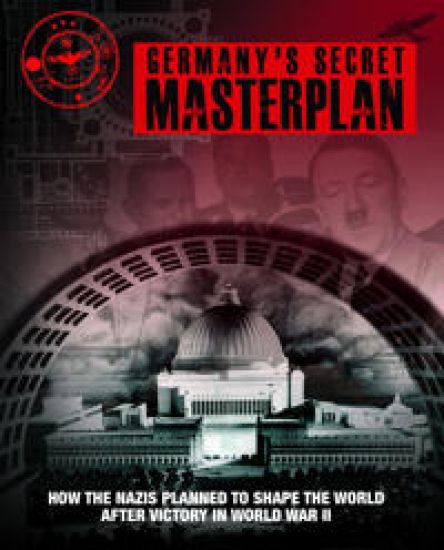
Germany's Secret Masterplan

Germany's Secret Masterplan

Chris McNab

Amber Books Ltd
2015
sidottu
What would Europe have looked like if Nazi Germany had been victorious in World War II? Between 1933 and 1945, Hitler developed a vision for an infrastructure, architecture, race, labour force and Lebensraum – the acquiring of ‘living space’ – among many other plans. Some of these were implemented during his leadership as the German Wehrmacht expanded the Nazi sphere of influence, but what were the unrealized plans for a Europe dominated by the Third Reich? A racially based order would have been established across European Russia, with former German soldiers running farms worked on by slave labour. Germany and Japan were to carve up the Soviet Union and Asia between them. Berlin was to be rebuilt as Germania, a world capital city designed on grandiose, neo-classical lines. Arranged in chapters covering topics such as leadership, war, physical infrastructure, empire building, race, culture and weaponry, Germany’s Secret Masterplan in World War II reveals the true scale of Hitler’s vision for a Greater Germany and a world dominated by the Nazi ideology. Packed with easy-to-understand maps, diagrams, graphs and illustrations, Germany’s Secret Masterplan in World War II is an essential reference guide for anyone interested in modern European history.
Extreme Fitness

Extreme Fitness

Chris McNab

Casemate Uk Ltd
2015
pokkari
Whoâ??s going to help you prepare for your next fitness challenge? Extreme Fitness explores different training methods to build strength, speed, agility and endurance, across running, swimming, weight and circuit training and triathlon events. It looks at how special forces maintain peak fitness through diet, rest, and mental fitness.
Riot Control Vehicles

Riot Control Vehicles

Chris McNab

Osprey Publishing
2015
nidottu
Fully illustrated with a mixture of dramatic archive photos and manufacturers’ images, this volume covers the little-known history of riot control vehicles. It explores the world of these vehicles from 1945 through to the present day – from adapted military armoured cars such as the Humber Pig (UK) and BRDM (Soviet Union) to the fully computerized systems of the Russian Lavina-Uragan and Canadian INKAS Armored Riot Control Vehicle – showing how their development and deployment has blurred the lines between civilian actions and military operations. It charts how the vehicles have evolved in terms of technology and layout, and also details how the associated weapon systems have been refined over time, from water cannon and tear gas launchers to subsonic sound waves and microwave energy. The operational history of the vehicles is explained in the dramatic context of major incidents across the world, from the streets of Northern Ireland and Eastern Europe to the favelas of Brazil and the battlegrounds of Iraq.
Battle Story: Passchendaele 1917

Battle Story: Passchendaele 1917

Chris McNab

The History Press Ltd
2014
nidottu
Passchendaele 1917 is the story of one of the most pitiless and iconic battles of the First World War, known today as Third Ypres. Fought over three tortuous months in 1917, the fighting raged through some of the worst physical conditions of the entire war, across battlefields collapsing into endless mud and blood. Eventually, more than 500,000 casualties bought front-line changes measured only in hundreds of yards. If you truly want to understand what happened and why – read Battle Story.
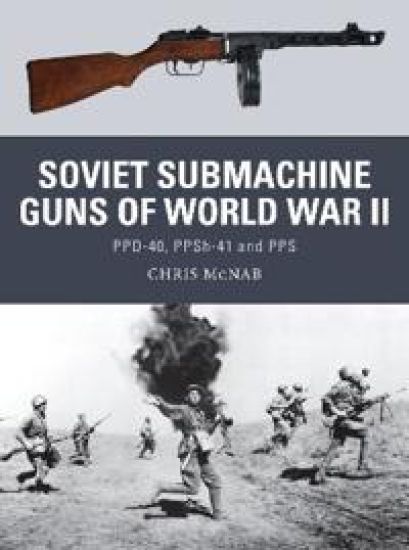
Soviet Submachine Guns of World War II

Soviet Submachine Guns of World War II

Chris McNab

Osprey Publishing
2014
nidottu

Halvin toimitettuna 21,50 €

The submachine gun (SMG) came to be the embodiment of the Soviet fighting spirit during World War II. From 1943 the Red Army’s preference for close-quarters combat resulted in entire infantry units being equipped with nothing but SMGs. By deploying multiple SMG-armed companies and battalions, the Red Army was able to develop ferocious firepower in urban warfare and position assaults, the soldiers keeping within the SMG’s effective range of about 150m to nullify the German skills in armoured and manoeuvre warfare, artillery support and aerial bombardment. Featuring expert analysis and an array of specially commissioned full-colour artwork, this engaging study explains the history, use and development of Soviet wartime SMGs in detail. It gives particular focus to the tactical applications of these weapons in combat, and how they compared to firearms wielded by their German opponents. With numerous first-hand combat accounts, and detailed technical explanations, this book is ideal for both the general reader and the firearms enthusiast.
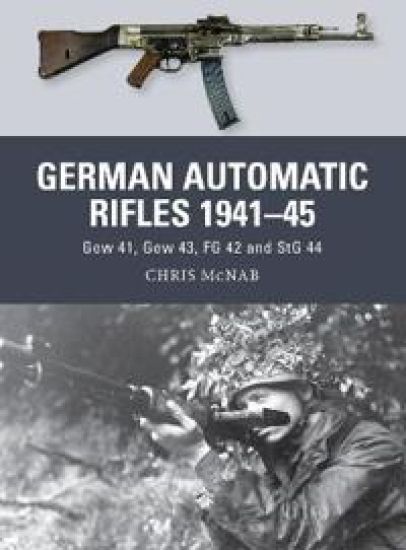
German Automatic Rifles 1941–45

German Automatic Rifles 1941–45

Chris McNab

Osprey Publishing
2013
nidottu
This book explores the origins, development, combat use and lasting influence of Nazi Germany’s automatic rifles, focusing on the Gew 41(W), Gew 43/Kar 43, FG 42 and MP 43/StG 44. The Blitzkrieg campaigns of 1939–40 convinced many observers that most infantry combat took place at closer ranges than the 750–1,000m. From 1941 Germany’s arms designers took note and produced a new series of infantry firearms. This study not only provides a detailed technical description of each weapon, but also explores how the firearms performed on the battlefields of World War II. The combat takes us from the FG 42 in the hands of Fallschirmjäger at Monte Cassino through to StG 44s being used by Waffen-SS soldiers on both the Eastern and Western Fronts. Postwar service is also studied, such as the Gew 43’s adoption by the Czech Army and the StG 44’s use by the Viet Cong in the Vietnam War. Setting each firearm in its tactical and historical context, and employing striking photographs and full-colour artwork, firearms expert Chris McNab sets out the absorbing story of this distinctive and influential series of weapons.
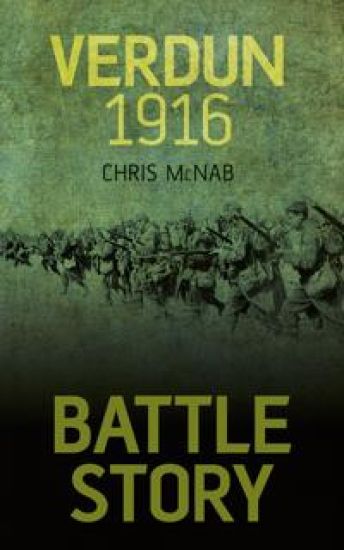
Battle Story: Verdun 1916

Battle Story: Verdun 1916

Chris McNab

The History Press Ltd
2013
nidottu
The Battle of Verdun was one of the bloodiest engagements of the First World War, resulting in 698,000 deaths, 70,000 for each of the 10 months of battle. The French Army in the area were decimated and it is often most tragically remembered as the battle in which the French were ‘bled white’. A potent symbol of French resistance, the fortress town of Verdun was one that the French Army was loath to relinquish easily. It was partly for this reason that the German commander chose to launch a major offensive here, where he could dent French national pride and military morale. His attack commenced on 21 February, using shock troops and flamethrowers to clear the French trenches. Starting with the capture of Fort Douamont, by June 1916 the Germans were pressing on the city itself, exhausting their reserves. The French continued to fight valiantly, despite heavy losses and eventually rolled back German forces from the city. In the end it was a battle that saw much loss of life for little gain on either side.
The Fall of Eben Emael

The Fall of Eben Emael

Chris McNab

Osprey Publishing
2013
nidottu
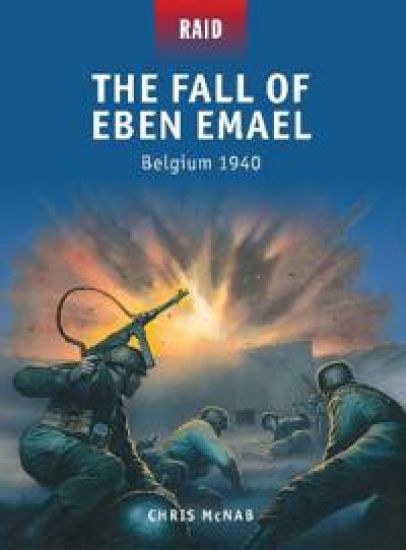
In early May 1940, the fortress of Eben Emael was a potent sentinel over the Belgian–Dutch borderlands. The fortress covered 75 hectares on the surface, had 5km of tunnels underground and was studded with bunkers, gun turrets and casemates. Add a garrison of 1,200 men and the natural protection of 60m-high canal walls, and Eben Emael gave the impression of near-impregnability. Yet on 10 May just 78 elite airborne soldiers managed to defeat this fortress in an operation of unprecedented tactical skill. Deployed by glider onto the very top of the fortifications, they utilized elite training, fast movement and specialist explosives to destroy many of the gun positions and trap much of the garrison within the fortress. Simultaneously, three other assault detachments conducted high-risk glider operations to capture critical bridges over the Albert Canal. By the end of 11 May, following the arrival of German infantry reinforcements, Eben Emael was in German hands. This Eben Emael RAID title tells the complete, fascinating story of this unique action.
MG 34 and MG 42 Machine Guns

MG 34 and MG 42 Machine Guns

Chris McNab

Osprey Publishing
2012
nidottu
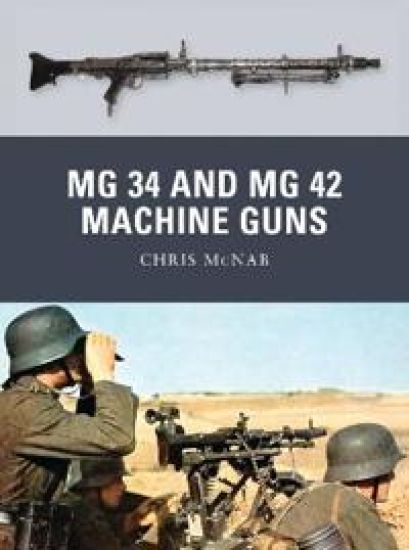
With the MG 34, the German Wehrmacht introduced an entirely new concept in automatic firepower – the general-purpose machine gun (GPMG). In itself the MG 34 was an excellent weapon: an air-cooled, recoil-operated machine gun that could deliver killing firepower at ranges of more than 1,000m. Yet simply by changing its mount and feed mechanism, the operator could radically transform its function. On its standard bipod it was a light machine gun, ideal for infantry assaults; on a tripod it could serve as a sustained-fire medium machine gun. During World War II, the MG 34 was superseded by a new GPMG – the MG 42. More efficient to manufacture and more robust, it had a blistering 1,200rpm rate of fire. Nicknamed ‘Hitler’s buzzsaw’ by Allied troops, it was arguably the finest all-round GPMG ever produced, and alongside the MG 34 it inflicted heavy casualties. Featuring specially commissioned full-colour artwork and drawing upon numerous technical manuals and first-hand accounts, this study explores the technological development, varied roles and lasting influence of the revolutionary MG 34 and MG 42 machine guns and their postwar successors.
Evacuees of Second World War

Evacuees of Second World War

Chris McNab

Pitkin Publishing
2012
nidottu
The evacuation of Britain’s urban children to the countryside was a uniquely emotional decision by the British government during the Second World War. The Pitkin Guide to Evacuees tells the colourful story of this mass exodus. As well as providing a clear narrative of how evacuation policy unfolded during the war, it also gives a deep insight into the experience of those who were evacuated. The personal stories vary greatly. The guide delves into many other elements of the evacuation experience: the practical challenges of housing thousands of displaced children in small villages and towns; the behavioural issues; the effect on the school system; how mothers coped with being separated from their children. Enhanced by superb photographic imagery, here is a complete and accessible reference guide to the mass evacuation of Britain’s children.
Battle Story: Cambrai 1917

Battle Story: Cambrai 1917

Chris McNab

The History Press Ltd
2012
sidottu
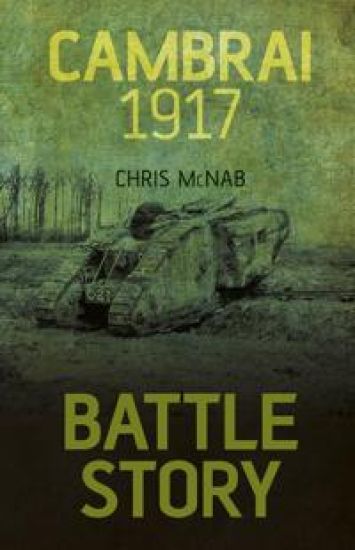
Cambrai 1917 was the battle that sowed the seeds of future combined-arms tank and infantry warfare, while remaining a battle of singular drama in its own right. If you truly want to understand what happened and why – read Battle Story. Detailed profiles explore the background of the generals of the two opposing forces, as well as what made up the average German and British soldier. First-person, contemporary sources bring the reader into the world of the Battle of Cambrai and show what it was like to be in the thick of battle. Detailed maps highlight key points in the battle and the surrounding area. Photographs place you on the front line of the unfolding action. Orders of battle reveal the composition of the two opposing forces’ army in detail. Packed with fact boxes, this short introduction is the perfect way to explore this important battle.
The Roman Army

The Roman Army

Chris McNab

BLOOMSBURY PUBLISHING PLC
2012
nidottu
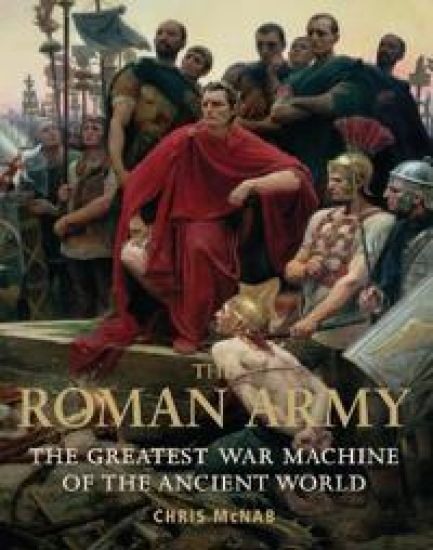
Packed with beautiful Osprey artwork, this volume offers a complete history of the Roman Army. The image of the Roman legionary is as familiar today as it was to the citizens – and enemies – of the vast Roman Empire two thousand years ago. This book goes beyond the stereotypes found in popular culture to examine the Roman Army from the first armed citizens of the early Republic through the glorious heights of the Imperial legions to the shameful defeats inflicted upon the late Roman Army by the Goths and Huns. Tracing the development of tactics, equipment and training, this work provides a detailed insight into the military force that enable Rome to become the greatest empire the world has ever seen. As well as describing the changes in the army over the centuries, The Roman Army also sheds light on the talented men who led these soldiers in battle and the momentous battles fought, including Cannae, Pharsalus and Adrianople. Illustrated with detailed maps, artwork and photographs, this volume provides a complete reference to the Roman Army from the 8th century BC to the period after the fall of the Western Roman Empire in the 5th century AD.
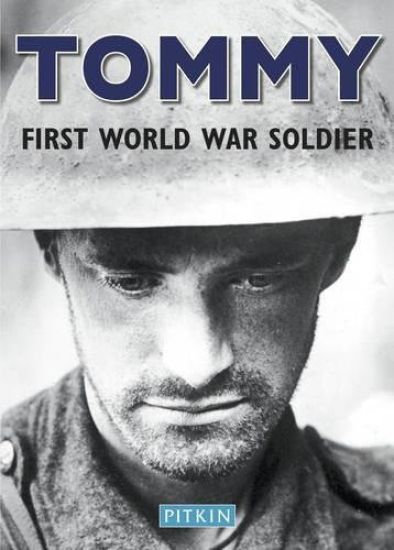
Tommy, First World War Soldier

Tommy, First World War Soldier

Chris McNab

Pitkin Publishing
2012
nidottu
This Pitkin Guide explores the reality, and unpacks the myths, of ‘Tommy’, the British soldier on the Western Front in the First World War. It looks at every aspect of his personal experience – uniform, kit, trench cuisine, health and hygiene, pay, training and weaponry. It conveys the horrors of the early days of industrial warfare, from machine guns and artillery barrages to close-quarters combat within the enemy trenches and bunkers, and much much more. As well as the most visible aspects of the Tommy’s experience, it also delves into more hidden worlds, and answers key questions. What did the Tommy do on his rest periods behind the frontlines? What caused him to suffer from shell shock, and how was he treated? How was he punished for disciplinary offences? These questions and many more are answered through a factual narrative.
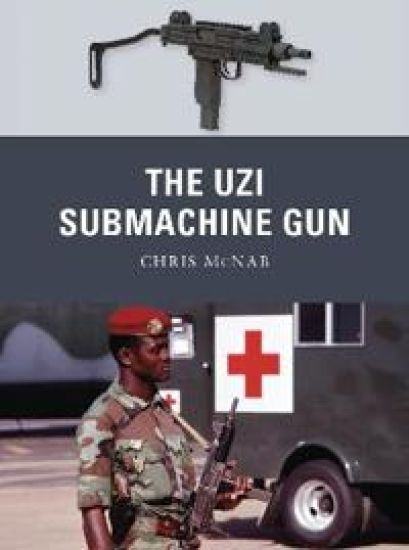
The Uzi Submachine Gun

The Uzi Submachine Gun

Chris McNab

Osprey Publishing
2011
nidottu
The Uzi submachine gun is one of the most recognizable weapons in history. Its familiarity stems in part from the sheer diversity of its users. Uzis have been seen being wielded and fired by US Secret Service agents and SWAT teams, Israeli soldiers, European special-forces, as well as criminals and terrorists the world over. The reasons they use the Uzi are simple – it provides devastating close-range firepower in a reliable, highly compact weapon. Weapon: The Uzi Submachine Gun tells the story of this unique weapon. It not only explores the gun's technical development and specifications, but also describes the and analyzes Uzi's combat use in a wide range of contexts, from Israeli soldiers battling on the Golan Heights in 1967, through to modern pirates operating off the coast of Somalia. This book presents the facts and challenges the myths surrounding this remarkable weapon.
The World War II Story

The World War II Story

Chris McNab

The History Press Ltd
2011
sidottu
In September 1939, Hitler’s Nazi Germany invaded Poland. Thus began the greatest armed struggle in history. Within days of the invasion, Germany was at war with France, Great Britain and much of the Commonwealth, but by the end of 1941 – by which time Japan and the United States had been plunged into war – the conflict had engulfed virtually the entire planet. World War II witnessed the mobilisation of more than 100 million military personnel. Here was ‘total war’ on a scale never previously experienced by any of the countries involved. The conflict eclipsed everything: industry, technology, the economy and home life. It transformed the lives of an entire generation of men and women, who grew up under the shadow of violence, separation and loss. It was also fought in every conceivable terrain and theatre, from the arctic conditions of the Soviet winter to the tropical landscape of the Pacific islands, with the battle for seas and skies being equally brutal. By the time it ended in September 1945, World War II had claimed the lives of more than 50 million people, and it witnessed the only use of nuclear weapons in warfare to this day. The World War II Story charts the dramatic narrative of the conflict from its first shots to its final apocalyptic end.
The Classic Military Vehicles Story

The Classic Military Vehicles Story

Chris McNab

The History Press Ltd
2011
sidottu
The mobilisation of troops and equipment has always been crucial to winning a war. During the twentieth century, the days of horse-drawn logistics and cavalry charges gradually became a thing of the past, and the age of military vehicles began. This book charts the development of military vehicles from steam-powered tractors to modern main battle tanks. The story reveals how such vehicles have changed the way wars are fought, either by increasing the speed and volume of logistics or troop deployments, or through the application of mobile firepower. The narrative explains key technical innovations from World War I, through the inter-war years to World War II, the Cold War and beyond. It pays homage to outstanding designs and those that are remembered with fondness, including the M3 Lee/Grant, T-34, Panther, Tiger, M1 Abrams, Chieftain and M4 Sherman tanks; the Bren Gun Carrier, the Willys ‘Jeep’, the Dodge truck; through to the modern ‘Humvee’ and Stryker, and many more.
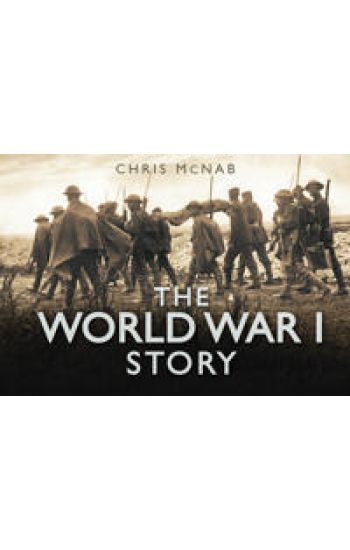
The World War I Story

The World War I Story

Chris McNab

The History Press Ltd
2011
sidottu
On 28 June 1914, Archduke Franz Ferdinand of Austria was assassinated. This event sparked off a war that was change the lives of millions of people around the world. More than 70 million military personnel were mobilised, and over 9 million combatants were killed. Entire generations of young men from towns and villages across Europe were wiped out. The conflict drew in the world’s great global powers, including the British Empire, France, Germany, Austria-Hungary, Russia, the United States and Japan, as well as many other nations. World War I transformed the way in which wars were fought. Cavalry charges and ‘staged’ clashes were consigned to history, making way for trench warfare, heavy artillery, machine guns and poison gas. Troops learnt to exist for months in confined spaces and ruined landscapes, fighting horrifying battles to push their line forward by only a few hundred yards. World War I changed the face of European society and politics forever, and set the scene for a subsequent world war. On 11 November 1918, an armistice at last came into effect, and we continue to remember today the moment when the guns fell silent on the Western Front. The World War I Story is the perfect pocket narrative of one of the largest conflicts in human history: the Great War.