Kirjojen hintavertailu – 12 859 818 kirjaa ja 27 kauppaa

Kirjailija

Christopher Coker

Kirjat ja teokset yhdessä paikassa: 39 kirjaa, julkaisuja vuosilta 1983–2024, suosituimpiin kuuluu Kunskap och information : den mänskliga intelligensen potential och fara. Vertaile teosten hintoja ja tarkista saatavuus suomalaisista kirjakaupoista.

39 kirjaa

Kirjojen julkaisuvuodet: 1983–2024.

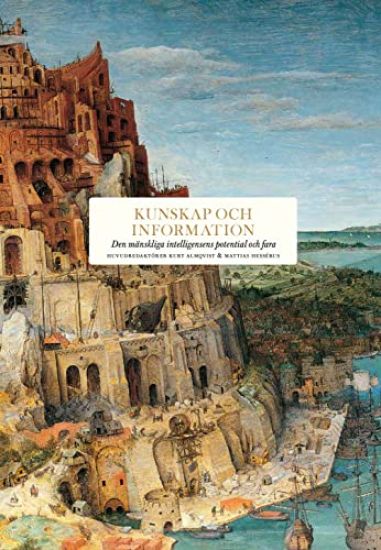
Kunskap och information : den mänskliga intelligensen potential och fara

Kunskap och information : den mänskliga intelligensen potential och fara

Mark Pagel; Mark Plotkin; John Hemming; Jessica Frazier; Richard Miles; Erica Benner; Peter Burke; Nathan Shachar; Suzana Herculano-Houzel; Mariano Sigman; Martin Ingvar; Michael Goodman; Gill Bennett; Simon Mayall; Maria Borelius; Andrew Keen; Nicholas Carr; Peter Frankopan; Christopher Coker; Janne Haaland Matláry; Elisabeth Kendall; Clarie Lehmann; David Goodhart; Brendan O´Neill; Fraser Nelson; Iain Martin; Adrian Wooldridge; S.J. M. Antoni J. Ucerler

Bokförlaget Stolpe
2021
sidottu
Vi har kommit långt från de religioner, myter och grundarberättelser som lade grunden till människans tidiga förståelse av världen och allting i den, och våra kunskaper har på senare tid ökat exponentiellt. I den här boken diskuterar ledande forskare inom konst och vetenskap hur kunskap och information har bevarats och förmedlats i historien, vilket leder oss fram till dagens digitala tidsålder och de många utmaningar som den ställer oss inför, inte minst beträffande våra persondata. Kommer vårt informationssamhälle, under växande spänning mellan en kunskapselit och dem som känner sig utestängda från offentlig diskussion och beslutsfattande, liksom under ökad friktion om tolkningsfrihet och yttrandefrihet i den akademiska världen, att bli en upplysningstid eller går vi in i en ny mörk tid för kunskapen? Texterna i den här illustrerade antologin härrör från det internationellt välrenommerade Engelsbergsseminariet 2018. Huvudredaktörer är Kurt Almqvist och Mattias Hessérus.
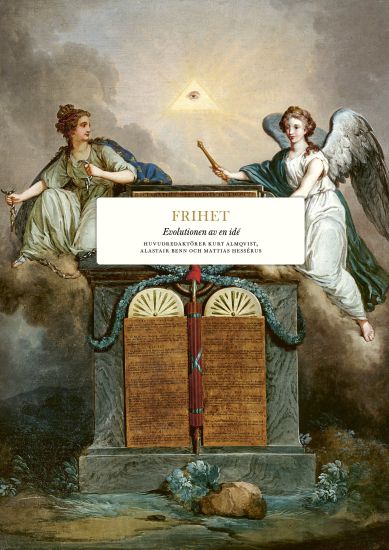
Frihet : evolutionen av en idé

Frihet : evolutionen av en idé

Kemi Badenoch; John Bew; Adrian Bradshaw; Hal Brands; Richard Chartres; Christopher Coker; Marie Kawthar Daouda; Peter Frankopan; Jessica Frazier; Francis Gavin; Matthew Goodwin; Katja Hoyer; Jeremy Jennings; Robert Johnson; Alexander Lee; Margaret MacMillan; Janne Haaland Matláry; Richard Miles; Fraser Nelson; Jesse Norman; Iuliia Osmolovska; Charly Salonius-Pasternak; Agnès C. Poirier; Alina Polyakova; Sergey Radchenko; Juliet Samuel; Mary Sarotte; Kori Schake; Mark J. Schiefsky; Brendan Simms; Alexander McCall Smith

Bokförlaget Stolpe
2024
sidottu
Hur har idén om frihet utvecklats och förändrats under århundradena? Vad betyder frihet idag och vad behöver vi göra för att behålla de friheter som generationer män och kvinnor har kämpat, och till och med dött, för? Frihet är en grundförutsättning för att ett samhälle ska frodas och utvecklas. Dess historia är brokig: mänsklighetens eviga kamp mot ödet, våra förfäder som outtröttligt stred för att upprätta tanke- och religionsfrihet, demokratiska friheter i samhället i stort och kampen mot auktoritära regimer och tyranner världen över. I denna essäsamling utforskar ledande akademiker, författare och historiker vad frihet har betytt genom tiderna. De reflekterar över detta ständigt pågående drama och varför vi så villigt offrar oss för friheten när den hotas.
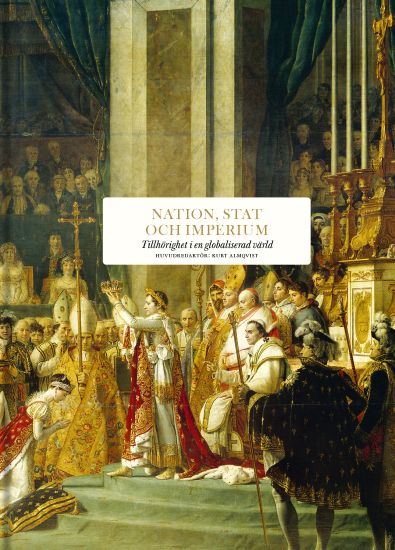
Nation, stat och imperium : tillhörighet i en globaliserad värld

Nation, stat och imperium : tillhörighet i en globaliserad värld

Philip Bobbitt; Gillian Clark; Christopher Coker; Carlos Escudé; Richard J. Evans; Jonathan Fenby; Jessica Frazier; David Goodhart; Freddy Gray; Steven Grosby; Janne Haaland Matláry; Tom Holland; Lawrence James; Jeremy Jennings; Josef Joffe; Rob Johnson; Robin Lane Fox; Charles S. Maier; Tim Marshall; Iain Martin; Simon Mayall; Lucy Riall; Larry Siedentop; Lars Trägårdh; Maurizio Viroli; Peter H. Wilson; Harvey Whitehouse; Martina Winkelhofer

Bokförlaget Stolpe
2021
sidottu
Med det kalla krigets slut och globaliseringens segertåg trodde många att nationalism hörde till historien. Men det visade sig vara tvärtom. Idag ser vi hur nationalismen sprids över hela världen. Samtidigt växer sig populistiska och anti-demokratiska rörelser starka. Att höra hemma någonstans tycks bli allt viktigare i en tid av ekonomisk och social osäkerhet. I en globaliserad värld förknippas därför identitet, medborgarskap och tillhörighet med födelseort och en fast plats att bo på. Essäerna i denna antologi är baserade på Engelsbergsseminariet 2017 där olika former av identitet knutna till olika samhällsbildningar granskades. Hur uppstår en nation? Hur skapas enighet i ett imperium med en mångfald av folk? Huvudredaktör för denna illustrerade antologi är Kurt Almqvist.
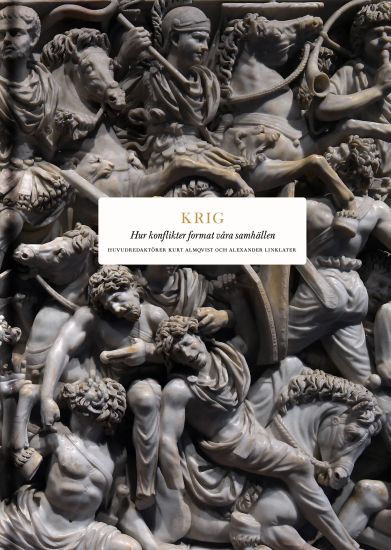
Krig : hur konflikter format våra samhällen

Krig : hur konflikter format våra samhällen

Alexey Arbatov; David J. Betz; Philip Bobbitt; Christopher Coker; Rolf Ekéus; Richard J. Evans; Gregory Feifer; Lawrence Freedman; Janne Haaland Matláry; Dick Harrison; Tom Holland; Rob Johnson; Frederick Kagan; Kimberly Kagan; Elisabeth Kendall; Fredrik Logevall; Rana Mitter; Peter Pomerantsev; Andrew Preston; Malise Ruthven; Charly Salonius-Pasternak; Hew Strachan; Nathan Shachar; Lilia Shevtsova; Jessica Stern; Pascal Vennesson

Bokförlaget Stolpe
2022
sidottu
Det påstås att ungefär 14 500 krig har utkämpats sedan år 3 500 f. Kr. Mänskligheten har bara erfarit 300 år av fred på jorden. Under 1900-talet dödades fler människor i krig än något tidigare sekel. Relativt sett dödar vi dock varandra mer sällan. Håller vi gradvis på att bli mer fredliga? Oavsett hur många som dödas, och med vilken metod, kan vi vara säkra på att krig kommer att fortsätta utkämpas. Ligger orsakerna till krig i samhället eller i biologin, i tävlan om ekonomiska resurser eller sexuella, i historiska omständigheter eller i en universell våldsinstinkt? Allt sedan antiken fram till dagens terrorism har krig varit förstörare och skapare av stater och civilisationer. Essäerna i denna antologi har sitt ursprung i det internationellt välrenommerade Engelsbergsseminariet 2015 och är skrivna av historiker, journalister, tänkare, forskare och författare från hela världen. Huvudredaktörer är Kurt Almqvist och Alexander Linklater.
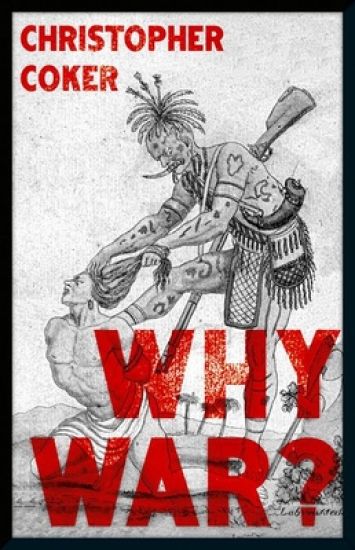
Why War?

Why War?

Christopher Coker

Oxford University Press, USA
2021
sidottu
What are humanity's biological origins? What are the mechanisms, including culture, that continue to drive it? What is the history that has allowed it to evolve over time? And what are its functions--how does it survive and thrive by exploiting the features that define it as a species? These are the four questions of the Tinbergen Method for explaining animal behavior, developed by the Nobel Prizewinning Dutch ethologist Niko Tinbergen. This book contends that applying this method to war--which is unique to humans--can help us better understand why conflict is so resilient. Christopher Coker explores these four questions of our past and present, and looks at our post-human future, assessing how far scientific advances in gene-editing, robotics and AI systems will de-center human agency. He concludes that we won't witness war's end until it has exhausted its evolutionary possibilities--meaning that, well into the future, war is likely to remain what Thucydides first called it: 'the human thing'. From the Ancients to Artificial Intelligence, Why War? is an exhilarating tour d'horizon of humankind's propensity to warfare and its behavioral underpinnings, offering new ways of thinking about our species' unique and deadly preoccupation.
Why War?

Why War?

Christopher Coker

C Hurst Co Publishers Ltd
2021
sidottu
What are humanity's biological origins? What are the mechanisms, including culture, that continue to drive it? What is the history that has allowed it to evolve over time? And what are its functions--how does it survive and thrive by exploiting the features that define it as a species? These are the four questions of the Tinbergen Method for explaining animal behaviour, developed by the Nobel Prizewinning Dutch ethologist Niko Tinbergen. This book contends that applying this method to war--which is unique to humans--can help us better understand why conflict is so resilient. Christopher Coker explores these four questions of our past and present, and looks at our post-human future, assessing how far scientific advances in gene-editing, robotics and AI systems will de-centre human agency. He concludes that we won't witness war's end until it has exhausted its evolutionary possibilities--meaning that, well into the future, war is likely to remain what Thucydides first called it: 'the human thing'. From the Ancients to Artificial Intelligence, Why War? is an exhilarating tour d'horizon of humankind's propensity to warfare and its behavioural underpinnings, offering new ways of thinking about our species' unique and deadly preoccupation.
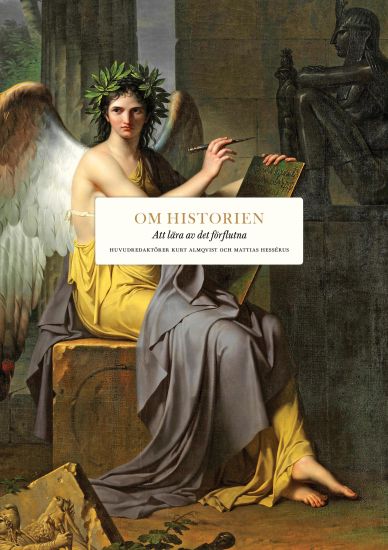
Om historien : att lära av det förflutna

Om historien : att lära av det förflutna

Erica Benner; John Bew; Philip Bobbitt; Vernon Bogdanor; Michael Burleigh; Cory J. Clark; Christopher Coker; Jonathan Fenby; Niall Ferguson; Janne Haaland Matlary; Josef Joffe; Rob Johnson; Elisabeth Kendall; Iain Martin; Rana Mitter; Andrew Monaghan; Fraser Nelson; Gudrun Persson; Peter Ricketts; Brendan Simms

Bokförlaget Stolpe
2020
sidottu
Historien, mänsklighetens samlade erfarenheter, lär oss om nuet och framtiden. Hur är det möjligt att titta på händelser i det förflutna och med hjälp av dem lösa samtidens politiska eller ekonomiska förhållanden och konflikter? Essäerna i denna antologi härrör från Engelsbergsseminariet 2019 där dessa frågor diskuterades. Ur bland annat idéhistoriskt och evolutionspsykologiskt perspektiv tillämpar skribenterna historien på nutida företeelser som internationella relationer, geopolitik och nationalekonomi, individens roll och den mänskliga naturen. Kanske är det bara genom att tillämpa historien som vi hittar vägen framåt?
The Rise of the Civilizational State

The Rise of the Civilizational State

Christopher Coker

Polity Press
2019
nidottu
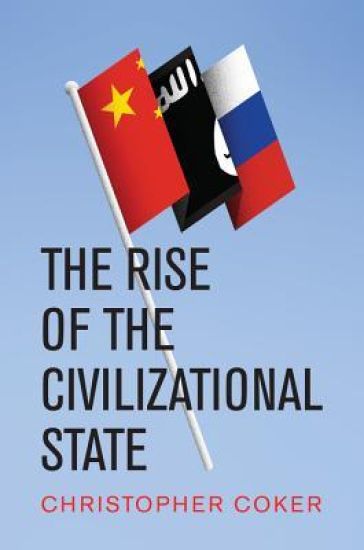
In recent years culture has become the primary currency of politics – from the identity politics that characterized the 2016 American election to the pushback against Western universalism in much of the non-Western world. Much less noticed is the rise of a new political entity, the civilizational state. In this pioneering book, the renowned political philosopher Christopher Coker looks in depth at two countries that now claim this title: Xi Jinping’s China and Vladimir Putin’s Russia. He also discusses the Islamic caliphate, a virtual and aspirational civilizational state that is unlikely to fade despite the recent setbacks suffered by ISIS. The civilizational state, he contends, is an idea whose time has come. For, while civilizations themselves may not clash, civilizational states appear to be set on challenging the rules of the international order that the West takes for granted. China seems anxious to revise them, Russia to break them, while Islamists would like to throw away the rule book altogether. Coker argues that, when seen in the round, these challenges could be enough to give birth to a new post-liberal international order.
The Rise of the Civilizational State

The Rise of the Civilizational State

Christopher Coker

Polity Press
2019
sidottu
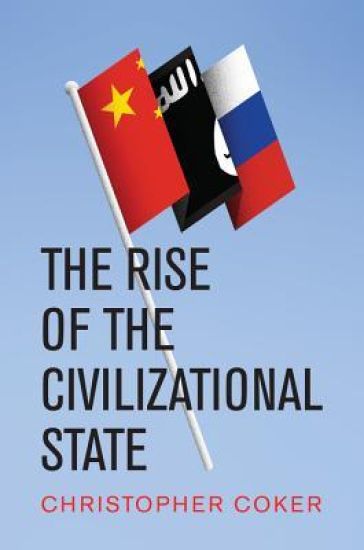
In recent years culture has become the primary currency of politics – from the identity politics that characterized the 2016 American election to the pushback against Western universalism in much of the non-Western world. Much less noticed is the rise of a new political entity, the civilizational state. In this pioneering book, the renowned political philosopher Christopher Coker looks in depth at two countries that now claim this title: Xi Jinping’s China and Vladimir Putin’s Russia. He also discusses the Islamic caliphate, a virtual and aspirational civilizational state that is unlikely to fade despite the recent setbacks suffered by ISIS. The civilizational state, he contends, is an idea whose time has come. For, while civilizations themselves may not clash, civilizational states appear to be set on challenging the rules of the international order that the West takes for granted. China seems anxious to revise them, Russia to break them, while Islamists would like to throw away the rule book altogether. Coker argues that, when seen in the round, these challenges could be enough to give birth to a new post-liberal international order.
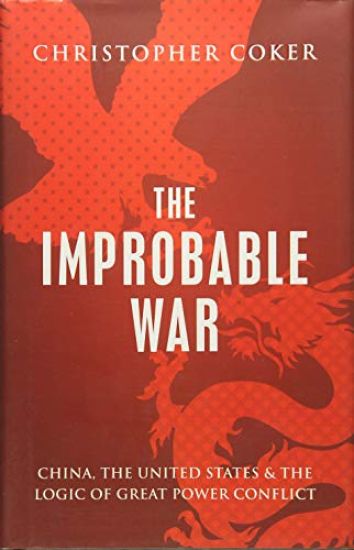
The Improbable War

The Improbable War

Christopher Coker

C Hurst Co Publishers Ltd
2017
nidottu
The Improbable War explains why conflict between the USA and China cannot be ruled out. In 1914 war between the Great Powers was considered unlikely, yet it happened. We learn only from history, and popular though the First World War analogy is, the lessons we draw from its outbreak are usually mistaken. Among these errors is the tendency to over-estimate human rationality. All major conflicts of the past 300 years have been about the norms and rules of the international system. In China and the US the world confronts two 'exceptional' powers whose values differ markedly, with China bidding to challenge the current order. The 'Thucydidean Trap' -when a conservative status quo power confronts a rising new one-may also play its part in precipitating hostilities. To avoid stumbling into an avoidable war both Beijing and Washington need a coherent strategy, which neither of them has. History also reveals that war evolves continually. The next global conflict is likely to be played out in cyberspace and outer space and like all previous wars it will have devastating consequences. Such a war between the United States and China may seem improbable, but it is all too possible, which is why we need to discuss it now.
Rebooting Clausewitz: 'On War' in the Twenty-First Century

Rebooting Clausewitz: 'On War' in the Twenty-First Century

Christopher Coker

Oxford University Press, USA
2017
nidottu
Rebooting Clausewitz offers an entirely new take on the work of history's greatest theorist of war. Written for an undergraduate readership that often struggles with Clausewitz's master work On War--a book that is often considered too philosophical and impenetrably dense--it seeks to unpack some of Clausewitz's key insights on theory and strategy. In three fictional interludes Clausewitz attends a seminar at West Point; debates the War on Terror at a Washington think tank; and visits a Robotics Institute in Santa Fe where he discusses how scientists are reshaping the future of war. Three separate essays situate Clausewitz in the context of his times, discuss his understanding of the culture of war, and the extent to which two other giants--Thucydides and Sun Tzu--complement his work. Some years ago the philosopher W. B. Gallie argued that Clausewitz needed to be 'saved from the Clausewitzians'. Clausewitz doesn't need saving and his commentators have contributed a great deal to our understanding of On War's seminal status as a text. But too often they tend to conduct a conversation between themselves. This book is an attempt to let a wider audience into the conversation.
Rebooting Clausewitz

Rebooting Clausewitz

Christopher Coker

C Hurst Co Publishers Ltd
2017
nidottu
Rebooting Clausewitz offers an entirely new take on the work of history's greatest theorist of war. Written for an undergraduate readership that often struggles with Clausewitz's master work On War--a book that is often considered too philosophical and impenetrably dense--it seeks to unpack some of Clausewitz's key insights on theory and strategy. In three fictional interludes Clausewitz attends a seminar at West Point; debates the War on Terror at a Washington think tank; and visits a Robotics Institute in Santa Fe where he discusses how scientists are reshaping the future of war. Three separate essays situate Clausewitz in the context of his times, discuss his understanding of the culture of war, and the extent to which two other giants--Thucydides and Sun Tzu--complement his work. Some years ago the philosopher W. B. Gallie argued that Clausewitz needed to be 'saved from the Clausewitzians'. Clausewitz doesn't need saving and his commentators have contributed a great deal to our understanding of On War's seminal status as a text. But too often they tend to conduct a conversation between themselves. This book is an attempt to let a wider audience into the conversation.
Future War

Future War

Christopher Coker

Polity Press
2015
nidottu

Halvin toimitettuna 29,70 €

Will tomorrow's wars be dominated by autonomous drones, land robots and warriors wired into a cybernetic network which can read their thoughts? Will war be fought with greater or lesser humanity? Will it be played out in cyberspace and further afield in Low Earth Orbit? Or will it be fought more intensely still in the sprawling cities of the developing world, the grim black holes of social exclusion on our increasingly unequal planet? Will the Great Powers reinvent conflict between themselves or is war destined to become much 'smaller' both in terms of its actors and the beliefs for which they will be willing to kill? In this illuminating new book Christopher Coker takes us on an incredible journey into the future of warfare. Focusing on contemporary trends that are changing the nature and dynamics of armed conflict, he shows how conflict will continue to evolve in ways that are unlikely to render our century any less bloody than the last. With insights from philosophy, cutting-edge scientific research and popular culture, Future War is a compelling and thought-provoking meditation on the shape of war to come.
Future War

Future War

Christopher Coker

Polity Press
2015
sidottu
Will tomorrow's wars be dominated by autonomous drones, land robots and warriors wired into a cybernetic network which can read their thoughts? Will war be fought with greater or lesser humanity? Will it be played out in cyberspace and further afield in Low Earth Orbit? Or will it be fought more intensely still in the sprawling cities of the developing world, the grim black holes of social exclusion on our increasingly unequal planet? Will the Great Powers reinvent conflict between themselves or is war destined to become much 'smaller' both in terms of its actors and the beliefs for which they will be willing to kill? In this illuminating new book Christopher Coker takes us on an incredible journey into the future of warfare. Focusing on contemporary trends that are changing the nature and dynamics of armed conflict, he shows how conflict will continue to evolve in ways that are unlikely to render our century any less bloody than the last. With insights from philosophy, cutting-edge scientific research and popular culture, Future War is a compelling and thought-provoking meditation on the shape of war to come.
The Improbable War

The Improbable War

Christopher Coker

C Hurst Co Publishers Ltd
2015
sidottu
The Improbable War explains why conflict between the USA and China cannot be ruled out. In 1914 war between the Great Powers was considered unlikely, yet it happened. We learn only from history, and popular though the First World War analogy is, the lessons we draw from its outbreak are usually mistaken. Among these errors is the tendency to over-estimate human rationality. All major conflicts of the past 300 years have been about the norms and rules of the international system. In China and the US the world confronts two 'exceptional' powers whose values differ markedly, with China bidding to challenge the current order. The 'Thucydidean Trap' -when a conservative status quo power confronts a rising new one-may also play its part in precipitating hostilities. To avoid stumbling into an avoidable war both Beijing and Washington need a coherent strategy, which neither of them has. History also reveals that war evolves continually. The next global conflict is likely to be played out in cyberspace and outer space and like all previous wars it will have devastating consequences. Such a war between the United States and China may seem improbable, but it is all too possible, which is why we need to discuss it now.
The Improbable War: China, the United States and Logic of Great Power Conflict
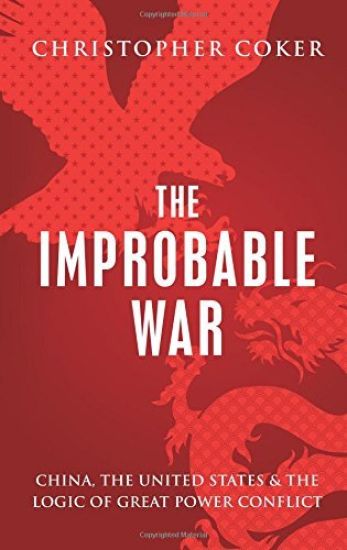
The Improbable War explains why conflict between the USA and China cannot be ruled out. In 1914 war between the Great Powers was considered unlikely, yet it happened. We learn only from history, and popular though the First World War analogy is, the lessons we draw from its outbreak are usually mistaken. Among these errors is the tendency to over-estimate human rationality. All major conflicts of the past 300 years have been about the norms and rules of the international system. In China and the US the world confronts two 'exceptional' powers whose values differ markedly, with China bidding to challenge the current order. The 'Thucydidean Trap' - when a conservative status quo power confronts a rising new one - may also play its part in precipitating hostilities. To avoid stumbling into an avoidable war both Beijing and Washington need a coherent strategy, which neither of them has. History also reveals that war evolves continually. The next global conflict is likely to be played out in cyberspace and outer space and like all previous wars it will have devastating consequences. Such a war between the United States and China may seem improbable, but it is all too possible, which is why we need to discuss it now.
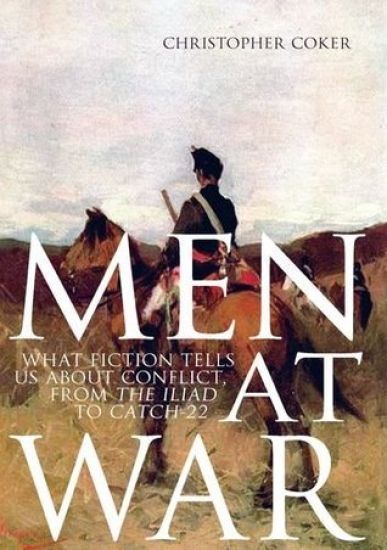
Men at War: What Fiction Tells Us about Conflict, from the Iliad to Catch-22
Since Achilles first stormed into our imagination, literature has introduced its readers to truly unforgettable martial characters. In Men at War, Christopher Coker discusses some of the most famous of these fictional creations and their impact on our understanding of war and masculinity. Grouped into five archetypes-warriors, heroes, villains, survivors and victims-these characters range across 3000 years of history, through epic poems, the modern novel and one of the twentieth century's most famous film scripts. Great authors like Homer and Tolstoy show us aspects of reality invisible except through a literary lens, while fictional characters such as Achilles and Falstaff, Robert Jordan and Jack Aubrey, are not just larger than life; they are life's largeness-and this is why we seek them out. Although the Greeks knew that the lovers, wives and mothers of soldiers are the chief victims of battle, for the combatants, war is a masculine pursuit. Each of Coker's chapters explores what fiction tells us about war's appeal to young men and the way it makes- and breaks-them. The existential appeal of war too is perhaps best conveyed in fictional accounts, and these too are scrutinized by the author.
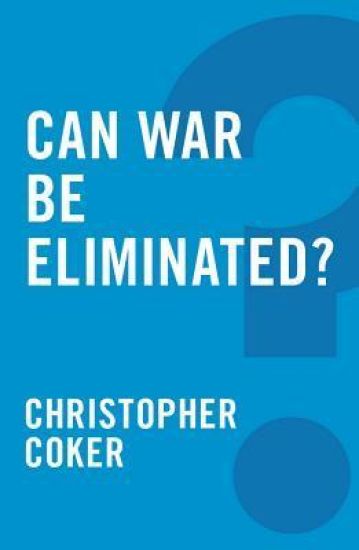
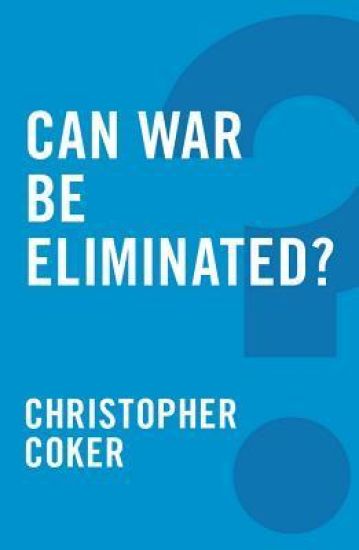
Can War be Eliminated?

Can War be Eliminated?

Christopher Coker

Polity Press
2014
nidottu
Throughout history, war seems to have had an iron grip on humanity. In this short book, internationally renowned philosopher of war, Christopher Coker, challenges the view that war is an idea that we can cash in for an even better one - peace. War, he argues, is central to the human condition; it is part of the evolutionary inheritance which has allowed us to survive and thrive. New technologies and new geopolitical battles may transform the face and purpose of war in the 21st century, but our capacity for war remains undiminished. The inconvenient truth is that we will not see the end of war until it exhausts its own evolutionary possibilities.
Can War be Eliminated?

Can War be Eliminated?

Christopher Coker

Polity Press
2014
sidottu
Throughout history, war seems to have had an iron grip on humanity. In this short book, internationally renowned philosopher of war, Christopher Coker, challenges the view that war is an idea that we can cash in for an even better one - peace. War, he argues, is central to the human condition; it is part of the evolutionary inheritance which has allowed us to survive and thrive. New technologies and new geopolitical battles may transform the face and purpose of war in the 21st century, but our capacity for war remains undiminished. The inconvenient truth is that we will not see the end of war until it exhausts its own evolutionary possibilities.