Kirjailija
Christopher Hill
Kirjat ja teokset yhdessä paikassa: 56 kirjaa, julkaisuja vuosilta 1982–2025, suosituimpiin kuuluu Domestic Sources of Foreign Policy. Vertaile teosten hintoja ja tarkista saatavuus suomalaisista kirjakaupoista.
56 kirjaa
Kirjojen julkaisuvuodet: 1982–2025.
In this, the last book published during his lifetime, renowned historian of the English Revolution Christopher Hill uses the literary culture of the seventeenth century to explore the immense social changes of the period as well as the expressions of liberty, the law and the hero-worship of the outlaw defiance. As well as chapters on gypsies and vagabonds, Hill analyzes class, religion and the shift away from the importance of the church after the Reformation. Liberty against the Law is a late classic of Hill's work and essential reading for anyone interested in the history and politics of the seventeenth-century.
In this remarkable book Christopher Hill used the learning gathered in a lifetime's study of seventeenth-century England to carry out a major reassessment of Milton as man, politician, poet, and religious thinker. The result is a Milton very different from most popular representations: instead of a gloomy, sexless "Puritan", we have a dashingly thinker, branded with the contemporary reputation of a libertine.
In the world we are living in, English has become the common language that people from different countries and cultures can use to communicate with one another. There are many reasons why people would want to learn English, but for a lot of them; It is work-related. Most large companies around the world require their employees to speak English. In some cases, these companies are requiring their workers to only use English at the workplace. English has also been referred to as "the language of business". If you have ambitions to become an international businessman or to work at some bigger companies, it's almost essential that you're able to speak English fluently. From The Intermediate Level to The Advanced Level From my years of teaching, I am confident to say that it is easy for an English learner to go from a beginner English level to an intermediate English level. However, it takes more time to go from an Intermediate level to an advanced English level. A lot of students have studied English for years but still aren't able to speak English on an advanced level. They have tried many methods, attending classes, learning how to pronounce every single word and even getting a private English tutor to improve their spoken English, yet they still have a hard time pronouncing English words correctly or feeling too nervous to speak. The Best Proven Way to Learn and Speak English In this book, Christopher Hill, "THE INTERNATIONAL ESL PROFESSOR " (with 20+ years of experience) will show you powerful unique ways to rapidly improve your spoken English. With topics you already have interest in, you will find out how easy and effortless to learn and speak fluent English. This effective method is simple, yet powerful. You will able to learn and improve your spoken English 3 to 5 times faster compared to the traditional way of learning. Inside This Black Book, You will Discover: The 3 Golden Rules of Speaking Fluent English The Power of Immersion The Process of Shadowing How Intensive Listening works The Best Accent Reduction Techniques Bonus Guide: The Secret Method to Become Super Fluent in 21 Days ( 365 Days ) How do you know this book is for me? This book is for busy Intermediate students who wish to get to the Advanced English Level. If you can understand 60-80% of an English speaking movie and understand what you are reading so far, you have found the right book. Stop Using Ineffective Ways to Learn and Speak English. When you are using proper methods to learn, you'll find that improving English is effortless. Learn and adopt these Proven techniques, tips, and many more secrets revealed in this black book. Don't Learn Using The Old-fashioned Way. Get a Copy of "The Black Book of Speaking Fluent English" and Start Speaking Fluent English: )
This is the classic life of Cromwell by one of the great radical historians of the English Civil War'A triumph of complex interpretation and delicious prose ... Hill introduced nuance into the character of Cromwell and the nature of his revolution ... the finest of guides to the man of the times' Tristram Hunt, Guardian'A humane and imaginative book by a historian writing at the peak of his powers' Ivan Roots, Daily Telegraph'This is the most intelligent summation we have on Cromwell, and it is written with the grace and power we have come to expect from Hill' J. P. Kenyon, Observer'One of the finest historians of the age' The Times Literary Supplement 'The dean and paragon of English historians' E. P. Thompson
Since 1945, Britain has had to cope with a slow descent from international primacy. The decline in global influence was intended to be offset by the United Kingdom’s entry into Europe in 1975, with the result that national foreign policy came to rest on the two pillars of the Atlantic alliance and the Common Foreign and Security Policy of the EU. Yet, with Brexit, one of these pillars is now being removed, leaving Britain facing some serious challenges arising from the prospect of independence. In this incisive book, Christopher Hill explores what lies ahead for British foreign policy in the shadows of Brexit and a more distant and protectionist America under Donald Trump. While there is much talk of a renewed global profile for the UK, Hill cautions that this is going to be difficult to turn into practical reality. Geography, history and limited resources mean that Britain is doomed to seek a continued foreign policy partnership with the Member States of the Union – only now it will be from outside the room looking in. As a result, there is the distinct possibility that both British and European foreign policies will end up worse off as the result of their divorce.
An easy read with great imagery will quickly pull you into a warming tale of a father's love for his son, seen through the innocence of a child's conversation.
In 1530 England was a backward economy, yet by 1780 she possessed a world empire and was just about to become the first industrialized power in the world. This book deals with the intervening 250 years, and tries to explain how England won her unique position in the world. This is a story that opens with the break with Europe and charts the tumultuous period of war, revolutions, and the a cultural and scientific flowering that made up the early modern period. Yet, during this period Britain also become the home to imperial ambitions and economic innovation. Hill excavates the conditions and ideas that underpin this age of extraordinary change, and shows how, and why, Britain became the most powerful nation in the world.
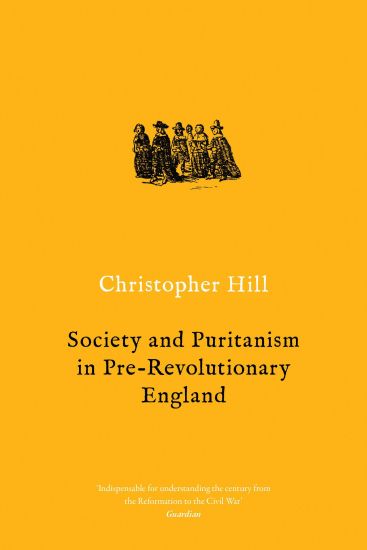
In order to understand the English Revolution and Civil War we need to understand Puritanism. In this classic work of social history, Professor Hill shows Puritanism as a living faith, one that responded to social as well as religious needs. It was a set of beliefs that answered the hopes and fears of yeomen and gentlemen, merchants and artisans in the tribulations of early modern Britain, a time of extraordinary turbulence. Over this period, Puritanism, he shows, was interwoven into daily life. He looks at how rituals such as oath-taking, the Sabbath, bawdy courts and poor relief, became ways to order the social upheaval. He even offers an explanation for the emergence of the seemingly paradoxical - the Puritan revolutionaries.
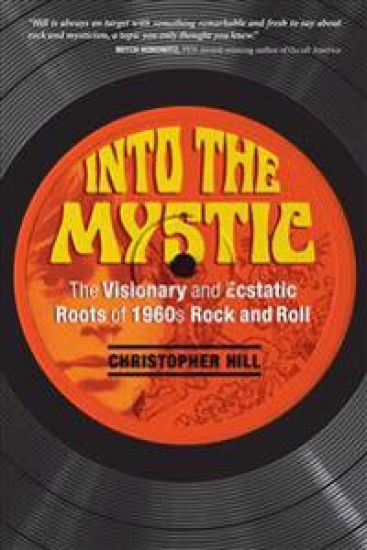
Exploring how 1960s rock and roll music became a school of visionary art, Christopher Hill shows how music raised consciousness on both the individual and collective levels to bring about a transformation of the planet. The author traces how rock and roll rose from the sacred music of the African Diaspora, harnessing its ecstatic power for evoking spiritual experiences through music. He shows how the British Invasion, beginning with the Beatles in the early 1960s, acted as the “detonator” to explode visionary music into the mainstream. He explains how 60s rock and roll made a direct appeal to the imaginations of young people, giving them a larger set of reference points around which to understand life. Exploring the sources 1960s musicians drew upon to evoke the initiatory experience, he reveals the influence of European folk traditions, medieval Troubadours, and a lost American history of ecstatic politics and shows how a revival of the ancient use of psychedelic substances was the strongest agent of change, causing the ecstatic, mythic, and sacred to enter the consciousness of a generation.
International Relations and the European Union
Christopher Hill; Michael Smith; Sophie Vanhoonacker
Oxford University Press
2017
nidottu
International Relations and the European Union takes a unique approach by incorporating the study of the EU's world role into the wider field of international relations. As the most comprehensive introduction to the EU's international relations written by leading experts in the field, it is the key text for anyone wishing to understand the EU's role in the contemporary world. Beginning with an examination of theoretical frameworks and approaches, the book goes on to address the institutions and processes that surround the EU's international relations. Key policy areas, such as security and trade, are outlined in detail, alongside the EU's relations with specific countries, including the United States, China, India, and Russia. Updates for the third edition include expanded discussions of three key perspectives to provide a rounded picture of the EU's place in the international system: as a sub-system of international relations, as part of the process of international relations, and as a power in its own right.
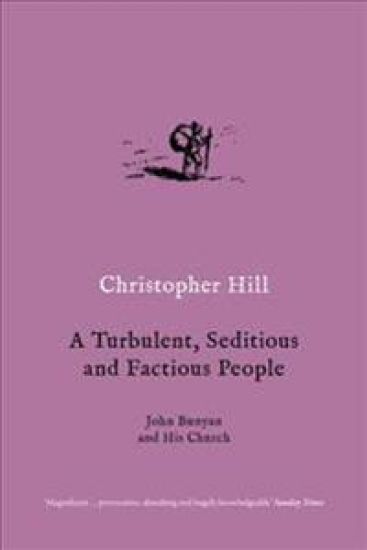
John Bunyan's Pilgrim's Progress is one of the most important works of English literature. Translated into more than 200 languages, it once rivalled the Bible in popularity in the English-speaking world. In A Turbulent, Seditious and Factious People, Christopher Hill reassesses the well-known author to recover Bunyan's significance as a preacher-a man whose nonconformist religion led him into conflict with the Quakers and resulted in long years of imprisonment. It was while confined that he wrote his most famous works. This classic biography by one of the leading historians of the seventeenth century offers an extraordinary insight into one of Britain's most influential writers.
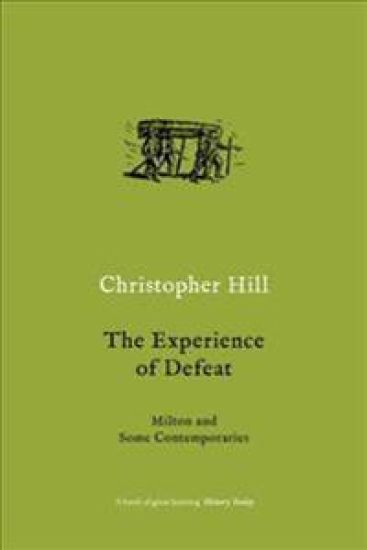
The Restoration, which re-established Charles II as king of England in 1660, marked the end of "God's cause"-a struggle for liberty and republican freedom. While most accounts of this period concentrate on the court, Christopher Hill focuses on those who mourned the passing of the most radical era in English history. The radical protestant clergy, as well as republican intellectuals and writers generally, had to explain why providence had forsaken the agents of God's work. In The Experience of Defeat, Christopher Hill explores the writings and lives of the Levellers, the Ranters and the Diggers, as well as the work of George Fox and other important early Quakers. Some of them were pursued by the new regime, forced into hiding or exile; others compelled to recant. In particular Hill examines John Milton's late work, arguing that it came directly out of a painful reassessment of man and society that impelled him to "justify the ways of God to Man."
In the years since 9/11, followed by the wars in Iraq and Afghanistan, public attention the world over has been on foreign policy. From the United States to Yemen, from China to Venezuela, the quality of the decisions taken by politicians and diplomats has been under the closest scrutiny. What is more, with the increased personal mobility created by globalization, many individuals and groups now focus as much on international events as on affairs within their own state. Diasporas, company managers, humanitarian volunteers and other non-state actors are aware of the necessity for effective diplomacy to secure the outcomes they hope for. This revised and retitled new edition of the author's acclaimed The Changing Politics of Foreign Policy provides the concepts and analysis needed to make sense of contemporary developments in this key site of political action. It provides a clear and engaging synthesis of what foreign policy means in the twenty-first century and shows how it can vary according to regime, level of development and geopolitical position. Stressing the interplay between context and shared dilemmas, it examines how actors – including the many non- and sub-state entities which have developed international strategies – engage, and attempt to manage their differences, within a network of complex multilateral relationships. Written by a leading scholar of international renown, this new edition has been updated throughout, with particular attention given to contemporary issues such as soft power, transnational security challenges and the role of regional actors such as the European Union. New to this Edition:- Substantially revised and updated new edition of an extremely influential, acclaimed and widely used foreign policy text- Updated coverage of events and theory
For three decades multiculturalism has been the focus of fierce debates. At the same time Europeans have worried, at the national level and at that of the European Union, about how to relate to a world in which their influence has been steadily reducing. But the two discussions, on society and on foreign policy, have rarely intersected. The events of 11 September 2001 did shock the citizens of Western countries into an awareness that international politics could literally explode onto their home streets, and generated fear and suspicion about and among minority groups. But the excessive focus on terrorism and on Islam which followed hardly did justice to the deeper processes of transnationally induced change which were at work. This book attempts to go beyond the emotive political debate to show how foreign policy and domestic society have been becoming more entangled with each other for some time. It focuses on the more established Member States of the European Union and the varying paths which they have taken in coping with the new domestic environment fostered by increased migration, ethnocultural diversity, and transnational relations. It investigates the contrasting approaches taken by the European states to what is loosely called 'multiculturalism', and analyses their impact on the interplay between foreign policy and domestic society, something which is now a structural feature of political life. It concludes with the argument that since domestic society is now taking on some of the diversity associated with international relations, governments can no longer assume a national consensus in their relations with the outside world, let alone the steady homogenisation of world society.
The Journey of Christian Initiation
Martin Davie; Harriet Harris; Christopher Hill; Stephen Platten; John Hind
Church House Publishing
2011
nidottu
This helpful volume sets out to clarify the Church of England’s thinking about baptism, confirmation and admission to communion, and addresses some very practical questions in relation to ministry in this area. Discussion of the topic is grounded in the New Testament and the early Church, and is traced through the development of the Church’s theology and practice of initiation from the mediaeval and Reformation periods up to the present. Drawing on the Book of Common Prayer (1662), the Thirty-nine Articles and Common Worship, as well as on Scripture and the Church’s tradition, it sheds light on contemporary practice and understanding, which can – and do - vary locally. Anglican approaches to Christian initiation are also explored in relation to those of other churches.
Financial Investigation Techniques: Locate Employers, Bank Accounts, and Assets with Pinpoint Accuracy!
Christopher Hill
Lulu.com
2010
nidottu
Despite the current economic environment, judgment recovery still remains to be a great way to earn income. Financial Investigation Techniques was written specifically for the collections and recovery professional who want to increase their income and accelerate their business during these tough times. This no-nonsense guide walks you through the entire process of a financial investigation, from locating social security numbers and addresses to submitting wage garnishments and bank levies. You'll see how to obtain access to both public and private databases, learn how to locate sources of income, analyze different reports, and overall become a better collections and recovery professional.
Focusing on Japan, France, and the United States, Christopher L. Hill reveals how the writing of national history in the late nineteenth century made the reshaping of the world by capitalism and the nation-state seem natural and inevitable. The three countries, occupying widely different positions in the world, faced similar ideological challenges stemming from the rapidly changing geopolitical order and from domestic political upheavals: the Meiji Restoration in Japan, the Civil War in the United States, and the establishment of the Third Republic in France. Through analysis that is both comparative and transnational, Hill shows that the representations of national history that emerged in response to these changes reflected rhetorical and narrative strategies shared across the globe. Delving into narrative histories, prose fiction, and social philosophy, Hill analyzes the rhetoric, narrative form, and intellectual genealogy of late-nineteenth-century texts that contributed to the creation of national history in each of the three countries. He discusses the global political economy of the era, the positions of the three countries in it, and the reasons that arguments about history loomed large in debates on political, economic, and social problems. Examining how the writing of national histories in the three countries addressed political transformations and the place of the nation in the world, Hill illuminates the ideological labor national history performed. Its production not only naturalized the division of the world by systems of states and markets, but also asserted the inevitability of the nationalization of human community; displaced dissent to pre-modern, pre-national pasts; and presented the subject’s acceptance of a national identity as an unavoidable part of the passage from youth to adulthood.