
Kirjailija
Christopher Isherwood
Kirjat ja teokset yhdessä paikassa: 76 kirjaa, julkaisuja vuosilta 1983–2026, suosituimpiin kuuluu The Complete Works of W.H. Auden. Vertaile teosten hintoja ja tarkista saatavuus suomalaisista kirjakaupoista.
76 kirjaa
Kirjojen julkaisuvuodet: 1983–2026.

Christopher Isherwood was only twenty-one when he began his first novel, All the Conspirators. in his introduction to the American edition, Isherwood explains: "All the Conspirators records a minor engagement in what Shelley calls 'the great war between the old and young.' And what a war it was " in many ways this novel (like the classic Berlin Stories) is a period piece growing out of a particular historical situation--clashes between parents and children with all their passionate moral struggles. Isherwood's vivid portrayal of an older generation trying to hold on while a younger generation tries to wrench free still resonates and disarms.
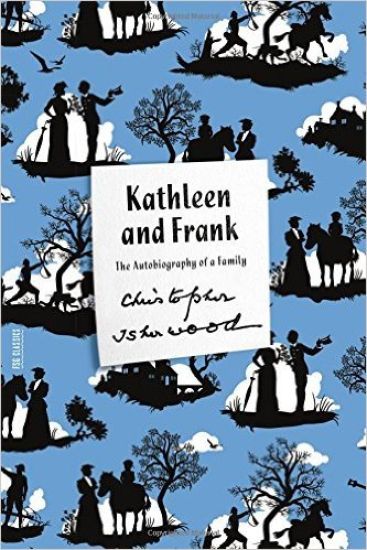
Kathleen and Frank: The Autobiography of a Family
Christopher Isherwood
Farrar, Straus and Giroux
2015
nidottu
Kathleen and Frank is a love story set in the glory days of the British Empire, the last decades before World War I It is the story of Christopher Isherwood's parents, the winsome and lively daughter of a successful wine merchant and the reticent, artistically gifted soldier-son of a country squire. They met in 1895 outside a music rehearsal in an army camp and married in 1903 after Christopher's father returned from the Boer War. Frank was killed in an assault near Ypres in 1915; Kathleen remained a widow for the rest of her life. Their story is told through letters and Kathleen's diary, with connecting commentary by Isherwood. Kathleen and Frank is a family memoir, but it is also a richly detailed social history of a period of striking change-- Queen Victoria's funeral, Bl riot's flight across the English Channel, Sarah Bernhardt's Hamlet, suffragettes, rising hemlines, the beginning of the Troubles in Ireland--the period that shaped Isherwood himself. As a young man, Isherwood fled the tragedy that engulfed his parents' lives and threatened his own; in Kathleen and Frank, he reweaves the tapestry of family and heritage and places himself in the pattern.
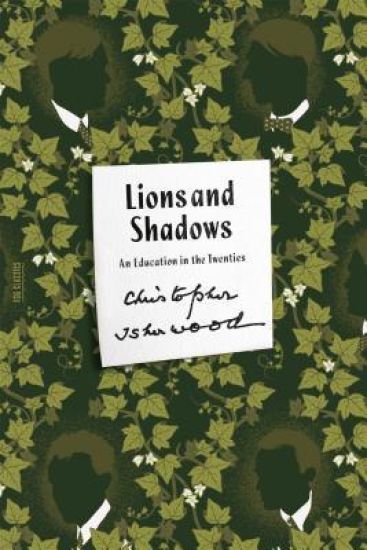
Lions and Shadows: An Education in the Twenties
Christopher Isherwood
Farrar, Straus and Giroux
2015
nidottu
Lions and Shadows blends autobiography and fiction to describe the true education of a writer evolving from precocious schoolboy to dropoutatlarge in London s bohemia of the 1920s. Forced to withdraw from Cambridge University, Christopher Isherwood works as a tutor to the privileged, serves as the secretary to a busy string quartet, ill-fatedly attends medical school. Licensed by names he invents, he works up extravagant portraits of his brilliant contemporaries W. H. Auden, Edward Upward, and Stephen Spender, whose intimate friendships and cult of rebellion changed the literary identity of England in the 1930s. Although the story is Isherwood s own life story, carrying him up to the age of twenty-five, he gives free rein to his remarkable powers of dramatization, improving on the facts here and there, to make a highly entertaining, sometimes hilarious book. Read it as a novel, says Isherwood. There is no difficulty taking his advice. But his characters were real people, and when Lions and Shadows was first published, in 1938, it transformed their lives into legend."

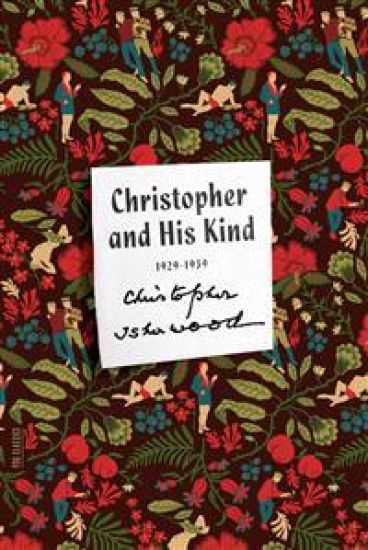
Christopher and His Kind: A Memoir, 1929-1939
Christopher Isherwood
Farrar, Straus and Giroux
2015
nidottu
An indispensable memoir by one of the most prominent writers of his generationOriginally published in 1976, Christopher and His Kind covers the most memorable ten years in the writer's life--from 1928, when Christopher Isherwood left England to spend a week in Berlin and decided to stay there indefinitely, to 1939, when he arrived in America. His friends and colleagues during this time included W. H. Auden, Stephen Spender, and E. M. Forster, as well as colorful figures he met in Germany and later fictionalized in his two Berlin novels--and who appeared again, fictionalized to an even greater degree, in I Am a Camera and Cabaret. What most impressed the first readers of this memoir, however, was the candor with which he describes his life in gay Berlin of the 1930s and his struggles to save his companion, a German man named Heinz, from the Nazis. An engrossing and dramatic story and a fascinating glimpse into a little-known world, Christopher and His Kind remains one of Isherwood's greatest achievements.

"Prater Violet is the most charming novel I have read in a long time." --Diana TrillingOriginally published in 1945, Christopher Isherwood's Prater Violet is a stingingly satirical novel about the film industry. It centers around the production of the vacuous fictional melodrama Prater Violet, set in nineteenth-century Vienna, providing an ironic counterpoint to tragic events as Hitler annexes the real Vienna of the 1930s. The novel features vivid portraits of the imperious, passionate, and witty Austrian director Friedrich Bergmann and his disciple, a genial young screenwriter--the fictionalized Christopher Isherwood.
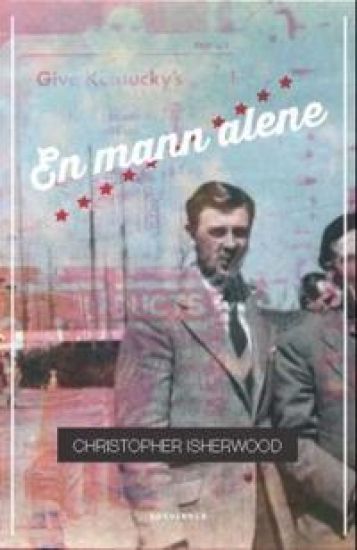
USA, 1962. Universitetsprofessor George Falconer er en homofil, middelaldrende engelskmann som underviser i litteratur på et Universitet i Sør-California. Det er omtrent ett år siden samboere hans, Jim, omkom i en trafikkulykke. George er i dyp sorg og kjemper seg gjennom hverdagen. Gjennom møter med andre mennesker, som venninnen Charlotte og studenten Kenny, begynner han likevel å tro at det er mulig å klare å leve videre. Men hva om dette er den siste dagen i Georges liv?
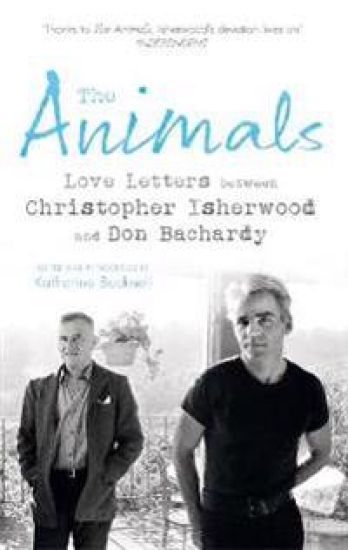
Christopher Isherwood was a celebrated English writer when he met the Californian teenager Don Bachardy on a Santa Monica beach in 1952. They spent their first night together on Valentine's Day 1953. Defying the conventions, the two men began living as an openly gay couple in an otherwise closeted Hollywood. This book tells their story.

The Animals: Love Letters Between Christopher Isherwood and Don Bachardy
Christopher Isherwood; Don Bachardy
Farrar, Straus and Giroux
2014
sidottu
The love story between Christopher Isherwood and Don Bachardy--in their own words The English novelist and screenwriter Christopher Isherwood was already famous as the author of Goodbye to Berlin when he met Don Bachardy, a California teenager, on the beach in Santa Monica in 1952. Within a year, they began to live together as an openly gay couple, defying convention in the closeted world of Hollywood. Isherwood was forty-eight; Bachardy was eighteen. The Animals is the testimony in letters to their extraordinary partnership, which lasted until Isherwood's death in 1986--despite the thirty year age gap, affairs and jealousy (on both sides), the pressures of increasing celebrity, and the disdain of twentieth-century America for love between two men. The letters reveal the private world of the Animals: Isherwood was "Dobbin," a stubborn old workhorse; Bachardy was the rash, playful "Kitty." Isherwood had a gift for creating a safe and separate domestic milieu, necessary for a gay man in mid-twentieth-century America. He drew Bachardy into his semi-secret realm, nourished Bachardy's talent as a painter, and launched him into the artistic career that was first to threaten and eventually to secure their life together. The letters also tell of public achievements--the critical acclaim for A Single Man, the commercial success of Cabaret--and the bohemian whirl of friendships in Los Angeles, London, and New York with such stars as Truman Capote, Julie Harris, David Hockney, Vanessa Redgrave, Gore Vidal, and Tennessee Williams. Bold, transgressive, and playful, The Animals articulates the devotion, in tenderness and in storms, between two uniquely original spirits.
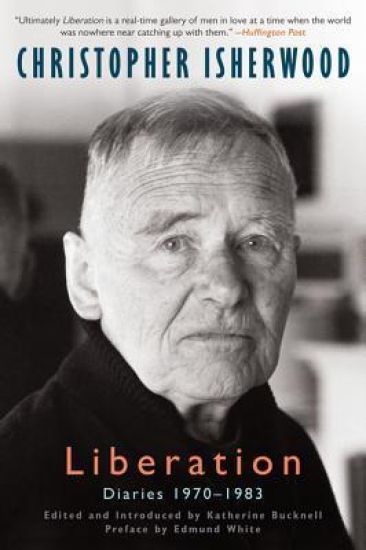
Candid and revealing, the final volume of Christopher Isherwood's diaries brings together his thoughts on life, love, and death. Beginning in the period of his life when he wrote Kathleen and Frank, his first intensely personal book, Liberation: Diaries 1970-1983 intimately and wittily records Isherwood's immersion in the 1970s art scene in Los Angeles, New York, and London--a world peopled by the likes of Robert Rauschenberg, Ed Ruscha, Andy Warhol, and David Hockney, as well as his Broadway writing career, which brought him in touch with John Huston, Merchant and Ivory, John Travolta, John Voight, Elton John, David Bowie, Joan Didion, and Armistead Maupin. With a preface by Edmund White, Liberation is a rich and engaging final memoir by one of the most celebrated writers of his generation.
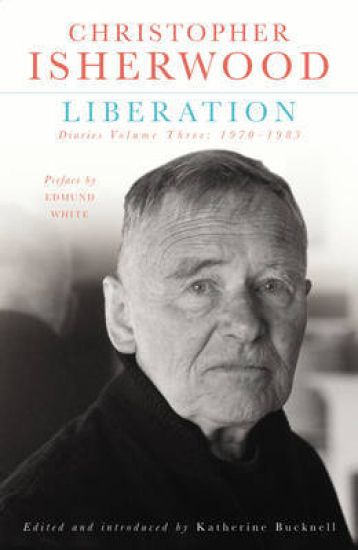
Christopher Isherwood journeyed and changed with his century, until, by the 1980s, he was celebrated as the finest prose writer in English and the Grand Old Man of Gay Liberation. In this final volume of Christopher Isherwood's diaries, he greets advancing age with poignant humour and an unquenchable appetite for the new.
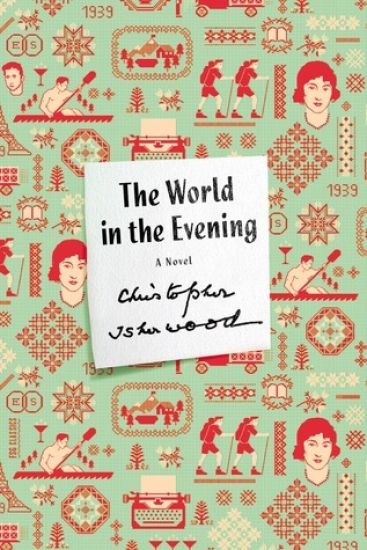
A deeply introspective book about war, religion, and sexuality Against the backdrop of World War II, "The World in the Evening" charts the emotional development of Stephen Monk, an aimless Englishman living in California. After his second marriage suddenly ends, Stephen finds himself living with a relative in a small Pennsylvania Quaker town, haunted by memories of his prewar affair with a younger man during a visit to the Canary Islands. The world traveler comes to a gradual understanding of himself and of his newly adopted homeland. When first published in 1953, "The World in the Evening" was notable for its clear-eyed depiction of European and American mores, sexuality, and religion. Today, readers herald Christopher Isherwood's frank portrayal of bisexuality and his early appreciation of low and high camp.
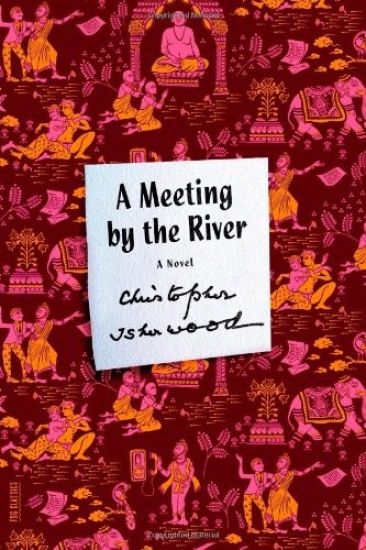
Isherwood's final work of fiction an epistolary novel that explores sexual identity and Eastern mysticismAfter a long separation, two English brothers meet in India. Oliver, the idealistic younger brother, prepares to take his final vows as a Hindu monk. Patrick, a successful publisher with a wife and children in London and a male lover in California, has publicly admired his brother's convictions while privately criticizing his choices. First published in 1967, "A Meeting by the River" delicately depicts the complexity of sibling relationships the resentment and competitiveness as well as the love and respect. Ultimately, the brothers' exposure to each other's differences deepens their awareness of themselves. In "A Meeting by the River," Christopher Isherwood dramatizes the conflict between sexuality and spirituality that inspired his late writings."

Toward the Goal Supreme
Swami Virajananda; Christopher Isherwood
Literary Licensing, LLC
2013
nidottu

Toward the Goal Supreme
Swami Virajananda; Christopher Isherwood
Literary Licensing, LLC
2013
sidottu
""Toward The Goal Supreme"" is a spiritual guidebook written by Swami Virajananda. It is a comprehensive and practical guide to achieving spiritual enlightenment and self-realization. The book is divided into several chapters, each focusing on a different aspect of spiritual practice. The author explores the nature of the mind, the importance of meditation, and the role of spiritual teachers in one's journey. He also discusses the obstacles that can arise on the path to enlightenment and offers guidance on how to overcome them. Throughout the book, the author draws on the teachings of the ancient scriptures and the wisdom of spiritual masters to provide readers with a clear and practical roadmap to achieving their spiritual goals. ""Toward The Goal Supreme"" is a valuable resource for anyone seeking to deepen their spiritual practice and experience greater peace, joy, and fulfillment in life. This is a new release of the original 1950 edition. This scarce antiquarian book is a facsimile reprint of the old original and may contain some imperfections such as library marks and notations. Because we believe this work is culturally important, we have made it available as part of our commitment for protecting, preserving, and promoting the world's literature in affordable, high quality, modern editions, that are true to their original work.
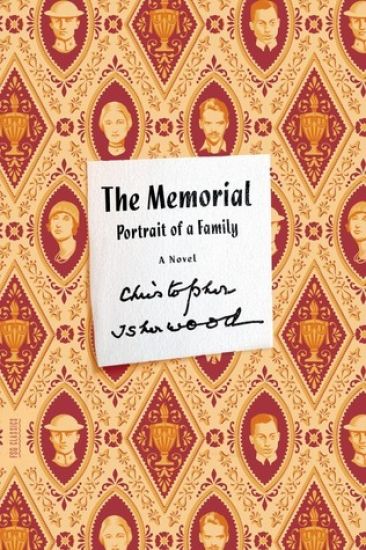
Set in the aftermath of World War I, Christopher Isherwood's The Memorial is the witty, almost forensic portrayal of the dissolution of a tradition-bound English family. On the cusp of adulthood, the Cambridge student Eric Vernon finds himself torn between his desire to emulate his heroic father, who led a life of quiet sacrifice before dying in the war, and his envy of his father's roguish friend who survived the war and afterward threw himself into gay life. Published in 1932, when Isherwood was twenty-eight years old, The Memorial is the novel in which a dazzlingly talented young writer found his literary voice, the book in which Isherwood became Isherwood.
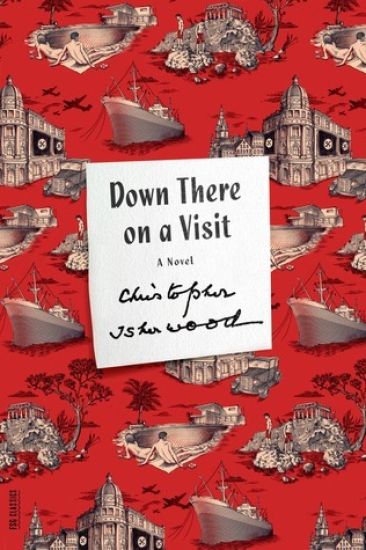
Bremen, 1928. The Greek Islands, 1932. London, 1938. California, 1940. Four portraits, four settings, four narrators all named Christopher Isherwood. Here are the postcards home from a spiritual tourist looking for a new mode of life as well as a new place to live while Europe, and then the world, moves relentlessly toward war. Which of the guides he encounters can lead him to a better future? The businessman, the utopian, the guru, the geisha? Published in 1962, Down There on a Visit is based on material from a proposed epic that would also have incorporated The Berlin Stories. It is now widely regarded as the most accomplished of Isherwood's novels.

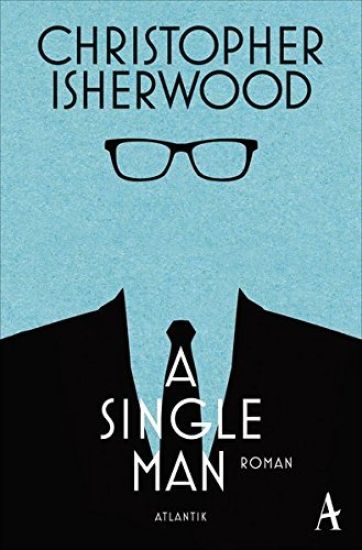
A Single Man
Christopher Isherwood
Farrar, Straus and Giroux
2013
nidottu
Halvin toimitettuna 20,30 €
When Christopher Isherwood's A Single Man first appeared, it shocked many with its frank, sympathetic, and moving portrayal of a gay man in maturity. Isherwood's favorite of his own novels, it now stands as a classic lyric meditation on life as an outsider. Welcome to sunny suburban 1960s Southern California. George is a gay middle-aged English professor, adjusting to solitude after the tragic death of his young partner. He is determined to persist in the routines of his former life. A Single Man follows him over the course of an ordinary twenty-four hours. Behind his British reserve, tides of grief, rage, and loneliness surge--but what is revealed is a man who loves being alive despite all the everyday injustices.

WITH AN INTRODUCTION BY PICO IYERIn September 1947, long before mass tourism and with no knowledge of Spanish, Christopher Isherwood and William Caskey left for a six-month tour of Colombia, Ecuador, Peru, Bolivia, and Argentina.