Kirjojen hintavertailu – 12 903 725 kirjaa ja 27 kauppaa
Kirjailija
Claude Lévi-Strauss
Kirjat ja teokset yhdessä paikassa: 59 kirjaa, julkaisuja vuosilta 1967–2026, suosituimpiin kuuluu Tropiikin kasvot (p). Vertaile teosten hintoja ja tarkista saatavuus suomalaisista kirjakaupoista.
The anthropologist Claude Levi-Strauss was one of the greatest intellectuals of the twentieth century. His work has had a profound impact not only within anthropology but also linguistics, sociology and philosophy. In this short book he examines the nature and role of myth in human history, distilling a lifetime of writing into a few sharp insights. It is a crystalline overview of many of the basic ideas underlying his work, including the theory of structuralism and the difference between 'primitive' and 'scientific' thought and shows why Levi-Strauss remains a hugely important intellectual figure. With a new foreword by Patrick Wilcken.
Anthropology Confronts the Problems of the Modern World is the first English translation of a series of lectures Claude Lévi-Strauss delivered in Tokyo in 1986. Written with an eye toward the future as his own distinguished career was drawing to a close, this volume presents a synthesis of the author’s major ideas about structural anthropology, a field he helped establish. Critiquing insights of his earlier writings on the relationship between race, history, and civilization, Lévi-Strauss revisits the social issues that never ceased to fascinate him. He begins with the observation that the cultural supremacy enjoyed by the West for over two centuries is at an end. Global wars and genocides in the twentieth century have fatally undermined Western faith in humanity’s improvement through scientific progress. Anthropology, however, can be the vehicle of a new “democratic humanism,” broadening traditional frameworks that have restricted cross-cultural understandings of the human condition, and providing a basis for inquiries into what other civilizations, such as those of Asia, can teach. Surveying a world on the brink of the twenty-first century, Lévi-Strauss assesses some of the dilemmas of cultural and moral relativism a globalized society faces—ethical dimensions of economic inequality, the rise of different forms of religious fundamentalism, the promise and peril of genetic and reproductive engineering. A laboratory of thought opening onto the future, Anthropology Confronts the Problems of the Modern World is an important addition to the canon of one of the twentieth-century’s most influential theorists.
Gathering for the first time all of Claude Lévi-Strauss’s writings on Japanese civilization, The Other Face of the Moon forms a sustained meditation into the French anthropologist’s dictum that to understand one’s own culture, one must regard it from the point of view of another. Exposure to Japanese art was influential in Lévi-Strauss’s early intellectual growth, and between 1977 and 1988 he visited the country five times. The essays, lectures, and interviews of this volume, written between 1979 and 2001, are the product of these journeys. They investigate an astonishing range of subjects—among them Japan’s founding myths, Noh and Kabuki theater, the distinctiveness of the Japanese musical scale, the artisanship of Jomon pottery, and the relationship between Japanese graphic arts and cuisine. For Lévi-Strauss, Japan occupied a unique place among world cultures. Molded in the ancient past by Chinese influences, it had more recently incorporated much from Europe and the United States. But the substance of these borrowings was so carefully assimilated that Japanese culture never lost its specificity. As though viewed from the hidden side of the moon, Asia, Europe, and America all find, in Japan, images of themselves profoundly transformed. As in Lévi-Strauss’s classic ethnography Tristes Tropiques, this new English translation presents the voice of one of France’s most public intellectuals at its most personal.
L?vi-Strauss setzt bei seinen anthropologischen Studien im engeren Sinne zunächst bei den äußeren Merkmalen der von ihm untersuchten Indianer ein und schildert mit wissenschaftlicher Gründlichkeit, die aber Wert- und Gefühlsurteilen nicht entbehrt, u. a. deren Siedlungsstil, Riten, Bekleidung, Traditionen, Gesang, Mythen, Körperbemalung, Tänze, Werkzeuge und Sprache. Er deckt dann in akribischer Arbeit die gesellschaftliche Struktur auf, die sich beispielsweise hinter den Mustern der Mbaya-Kunst verbirgt. Bisweilen, wie in der Schilderung der Riten der Bororo, schimmert dabei die Klassenkritik des Marxisten durch. Traurig seien die Tropen nicht nur aufgrund des Identitätsverlusts der Indianer, sondern auch, weil die Städte Amerikas >>zu zerfallen scheinen, bevor sie zu altern beginnen
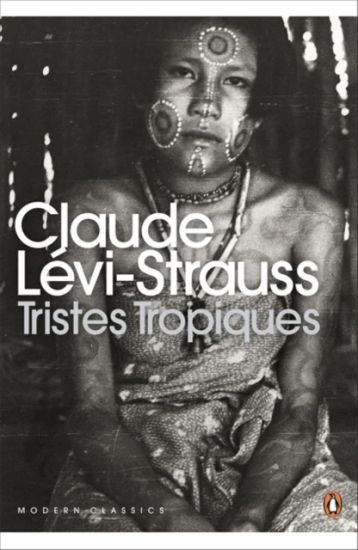
A milestone in the study of culture from the father of structural anthropologyThis watershed work records Claude L vi-Strauss's search for "a human society reduced to its most basic expression." From the Amazon basin through the dense upland jungles of Brazil, L vi-Strauss found the societies he was seeking among the Caduveo, Bororo, Nambikwara, and Tupi-Kawahib. More than merely recounting his time in their midst, Tristes Tropiques places the cultural practices of these peoples in a global context and extrapolates a fascinating theory of culture that has given the book an importance far beyond the fields of anthropology and continental philosophy. The author's fresh approach, sense of humor, and openness to the sensuous mystique of the tropics make the scientific thrust of the book eminently accessible. For more than seventy years, Penguin has been the leading publisher of classic literature in the English-speaking world. With more than 1,700 titles, Penguin Classics represents a global bookshelf of the best works throughout history and across genres and disciplines. Readers trust the series to provide authoritative texts enhanced by introductions and notes by distinguished scholars and contemporary authors, as well as up-to-date translations by award-winning translators.
'One of the great books of our century . . . It speaks with a human voice' Susan SontagTristes Tropiques begins with the line 'I hate travelling and explorers', yet during his life Claude Lévi-Strauss travelled from wartime France to the Amazon basin and the dense upland jungles of Brazil, where he found 'human society reduced to its most basic expression'. His account of the people he encountered changed the field of anthropology, transforming Western notions of 'primitive' man. Tristes Tropiques is a major work of art as well as of scholarship. It is a memoir of exquisite beauty and a masterpiece of travel writing: funny, discursive, movingly detailing personal and cultural loss, and brilliantly connecting disparate fields of thought. Few books have had as powerful and broad an impact.
The CBC Massey Lectures, Canada's preeminent public lecture series, are for many of us a highly anticipated annual feast of ideas. However, some of the finest lectures, by some of the greatest minds of modern times, have been lost for many years -- unavailable to the public in any form. This is the second volume of recovered lectures, a follow-on to The Lost Massey Lectures, and features: Nobel Peace Prize recipient Willy Brandt on the dangerous inequities between developing and industrialized nations in Dangers and Options: The Matter of World Survival; George Grant on the worsening predicament of the West through an examination of the thought of Friedrich Nietzsche in Time as History; Claude Levi-Strauss on the nature and role of myth in human history in Myth and Meaning; Frank Underhill on the deficiencies of the Canadian constitution in The Image of Confederation; and Barbara Ward, in the very first Massey Lecture, on the origin and predicament of underdeveloped countries in The Rich Nations and the Poor Nations. More Lost Massey Lectures includes an introduction by Bernie Lucht, who has been the executive producer of CBC Radio's Ideas and the Massey Lectures since 1984.
In Les Structures Élémentaires de la Parenté , the early opus magnum of French Structuralism, Lévi-Strauss tries to explain the systems of kinship and marriage in their enormous diversity and their frequently bizarre institutions, by means of a single principle: the exchange. Exchange is perceived to be the manifestation of fundamental structural constants of the human mind which may also be discerned in other subsystems of culture, most obviously in language. This book represents the first great result of the author's life-long research, dedicated to exploring this relationship, which also led him into the fields of the classification-systems of language and of mythology.
In addresses written for a wide general audience, one of the twentieth century's most prominent thinkers, Claude Lévi-Strauss, here offers the insights of a lifetime on the crucial questions of human existence. Responding to questions as varied as 'Can there be meaning in chaos?', 'What can science learn from myth?' and 'What is structuralism?', Lévi-Strauss presents, in clear, precise language, essential guidance for those who want to learn more about the potential of the human mind.
In addresses written for a wide general audience, one of the twentieth century's most prominent thinkers, Claude Lévi-Strauss, here offers the insights of a lifetime on the crucial questions of human existence. Responding to questions as varied as 'Can there be meaning in chaos?', 'What can science learn from myth?' and 'What is structuralism?', Lévi-Strauss presents, in clear, precise language, essential guidance for those who want to learn more about the potential of the human mind.
Claude Lévi-Strauss etnografiska och litterära klassiker Spillror av paradiset kommer i reviderad upplaga med fler bilder och ett nyskrivet förord av antropologen Christer Lindberg. I denna förunderliga, skarpsynta och personliga reseskildring berättar Lévi-Strauss om sin vistelse hos indianstammar i det inre av Brasilien. Han ger färgrika bilder av indianernas sedvänjor, riter och myter, samhällsorganisation, familjeliv och psykologiska beteendemönster, och ställer deras kultur i relation till vår egen. "Indianerna därute hade redan börjat sjunga, djupt nere i basen, klangfullt och gutturalt och med tydlig artikulation. Det är bara männen som sjunger. Harmonierna, de enkla och i oändlighet upprepade melodierna, samspelet mellan kör och soli, den manliga och tragiska stilen påminner om krigarkörerna i något germanskt Männerbund. Varför sjöng de? För irara, sade man. Vi hade haft med oss villebråd, och det var nödvändigt att utföra en lugnande ritual över dess ande och helga jakten innan man kunde äta bytet. Jag var för matt för att orka med några etnografiska iakttagelser och somnade så snart det blivit mörkt. Jag var trött och sov oroligt. Sångerna varade ända till gryningen."
Lévi-Strauss, strukturalismens förgrundsgestalt, behandlar här bl a etnocentrismens historia och verkan, faran i att förväxla tid med rum, den västerländska framstegstanken osv. Han vågar ge sig in i härvan av villfarelser och fördomar, och belyser problemen klarsynt och lättillgängligt.
"In olden days, in a village peopled by animal creatures, lived Wild Cat (another name for Lynx). He was old and mangy, and he was constantly scratching himself with his cane. From time to time, a young girl who lived in the same cabin would grab the cane, also to scratch herself. In vain Wild Cat kept trying to talk her out of it. One day the young lady found herself pregnant; she gave birth to a boy. Coyote, another inhabitant of the village, became indignant. He talked all of the population into going to live elsewhere and abandoning the old Wild Cat, his wife, and their child to their fate ..." So begins the Nez Perce's myth that lies at the heart of "The Story of Lynx", Claude Levi-Strauss's accessible examination of the mythology of American Indians. In this wide-ranging work, the author considers the many variations in a story that occur in both North and South America, but especially among the Salish-speaking peoples of the Northwest Coast. He also shows how centuries of contact with Europeans have altered the tales. Levi-Strauss focuses on the opposition between Wild Cat and Coyote to explore the meaning and uses of "gemellarity", or twinness, in Native American culture. The concept of dual organization that these tales exemplify is one of non-equivalence: everything has an opposite or other, with which it coexists in unstable tension. In contrast, Levi-Strauss argues, European notions of twinness - as in the myth of Castor and Pollux - stress the essential sameness of the twins. This fundamental cultural difference lay behind the fatal clash of European and Native American peoples. This work addresses and clarifies all the major issues that have occupied Claude Levi-Strauss for decades, and in it he explicitly connects history and structuralism.
In this volume Levi-Strauss explores the mythologies of the Americas, with occasional incursions into European and Japanese folklore, tales of sloths and squirrels interweave with discussions of Freud, Saussure, "signification," and plays by Sophocles and Labiche. The author also critiques psychoanalytic interpretation and defends the interpretive powers of structuralism.
"In olden days, in a village peopled by animal creatures, lived Wild Cat (another name for Lynx). He was old and mangy, and he was constantly scratching himself with his cane. From time to time, a young girl who lived in the same cabin would grab the cane, also to scratch herself. In vain Wild Cat kept trying to talk her out of it. One day the young lady found herself pregnant; she gave birth to a boy. Coyote, another inhabitant of the village, became indignant. He talked all of the population into going to live elsewhere and abandoning the old Wild Cat, his wife, and their child to their fate ..." So begins the Nez Perce myth that lies at the heart of "The Story of Lynx", Claude Levi-Strauss's examination of the rich mythology of American Indians. In this work, Levi-Strauss considers the many variations in a story that occurs in both North and South America, but especially among the Salish-speaking peoples of the Northwest Coast. He also shows how centuries of contact with Europeans have altered the tales. Levi-Strauss focuses on the opposition between Wild Cat and Coyote to explore the meaning and uses of gemellarity, or twinness, in Native American culture. The concept of dual organization that these tales exemplify is one of non-equivalence: everything has an opposite or other, with which it coexists in unstable tension. In contrast, Levi-Strauss argues, European notions of twinness - as in the myth of Castor and Pollux - stress the essential sameness of the twins. This is one of the fundamental cultural differences between the European and Native American peoples.
This collection touches on a wide range of anthropological issues, including family and marriage, myths, and rites, the environment and its representation, and constraint and freedom. The essays encompass more than forty years of analysis and constrain arguments that are as relevant today as they were thirty years ago. Hardly a field remains untouched--sociobiology, linguistics, botany, genetics, psychiatry, esthetics, ecology, politics, neuroscience, education, morality, psychology. . . . It's all breathtaking and alarming, some of it wonderful, some of it ridiculous. . . . At times the experience is exhilarating.--Richard A. Shweder, New York Times Book Review