
Kirjailija
Claude Lévi-Strauss
Kirjat ja teokset yhdessä paikassa: 59 kirjaa, julkaisuja vuosilta 1967–2026, suosituimpiin kuuluu Tropiikin kasvot (p). Vertaile teosten hintoja ja tarkista saatavuus suomalaisista kirjakaupoista.
Nimi esiintyy myös muodoissa: Claude Levi-Strauss
59 kirjaa
Kirjojen julkaisuvuodet: 1967–2026.
"The Naked Man is the fourth and final volume of Mythologiques], written by the most influential and probably the most controversial anthropologist of our time. . . . Myths from North and South America are set side by side to show their transformations: in passing from person to person and place to place, a myth can change its content and yet retain its structural principles. . . . Apart from the complicated transformations discovered and the fascinating constructions placed on these, the stories themselves provide a feast."-Betty Abel, Contemporary Review "L vi-Strauss uses the structural method he developed to analyze and 'decode' the mythology of native North Americans, focusing on the area west of the Rockies. . . . The author] takes the opportunity to refute arguments against his method; his chapter 'Finale' is a defense of structural analysis as well as the closing statement of this four-volume opus which started with an 'Ouverture' in The Raw and the Cooked."-Library Journal "The culmination of one of the major intellectual feats of our time."-Paul Stuewe, Quill and Quire
The Origin of Table Manners: Mythologiques, Volume 3
Claude Lévi-Strauss
University of Chicago Press
1990
nidottu
"The Origin of Table Manners is the third volume of a tetralogy devoted to American Indian mythology. Unlike the first two volumes (The Raw and the Cooked, From Honey to Ashes), which are devoted to South American myths, the present one establishes relations with North America, which is the subject of the fourth (The Naked Man). . . . In the course of the analysis, the myths link up with ideas of more general interest. Thus, we find discussions of numeration, of morals, and of the origin of the novel. . . . The Origin of Table Manners is thus of special interest to students of American Indian mythology, although it contains ideas of interest to other fields and even to the general reader."-Daniel C. Raffalovich, American Anthropologist "An immense anthropological erudition is here wielded by one of the world's finest minds, and the myths themselves have never been taken more seriously. . . . L vi-Strauss] raises issues and then resolves them with the suspenseful cunning of a mystery novelist."-John Updike, New Yorker
The Way of the Masks
Claude Levi-Strauss
University of Washington Press
1988
pokkari
Halvin toimitettuna 26,20 €
Claude Levi-Strauss's fascination with Northwest Coast Indian art dates back to the late 1930s. "Sometime before the outbreak of the Second World War," he writes, "I had already bought in Paris a Haida slate panel pipe." In New York in the early forties, he shared his enthusiasm with a group of Surrealist refugee artists with whom he was associated. "Surely it will not be long," he wrote in an article published in 1943, "before we see the collections from this part of the world moved from ethnographic to fine arts museums to take their just place amidst the antiquities of Egypt of Persia and the works of medieval Europe. For this art is not unequal to the greatest, and, in the course of the century and a half of its history that is known to us, it has shown evidence of a superior diversity and has demonstrated apparently inexhaustible talents for renewal." In The Way of the Masks, first published more than thirty years later, he returned to this material, seeking to unravel a persistent problem that he associated with a particular mask, the Swaihwe, which is found among certain tribes of coastal British Columbia. This book, now available for the first time in an English translation, is a vivid, audacious illustration of Levi-Strauss's provocative structural approach to tribal art and culture. Bringing to bear on the Swaihwe masks his theory that mythical representations cannot be understood as isolated objects, Levi-Strausss began to look for links among them, as well as relationships between these and other types of masks and myths, treating them all as parts of a dialogue that has been going on for generations among neighboring tribes. The wider system that emerges form his investigation uncovers the association of the masks with Northwest coppers and with hereditary status and wealth, and takes the reader as far north as the Dene of Alaska, as far south as the Yurok of northern California, and as far away in time and space as medieval Europe. As one reader said of this book, "It will be controversial, as his work always is, and it will stimulate more scholarship on the Northwest Coast than any other single book that I can think of."
As Lévi-Strauss freely explores the mythologies of the Americas, with occasional incursions into European and Japanese folklore, tales of sloths and squirrels interweave with discussions of Freud, Saussure, "signification," and plays by Sophocles and Labiche. Lévi-Strauss critiques psychoanalytic interpretation and defends the interpretive powers of structuralism. "Electrifying... A brilliant demonstration of structural analysis in action... Can be read with pleasure and profit by anyone interested in that aspect of self-discovery that comes through knowledge of the universal and timeless myths that live on in all of us."--Jonathan Sharp, San Francisco Examiner-Chronicle "A characteristic tour de force... One remains awed by him."--Colin Thubron, Sunday Times "With all its epistemological depth, the book reads at times like a Simenon or a Lewis Carroll, fusing concise methodology with mastery of style."--Bernadette Bucher, American Ethnologist "[An] engagingly provocative exploration of mythology in the Americas... Always a good read."--Choice "A playful, highly entertaining book, fluently and elegantly translated by Bénédicte Chorier." --Wendy Doniger O'Flaherty, New York Times Book Review
Claude Lévi-StraussAnthropology and MythLectures 1951 – 1982Translated by Roy WillisThe published work of Claude Lévi-Strauss over the last three and a half decades has established him as one of the word’s most innovative anthropologists. Yet throughout this period he was maintaining a full teaching commitment in Paris. The pieces in Anthropology and Myth illustrate (in his own word) ‘the effort, the tentative advances and retreats and now and again the achievements of a thought process during some thirty-two years that amount to a large proportion of an individual life and the span of a generation’. Lévi-Strauss used the lecture theatre as a workshop in which to try out and develop new ideas, and many of the familiar themes of his book will be found here: analysis of myth and ritual, totemism, kinship, marriage social stucture. Offering a unique glimpse of the genesis of such subjects throughout his teaching career, this book provides a sketchbook of the themes painted elsewhere in larger, more finished form, and thus forms a document of vital importance for the history of anthropological thought. ContentsTranslator’s NotePreface The Field of ResearchMythologicsInquiries into Mythology and RitualCurrent Controversies and Social Organization and KinshipClan, Lineage, HouseAppendix: Nine Course ReportsChronological TableIndexJacket illustrations: (Front) The Jungle, 1943, by Wifredo Lam, gouache on paper mounted on canvas. 7’10 1/4” x 7’6 1/2” (239.4 x 229.9 cm). Collection, The Museum of Modern Art, New York. Inter-American Fund. © DACS 1986 – Photograph © 1986, The Museum of Modern Art, New York is reproduced by kind permission. (Back) Photograph reproduced by kind permission of the Collège de France and Librairie Plon.

First published in 1987. Claude Levi-Strauss is one of the intellectual giants of the twentieth century, a leading exponent of structuralism and a great social anthropologist. His Introduction to the Work of Marcel Mauss , originally written to preface the earliest major collection of Mauss's writings, Sociologie et Anthropologie (1950), was hailed as a seminal text by leading structuralists such as Derrida, Lacan and Barthes. This edition, the first English translation to be published, should prove invaluable to anthropologists, philologists, psychologists, and all those interested in one of the most important intellectual movements generated by the twentieth century. Levi-Strauss uses an approach combining anthropology and structural linguistics to assess Marcel Mauss's achievements and intentions arguing that Mauss - who at the time represented the mainstream of French anthropology - was in fact structuralist manque. He goes on to formulate the central tenets of structuralist thought: the belief in societies being organised on immutable and unconscious laws, this foundation then providing the basis for true scientific study; multi-discplinary methodology combining anthropology, lingusitics and psychoanalysis; and a faith that a comprehensive science of communication can be made by the application of mathematical reasoning.
The Raw and the Cooked: Mythologiques, Volume 1
Claude Lévi-Strauss
University of Chicago Press
1983
nidottu
Analyzes the myths concerning cooked food, the seasons, water, the stars, and other subjects in the culture of the Bororo Indians of Brazil
The eighteen essays collected in this volume have been selected and ordered to give what L vi-Strauss terms "a bird's-eye view of the problems of modern ethnology." As representative examples, these essays introduce readers to the methods of structural anthropology while affording a glimpse into the mind of one of the foremost anthropologists of our time. "Structural Anthropology, Volume II is a diverse collection. It is] a useful 'sampler' that gives a reader the full range of L vi-Strauss's interests."-Daniel Bell, New York Times Book Review
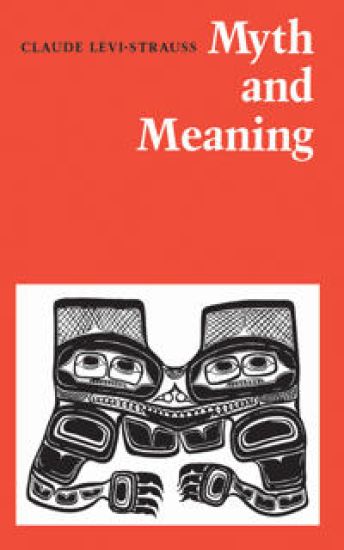
Myth and Meaning
Claude Lévi-Strauss
University of Toronto Press
1978
pokkari
Halvin toimitettuna 23,00 €
Ever since the rise of science and the scientific method in the seventeenth century, we have rejected mythology as the product of superstitious and primitive minds. Only now are we coming to a fuller appreciation of the nature and role of myth in human history. In these five lectures originally prepared for the CBC, Claude Lévi-Strauss, one of the world's greatest living thinkers, offers the insights of a lifetime spent interpreting myths and trying to discover their significance for human understanding. The lectures begin with a discussion of the historical split between mythology and science and the evidence that mythic levels of understanding are being reintegrated in our approach to knowledge. In an extension of his theme, Professosr Lévi-Strauss analyses what we have called 'primitive' thinking and discusses some universal features of human mythology. The final two lectures outline the functional relationship between mythology and history and the structural relationship between mythology and music. Combining history, anthropology, and philosophy, this book provides a broad and penetrating perspective on the contemporary western world.
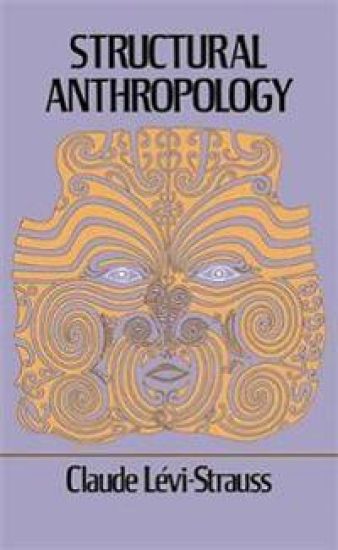
The structural method," first set forth in this epoch-making book, changed the very face of social anthropology. This reissue of a classic will reintroduce readers to Lévi-Strauss's understanding of man and society in terms of individuals,kinship, social organization, religion, mythology, and art.
The Elementary Structures of Kinship
Claude Levi-Strauss
BEACON PRESS
1971
pokkari
Halvin toimitettuna 58,20 €
Professor L vi-Strauss's first major work, Les Structures l mentaires de la Parent , has acquired a classic reputation since its original publication in 1949; and it has become the constant focus of academic debate about central theoretical concerns in social anthropology. It is, however, a long and difficult book for many students to read in French, and its arguments have consequently become known, even among professional anthropologists, largely through critical analysis. It was republished in a revised French edition in 1967 with a new foreword by the author, and it is this text with his further emendations that has been used in this translation. L vi-Strauss applies his intellectual powers to the perennial problem of incest, which he elucidates by means of the concept of exchange as formulated by Marcel Mauss in his famous analysis of the gift (Essai sur le don, 1925). He distinguishes two elementary modes of exchange which govern not only the conventional variety of goods and services but also the transfer of women in marriage: these are "restricted" and "generalized" exchange. With a mass of ethnographic evidence he demonstrates how the formidable intricacy of marriage customs, comprising moral and jural ideas and institutions (which appear to be essentially arbitrary), can be seen as local and historical rules of exchange. Charles L vi-Strauss traces these rules throughout a vast range of simple societies, chiefly in Australia and mainland Southeast Asia but also in the Americas, in Oceania, and in other parts of the world. To this survey he adds two extended sections on the great civilizations of China and India. He continues with a briefer consideration of the passage from elementary to complex structures, with particular reference to African societies, and concludes with a stimulating chapter on the principles of kinship, exchange as the universal basis for marriage prohibitions, and the formal relations between the sexes as part of a universe of communication. Although much of the work is technical, consisting of detailed analyses of types of social organization with which social anthropologists will be most familiar, it also contains much that will be of interest to psychologists, linguists, and philosophers, and to all who are interested in the possibility and the technique of the structural analysis of human activity. After the successes, moreover, of L vi-Strauss's subsequent books--notably Structural Anthropology, Tristes Tropiques, Totemism, and The Savage Mind--this new edition of the work which founded his present outstanding reputation will have additional value as a further means of contact with one of the original minds of this century. The translation has been made by James Harle Bell and John Richard von Sturmer, of the University of New England, Australia, and by Rodney Needham, of the University of Oxford. Dr. Needham also acted as general editor and supplied the work with a new general index. He is the translator of L vi-Strauss's Le Totemisme aujourd'hui and author of Structure and Sentiment (1962) and numerous papers which have contributed to the recognition of Professor L vi-Strauss's work in the English-speaking world.
Levi-Strauss continues his assault on the myth of the primitice as savage by turning to the phenomena of totemism an totoemix classification ... to show, contrary to this myth, that primitive thought rests upon a rich and complex conceptual structure. - Commentary
Claude Lévi-Strauss är en av världens ledande socialantropologer och en av grundarna av strukturalismen inom antropologien. I sin bok Totemismen påvisar författaren att begreppet totemism använts för att beteckna de mest olikartade trosföreställningar. Han behandlar teorier om totemismen hos framstående antropologer som Boas, van Gennep, Elkin, Fortes, Firth, Evans-Pritchard och Radcliffe-Brown. D

Teoksessaan Tiloja / Avaruuksia Georges Perec (1936–1982) kehittää yhtä monipuolisen tuotantonsa läpi käyvistä teemoista: paikan ja tilan hahmottumista ja merkitystä. Se on mielikuvituksellisen metodinen tutkielma tilasta sen välittömästi ilmenevissä muodoissa. "Sänkyni päällä, vatsallani maaten luin Muskettisoturit seikkailevat jälleen, Ihmeellisen saaren ja Jerry saarella. Sängystä tuli metsästäjien maja, tai pelastusvene myrskyävällä valtamerellä, tai baobab-puu metsäpalon uhatessa. Siitä tuli autiomaahan pystytetty teltta, suojaava salakuoppa jonka ohi muutaman senttimetrin päästä kulkivat mitään aavistamattomat viholliset. Olen matkustellut paljon sänkyni pohjalla..." "Katseemme pyyhkii tilaa ja antaa meille illuusion muodosta ja etäisyydestä. Konstruoimme avaruutta ylhäällä ja alhaalla, oikealla ja vasemmalla, edessä ja takana, lähellä ja kaukana olevan avulla. Jos mikään ei pysäytä katsettamme, se kantaa hyvin kauas. Mutta jos se ei kohtaa mitään, se ei näe mitään; se näkee vain kohtaamansa: tila pysäyttää katseen, se on este johon katse seisahtuu: kappale, kulma, pakopiste: se muodostaa kulman, se pysähtyy, ja jotta se jatkuisi, täytyy kääntyä. Tila ei ole ektoplasmaa; sillä on reunat, se ei etene joka suuntaan, se tekee kaikkensa yhdistääkseen rautatiekiskot ennen äärettömyyttä."