
Kirjailija
Claude McKay
Kirjat ja teokset yhdessä paikassa: 62 kirjaa, julkaisuja vuosilta 1987–2027, suosituimpiin kuuluu Graphic Classics Volume 22: African-American Classics. Vertaile teosten hintoja ja tarkista saatavuus suomalaisista kirjakaupoista.
62 kirjaa
Kirjojen julkaisuvuodet: 1987–2027.

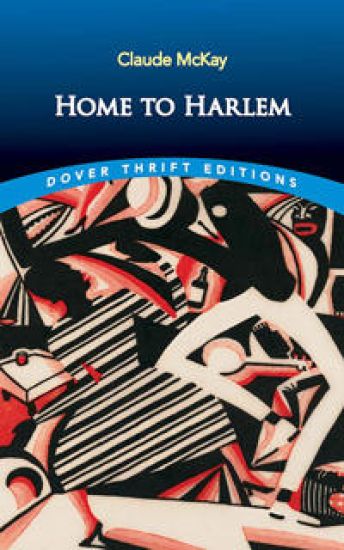
Jake Brown, a World War I army deserter, is one of the protagonists of Claude McKay's novel Home to Harlem. When he leaves London and returns to New York, Jake gets entangled in the seedy side of Harlem life – prostitutes, clubs, and gambling halls. He reunites briefly with a former war buddy, Zeddy Plummer, and later befriends a Haitian immigrant named Ray while they are both working on a train. The novel explores the plight of young Black men in the early twentieth century in America, and was both applauded and criticized for its sensual, brutal honesty of its portrayal of urban life.
First published in 1928, "Home to Harlem" is Claude McKay's classic portrayal of African American society in New York City after World War One, during the height of the Harlem Renaissance. The story revolves around Jake Brown, an army deserter who has been living in London. When Jake hears news of a race riot in America he returns home to Harlem. On his first night back Jake falls in love with a sex worker and spends much of the rest of the novel in search of her. In a series of largely unconnected episodes, Claude McKay gives the reader a vivid picture of Jake and more broadly of African American life in Harlem just before prohibition. An instant commercial success when it was first published; "Home to Harlem" has been both praised and criticized for its gritty raw portrayal of African American life in New York City at the end of the 1910s. The novel remains to this day as one of McKay's most important works. This edition is printed on premium acid-free paper.
From one of the most significant figures of the Harlem Renaissance comes a narrative defining book chronicling his life from Jamaica to New York CityClaude McKay's long odyssey from Jamaica to Harlem, Europe, North Africa, Russia, and back to America is chronicled in this autobiography of the most militant writers to emerge from the New Negro movement following World War I. Whether in the intellectual circles of Harlem and Greenwich Village, the docks of Marseilles, or the inner circles of post-revolutionary Russia, McKay's contact with such figures as Frank Harris, Max Eastman, George Bernard Shaw, W. E. B Dubois, James Weldon Johnson, Charles Chaplin, H. G Wells, Sinclair Lewis, Trotsky, and Radek all served to advance those views which would be so widely accepted in the 1960--Black Pride, self-determination, and the necessity for Black culture to define itself.
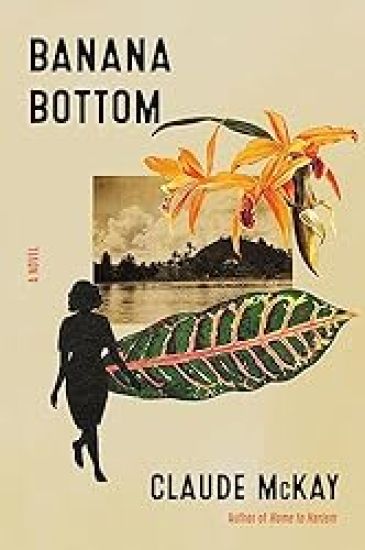
"There is an abundant humor to this book and pathos; there is melodrama and the quiet charm of introspective analysis, and above all there is entertainment."--Saturday ReviewA novel of love and war, from the author of Home to HarlemBita Plant is adopted and sent to England from Jamaica by white missionary benefactors and returns to her home village of Banana Bottom seven years later a beautiful, cultured young lady. Despite the evangelical guidance of her foster parents and friendship with a white squire, Bita is increasingly drawn to the vitality of her more natural culture with its festivals, superstitions, revival meetings, and passionate courtships. Among her many suitors she chooses to marry the quiet, humble man who allows her to be most true to herself.
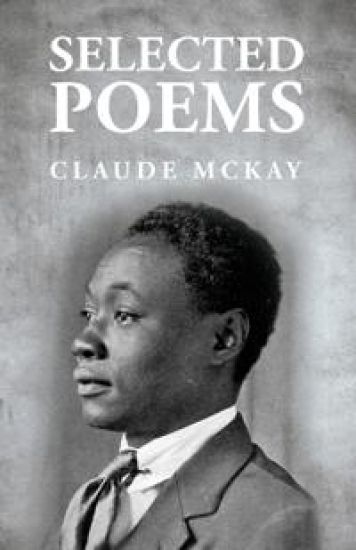
In his 1918 autobiographical essay, "A Negro Poet Writes," Claude McKay (1889-1948), reveals much about the wellspring of his poetry." I am a black man, born in Jamaica, B. W. I., and have been living in America for the last years. It was the first time I had ever come face to face with such manifest, implacable hate of my race, and my feelings were indescribable ... Looking about me with bigger and clearer eyes I saw that this cruelty in different ways was going on all over the world. Whites were exploiting and oppressing whites even as they exploited and oppressed the yellows and blacks. And the oppressed, groaning under the leash, evinced the same despicable hate and harshness toward their weaker fellows. I ceased to think of people and things in the mass. O]ne must seek for the noblest and best in the individual life only: each soul must save itself." So wrote the first major poet of the Harlem Renaissance, whose collection of poetry, Harlem Shadows (1922), is widely regarded as having launched the movement. But McKay's literary significance goes far beyond his fierce condemnations of racial bigotry and oppression, as is amply demonstrated by the universal appeal of his sonnet, "If We Must Die," recited by Winston Churchill in a speech against the Nazis in World War II. While in Jamaica, McKay produced two works of dialect verse, Songs of Jamaica and Constab Ballads, that were widely read on the island. In richly authentic dialect, the poet evoked the folksongs and peasant life of his native country. The present volume, meticulously edited and with an introduction by scholar Joan R. Sherman, includes a representative selection of this dialect verse, as well as uncollected poems, and a generous number in standard English from Harlem Shadows.
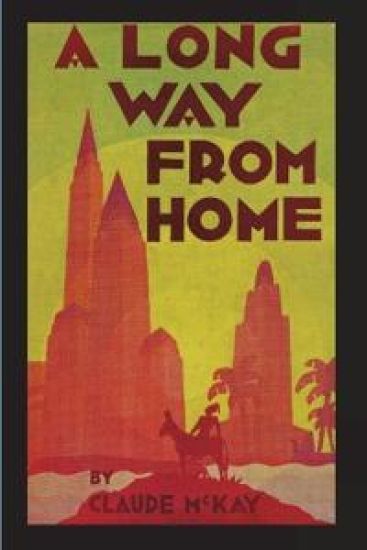
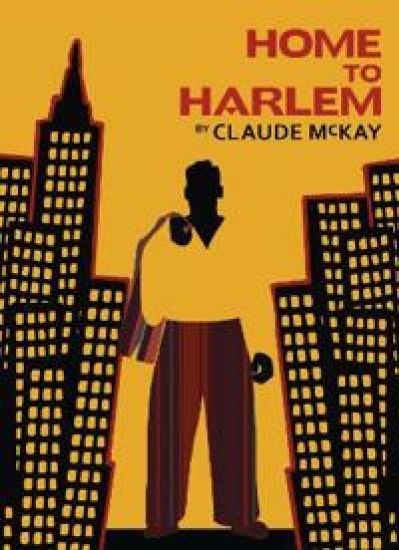
VINTAGE CLASSICS' HARLEM RENAISSANCE SERIES Celebrating the finest works of the Harlem Renaissance, one of the most important Black arts movements in modern history.'Why did I want to mix mahself up in a white folk's war? It ain't ever was any of black folks' affair'When Jake Brown joins the army during the First World War, he is treated more like a slave than a soldier. After deserting his post to escape the racial violence he is facing, Jake travels back home to Harlem. But despite the distance, Jake cannot seem to escape the past and the explosive ways in which it can culminate. Written with brutal accuracy, Home to Harlem is an extraordinary work, and was the first American bestseller by a Black writer. 'One of the most gifted writers of the Harlem Renaissance' Washington Post
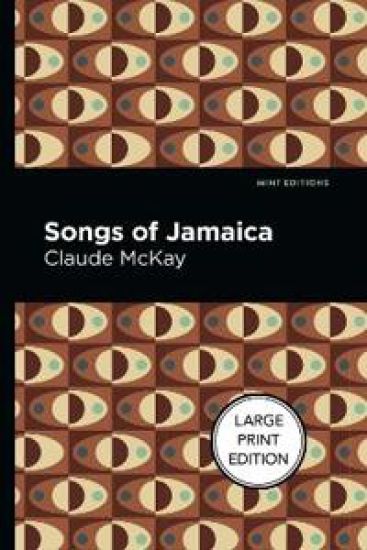
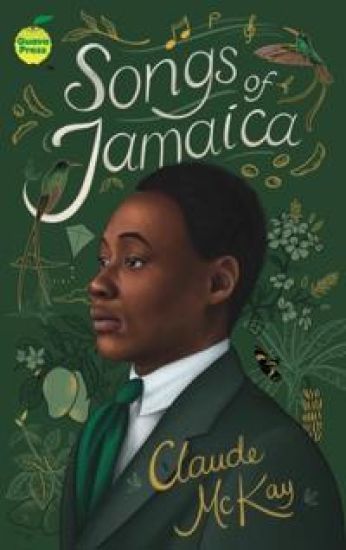
LARGE PRINT EDITION. Songs of Jamaica (1912) is a poetry collection by Claude McKay. Published before the poet left Jamaica for the United States, Songs of Jamaica is a pioneering collection of verse written in Jamaican Patois, the first of its kind. As a committed leftist, McKay was a keen observer of the Black experience in the Caribbean, the American South, and later in New York, where he gained a reputation during the Harlem Renaissance for celebrating the resilience and cultural achievement of the African American community while lamenting the poverty and violence they faced every day. “Quashie to Buccra,” the opening poem, frames this schism in terms of labor, as one class labors to fulfill the desires of another: “You tas’e petater an’ you say it sweet, / But you no know how hard we wuk fe it; / You want a basketful fe quattiewut, / ‘Cause you no know how ‘tiff de bush fe cut.” Addressing himself to a white audience, he exposes the schism inherent to colonial society between white and black, rich and poor. Advising his white reader to question their privileged consumption, dependent as it is on the subjugation of Jamaica’s black community, McKay warns that “hardship always melt away / Wheneber it comes roun’ to reapin’ day.” This revolutionary sentiment carries throughout Songs of Jamaica, finding an echo in the brilliant poem “Whe’ fe do?” Addressed to his own people, McKay offers hope for a brighter future to come: “We needn’ fold we han’ an’ cry, / Nor vex we heart wid groan and sigh; / De best we can do is fe try / To fight de despair drawin’ night: / Den we might conquer by an’ by— / Dat we might do.” With a beautifully designed cover and professionally typeset manuscript, this edition of Claude McKay’s Songs of Jamaica is a classic of Jamaican literature reimagined for modern readers.

This book has been considered important throughout the human history, and so that this work is never forgotten we have made efforts in its preservation by republishing this book in a modern format for present and future generations. This whole book has been reformatted, retyped and designed. These books are not made of scanned copies and hence the text is clear and readable.
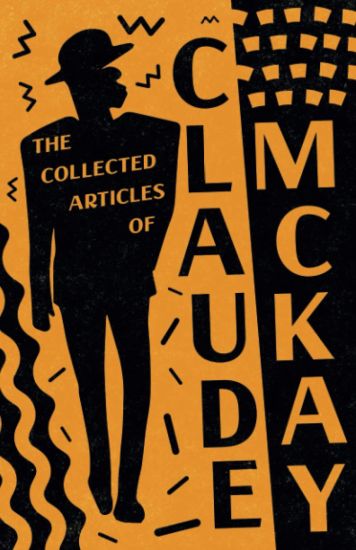
Festus Claudius "Claude" McKay OJ (1890-1948) was a Jamaican-born American poet and writer famous for his central role in the Harlem Renaissance. After travelling to America to attend college, he came across W. E. B. Du Bois's "The Souls of Black Folk", which inspired in him an interest in politics. In 1914 he moved to New York City and five years later wrote his most famous work, "If We Must Die", a sonnet dealing with the spate of white-on-black race riots and lynchings that succeeded the First World War. McKay's political and literary endeavours eventually took him to Russia, where he collaborated on "The Negroes of America" (1923) and "Trial by Lynching" (1925), which explored American black-white racism from a Marxist class-conflict perspective. After coming to terms with the Authoritarianism of the Soviet Union, McKay left for Western Europe in 1923. This book contains a fantastic collection of McKay's most influential articles on race and politics, not to be missed by those with an interest in American history and global politics during the twentieth century. Contents include: "Claude Mckay by Robert Thomas Kerlin", "Socialism and the Negro", "The Capitalist Way: Lettow-Vorbeck", "A Black Man Replies", "Review of First Principles of Working Class Education", "Communists and the Local Councils of Action", "The Revolution in Currency", "The Yellow Peril and the Dockers", "How Black Sees Green and Red", etc. Other notable works by this author include: "Gingertown" (1932), "A Long Way from Home" (1937) and "My Green Hills of Jamaica" (1979). Read & Co. Books are proudly publishing this brand new collection of classic articles, now complete with an introductory biography from Robert Thomas Kerlin's "Negro Poets and their Poems" (1923).

This is a full-length novel written by Claude McKay in 1933-34, in the same key as the episodic "Banjo", but for which he was never able to find a publisher. Richard Bradbury, who discovered the manuscript in New York, provides a critical introduction.

This is a full-length novel written by Claude McKay in 1933-34, in the same key as the episodic "Banjo", but for which he was never able to find a publisher. Richard Bradbury, who discovered the manuscript in New York, provides a critical introduction.
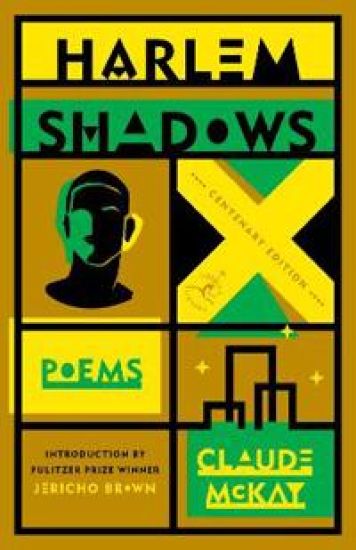
Harlem Shadows
Claude McKay; Jericho Brown
RANDOM HOUSE USA INC
2022
nidottu
Halvin toimitettuna 18,70 €
A harbinger of the Harlem Renaissance first published in 1922, this collection of poignant, lyrical poems explores the author's yearning for his Jamaican homeland and the bitter plight of Black people in America--now with an introduction by Pulitzer Prize-winning poet Jericho Brown. With pure heart, passion, and honesty, Claude McKay offers an acute reflection on the complex nature of racial identity in the Caribbean diaspora, encompassing issues such as nationalism, freedom of expression, class, gender, and sex. The collection's eponymous poem, Harlem Shadows, portrays the struggle of sex workers in 1920s Harlem. In If We Must Die, McKay calls for justice and retribution for Black people in the face of racist abuse. Juxtaposing the cruel noise of New York City with the serene beauties of Jamaica, McKay urges us to reckon with the oppression that plagues a long-suffering race, which he argues has no home in a white man's world. Poems of Blackness, queerness, desire, performance, and love are infused with a radical message of resistance in this sonorous cry for universal human rights. Simultaneously a love letter to the spirit of New York City and a list of grievances with its harsh cruelty, Harlem Shadows is a stunning collection that remains all too relevant one hundred years after its original publication.
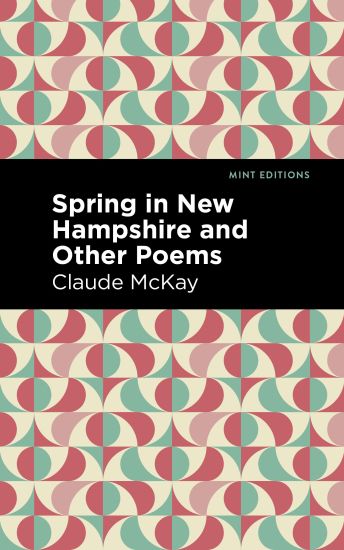
Spring in New Hampshire and Other Poems (1920) is a poetry collection by Claude McKay. Published toward the beginning of the Harlem Renaissance, Spring in New Hampshire and Other Poems is the first of McKay’s collections to appear in the United States. As a committed leftist, McKay—who grew up in Jamaica—captures the life of African Americans from a realist’s point of view, lamenting their exposure to poverty, racism, and violence while celebrating their resilience and cultural achievement. Several years before T. S. Eliot’s The Waste Land (1922) and William Carlos Williams’ Spring and All (1923), modernist poet Claude McKay troubles the traditional symbol of springtime to accommodate the hardships of an increasingly industrialized world. In “Spring in New Hampshire,” the poet gives voice to a desperate laborer, for whom the beauty and harmony of the season of rebirth are not only sickening, but altogether inaccessible: “Too green the springing April grass, / Too blue the silver-speckled sky, / For me to linger here, alas, / While happy winds go laughing by, / Wasting the golden hours indoors, / Washing windows and scrubbing floors.” A master of traditional forms, McKay brings his experience as a black man to bear on a poem otherwise dedicated to descriptions of natural beauty, challenging the very tradition his language and style invoke. In “The Lynching,” he calls on the reader to witness the brutality of American racism while exposing the complicity of those who would look without feeling: “[S]oon the mixed crowds came to view / The ghastly body swaying in the sun: / The women thronged to look, but never a one / Showed sorrow in her eyes of steely blue…” As children dance around the victim’s body, “lynchers that were to be,” McKay raises a terrible, timeless question: how long will such violence endure? With a beautifully designed cover and professionally typeset manuscript, this edition of Claude McKay’s Spring in New Hampshire and Other Poems is a classic of Jamaican literature reimagined for modern readers.