Kirjojen hintavertailu – 12 903 725 kirjaa ja 27 kauppaa

Kirjailija

Claude McKay

Kirjat ja teokset yhdessä paikassa: 62 kirjaa, julkaisuja vuosilta 1987–2027, suosituimpiin kuuluu Graphic Classics Volume 22: African-American Classics. Vertaile teosten hintoja ja tarkista saatavuus suomalaisista kirjakaupoista.

62 kirjaa

Kirjojen julkaisuvuodet: 1987–2027.

Songs of Jamaica

Songs of Jamaica

Claude McKay

Mint Editions
2021
sidottu
Songs of Jamaica (1912) is a poetry collection by Claude McKay. Published before the poet left Jamaica for the United States, Songs of Jamaica is a pioneering collection of verse written in Jamaican Patois, the first of its kind. As a committed leftist, McKay was a keen observer of the Black experience in the Caribbean, the American South, and later in New York, where he gained a reputation during the Harlem Renaissance for celebrating the resilience and cultural achievement of the African American community while lamenting the poverty and violence they faced every day. “Quashie to Buccra,” the opening poem, frames this schism in terms of labor, as one class labors to fulfill the desires of another: “You tas’e petater an’ you say it sweet, / But you no know how hard we wuk fe it; / You want a basketful fe quattiewut, / ‘Cause you no know how ‘tiff de bush fe cut.” Addressing himself to a white audience, he exposes the schism inherent to colonial society between white and black, rich and poor. Advising his white reader to question their privileged consumption, dependent as it is on the subjugation of Jamaica’s black community, McKay warns that “hardship always melt away / Wheneber it comes roun’ to reapin’ day.” This revolutionary sentiment carries throughout Songs of Jamaica, finding an echo in the brilliant poem “Whe’ fe do?” Addressed to his own people, McKay offers hope for a brighter future to come: “We needn’ fold we han’ an’ cry, / Nor vex we heart wid groan and sigh; / De best we can do is fe try / To fight de despair drawin’ night: / Den we might conquer by an’ by— / Dat we might do.” With a beautifully designed cover and professionally typeset manuscript, this edition of Claude McKay’s Songs of Jamaica is a classic of Jamaican literature reimagined for modern readers.
Songs of Jamaica

Songs of Jamaica

Claude McKay

Graphic Arts Books
2021
pokkari
Songs of Jamaica (1912) is a poetry collection by Claude McKay. Published before the poet left Jamaica for the United States, Songs of Jamaica is a pioneering collection of verse written in Jamaican Patois, the first of its kind. As a committed leftist, McKay was a keen observer of the Black experience in the Caribbean, the American South, and later in New York, where he gained a reputation during the Harlem Renaissance for celebrating the resilience and cultural achievement of the African American community while lamenting the poverty and violence they faced every day. “Quashie to Buccra,” the opening poem, frames this schism in terms of labor, as one class labors to fulfill the desires of another: “You tas’e petater an’ you say it sweet, / But you no know how hard we wuk fe it; / You want a basketful fe quattiewut, / ‘Cause you no know how ‘tiff de bush fe cut.” Addressing himself to a white audience, he exposes the schism inherent to colonial society between white and black, rich and poor. Advising his white reader to question their privileged consumption, dependent as it is on the subjugation of Jamaica’s black community, McKay warns that “hardship always melt away / Wheneber it comes roun’ to reapin’ day.” This revolutionary sentiment carries throughout Songs of Jamaica, finding an echo in the brilliant poem “Whe’ fe do?” Addressed to his own people, McKay offers hope for a brighter future to come: “We needn’ fold we han’ an’ cry, / Nor vex we heart wid groan and sigh; / De best we can do is fe try / To fight de despair drawin’ night: / Den we might conquer by an’ by— / Dat we might do.” With a beautifully designed cover and professionally typeset manuscript, this edition of Claude McKay’s Songs of Jamaica is a classic of Jamaican literature reimagined for modern readers.
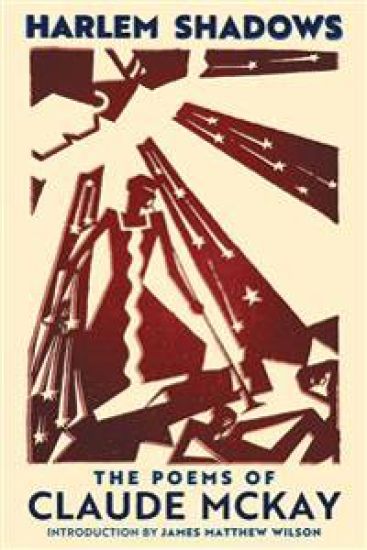
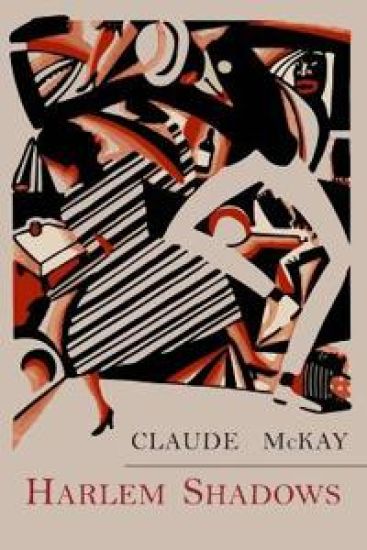
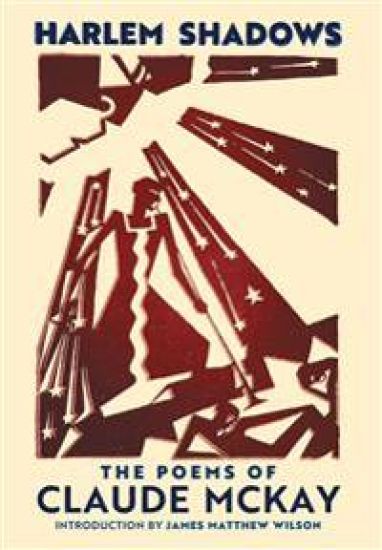
Harlem Shadows

Harlem Shadows

Claude McKay

Graphic Arts Books
2021
pokkari
Harlem Shadows (1922) is a poetry collection by Claude McKay. Published at the height of the Harlem Renaissance, Harlem Shadows earned praise from legendary poet and political activist Max Eastman for its depictions of urban life and the technical mastery of its author. As a committed leftist, McKay—who grew up in Jamaica—captures the life of Harlem from a realist’s point of view, lamenting the poverty of its African American community while celebrating their resilience and cultural achievement. In “The White City,” McKay observes New York, its “poles and spires and towers vapor-kissed” and “fortressed port through which the great ships pass.” Filled him with a hatred of the inhuman scene of industry and power, forced to “muse [his] life-long hate,” he observes the transformative quality of focused anger: “My being would be a skeleton, a shell, / If this dark Passion that fills my every mood, / And makes my heaven in the white world’s hell, / Did not forever feed me vital blood.” Rather than fall into despair, he channels his hatred into a revolutionary spirit, allowing him to stand tall within “the mighty city.” In “The Tropics in New York,” he walks past a window filled with “Bananas ripe and green, and ginger-root, / Cocoa in pods and alligator pears,” a feast of fresh tropical fruit that brings him back, however briefly, to his island home of Jamaica. Recording his nostalgic response, McKay captures his personal experience as an immigrant in America: “My eyes grew dim, and I could no more gaze; / A wave of longing through my body swept, / And, hungry for the old, familiar ways, / I turned aside and bowed my head and wept.” With a beautifully designed cover and professionally typeset manuscript, this edition of Claude McKay’s Harlem Shadows is a classic of Jamaican literature reimagined for modern readers.
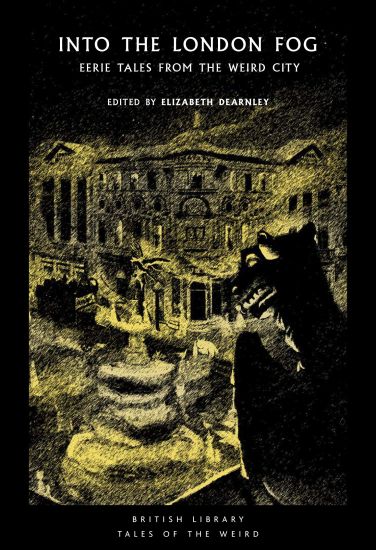
Into the London Fog

Into the London Fog

Charlotte Riddell; Rhoda Broughton; Sam Selvon; Claude McKay; Edith Nesbit; Violet Hunt; Lettice Galbraith; E. F. Benson; Elizabeth Bowen

British Library Publishing
2020
nidottu

Halvin toimitettuna 17,40 €

As the smoky dark sweeps across the capital, strange stories emerge from the night. A seance reveals a ghastly secret in the murk of Regent's Canal. From south of the Thames come chilling reports of a spring-heeled spectre, and in Stoke Newington rumours abound of an opening to another world among the quiet alleys. Join Elizabeth Dearnley on this atmospheric tour through a shadowy London, a city which has long inspired writers of the weird and uncanny. Waiting in the hazy streets are eerie tales from Charlotte Riddell, Lettice Galbraith and Violet Hunt, along with haunting pieces by Virginia Woolf, Arthur Machen, Sam Selvon and many more.
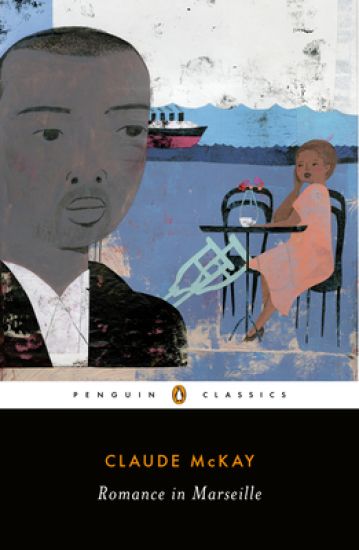
Romance in Marseille

Romance in Marseille

Claude McKay

Penguin Classics
2020
pokkari
While stowed away on a transatlantic freighter, Lafala is discovered and locked away in an icy-cold closet, resulting in the loss of his frostbitten legs. When his successful lawsuit against the shipping company brings big bucks, Lafala returns to Marseille to resume his affair with Aslima, a Moroccan prostitute. With its scenes of black bodies seeking pleasure and fighting for freedom even when stolen, shipped, and sold for parts, Romance in Marseille explores the heritage of slavery amid a predatory modern economy.
Amiable with Big Teeth

Amiable with Big Teeth

Claude McKay

Penguin USA
2018
pokkari
A monumental literary event: the newly discovered final novel by seminal Harlem Renaissance writer Claude McKay, a rich and multilayered portrayal of life in 1930s Harlem and a historical protest for black freedomThis colourful, dramatic novel centres on the efforts by Harlem intelligentsia to organize support for the liberation of fascist-controlled Ethiopia, a crucial but largely forgotten event in American history. At once a penetrating satire of political machinations in Depression-era Harlem and a far-reaching story of global intrigue and romance, Amiable with Big Teeth plunges into the concerns, anxieties, hopes and dreams of African-Americans at a moment of crisis for the soul of Harlem - and America.
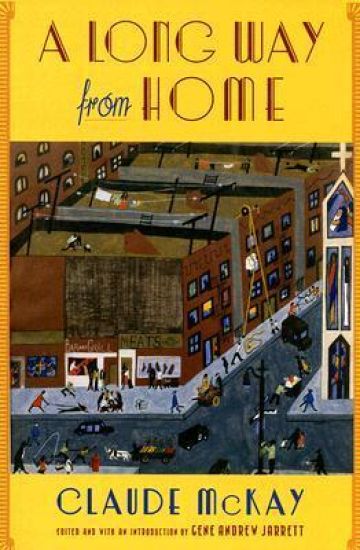
A Long Way From Home

A Long Way From Home

Claude McKay

Rutgers University Press
2007
nidottu
Claude McKay (1889–1948) was one of the most prolific and sophisticated African American writers of the early twentieth century. A Jamaican-born author of poetry, short stories, novels, and nonfiction, McKay has often been associated with the “New Negro” or Harlem Renaissance, a movement of African American art, culture, and intellectualism between World War I and the Great Depression. But his relationship to the movement was complex. Literally absent from Harlem during that period, he devoted most of his time to traveling through Europe, Russia, and Africa during the 1920s and 1930s. His active participation in Communist groups and the radical Left also encouraged certain opinions on race and class that strained his relationship to the Harlem Renaissance and its black intelligentsia. In his 1937 autobiography, A Long Way from Home, McKay explains what it means to be a black “rebel sojourner” and presents one of the first unflattering, yet informative, exposés of the Harlem Renaissance. Reprinted here with a critical introduction by Gene Andrew Jarrett, this book will challenge readers to rethink McKay’s articulation of identity, art, race, and politics and situate these topics in terms of his oeuvre and his literary contemporaries between the world wars.
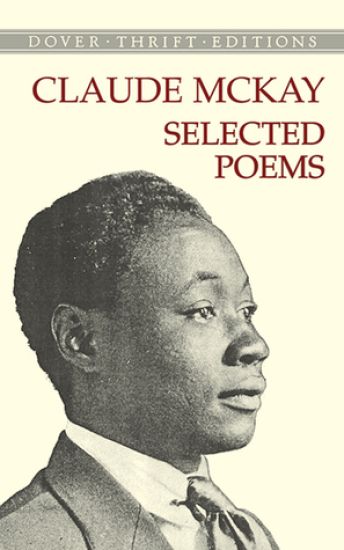
Claude Mckay: Selected Poems

Claude Mckay: Selected Poems

Claude McKay

Dover Publications Inc.
2003
nidottu
Jamaican-American poet Claude McKay (1889–1948) came to the U. S. in 1912 and became an important figure in the Harlem Renaissance. This inexpensive edition includes a representative sample of his Jamaican dialect verse, but concentrates on poems from Harlem Shadows (1922) and uncollected verse. Edited and with an introduction by Joan R. Sherman.
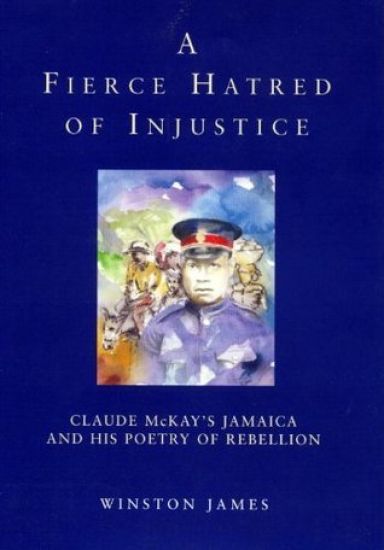
A Fierce Hatred of Injustice

A Fierce Hatred of Injustice

Claude McKay; Winston James

Verso Books
2001
sidottu
Claude McKay remains one of the most influential intellectuals of the African Diaspora. Best remembered for his extraordinary poetry, his achievement in verse has been widely analyzed and praised. Yet in the welter of discussion about McKay, little has been said about his early writing in Jamaican. Two collections from the period, Songs of Jamaica and Constab Ballads, are more known about than known, and his poems for the Jamaican press, most of which have never been anthologized, are rarely studied. In A Fierce Hatred of Injustice, Winston James elegantly redresses this omission. Through a subtle and detailed consideration of McKay's formative years on the island, James reviews the themes and politics of poetry which McKay began writing at the age of ten. Above all he focuses on the poet's pioneering use of Jamaican creole revealing the way in which this laid a foundation for subsequent work by writers such as Louise Bennett, Linton Kwesi Johnson and Michael Smith. The volume concludes with a comprehensive anthology of the early poems together with a comic sketch about Jamaican peasant life by McKay and an autobiographical essay on his experiences in the Kingston police force.