Kirjojen hintavertailu – 12 903 729 kirjaa ja 27 kauppaa

Kirjailija

Cliff Roberson

Kirjat ja teokset yhdessä paikassa: 26 kirjaa, julkaisuja vuosilta 2000–2025, suosituimpiin kuuluu Introduction to Private Security. Vertaile teosten hintoja ja tarkista saatavuus suomalaisista kirjakaupoista.

26 kirjaa

Kirjojen julkaisuvuodet: 2000–2025.

Procedures in the Justice System Plus MyLab Criminal Justice with Pearson eText -- Access Code Card
ALERT: Before you purchase, check with your instructor or review your course syllabus to ensure that you select the correct ISBN. Several versions of Pearson's MyLab & Mastering products exist for each title, including customized versions for individual schools, and registrations are not transferable. In addition, you may need a CourseID, provided by your instructor, to register for and use Pearson's MyLab & Mastering products. Packages Access codes for Pearson's MyLab & Mastering products may not be included when purchasing or renting from companies other than Pearson; check with the seller before completing your purchase. Used or rental books If you rent or purchase a used book with an access code, the access code may have been redeemed previously and you may have to purchase a new access code. Access codes Access codes that are purchased from sellers other than Pearson carry a higher risk of being either the wrong ISBN or a previously redeemed code. Check with the seller prior to purchase. --
Police Field Operations

Police Field Operations

Michael Birzer; Cliff Roberson

PEARSON EDUCATION (US)
2023
nidottu
For courses in police operations and patrol. A practical look at police field operationsComprehensive and readable, Police Field Operations: Theory Meets Practice addresses the theory and practical applications of police practices, drawing on the personal accounts of current and former police officers. The text covers all major areas of police field operations, including patrolling, investigations, crime mapping, community policing, hot pursuit issues, communications, gangs, and drugs. With chapters that work consecutively or as independent units, the 3rd edition has been extensively updated with two new chapters and with coverage reflecting the challenges confronting police officers today.
Constitutional Law and Criminal Justice

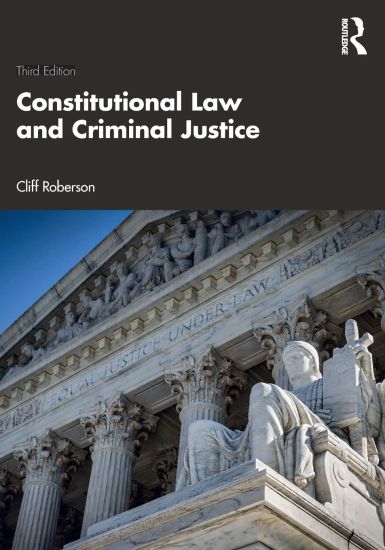
Constitutional Law and Criminal Justice

Cliff Roberson

TAYLOR FRANCIS LTD
2021
sidottu
Illuminating US constitutional concepts in plain language and clarifying nuances in the law, this third edition of Constitutional Law and Criminal Justice simplifies understanding of the United States judicial system for those without advanced legal training. It updates recent decisions by the Supreme Court of the United States and includes a discussion on the current makeup and policy of the Supreme Court. Learning objectives and summary outlines of recent Supreme Court decisions, combined with practical examples and selected actual court documents, enhance students’ understanding of the most important issues regarding the US Constitution and its application in the criminal justice system. The book begins with an overview of the Bill of Rights, followed by an examination of the components of the judiciary. It moves on to a discussion of due process; the First, Fourth, Fifth, Sixth, and Eighth Amendments; and the exclusionary rule. A unique chapter addressing civil liability and the criminal justice professional is especially relevant to students in criminal justice programs. Concise and informative, this book is designed to be used in undergraduate courses in criminal justice and justice administration programs in universities and community colleges.
Constitutional Law and Criminal Justice

Constitutional Law and Criminal Justice

Cliff Roberson

TAYLOR FRANCIS LTD
2021
nidottu
Illuminating US constitutional concepts in plain language and clarifying nuances in the law, this third edition of Constitutional Law and Criminal Justice simplifies understanding of the United States judicial system for those without advanced legal training. It updates recent decisions by the Supreme Court of the United States and includes a discussion on the current makeup and policy of the Supreme Court. Learning objectives and summary outlines of recent Supreme Court decisions, combined with practical examples and selected actual court documents, enhance students’ understanding of the most important issues regarding the US Constitution and its application in the criminal justice system. The book begins with an overview of the Bill of Rights, followed by an examination of the components of the judiciary. It moves on to a discussion of due process; the First, Fourth, Fifth, Sixth, and Eighth Amendments; and the exclusionary rule. A unique chapter addressing civil liability and the criminal justice professional is especially relevant to students in criminal justice programs. Concise and informative, this book is designed to be used in undergraduate courses in criminal justice and justice administration programs in universities and community colleges.
Juvenile Delinquency

Juvenile Delinquency

Cliff Roberson; Elena Azaola

Rowman Littlefield
2021
sidottu
Juvenile Delinquency: Why Do Youths Commit Crime? focuses on why juveniles commit crime. It includes discussions on what constitutes criminal behavior by juveniles, the general theories on delinquency, and discussions that tie the theories with real life situations. The book opens the students’ eyes to the fascinating concepts involving juvenile delinquency, and is designed to provide a complete study of the behavior, beliefs, conditions, and reactions to deviance by young offenders. Throughout Cliff Roberson and Elena Azaola gives students a detailed discussion of and what constitutes juvenile delinquency to allow for better understanding of this phenomenon. In each of the chapters, the authors encourage the student to develop new insights on criminal behavior of juveniles. The book makes the subject come alive by the generous use of “down to earth” examples of the issues involved in the area. While each chapter builds on the previous chapters, the book is written in a manner to reduce the necessity of memorization by students. Each chapter begins with chapter objectives that highlights key points for the student and brief chapter outlines. Each chapter closes with a practicum, chapter summary, and discussion and review questions which enhance student learning. The book closes with a glossary where student may refer to they key terms and words throughout the text.
Juvenile Delinquency

Juvenile Delinquency

Cliff Roberson; Elena Azaola

Rowman Littlefield
2021
nidottu
In each of the chapters, our objective is to encourage the student in the development of new insights on criminal behavior by young people. The manuscript will make the subject come alive by the generous use of "down to earth" examples of the issues involved in the area. While each chapter builds on the previous chapters, the text will be written in a manner to reduce the necessity of memorization by students. Each chapter will begin with "What You Need to Know" that highlights key points for the reader and brief chapter outlines. Each chapter will close with questions in review, case studies, and exercises to enhance student learning. Key terms and words will be contained in a glossary that may be referred to by the students.
Law and Society

Law and Society

John Harrison Watts; Cliff Roberson

Routledge
2020
nidottu
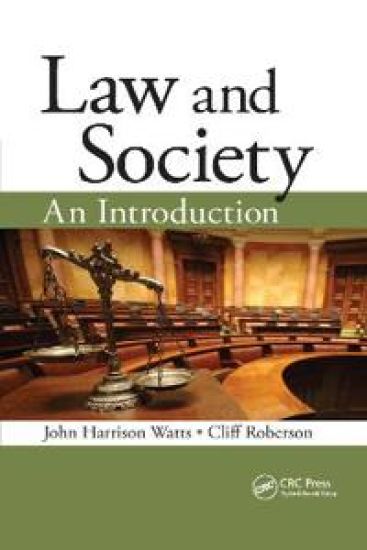
In recent years, legal studies courses have increased the focus on contemporary social issues as part of the curriculum. Law and Society: An Introduction discusses the interface between these two institutions and encourages students in the development of new insights on the topic. The book begins by introducing definitions, classifications, and the concept of the "rule of law." It then explores:Principal legal systems, including common law, civil law, Islamic and socialist systems, and American Indian lawFeminist legal theories, critical race theory, and the roles of morality and values in social controlThe contributions of sociological research and its impact on the lawCourt systems and procedures, the exclusionary rule, and plea bargainingThe nature and process of legislative, administrative, and judicial lawmakingAlternative dispute resolution and international arbitration and mediationThe law as a mechanism for social changes, such as those brought on by the 1964 Civil Rights ActIssues related to the legal profession and professional responsibilityThis text eliminates the need for a separate reader by also discussing controversial legal topics—including affirmative action, education, the death penalty, right to work laws, and abortion. Each chapter builds on the previous ones and includes concrete examples of the issues involved. Enhanced by chapter summaries of salient points, review questions, and practical exercises, the book is designed to encourage students in the development of new insights into the relationships between law and society.
Principles of Criminal Law

Principles of Criminal Law

Cliff Roberson; Michael O'Reilley

Pearson
2020
nidottu
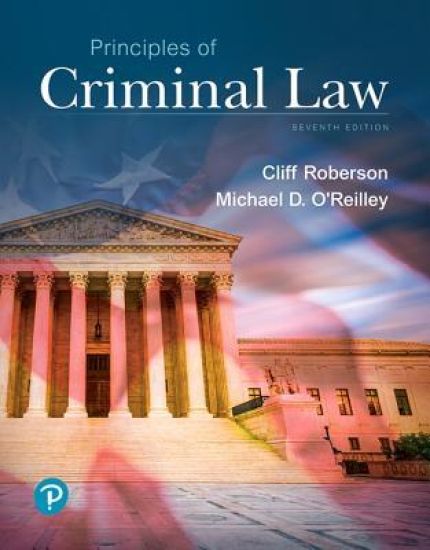
For courses in criminal law. A succinct, readable survey of criminal lawPrinciples of Criminal Law is a clear, efficient introduction to criminal law viewed through the lens of human behavior. Concise enough for a one-semester course, it provides critical background information, establishes elements of major crimes, and covers a vast range of crimes, including white¿-collar, victimless, and political crimes — without dense citations or lengthy discussion. Bolstered by cases and critical-thinking features, the 7th edition has new information on organized and white-collar crime, up-to-date marijuana laws, and additional content on specific crimes and legal rules.
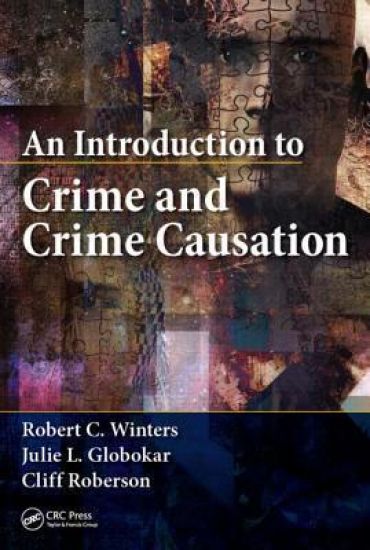
An Introduction to Crime and Crime Causation

An Introduction to Crime and Crime Causation

Robert C. Winters; Julie L. Globokar; Cliff Roberson

Routledge
2020
nidottu
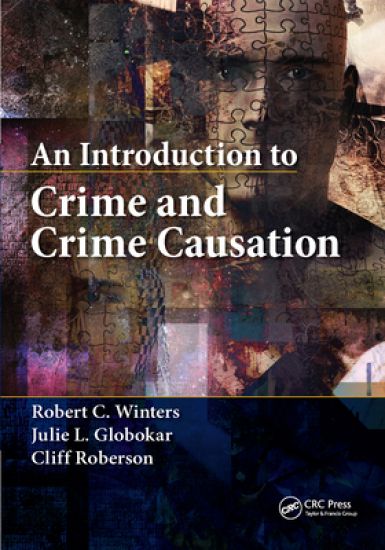
An Introduction to Crime and Crime Causation is a student-friendly textbook that defines and explains the concepts of crime, criminal law, and criminology. Ideal for a one-semester course, the book compares and contrasts early criminal behavior and today’s modern forms of crime. It also explores society’s responses to criminal behavior in the past and in the present day. It covers both major and lesser-known crime causation theories and their impact on society. Topics covered include:The importance of understanding crime data The goals of punishment The history of criminology, including the influence of social Darwinism on early trait theorists Crime causation theories, including a comparison of mainstream and critical theories The relationship between crime and biology, including the influence of genetics, substance use, and mental illness The social structural approach to crime, including a consideration of the changing contexts of urban criminality The nature and function of the justice system at the local, state, and federal levels, and basic categories of crimes Drug trafficking crimes, drug court efforts, and perceived weaknesses in current antidrug efforts Each chapter begins with a set of objectives and concludes with a summary. Interactive questions promote classroom discussion and practicum sections facilitate contextual learning. Drawn from different and distinct backgrounds, the authors each have unique perspectives on crime, making for a particularly well-rounded text that explores crime from several angles. The book attempts to educate readers in the development of new insights on crime and crime causation and provides a greater understanding of the steps that need to be taken before a significant reduction in crime can occur.
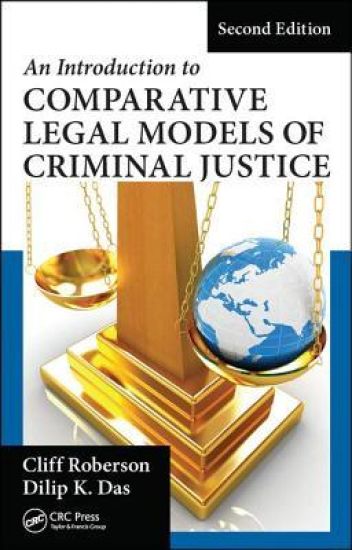
An Introduction to Comparative Legal Models of Criminal Justice
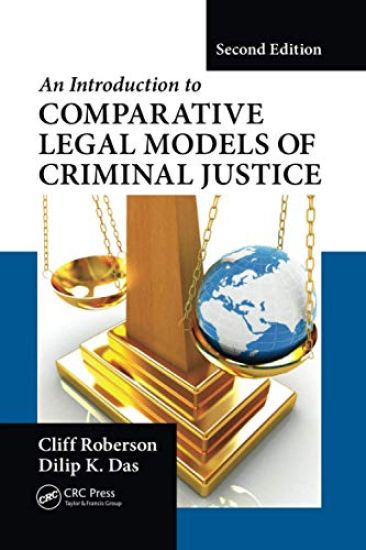
Updated to reflect changes in the criminal justice systems in several countries, An Introduction to Comparative Legal Models of Criminal Justice, Second Edition explores and illustrates the idea that a country’s legal model determines the character of its police, corrections, and legal system. It focuses on how law shapes policing, including how it causes police to act as though they are above the law. Each chapter is designed as an independent unit of study. Along with updates to each chapter, other new additions to the second edition include:A list of learning objectives at the beginning of each chapterA summary at the end of each chapterClassroom exercisesA threefold increase to the number of photographsAn expanded discussion of the oldest known legal systemsAn extensive discussion on the rule of lawA discussion of United Nations actions to improve juvenile justiceIncreased attention to the role of the Organization of American StatesThorough and concise, An Introduction to Comparative Legal Models of Criminal Justice, Second Edition provides a text covering the different major legal models in the world that is ideal for a one-semester course.
Deviant Behavior

Deviant Behavior

Cliff Roberson; Elena Azaola Garrido

Routledge
2020
nidottu
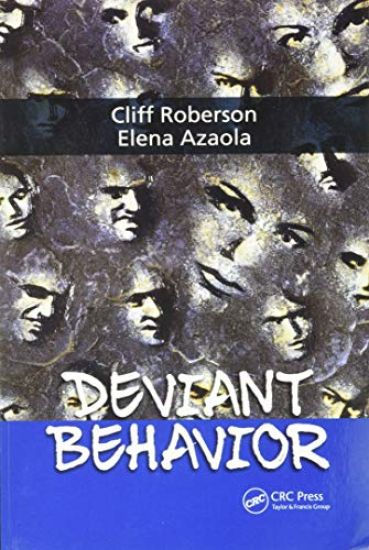
Deviant behavior is not a subject that you study in school and then file away. It is a study of life and is ever changing. Defining the concept of deviant behavior is one of the most difficult tasks to overcome when studying the subject. Sociologists probably disagree more over the meaning of deviant behavior than any other subject. Deviant Behavior is an easy-to-read text that defines and explains the concepts and issues involved in the study of deviant behavior. The book begins by exploring the nature and definition of deviance. It discusses why certain conduct is labeled as deviant and some is not. It examines the two major perspectives on what constitutes deviance—positivism and constructionism. It goes on to look at the various theoretical explanations for deviant behavior, including free will or lack thereof, rational choice, social control, cultural transmission, strain theories, and biological and psychological explanations. The book provides an in-depth explanation of the many categories of deviant behavior—interpersonal violence, self-destructive behavior, family violence, business and organized crime, governmental deviance, cybercrimes, and human trafficking and commercial sex. The authors take an international approach and emphasize that what is deviant in one culture may not be deviant in another. To aid understanding, each chapter concludes with a detailed summary, review questions, and definitions of the relevant key terms.
Introduction to Corporate and White-Collar Crime

Introduction to Corporate and White-Collar Crime

Frank J. DiMarino; Cliff Roberson

Routledge
2019
nidottu
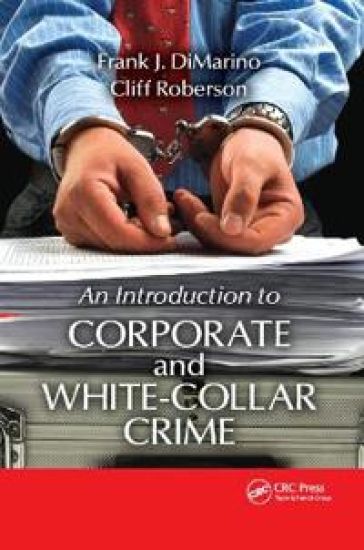
White-collar crime costs the United States more than $300 billion each year. It is surprisingly common, with one in every three Americans eventually becoming a victim. The criminals often dismiss these crimes as victimless, but those unfortunate enough to fall prey would disagree. An Introduction to Corporate and White-Collar Crime provides readers with an understanding of what white-collar crime is, how it works, and the extent to which it exists in our society. The broad-based coverage in this text analyzes the opportunity structures for committing white-collar crime and explores new ways of thinking about how to control it. Topics include: Theories behind white-collar crime, including social and psychological theoriesRoutine activity, crime pattern, and situational crime prevention theoriesLaws that govern the securities industries, including the Securities Exchange Act and Sarbanes–OxleyBank fraud, money laundering, racketeering, and organized crimeCrimes involving public officials and obstruction of justiceControl and prevention of white-collar crimes and sanctions for white-collar criminals The material is organized and presented in a logical fashion, with each chapter building from the previous content. Every chapter begins with objectives to help readers focus on the topic and concludes with review questions to test assimilation of the material and promote debate. Several chapters conclude with a practicum to facilitate real-world understanding of the material.
Family Violence

Family Violence

Harvey Wallace; Cliff Roberson; Julie Globokar

Routledge
2019
sidottu
Family Violence: Legal, Medical, and Social Perspectives examines the entire spectrum of family violence, focusing on social processes and social relationships. The Ninth Edition of Family Violence is a comprehensive updated version of the classic text on family violence. In addition to the updates to each chapter, the new edition features new research, comments, and discussions on the #MeToo Movement, same gender couples, elder abuse, stalking, partner abuse, and law enforcement’s updated responses to these incidents. The new edition, however, still retains the coverage of the seminal research studies that are the bases of popular theories on partner and family violence. In the new edition, the authors have sought to make the material more understandable to the readers so that instructors will not need to waste valuable class time explaining the text.
Family Violence

Family Violence

Harvey Wallace; Cliff Roberson; Julie Globokar

Routledge
2019
nidottu
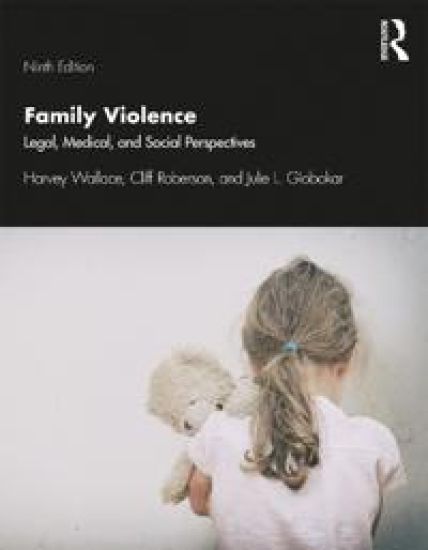
Family Violence: Legal, Medical, and Social Perspectives examines the entire spectrum of family violence, focusing on social processes and social relationships. The Ninth Edition of Family Violence is a comprehensive updated version of the classic text on family violence. In addition to the updates to each chapter, the new edition features new research, comments, and discussions on the #MeToo Movement, same gender couples, elder abuse, stalking, partner abuse, and law enforcement’s updated responses to these incidents. The new edition, however, still retains the coverage of the seminal research studies that are the bases of popular theories on partner and family violence. In the new edition, the authors have sought to make the material more understandable to the readers so that instructors will not need to waste valuable class time explaining the text.
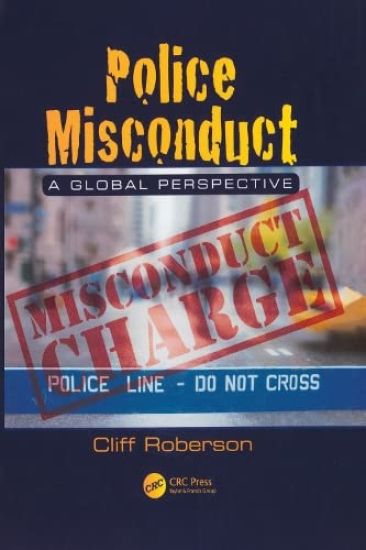
Police Misconduct

Police Misconduct

Cliff Roberson

Productivity Press
2016
sidottu
This book explores the different types of police misconduct including the use of excessive force. It also explores what types of officers become involved in illegal misconduct, steps jurisdictions may take to prevent such problems, and discusses who should police the police. Also included is a historical analysis of police misconduct, discussions on the legal restrictions designed to prevent police misconduct, and steps that the jurisdiction may take to limit their liability. Ancillary material is available with course adoption.
An Introduction to Comparative Legal Models of Criminal Justice

An Introduction to Comparative Legal Models of Criminal Justice

Cliff Roberson; Dilip K. Das

Productivity Press
2016
sidottu
Updated to reflect changes in the criminal justice systems in several countries, An Introduction to Comparative Legal Models of Criminal Justice, Second Edition explores and illustrates the idea that a country’s legal model determines the character of its police, corrections, and legal system. It focuses on how law shapes policing, including how it causes police to act as though they are above the law. Each chapter is designed as an independent unit of study. Along with updates to each chapter, other new additions to the second edition include:A list of learning objectives at the beginning of each chapterA summary at the end of each chapterClassroom exercisesA threefold increase to the number of photographsAn expanded discussion of the oldest known legal systemsAn extensive discussion on the rule of lawA discussion of United Nations actions to improve juvenile justiceIncreased attention to the role of the Organization of American StatesThorough and concise, An Introduction to Comparative Legal Models of Criminal Justice, Second Edition provides a text covering the different major legal models in the world that is ideal for a one-semester course.
Deviant Behavior

Deviant Behavior

Cliff Roberson; Elena Azaola Garrido

Apple Academic Press Inc.
2015
sidottu
Deviant behavior is not a subject that you study in school and then file away. It is a study of life and is ever changing. Defining the concept of deviant behavior is one of the most difficult tasks to overcome when studying the subject. Sociologists probably disagree more over the meaning of deviant behavior than any other subject. Deviant Behavior is an easy-to-read text that defines and explains the concepts and issues involved in the study of deviant behavior. The book begins by exploring the nature and definition of deviance. It discusses why certain conduct is labeled as deviant and some is not. It examines the two major perspectives on what constitutes deviance—positivism and constructionism. It goes on to look at the various theoretical explanations for deviant behavior, including free will or lack thereof, rational choice, social control, cultural transmission, strain theories, and biological and psychological explanations. The book provides an in-depth explanation of the many categories of deviant behavior—interpersonal violence, self-destructive behavior, family violence, business and organized crime, governmental deviance, cybercrimes, and human trafficking and commercial sex. The authors take an international approach and emphasize that what is deviant in one culture may not be deviant in another. To aid understanding, each chapter concludes with a detailed summary, review questions, and definitions of the relevant key terms.
An Introduction to Crime and Crime Causation

An Introduction to Crime and Crime Causation

Robert C. Winters; Julie L. Globokar; Cliff Roberson

Routledge Member of the Taylor and Francis Group
2014
sidottu
An Introduction to Crime and Crime Causation is a student-friendly textbook that defines and explains the concepts of crime, criminal law, and criminology. Ideal for a one-semester course, the book compares and contrasts early criminal behavior and today’s modern forms of crime. It also explores society’s responses to criminal behavior in the past and in the present day. It covers both major and lesser-known crime causation theories and their impact on society. Topics covered include: The importance of understanding crime data The goals of punishment The history of criminology, including the influence of social Darwinism on early trait theorists Crime causation theories, including a comparison of mainstream and critical theories The relationship between crime and biology, including the influence of genetics, substance use, and mental illness The social structural approach to crime, including a consideration of the changing contexts of urban criminality The nature and function of the justice system at the local, state, and federal levels, and basic categories of crimes Drug trafficking crimes, drug court efforts, and perceived weaknesses in current antidrug effortsEach chapter begins with a set of objectives and concludes with a summary. Interactive questions promote classroom discussion and practicum sections facilitate contextual learning. Drawn from different and distinct backgrounds, the authors each have unique perspectives on crime, making for a particularly well-rounded text that explores crime from several angles. The book attempts to educate readers in the development of new insights on crime and crime causation and provides a greater understanding of the steps that need to be taken before a significant reduction in crime can occur.
Law and Society

Law and Society

John Harrison Watts; Cliff Roberson

Routledge Member of the Taylor and Francis Group
2013
sidottu
In recent years, legal studies courses have increased the focus on contemporary social issues as part of the curriculum. Law and Society: An Introduction discusses the interface between these two institutions and encourages students in the development of new insights on the topic. The book begins by introducing definitions, classifications, and the concept of the "rule of law." It then explores: Principal legal systems, including common law, civil law, Islamic and socialist systems, and American Indian law Feminist legal theories, critical race theory, and the roles of morality and values in social control The contributions of sociological research and its impact on the law Court systems and procedures, the exclusionary rule, and plea bargaining The nature and process of legislative, administrative, and judicial lawmaking Alternative dispute resolution and international arbitration and mediation The law as a mechanism for social changes, such as those brought on by the 1964 Civil Rights Act Issues related to the legal profession and professional responsibilityThis text eliminates the need for a separate reader by also discussing controversial legal topics—including affirmative action, education, the death penalty, right to work laws, and abortion. Each chapter builds on the previous ones and includes concrete examples of the issues involved. Enhanced by chapter summaries of salient points, review questions, and practical exercises, the book is designed to encourage students in the development of new insights into the relationships between law and society.
Introduction to Corporate and White-Collar Crime

Introduction to Corporate and White-Collar Crime

Frank J. DiMarino; Cliff Roberson

Routledge Member of the Taylor and Francis Group
2013
sidottu
White-collar crime costs the United States more than $300 billion each year. It is surprisingly common, with one in every three Americans eventually becoming a victim. The criminals often dismiss these crimes as victimless, but those unfortunate enough to fall prey would disagree. An Introduction to Corporate and White-Collar Crime provides readers with an understanding of what white-collar crime is, how it works, and the extent to which it exists in our society. The broad-based coverage in this text analyzes the opportunity structures for committing white-collar crime and explores new ways of thinking about how to control it. Topics include: Theories behind white-collar crime, including social and psychological theoriesRoutine activity, crime pattern, and situational crime prevention theoriesLaws that govern the securities industries, including the Securities Exchange Act and Sarbanes–OxleyBank fraud, money laundering, racketeering, and organized crimeCrimes involving public officials and obstruction of justiceControl and prevention of white-collar crimes and sanctions for white-collar criminalsThe material is organized and presented in a logical fashion, with each chapter building from the previous content. Every chapter begins with objectives to help readers focus on the topic and concludes with review questions to test assimilation of the material and promote debate. Several chapters conclude with a practicum to facilitate real-world understanding of the material.