
Kirjojen hintavertailu – 12 859 829 kirjaa ja 27 kauppaa

Kirjailija

Collins Achepsah Leke

Kirjat ja teokset yhdessä paikassa: 2 kirjaa, julkaisuja vuodelta 2019, suosituimpiin kuuluu Handbook Of Machine Learning - Volume 2: Optimization And Decision Making. Vertaile teosten hintoja ja tarkista saatavuus suomalaisista kirjakaupoista.

2 kirjaa

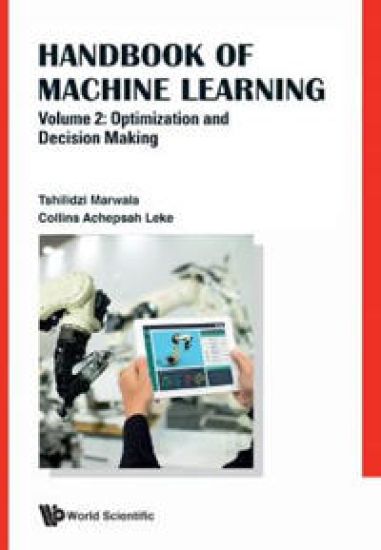
Handbook Of Machine Learning - Volume 2: Optimization And Decision Making

Handbook Of Machine Learning - Volume 2: Optimization And Decision Making

Tshilidzi Marwala; Collins Achepsah Leke

World Scientific Publishing Co Pte Ltd
2019
sidottu
Building on , this volume on Optimization and Decision Making covers a range of algorithms and their applications. Like the first volume, it provides a starting point for machine learning enthusiasts as a comprehensive guide on classical optimization methods. It also provides an in-depth overview on how artificial intelligence can be used to define, disprove or validate economic modeling and decision making concepts.
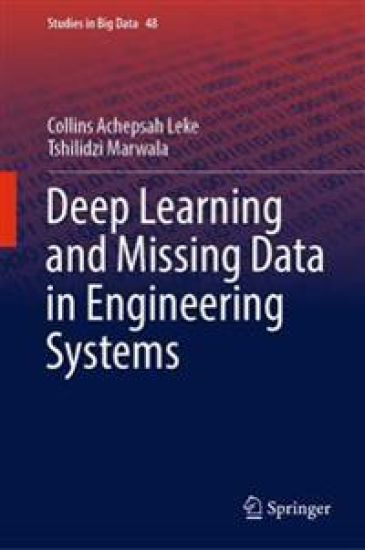
Deep Learning and Missing Data in Engineering Systems

Deep Learning and Missing Data in Engineering Systems

Collins Achepsah Leke; Tshilidzi Marwala

Springer Nature Switzerland AG
2019
sidottu
Deep Learning and Missing Data in Engineering Systems uses deep learning and swarm intelligence methods to cover missing data estimation in engineering systems. The missing data estimation processes proposed in the book can be applied in image recognition and reconstruction. To facilitate the imputation of missing data, several artificial intelligence approaches are presented, including:deep autoencoder neural networks;deep denoising autoencoder networks;the bat algorithm;the cuckoo search algorithm; andthe firefly algorithm. The hybrid models proposed are used to estimate the missing data in high-dimensional data settings more accurately. Swarm intelligence algorithms are applied to address critical questions such as model selection and model parameter estimation. The authors address feature extraction for the purpose of reconstructing the input data from reduced dimensions by the use of deep autoencoder neural networks. They illustrate new models diagrammatically, report their findings in tables, so as to put their methods on a sound statistical basis. The methods proposed speed up the process of data estimation while preserving known features of the data matrix. This book is a valuable source of information for researchers and practitioners in data science. Advanced undergraduate and postgraduate students studying topics in computational intelligence and big data, can also use the book as a reference for identifying and introducing new research thrusts in missing data estimation.