

Kirjailija
Dacia Maraini
Kirjat ja teokset yhdessä paikassa: 32 kirjaa, julkaisuja vuosilta 1993–2026, suosituimpiin kuuluu Querido Pier Paolo. Vertaile teosten hintoja ja tarkista saatavuus suomalaisista kirjakaupoista.
32 kirjaa
Kirjojen julkaisuvuodet: 1993–2026.
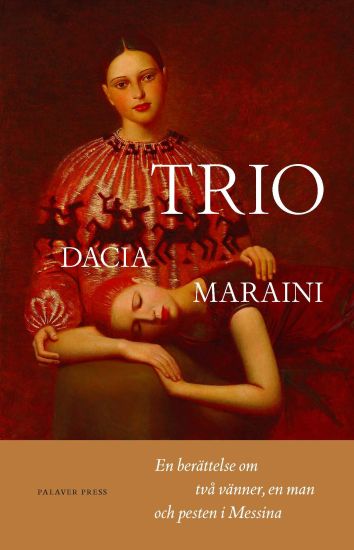
Trio : en berättelse om två vänner, en man och pesten i Messina
Dacia Maraini
Bokförlaget palaver press AB
2026
sidottu
Trio är en finstämd brevroman om vänskap av en av italiens främsta författare. Sicilien, 1743. Pesten härjar i Messina. Barndomsvännerna Agata och Annuzza flyr till landsbygden och håller kontakten genom brev. Deras vänskap har djupa rötter, men prövas när Annuzza förälskar sig i Agatas make. Ändå är det inte kärleken, utan vänskapen, som består när världen rasar samman.


Dacia Maraini's memoir, The Ship for Kobe, features a series of recollections which weave her mother's diaries written in 1939, when the family embarked for Kobe, Maraini's own travels with Italian luminaries of the era, such as Fellini, Callas, Moravia, and Pasolini, and the profound experience of the concentration camp for anti-fascists in Nagoya, where the family was deported.

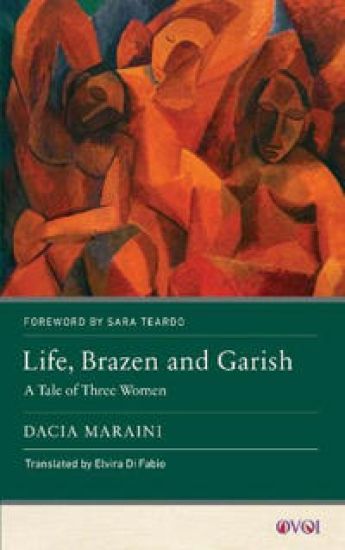
Three generations of women live together under the same roof. Though they are united by blood, each of the Cascadei women has a very different personality and way of expressing herself. Teenage daughter Lori scribbles impulsively in her diary, so eager to speed off on her moped that she rarely bothers with punctuation. Mother Maria, a professional translator, writes detailed and observant letters yet doesn’t see what is happening right in front of her. And grandmother Gesuina, a former stage actress, speaks into an audio recorder, giving a provocative and brutally candid performance for an imagined audience that might never listen. Life, Brazen and Garish offers a fresh take on the epistolary novel, telling the story of a family through the fragmented and disparate perspectives of daughter, mother, and grandmother. Yet even as each woman endures her private struggles with love and betrayal, youth and maturity, knowledge and ignorance, reality and illusion, the Cascadeis forge a solidarity that transcends generations. In turns heartbreaking and laugh-out-loud funny, this novel is a triumph of narrative voice and literary style from one of Italy’s most renowned writers. Questo libro è stato tradotto grazie a un contributo del Ministero degli Affari Esteri e della Cooperazione Internazionale italiano. This book has been translated thanks to a contribution from the Italian Ministry of Foreign Affairs and International Cooperation.
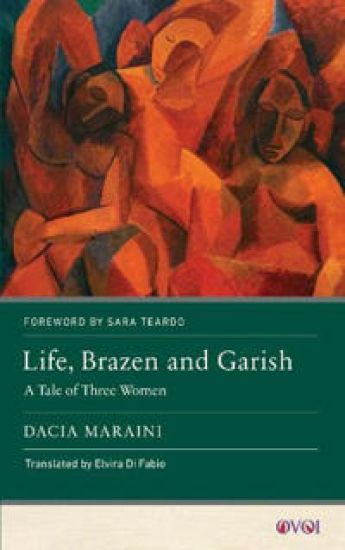
Three generations of women live together under the same roof. Though they are united by blood, each of the Cascadei women has a very different personality and way of expressing herself. Teenage daughter Lori scribbles impulsively in her diary, so eager to speed off on her moped that she rarely bothers with punctuation. Mother Maria, a professional translator, writes detailed and observant letters yet doesn’t see what is happening right in front of her. And grandmother Gesuina, a former stage actress, speaks into an audio recorder, giving a provocative and brutally candid performance for an imagined audience that might never listen. Life, Brazen and Garish offers a fresh take on the epistolary novel, telling the story of a family through the fragmented and disparate perspectives of daughter, mother, and grandmother. Yet even as each woman endures her private struggles with love and betrayal, youth and maturity, knowledge and ignorance, reality and illusion, the Cascadeis forge a solidarity that transcends generations. In turns heartbreaking and laugh-out-loud funny, this novel is a triumph of narrative voice and literary style from one of Italy’s most renowned writers. Questo libro è stato tradotto grazie a un contributo del Ministero degli Affari Esteri e della Cooperazione Internazionale italiano. This book has been translated thanks to a contribution from the Italian Ministry of Foreign Affairs and International Cooperation.


Staging Violence Against Women and Girls
Isley Lynn; Raúl Quirós Molina; Bahar Brunton; Karis E. Halsall; Dacia Maraini; Renato Chiocca
BLOOMSBURY PUBLISHING PLC
2023
sidottu
Staging Violence Against Women and Girls brings together three contemporary plays that denounce gendered violence, along with interviews with their creators and the practitioners who have staged them in different national contexts. Little Stitches (London, 2014): consisting of four short pieces by Isley Lynn, Raúl Quirós Molina, Bahar Brunton and Karis E. Halsall, this play presents Female Genital Mutilation/Cutting (FGM/C) from the points of view of by-standers, anti-FGM/C activists, health professionals, women who perpetuatethe practice and, finally, survivors.‘Kubra’ (Sydney, 2016): written by Dacia Maraini, this short play features a young woman who was subjected to FGM/C as a child and now, years later, brings her case to court in a search for justice. A Trial for Rape (Rome, 2018): adapted for theatre by Renato Chiocca from the international award-winning 1979 documentary of the same name, this play reveals how judicial procedures and attitudes toward sexual violence tend to turn rape survivors from accusers into accused. In their interviews, the writers, directors and producers discuss their conception and production of the works collected in Staging Violence Against Women and Girls. The plays and their creators highlight the urgency of raising awareness of these forms of violence and giving voice to survivors.

Staging Violence Against Women and Girls
Isley Lynn; Raúl Quirós Molina; Bahar Brunton; Karis E. Halsall; Dacia Maraini; Renato Chiocca
BLOOMSBURY PUBLISHING PLC
2023
nidottu
Staging Violence Against Women and Girls brings together three contemporary plays that denounce gendered violence, along with interviews with their creators and the practitioners who have staged them in different national contexts. Little Stitches (London, 2014): consisting of four short pieces by Isley Lynn, Raúl Quirós Molina, Bahar Brunton and Karis E. Halsall, this play presents Female Genital Mutilation/Cutting (FGM/C) from the points of view of by-standers, anti-FGM/C activists, health professionals, women who perpetuatethe practice and, finally, survivors.‘Kubra’ (Sydney, 2016): written by Dacia Maraini, this short play features a young woman who was subjected to FGM/C as a child and now, years later, brings her case to court in a search for justice. A Trial for Rape (Rome, 2018): adapted for theatre by Renato Chiocca from the international award-winning 1979 documentary of the same name, this play reveals how judicial procedures and attitudes toward sexual violence tend to turn rape survivors from accusers into accused. In their interviews, the writers, directors and producers discuss their conception and production of the works collected in Staging Violence Against Women and Girls. The plays and their creators highlight the urgency of raising awareness of these forms of violence and giving voice to survivors.
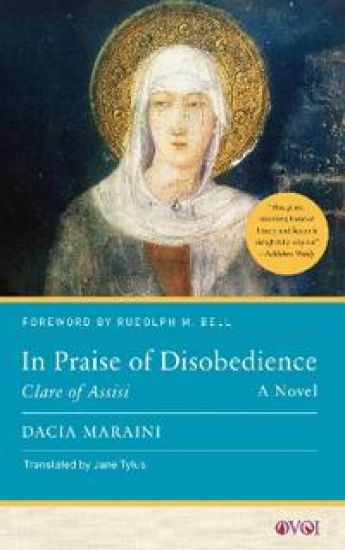
An author receives a mysterious e-mail begging her to tell the story of Clare of Assisi, the thirteenth-century Italian saint. At first annoyed by the request, the author begins to research Saint Clare and becomes captivated by her life. We too are transported into the strange and beautiful world of medieval Italy, witnessing the daily rituals of convent life. At the center of that life is Saint Clare, a subversive and compelling figure full of contradictions: a physically disabled woman who travels widely in her imagination, someone unforgivingly harsh to herself yet infinitely generous to the women she supervises, a practitioner of self-abnegation who nevertheless knows her own worth. A visionary who liberated herself from the chains of materialism and patriarchy, Saint Clare here becomes an inspirational figure for a new generation of readers.
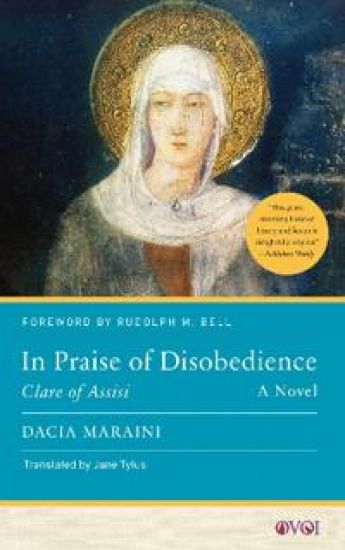
An author receives a mysterious e-mail begging her to tell the story of Clare of Assisi, the thirteenth-century Italian saint. At first annoyed by the request, the author begins to research Saint Clare and becomes captivated by her life. We too are transported into the strange and beautiful world of medieval Italy, witnessing the daily rituals of convent life. At the center of that life is Saint Clare, a subversive and compelling figure full of contradictions: a physically disabled woman who travels widely in her imagination, someone unforgivingly harsh to herself yet infinitely generous to the women she supervises, a practitioner of self-abnegation who nevertheless knows her own worth. A visionary who liberated herself from the chains of materialism and patriarchy, Saint Clare here becomes an inspirational figure for a new generation of readers.


Självlysande romanklassiker med förord av Lina WolffDet är tidigt 1700-tal på Sicilien. Efter ett trauma i barndomen är hertiginnan Marianna Ucrìa både döv och stum och lever i en värld av tystnad. Hon är bortgift med en liderlig släkting men kämpar mot alla konventioner för att bilda sig och finna sin plats i en värld där hon betraktas som föga mer än egendom. Hennes liv är lika mycket villkorat av traditioner och realpolitik som av sexuell äganderätt. I en värld av överdåd, lyx och korruption blir varje uttryck för självständighet farligt, varje strävan efter frihet livshotande. På ett självlysande språk fångar Dacia Maraini den starka livsviljan hos en kvinna som är instängd i tystnad och omgärdad av våld. I svensk översättning av Ing-Britt Björklund och med ett nyskrivet förord av författaren Lina Wolff. DACIA MARAINI är en italiensk författare, född 1936. Hon har haft avgörande betydelse för italienskt kulturliv, inte bara som författare utan också som dramatiker och teatermänniska. 1973 var hon med och grundade Teatro della Maddalena som drivs av enbart kvinnor. Den stumma hertiginnan, som utkom första gången 1990, presenteras här med ett nyskrivet förord av Lina Wolff.

Fem kvinnor berättar om olika typer av våld de har varit utsatta för. Deras röster kommer från Tibet, Kalifornien, Italien, Belgien. Våld mot kvinnor känner inga gräser och uttrycker sig lika brutalt överallt.

Filmregissören John Waters har sagt om Marainis författarkollega Elena Ferrante att hon är the best angry woman writer ever. Kanske har han inte läst Dacia Maraini.« Ur Annina Rabes förord Enrica, 17, är från en fattig familj i Rom. Hennes mor är den enda som drar in pengar, medan fadern mest dricker. Som ung kvinna är hon ett ständigt villebråd när hon går ut. Och som ung kvinna är hennes framtidsvillkor ytterligt strama. Enrica skyddar sig med hård likgiltighet. Inte ens när modern dör, eller när hon själv genomgår en plågsam abort, visar hon några känslor. Så lär hon känna den rika grevinnan Bardengo och en »finare« värld som blottar om möjligt ännu större avgrunder av förfall. Enrica rör sig genom den som en sömngångare, och som en obarmhärtigt skarp iakttagare. Dacia Marainis Olustens år [L'età del malessere] belönades 1963 med det prestigefyllda Prix Formentor. I dag räknas romanen till klassikerna inom den italienska socialrealismen, som en tidig italiensk feministisk roman, samt en stilistisk föregångare till författaren Elena Ferrante. I svensk översättning av Karin de Laval och med ett nyskrivet förord av kritikern Annina Rabe. DACIA MARAINI född 1936 i Fiesole i Toscana, är en italiensk romanförfattare, poet, och dramatiker. Hon debuterade 1962 med romanen La Vacanza [Semestern]. Under många år levde hon tillsammans med den kända italienske författaren Alberto Moravia, och i hennes umgänge ingick personer som författaren och filmaren Pier Paolo Pasolini och operasångerskan Maria Callas. I dag tillhör hon Italiens främsta författare, mångfaldigt prisbelönt. I hemlandet är hon också en uppmärksammad politisk och feministisk debattör. På nittiotalet skapade hon rubriker med sitt sätt att öppet kritisera påven i abortfrågan.» Dacia Maraini innehar en särställning i italiensk litteratur.« The New York Times


La campa a mundial "No m s violencia contra las mujeres" de Amnist a Internacional (https: //amnistia.org.mx/) hace un llamado a los Estados para que cumplan con sus obligaciones internacionales de tomar medidas para prevenir y detener la violencia dom stica y garantizar una reparaci n adecuada para las v ctimas. Para que esta campa a alcance resultados concretos, es necesario apoyar la acci n fundamental de las asociaciones, de los centros antiviolencia, de las casas-refugio, de los servicios m dicos y legales. Adem s, es necesario dar a conocer las historias recopiladas con tanta dedicaci n y solidaridad por Dacia Maraini en este valioso volumen. Amnist a Internacional