
Kirjailija
Dan Stone
Kirjat ja teokset yhdessä paikassa: 29 kirjaa, julkaisuja vuosilta 2002–2027, suosituimpiin kuuluu Thinking Europe’s Catastrophe. Vertaile teosten hintoja ja tarkista saatavuus suomalaisista kirjakaupoista.
29 kirjaa
Kirjojen julkaisuvuodet: 2002–2027.

Thinking Europe’s Catastrophe
Dan Stone
ibidem-Verlag Jessica Haunschild u Christian Schon
2026
Sidottu
Thinking Europe’s Catastrophe: Selected Essays brings together some of historian Dan Stone’s most influential articles. With a focus on the history and interpretation of the Holocaust, the chapters range widely in history of ideas especially the idea of ‘race’, fascism, and genocide. Social history, international history, and the history of the human sciences are all represented here. From studies of individual thinkers from a range of scholarly backgrounds, to analyses of postwar tracing, open source intelligence, archival history, psychoanalysis, and collective memory, these chapters offer a way into Stone’s large body of work and show how his various approaches to the past are united by the attempt to uncover, from as wide a perspective as possible, the sources of Europe’s mid-twentieth-century catastrophe and to appreciate the Holocaust’s effects on the postwar world.

Thinking Europe’s Catastrophe
Dan Stone
ibidem-Verlag Jessica Haunschild u Christian Schon
2026
Sidottu
Thinking Europe’s Catastrophe: Selected Essays brings together some of historian Dan Stone’s most influential articles. With a focus on the history and interpretation of the Holocaust, the chapters range widely in history of ideas especially the idea of ‘race’, fascism, and genocide. Social history, international history, and the history of the human sciences are all represented here. From studies of individual thinkers from a range of scholarly backgrounds, to analyses of postwar tracing, open source intelligence, archival history, psychoanalysis, and collective memory, these chapters offer a way into Stone’s large body of work and show how his various approaches to the past are united by the attempt to uncover, from as wide a perspective as possible, the sources of Europe’s mid-twentieth-century catastrophe and to appreciate the Holocaust’s effects on the postwar world.

»Även den som tror sig kunna ämnet kommer här att finna saker som får en att fundera … Överraskande och provokativ … En lysande bok.» /Dominic Sandbrook i SUNDAY TIMES »Överraskade … En tät men tillgänglig framställning som sträcker sig bortom dödslägren.» /Jennifer Szalai i NEW YORK TIMES »Dan Stones bok är en fenomenal studie som på ett tankeväckande och informativt sätt uppdaterar synen på det judiska folkmordet.» /Jeffrey Veidlinger i TIMES LITERARY SUPPLEMENT ”Handlingsprogrammet mot judarna innebar att de berövades sin rösträtt, stigmatiserades, frånkändes sina medborgerliga rättigheter, utsattes för fysisk misshandel och skadegörelse på egendom, deporterades, förslavades, sattes i tvångsarbete, svältes ut, mördades och massutrotades.” Så inleder Dan Stone sin bok om förintelsen i hela dess vidd – från de samhälleliga och sociala förutsättningarna från tiden efter första världskriget till dess klimax under andra världskriget. Stone problematiserar idén om ett ”industriellt” mördande och menar att den är ofullständig: många av offren dödades på de mest brutala sätt där de levde. Han beskriver det djupgående samarbetet mellan nazister och lokala makthavarare över hela Europa och argumenterar övertygande för att vi måste sluta tänka på förintelsen som ett uteslutande tyskt projekt. Stone resonerar också kring de trauman förintelsen gav upphov till. Och han klargör att kärnan i förståelsen av nazisternas tänkande och agerande är deras folkmordsideologi, och ger en djupgående analys av dess ursprung. Med utgångspunkt i decennier av forskning omkullkastar Stones bok mycket av det vi tror oss veta om förintelsen. Stone utgår från nazistiska dokument, men också från dagböcker, samtida och senare vittnesmål och även skönlitteratur, och menar att vi i en tid av ökande nationalism och främlingsfientlighet behöver förstå förintelsens verkliga historia. DAN STONE är professor i modern historia vid Royal Holloway, University of London, där han leder dess Holocaust Research Institute.

The Holocaust: An Unfinished History
Dan Stone
Mariner Books
2025
nidottu
Halvin toimitettuna 23,20 €
A revelatory new history that reexamines the brutal reality of the Holocaust-and reinterprets the events as a living trauma from which modern society has not yet recoveredOne of the most acclaimed books of the year: "Outstanding" (Times Literary Supplement); "Remarkable" (Guardian); "Important and challenging" (Jewish Chronicle); "Deeply haunting" (Telegraph)The Holocaust is much discussed, much memorialized, and much portrayed. But there are major aspects of its history that have been overlooked. Spanning the entirety of the Holocaust, this sweeping history deepens our understanding. Dan Stone--Director of the Holocaust Research Institute at Royal Holloway, University of London--reveals how the idea of "industrial murder" is incomplete: many were killed where they lived in the most brutal of ways. He outlines the depth of collaboration across Europe, arguing persuasively that we need to stop thinking of the Holocaust as an exclusively German project. He also considers the nature of trauma the Holocaust engendered, and why Jewish suffering has yet to be fully reckoned with. And he makes clear that the kernel to understanding Nazi thinking and action is genocidal ideology, providing a deep analysis of its origins. Drawing on decades of research, The Holocaust: An Unfinished History upends much of what we think we know about the Holocaust. Stone draws on Nazi documents, but also on diaries, post-war testimonies, and even fiction, urging that, in our age of increasing nationalism and xenophobia, it is vital that we understand the true history of the Holocaust.
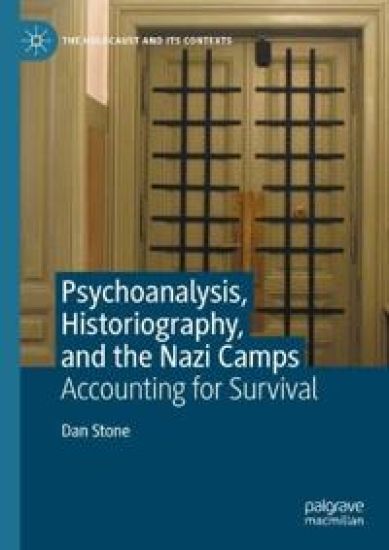
Psychoanalysis, Historiography, and the Nazi Camps
Dan Stone
Springer International Publishing AG
2024
sidottu
? In the postwar years, Dutch survivors Eddy de Wind, Louis Micheels, and Elie A. Cohen, who went on to become practicing psychoanalysts, penned accounts of their survival of the Nazi camps. Their sober assessments contrast sharply with those by Bruno Bettelheim and Viktor Frankl, which emphasized decisiveness, 'positive thinking', and resistance, missing the fact that many Holocaust victims with those characteristics or other qualities did not survive. De Wind’s, Micheels’ and Cohen’s accounts are more sober, (self-)critical, and shaped by analytical practice. By analyzing them anew and comparing them with accounts by female doctors who survived Block 10 in Auschwitz, this book argues that their theories of survival accord with contemporary sensibilities in psychoanalysis and Holocaust historiography. Psychoanalytic concepts have changed over time in response to greater understanding of the Holocaust and recent Holocaust historiography makes us more receptive to insights that were unfashionable in the first postwar decades.
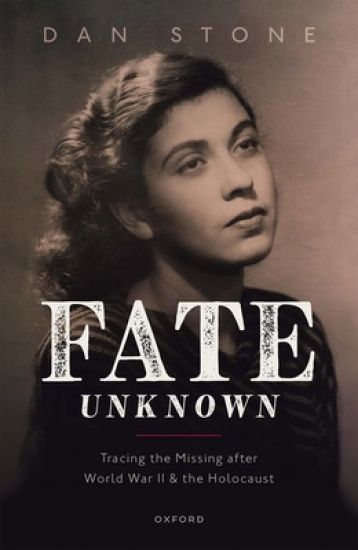
Dan Stone tells the story of the last great unknown archive of Nazism, the International Tracing Service. Set up by the Allies at the end of World War II, the ITS has worked until today to find missing persons and to aid survivors with restitution claims or to reunite them with loved ones. From retracing the steps of the 'death marches' with the aim of discovering the burial sites of those murdered across the towns and villages of Central Europe, to knocking on doors of German foster homes to find the children of forced labourers, Fate Unknown uncovers the history of this remarkable archive and its more than 30 million documents. Under the leadership of the International Committee of the Red Cross, the tracing service became one of the most secretive of postwar institutions, unknown even to historians of the period. Delving deeply into the archival material, Stone examines the little-known sub-camps and, after the war, survivors' experience of displaced persons' camps, bringing to life remarkable stories of tracing. Fate Unknown combs the archives to reveal the real horror of the Holocaust by following survivors' horrific journeys through the Nazi camp system and its aftermath. The postwar period was an age of shortage of resources, bitterness, and revenge. Yet the ITS tells a different story: of international collaboration, of commitment to justice, and of helping survivors and their relatives in the context of Cold War suspicion. These stories speak to a remarkable attempt by the ITS, before the Holocaust was a matter of worldwide interest, to carry out a programme of ethical repair and to counteract some of the worst effects of the Nazis' crimes.
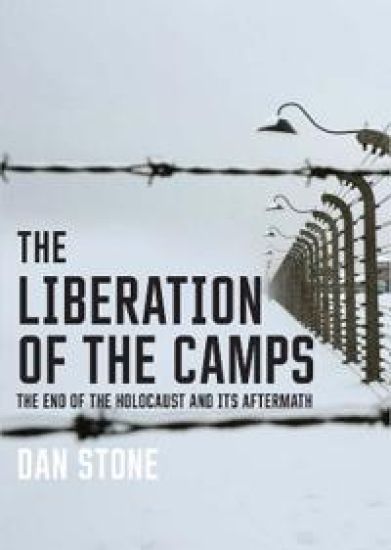
A moving, deeply researched account of survivors’ experiences of liberation from Nazi death camps and the long, difficult years that followed When tortured inmates of Hitler’s concentration and extermination camps were liberated in 1944 and 1945, the horror of the atrocities came fully to light. It was easy for others to imagine the joyful relief of freed prisoners, yet for those who had survived the unimaginable, the experience of liberation was a slow, grueling journey back to life. In this unprecedented inquiry into the days, months, and years following the arrival of Allied forces at the Nazi camps, a foremost historian of the Holocaust draws on archival sources and especially on eyewitness testimonies to reveal the complex challenges liberated victims faced and the daunting tasks their liberators undertook to help them reclaim their shattered lives. Historian Dan Stone focuses on the survivors—their feelings of guilt, exhaustion, fear, shame for having survived, and devastating grief for lost family members; their immense medical problems; and their later demands to be released from Displaced Persons camps and resettled in countries of their own choosing. Stone also tracks the efforts of British, American, Canadian, and Russian liberators as they contended with survivors’ immediate needs, then grappled with longer-term issues that shaped the postwar world and ushered in the first chill of the Cold War years ahead.
This book contains essays on Fascism, Nazism and the Holocaust by distinguished scholar Professor Dan Stone. It examines issues such as race science and the racial state, Nazi race ideology, slave labour, concentration camps, British reaction to the rise of Nazism and the Holocaust, the search for missing persons in the chaos of postwar Europe and the postwar revival of fascism. Though mainly focused on Nazi Germany, it also makes comparisons with other fascist movements and regimes in Romania and elsewhere. This book will be of great interest to scholars and students of antisemitism, fascism, Nazism, World War II, genocide studies and the Holocaust.

This book contains essays on Fascism, Nazism and the Holocaust by distinguished scholar Professor Dan Stone. It examines issues such as race science and the racial state, Nazi race ideology, slave labour, concentration camps, British reaction to the rise of Nazism and the Holocaust, the search for missing persons in the chaos of postwar Europe and the postwar revival of fascism. Though mainly focused on Nazi Germany, it also makes comparisons with other fascist movements and regimes in Romania and elsewhere. This book will be of great interest to scholars and students of antisemitism, fascism, Nazism, World War II, genocide studies and the Holocaust.

From a veteran of the trade, a provocative and entertaining voyage into the turbulent heart of modern money that sheds new light on the rise of our threatening and complicated financial system, how money became our adversary, and why finding a new course is crucial to a healthy societyIn the not too distant past, money was simple. You might have had a bank account and a mortgage, perhaps some basic investments. Wall Street didn't have a reputation for greed and recklessness. That all started to change in the eighties, as our financial systems became increasingly complex, moving beyond the understanding of the general public while impacting our lives in innumerable ways. The financial world began to feel like an enigma--a rogue force working against us, seemingly controlled by no one. From an industry veteran who's had firsthand involvement in the events that shaped modern money, How Money Became Dangerous journeys from the crime-ridden LA jewelry district to the cutthroat Salomon Brothers trading floor, from the high-stakes world of investment banking to the center of the technology boom, capturing the key deals, developments, and players that made the financial world what it is today. The book illuminates the dark, hidden forces of Wall Street and how it has dehumanized and left behind everyday Americans. A fresh and enlightening take on how we reached this point, How Money Became Dangerous also makes the case for why Wall Street needs to be saved, if only to save ourselves.
How Money Became Dangerous: The Inside Story of Our Turbulent Relationship with Modern Finance
Christopher Varelas; Dan Stone
Harpercollins
2019
cd
From a veteran of the trade, a provocative and entertaining voyage into the turbulent heart of modern money that sheds new light on the rise of our threatening and complicated financial system, how money became our adversary, and why finding a new course is crucial to a healthy societyIn the not too distant past, money was simple. You might have had a bank account and a mortgage, perhaps some basic investments. Wall Street didn't have a reputation for greed and recklessness. That all started to change in the eighties, as our financial systems became increasingly complex, moving beyond the understanding of the general public while impacting our lives in innumerable ways. The financial world began to feel like an enigma--a rogue force working against us, seemingly controlled by no one. From an industry veteran who's had firsthand involvement in the events that shaped modern money, How Money Became Dangerous journeys from the crime-ridden LA jewelry district to the cutthroat Salomon Brothers trading floor, from the high-stakes world of investment banking to the center of the technology boom, capturing the key deals, developments, and players that made the financial world what it is today. The book illuminates the dark, hidden forces of Wall Street and how it has dehumanized and left behind everyday Americans. A fresh and enlightening take on how we reached this point, How Money Became Dangerous also makes the case for why Wall Street needs to be saved, if only to save ourselves.

Concentration camps are a relatively new invention, a recurring feature of twentieth century warfare, and one that is important to the modern global consciousness and identity. Although the most famous concentration camps are those under the Nazis, the use of concentration camps originated several decades before the Third Reich, in the Philippines and in the Boer War, and they have been used again in numerous locations, not least during the genocides in Bosnia and Rwanda. Over the course of the twentieth century they have become defining symbols of humankind's lowest point and basest acts. In this Very Short Introduction, Dan Stone gives a global history of concentration camps, and shows that it is not only "mad dictators" who have set up camps, but instead all varieties of states, including liberal democracies, that have made use of them. Setting concentration camps against the longer history of incarceration, he explains how the ability of the modern state to control populations led to the creation of this extreme institution. Looking at their emergence and spread around the world, Stone argues that concentration camps serve the purpose, from the point of view of the state in crisis, of removing a section of the population that is perceived to be threatening, traitorous, or diseased. Drawing on contemporary accounts of camps, as well as the philosophical literature surrounding them, Stone considers the story camps tell us about the nature of the modern world as well as about specific regimes. ABOUT THE SERIES: The Very Short Introductions series from Oxford University Press contains hundreds of titles in almost every subject area. These pocket-sized books are the perfect way to get ahead in a new subject quickly. Our expert authors combine facts, analysis, perspective, new ideas, and enthusiasm to make interesting and challenging topics highly readable.

Swallowing the Red Pill: The Shocking Truth about the origin of life and the Universe
Dan Stone
Createspace Independent Publishing Platform
2018
nidottu
Swallowing the Red Pill uses Neo's choice to take the Red Pill in the film 'The Matrix' to challenge readers to question their deepest assumptions about the nature of reality. The book tackles ultimate questions such as 'How did the Universe begin' and 'Are living things designed' by exploring the answers offered by evolutionary biology and intelligent design. The book is unique in that it draws together all the big questions about origins in a logical and chronological order and frames them in the philosophical context of a search for truth, inspired by the Socratic Principle 'Follow the argument wherever it leads'. The book offers a critique of the current evolutionary paradigm and offers a radical alternative explanation for the origin of the Universe and life.

Fate Unknown: The Search for the Missing after the Holocaust: Exhibition catalogue
Dan Stone
Createspace Independent Publishing Platform
2018
nidottu
By the end of World War II, millions of people had been murdered or displaced by war and genocide. Families and communities were torn apart. Many were missing, and some people's fates remain unclear to this day. Despite immense logistical challenges, a number of charities, such as the British Red Cross Society and the Jewish Relief Unit, attempted to help find missing people and reunite families. Their efforts came together what became known as the International Tracing Service (ITS). Co-curated with Professor Dan Stone (Royal Holloway, University of London), this exhibition tells the remarkable, little-known story of the agonising search for the missing after the Holocaust. Drawing upon The Wiener Library's family document collections and its digital copy of the ITS archive, one of the largest document collections related to the Holocaust in the world, the exhibition considers the legacy of the search for descendants of those affected by World War II, and the impact of fates unknown.
Concentration camps are a relatively new invention, a recurring feature of twentieth century warfare, and one that is important to the modern global consciousness and identity. Although the most famous concentration camps are those under the Nazis, the use of concentration camps originated several decades before the Third Reich, in the Philippines and in the Boer War, and they have been used again in numerous locations, not least during the genocide in Bosnia. They have become defining symbols of humankind's lowest point and basest acts. In this book, Dan Stone gives a global history of concentration camps, and shows that it is not only "mad dictators " who have set up camps, but instead all varieties of states, including liberal democracies, that have made use of them. Setting concentration camps against the longer history of incarceration, he explains how the ability of the modern state to control populations led to the creation of this extreme institution. Looking at their emergence and spread around the world, Stone argues that concentration camps serve the purpose, from the point of view of the state in crisis, of removing a section of the population that is perceived to be threatening, traitorous, or diseased. Drawing on contemporary accounts of camps, as well as the philosophical literature surrounding them, Stone considers the story camps tell us about the nature of the modern world as well as about specific regimes.

The Rest of the Gospel (Chinese Version): When the Partial Gospel Has Worn You Out
Dan Stone; David Gregory
Brents Brothers Media
2015
nidottu
“Do I have life ‘more abundant’?” That’s a question millions of Christians have asked down through the ages. Dan Stone asked that question during a time of spiritual frustration in his own life and God answered by showing Dan he had been living only a part of the gospel message. Dan’s search led him to discover the truth of “Christ in you” as “the rest of the gospel” that most Christians overlook. Readers who are hungry for a deeper experience with God will resonate with Dan’s discovery of “the rest of the gospel,” which is indeed rest for everyone who is willing to finally let go and let God.
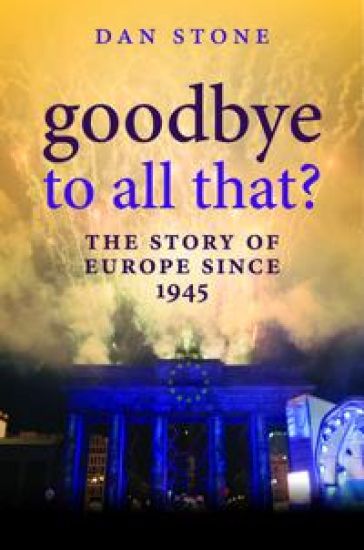
In the decade after 1945, as the Cold War freeze set in, a new Europe slowly began to emerge from the ruins of the Second World War, based on a broad rejection of the fascist past that had so scarred the continent's recent history. In the East, this new consensus was enforced by Soviet-imposed Communist regimes. In the West, the process was less coercive, amounting more to a consensus of silence. On both sides, much was deliberately forgotten or obscured. The years which followed were in many ways golden years for western Europe. Democracy became embedded in Germany, and eventually triumphed over dictatorship in Spain, Portugal, and Greece. Britain and France faced up to the necessity of decolonization. The European Economic Community was founded and went from strength to strength, as the economies of western Europe bounced back from the devastation of the war. The countries of the East lagged far behind and seemed caught in a perpetual game of catch-up, but even there conditions had improved since the end of the war, albeit at a much slower rate. Above all, throughout this period the European world continued to be sustained by the broad anti-fascist consensus that had emerged in the years after 1945. However, as Dan Stone shows in this new history of the continent since the war, this fundamental consensus began to break down in the wake of the oil shocks of the 1970s, a process which has rapidly accelerated since the end of the Cold War. Globalization, deregulation, and the erosion of social-democratic welfare capitalism in the West, and the collapse of the purported Communist alternative in the East, have all fatally undermined the post-war anti-fascist value system that predominated across Europe in the first four decades after the end of the Second World War. Ominously, this has been accompanied by a rise in right-wing populism and a widespread revision of the anti-fascist narrative on which this value system was based. The danger of this shift is now evident: financial and social crisis, an increasing inability on the part of European populations to resist historical myth-making, and the re-emergence of fascist ideas. The result, as Dan Stone warns, is socially divisive, politically dangerous, and a genuine threat to the future of a civilized Europe.

'I have been crucified with Christ; and it is no longer I who live, but Christ lives in me; and the life which I now live in the flesh I live by faith in the Son of God, who loved me and gave himself up for me.' Galatians 2:20 Having God's forgiveness is wonderful. Spending eternity with God is great. But for now, where is the abundant life Jesus promised? Why is the Christian life such a struggle? Because getting forgiven is only half of the gospel! The rest of the gospel is not us striving on our own to be good Christians, but Christ in us, living his life through us as we rest in him.