Kirjailija
David Armstrong
Kirjat ja teokset yhdessä paikassa: 47 kirjaa, julkaisuja vuosilta 1990–2025, suosituimpiin kuuluu Fivefold Training Modules. Vertaile teosten hintoja ja tarkista saatavuus suomalaisista kirjakaupoista.
47 kirjaa
Kirjojen julkaisuvuodet: 1990–2025.
People are not Edward's forte, but despite his best efforts, people are sometimes unavoidable. An autistic adult, Edwards finds his routine life disrupted by events that force him to face uncomfortable changes. First, he receives an unusual job assignment that requires him to make monthly visits to a cantankerous old man. Then his widowed mother's stroke forces Edward to become her caregiver. When the old man overcomes his drug addiction, he tries to make Edward his friend, and Edward is forced to learn to interact. The old man's recently divorced daughter comes to live with him, and Edward experiences his first romantic infatuation. His crush blossoms into love, which he struggles to express with his limited emotional intelligence. More changes tear Edward out of his routine existence as the old man, now his friend, develops cancer and passes away. He comes to grips with a world of changes and leaves the safety of the old man's porch to enter the doorway to love and a new life.

Set in south London, Making It Rain is a satirical dissection of office life and politics. We've all been there - workplaces made dysfunctional by inflated egos and competing ambitions - not to mention petty jealousies, imprudent liaisons, bullying and harassment. We may have variously enjoyed, ridiculed, challenged, lamented or simply endured the resulting disruption. Now, Making It Rain lifts the lid on some of our more squalid transgressions and spills the all-too-familiar beans with frankness and wit. Compounded by sexual tensions, the many threads within this intricate narrative start to unravel when Hannah exposes a very basic error in a prestige-project supposedly managed by her bosses. No one is very surprised when the messenger is blamed for her message... As the story unfolds, almost everyone proves vulnerable and strangely flawed... Deeply personal scores accumulate and wait to be settled... And will it ever stop raining?
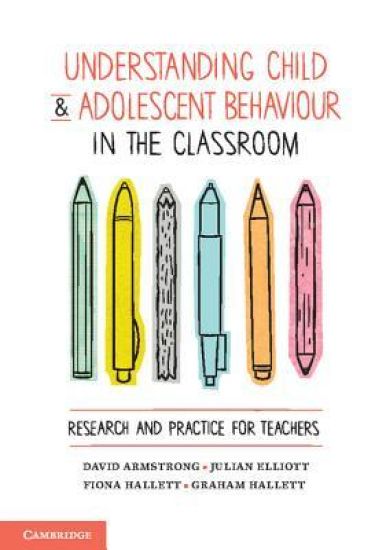
Understanding Child and Adolescent Behaviour in the Classroom
David Armstrong; Julian Elliott; Fiona Hallett; Graham Hallett
Cambridge University Press
2015
pokkari
Understanding Child and Adolescent Behaviour in the Classroom is a vital guide for pre-service and in-service teachers, providing the tools to respond effectively and ethically to child and adolescent behaviour that is of concern. In this innovative book, expert authors offer 'positive rules' that will assist educators in their classroom practice. Key practical issues that are addressed include: • Building a purposeful and emotionally and psychologically positive classroom culture • Recognising and responding to children who present with social, emotional and behavioural difficulties (SEBD/EBD) • Using research to inform and enrich classroom practice around student conduct • Working collegially to respond to the social, emotional and/or behavioural needs of individual students, including those needs associated with poor mental health and/or child protection Cutting-edge research from psychology, behavioural science and education is accessibly presented to help develop professional expertise and knowledge in the area of child and adolescent behaviour.
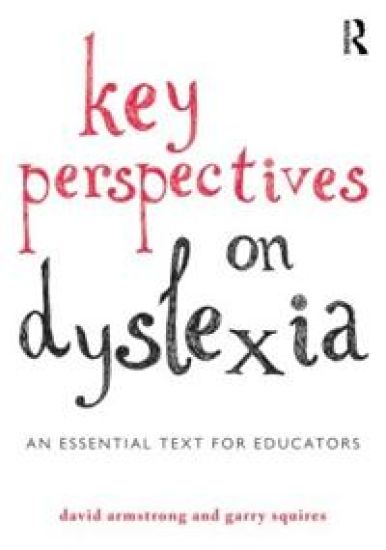
This indispensable book critically sets out the skills and knowledge required by a specialist educator for students who present with dyslexia. The British Dyslexia Association Professional Criteria (BDA, 2012) provides an anchor throughout for this book’s content. Chapters are explicitly mapped to specific professional criteria, offering the reader confidence that guidance in Key Perspectives on Dyslexia is underpinned by this internationally recognised professional framework. Key issues in the education and care of those affected by dyslexia are critically explained and explored in this publication, using both author’s years of specialist experience in this field. As established scholars both authors also suggest how research can inform and enrich how an educator responds to these issues. The content of this book includes:Detailed case studies disclosing how dyslexia presents in different individuals and which richly illuminate the issues considered by each chapterA concise examination of reading instruction in the context of typically-developing students and in relation to those who present with dyslexia: this incorporates an expert but accessible review of international policy and educational practice, including influential findings from research Detailed guidance on how to identify possible dyslexia and key issues to consider in referral and assessment of those affected, including associated models here such as Response to Intervention (RTI) Consideration of intelligence and in how this figures in relation to assessment for dyslexia, including the possible role of intellectual disability (ID). Comprehensive evaluation of the role of behaviour in relation to dyslexia, with guidance on how this can be used to inform a programme of support for students with social, emotional or behavioural difficulties (EBD/SEBD). Consideration of how the professional role of a specialist educator might travel across the English speaking world and also beyond in China or India. Key Perspectives on Dyslexia is an essential text for educators and will become a landmark guide for educational practice and policy.
The challenges and opportunities of teaching, with "how-to" strategies for working with today's students. Teaching Today: An Introduction to Education helps future teachers develop a broad understanding of the complex world of education. With an emphasis on topics that are relevant to the classrooms students will enter as educators, the authors provide basic information and alternative perspectives on the issues. Students see how to develop their own personal perspectives, and track their growth toward becoming professional educators. The focus is on developing a broad understanding of the complex world of education, and producing quality teachers who have a clear grasp of the basic issues, coupled with a strong does of the realities of teaching today. For courses in Introduction to Teaching. Pearson eText is an easy-to-use digital textbook that you can purchase on your own or instructors can assign for their course. The mobile app lets you keep on learning, no matter where your day takes you, even offline. You can also add highlights, bookmarks, and notes in your Pearson eText to study how you like. NOTE: This ISBN is for the Pearson eText access card. Pearson eText is a fully digital delivery of Pearson content. Before purchasing, check that you have the correct ISBN. To register for and use Pearson eText, you may also need a course invite link, which your instructor will provide. Follow the instructions provided on the access card to learn more.
The moving story of triumph over the life-long effects of shocking sexual and physical abuse at an English Catholic 'Approved' School.
How to Stop Common Core 2nd Edition: A Step-by-Step Kit for Stopping Common Core at the Local Level
David Armstrong; Marian Armstrong
Armstrong Publishing
2013
nidottu
More than a book, this is a complete kit with step-by-step instructions on stopping the Common Core takeover of your local schools. Learn who makes education decisions and how to influence them Win the arguments against Common Core with provable facts and information Learn from successful Common Core reversals in other locations Use technology to leverage your campaign, step-by-step Free effective letter and email templates online Learn how to use Google to find the names, addressed and email addresses of decision makers Step-by-step instructions on broadcasting emails and letters using Office and Google Docs Learn how to send thousands of email and letters with a single click
The Special Operations Executive (SOE) was the paramount Allied sabotage force of the Second World War. Its job - in Churchill's words - was to "set Europe ablaze" through the use of sabotage, insurrection and assassination. One of its "shining Stars" and "legends" was the close-combat pistol instructor, Colonel Hector Grant-Taylor. Grant-Taylor taught the commandos, secret agents and irregular soldiers the art of how to kill at close quarters. He taught them how to be ruthless, lethal and covert, and yet his own life was itself a mystery worthy of a John Buchan thriller novel. Misinformation, deception, bravery, murder, and ultimately redemption, all play a part in his story. At Close Quarters finally puts to rest the myths and legends that surrounded his life, and unravels the mysterious truth behind the enigma that was Colonel Hector Grant-Taylor!
Contemporary Issues in Special Educational Needs: Considering the Whole Child
David Armstrong; Garry Squires
Open University Press
2012
nidottu
This thought-provoking and accessible book provides an overview of key issues in the education of children with Special Educational Needs and Disabilities. Written by highly experienced practitioners and educationalists, the book explores a range of approaches for working with this diverse group of learners and invites you to consider your possible responses. The book begins with an historical overview of Special Educational Needs and Disabilities and a critical guide to current policy. The contributors then expertly explore and summarise many of the fascinating topics which arise in practice and scholarly research in this area, including: Ethical and practical implications of labelling children and young people with forms of special educational needs or disabilityThe role of special schools, particularly in light of enduring debates about inclusion/exclusionWhat increased student participation, student voice and other facets of a democratic classroom mean for students with Special Educational Needs and Disabilities The contributions psychology can make to developing and enriching educational practice Understanding ‘behaviour’ in relation to children and young people with Special Educational Needs and Disabilities Case studies are used to illustrate these discussions and the book includes suggested protocols for good practice throughout. Throughout the book the reader is asked to reflect on the issues presented and come to their own decisions about what represents good practice in their setting. The journey concludes with a look at a possible ‘ideal’ school or educational setting for children with Special Educational Needs and Disabilities. Contemporary Issues in Special Educational Needs is an invaluable guide for trainee and qualified teachers, learning support staff, SENCO’s, local authority officers, educational consultants and educational psychologists.“This book presents a stimulating and up-to-date overview of the context of education in SEN and suggests how educators can address special needs most effectively by keeping in mind an image of the development of the whole child.” Tony Cline, Educational Psychology Group, University College London, UK.“This book provides readers with a fresh, often incisive approach to many perennial issues in education.” Dr Victor Martinelli, University of Malta, Malta.“This book provides a welcome overview and commentary on current complex issues and problems affecting all those with an interest in children and young people with special educational needs. This book is an excellent compilation of relevant contemporary pieces thoughtfully woven together by highly skilled, well-placed editors.” Jane Leadbetter, University of Birmingham, UK.
International Law and International Relations
David Armstrong; Theo Farrell; Hélène Lambert
Cambridge University Press
2012
sidottu
In this fully updated and revised edition, the authors explore the evolution, nature and function of international law in world politics and situate international law in its historical and political context. They propose three interdisciplinary 'lenses' (realist, liberal and constructivist) through which to view the role of international law in world politics and suggest that the concept of an international society provides the overall context within which international legal developments occur. These theoretical perspectives offer different ways of looking at international law in terms of what it is, how it works and how it changes. Topics covered include the use of force, international crimes, human rights, international trade and the environment. The new edition also contains more material on non-western perspectives, international institutions and non-state actors and a new bibliography. Each chapter features discussion questions and guides to further reading.
International Law and International Relations
David Armstrong; Farrell Theo; Hélène Lambert
Cambridge University Press
2012
pokkari
In this fully updated and revised edition, the authors explore the evolution, nature and function of international law in world politics and situate international law in its historical and political context. They propose three interdisciplinary 'lenses' (realist, liberal and constructivist) through which to view the role of international law in world politics and suggest that the concept of an international society provides the overall context within which international legal developments occur. These theoretical perspectives offer different ways of looking at international law in terms of what it is, how it works and how it changes. Topics covered include the use of force, international crimes, human rights, international trade and the environment. The new edition also contains more material on non-western perspectives, international institutions and non-state actors and a new bibliography. Each chapter features discussion questions and guides to further reading.
Teaching in the Secondary School, Seventh Edition, utilizes using a reflective approach to learning and prepares secondary school teachers, in an era of change, for the realities of teaching in today’s classrooms. Highlighting critical issues such as diversity, differentiated instruction, cooperative learning, direct instruction, higher-level thinking, assessment, planning, classroom management, legal issues that teachers may confront, and career-long professional development, this thoroughly updated and revised text equips teachers with the tools they need to successfully face the day-to-day classroom environment, and the real challenges facing today’s secondary school students and educators. This edition features all new information on: education reform proposals, such as: Race To The Top and Breaking Ranks, and how the role of secondary teachers is changing; diagnostic, formative, and summative assessments, and a new emphasis on planning assessment prior to planning instruction, outlined in the “Backward Design” model; writing across the curriculum and the increase in integrating literacy across the curriculum in all secondary classes; bullying, cyber-bullying, school violence, and drug abuse, including legal issues and school responsibility alerts teachers to the serious misbehaviors that exist in today’s schools and one of the most common and pressing concerns of new teachers; and the tremendous opportunities the internet provides for professional development purposes, such as using webinars, podcasts, and e-workshops.
Show of Hands - A Natural History of Sign Language
David Armstrong
Gallaudet University Press,U.S.
2011
nidottu
Most scholarly speculation on the origin of human language has centered around speech. However, the growing understanding of sign languages on human development has transformed the debate on language evolution. David F. Armstrong's new book Show of Hands: A Natural History of Sign Language casts a wide net in history and geography to explain how these visible languages have enriched human culture in general and how their study has expanded knowledge of the human condition. Armstrong addresses the major theories of language evolution, including Noam Chomsky's thesis of an innate human "organ" for language and Steven Pinker's contention that there is language and not-language without any gradations between gesture and language. This engrossing survey proceeds with William C. Stokoe's revival of the early anthropological cognitive-linguistic model of gradual development through the iconicity of sign languages. Armstrong ranges far to reveal the nature of sign languages, from the anatomy of early human ancestors to telling passages by Shakespeare, Dickens, and Pound, to the astute observations of Socrates, Lucretius, and Abb de l'Ep e on sign communication among deaf people. Show of Hands illustrates the remarkable development of sign languages in isolated Bedouin communities and among Australian indigenous peoples. It also explores the ubiquitous benefits of "Deaf Gain" and visual communication as they dovetail with the Internet and its mushrooming potential for the future.
'For you, voting Conservative would be just like adultery and you won't know what a pleasure that is until you've tried it!' Lucy tires of her husband, Barry, and his serial infidelities. She begins an affair with their mutual friend Tom, who responds willingly. Complicities, deceits and manipulations inevitably follow in a reflective story set amongst the chattering classes of South London during the months leading up to the General Election of 2005.
A pictorial history of Grimsby through a series of old photographs and images, along with historical captions.
The author has been a leading figure internationally in the fields of organizational consultancy and group relations for many years. Robert French and Russ Vince have gathered together, for the first time, his key writings in this area. This is essential reading for managers and leaders, as well as organizational consultants, academics and students of organizations. Part of the Tavistock Clinic Series.