Kirjojen hintavertailu – 12 903 724 kirjaa ja 27 kauppaa

Kirjailija

David Armstrong

Kirjat ja teokset yhdessä paikassa: 47 kirjaa, julkaisuja vuosilta 1990–2025, suosituimpiin kuuluu Fivefold Training Modules. Vertaile teosten hintoja ja tarkista saatavuus suomalaisista kirjakaupoista.

47 kirjaa

Kirjojen julkaisuvuodet: 1990–2025.

International Organisation in World Politics

International Organisation in World Politics

David Armstrong; Lorna Lloyd; John Redmond

Red Globe Press
2004
nidottu
Since the end of the Cold War, international organisations have assumed a greater importance on the world stage. The United Nations has played a key role in all of the major security issues during this period - increasingly called upon to address other global problems such as poverty and international crime - while the European Union has created a single currency and moved towards the adoption of a constitution. The growing significance of the World Trade Organisation and other economic institutions has led some to talk of the emergence of a structure of global governance; and international non-governmental organisations and social movements are now widely seen as forming a kind of global civil society that both challenges and participates in these developments. Building on the success of the previous edition (Versailles to Maastricht: International Organisation in the Twentieth Century), this book is a valuable introduction to the complex history of modern international organisation. David Armstrong, Lorna Lloyd and John Redmond:- pay close attention to the League of Nations, the UN and the EU- offer chapters on the new regionalism, global governance and international regimes and global civil society- adopt a thematic and analytical approach to the subject- provide a concise factual account of the rise of the international organisation
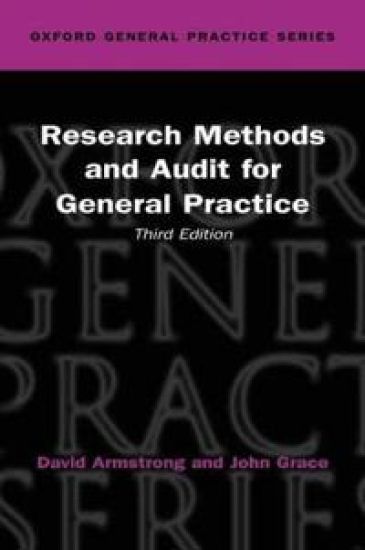
Research Methods and Audit in General Practice

Research Methods and Audit in General Practice

David Armstrong; John Grace

Oxford University Press
2000
nidottu
This book is the third edition of a highly successful book in the Oxford General Practice Series. The aim is to provide practical guidance to get you to the point where you will be able to complete and publish a research project of your own. In this respect the book is intended as a basic research primer. The book is organised to follow the research process, from the initial formulation of a researchable question, through the process of deciding on a plan (the design), choosing a sample, and devising appropriate measurement 'instruments, to the data analysis and final writing up of the project. The book is appropriate for individuals planning research and groups. The text has been extensively revised, in part as a response to the increasingly important part palyed by computers in research. But also research techniques are in a contant state of development so it was opportune to update sections on research design and statistics. The last chapter on audit has now been placed in the context of clinical governance. From reviews from first edition: Practical, comprehensive, readable...better than the competition; well worth getting (like the rest of the series). Postgraduate Education for General Practice The text is comprehensible and guides the reader in a structured way through the research process. It will make a valuable contribution to improving research in general practice. Family Practice
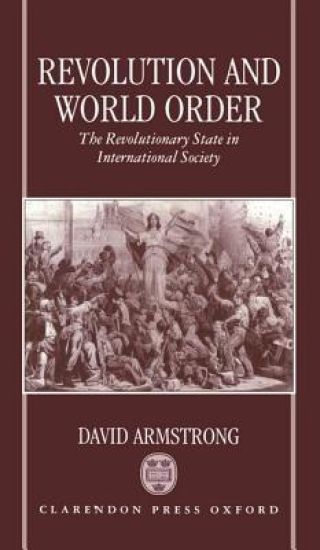
Revolution and World Order

Revolution and World Order

David Armstrong

Clarendon Press
1993
sidottu
In this important study David Armstrong examines the impact of revolutionary states on the international system. These states have always posed major problems for the achievement of world order: revolution is often accompanied by international as well as civil conflict, while revolutionary doctrines have proven to be highly disruptive of the existing structure of international politics. Dr Armstrong asks whether revolutionary states are `socialized' into adopting acceptable patterns of international behaviour or whether it is international society that is forced to change when these new states appear. He looks in detail at the French, American, and Russian revolutions and at several post-1945 revolutionary states; he also examines the relationship between revolutionary states and the principal ordering devices of international society: international law, diplomacy, and the balance of power. His book is a major contribution to international relations and an important development and application of the `international society' concept.
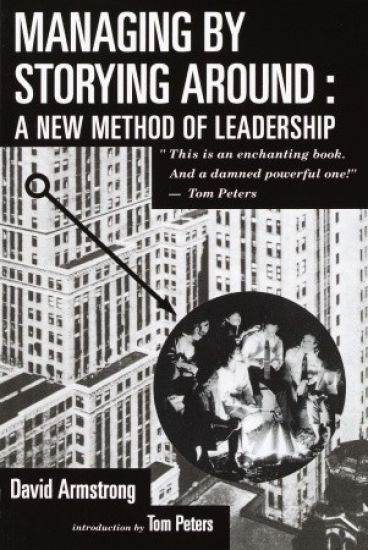
Managing by Storying Around

Managing by Storying Around

David Armstrong

Bantam Doubleday Dell Publishing Group
1992
pokkari
From the original book "Managing By Storying Around", this 4 disc CD package are stories told by David Armstrong about Armstrong International employees and his methods of great leadership and management ideas.
Horace

Horace

David Armstrong

Yale University Press
1990
pokkari
Among the greatest names in Roman—and European—poetry has always been that of Horace. Through all the centuries since his death in 8 B. C., his superb poetic craftsmanship has remained unassailable. Yet the full range and depth of his humanity continue to prove curiously elusive, especially for the nonspecialist reader to whom above all this book is directed. In the days when Latin was generally read, Horace was too often seen as the poet of establishments, whether the establishment involved was the imperial Roman court, the aristocracy of Augustan England, or the nineteenth-century educational system, and something of that reputation has lingered on even into our own day. To see him thus is the entire aim of David Armstrong’s new study. From it emerges not just the illustrious master (“famous, calm, and dead”) in the arts of lyric and satiric poetry, but the freedman’s son who struggled through the terrible upheavals of the collapsing Roman Republic to become, by sheer force of genius, a member of the brilliant circle surrounding the Emperor Augustus. To the very end of that adventurous career on the fringes of power, Horace retained an extraordinary candor, independence, and common sense. It is as the ultimate critic and connoisseur, not merely of literature but also of love and life itself, that he surveys the Augustan scene: the tragicomedy of bisexual politics in the demi-monde, the pretentious fashions of middle-class dinner parties, the pomposity of jurists and philosophers, the idiocies of the literati, and not least the grandeur and terror of a novel political entity—an empire almost coextensive with the known world. The poetry thus restored to life proves to be a poetry for all thinking and feeling people.