Kirjailija
David Brown
Kirjat ja teokset yhdessä paikassa: 223 kirjaa, julkaisuja vuosilta 1980–2026, suosituimpiin kuuluu The Art of Business Wars: Battle-Tested Lessons for Leaders and Entrepreneurs from History's Greatest Rivalries. Vertaile teosten hintoja ja tarkista saatavuus suomalaisista kirjakaupoista.
223 kirjaa
Kirjojen julkaisuvuodet: 1980–2026.

A science fiction tale like no other ever written. Earth collides with Planet Orgasm and the two races which live there. Only through a great Orgasm will the universe finally be united but how that Orgasm will be attained is anyone's guess.
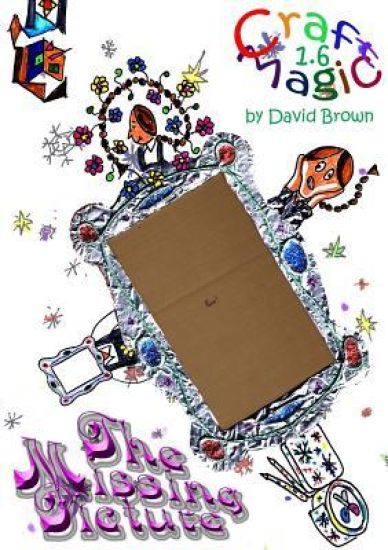
Amelia draws herself into her magical pad and goes missing! Meanwhile Greg is cooking up another plan to get hold of the magical stationery set. And, while all of this is going on, Finola is trying to decide whether she really does want to be Amelia's best friend.
Dad Jokes: 9 Unique Categories of Groan Producing Jokes, Puns and Riddles.
David Brown
Createspace Independent Publishing Platform
2018
nidottu
Get Amusing Reactions Out of Your Friends and Family with Little EffortDad jokes, though often groan-worthy and at times make us want to hide from dad for long periods of time, are actully still quite enjoyable and hilarious. They are often extremely bad and it is a surprise that we still like them. It is perhaps our love and adoration towards our fathers that allows us to enjoy such bad jokes. This book will be like a trip into nostalgia for people who have grown up with dad jokes. The book caters almost every kind of dad joke, whether it is bad puns, bad riddles, groan inducing questions, or just simple dad and son conversations. It has everything that can make you laugh while groaning and groan while laughing. Some Categories Included Are: -Most Over The Top- Jokes that go a little to far. -Most Typical- Jokes you may have heard from dad before. -Worst Jokes- Most likely to get the most groans and annoyance from the family.-Holiday Jokes- Special jokes based around all holidays of the year. -And Many More Keep this book around: - Whenever life gets you down, and you need a good pick me up to destress and laugh a little more. -To always have a way to make your friends and family laugh or groan with little effort from you. -For guests, so they can be entertained even when you're not around. -To have a joke off with dad to see who's got the better jokes up their sleeves. Show him who the master of dad jokes is This book will make a great fathers day gift for dads who think they've heard them all. To add some more fun to your life, click the yellow Add to Cart button at the top right of this page to buy this book.
First published in 1979. This study explores the main critical issues that arise out of a modern reading of Scott’s work, and treats the major novels in detail. It tackles the questions of Scott’s place in literary history and his problems in pioneering the historical novel. As well as examining the greater novels of the Scottish series, the author also deals with the relation between historical fiction and reality, with reference to the Waverley Novels, and Scott’s own attitude to history. Also discussed are some of the possible reasons for Scott’s failure to depict conflicts in his contemporary society. This book would be of interest to students of literature.
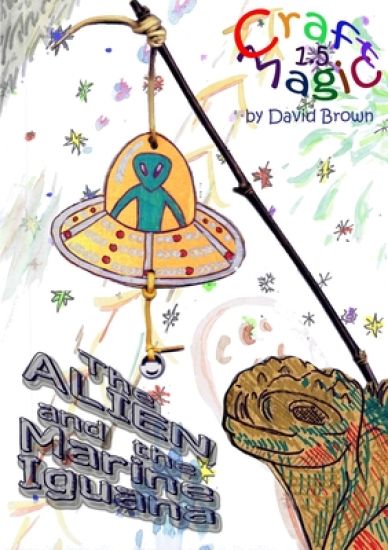
Greg is keen to get his hands on Amelia's magical stationery set. With the help of his cardboard viking, he hatches a plan to fly aliens into her room to take it. Amelia's best hopes of defence are her own crafty creations: a pink card rabbit and a slot-together marine iguana.
Daniel suffered many trials of both the worldIs making as well as his own, but all along he really believed that heId be able to circumvent the Apostle JohnIs Revelation which unequivocally states that anyone who takes the mark of the beast during the Great Tribulation would surely be slain upon the return of the King. Daniel had done it only for his familyIs sake, and heId imagined that this noble motive for accepting the cursed mark would grant him a reprieve. Unfortunately for him, he was wrong...dead wrong. Even so, and providentially for the universe, the thoughts of man are not GodIs thoughts and the ways of man are not GodIs ways. The Omega Gambit tells of Daniel BradfordIs struggles and fall in his attempt to exploit an ambiguity in GodIs eternal Law. En Passant not only explains why this had to be, but details the final disposition of his soul at the end of time.
"The Devil You Know": Erotic Horror Adults Only
David Brown
Createspace Independent Publishing Platform
2017
nidottu
Story of an everyday average man who learns God is dead and the Devil is in charge. He must now choose between good and evil. But this time the 'right' thing to do means eternal damnation for him and all he loves.
George W. Bush's Foreign Policies
Donette Murray; David Brown; Martin A. Smith
Routledge
2017
sidottu
This book offers a fresh assessment of George W. Bush’s foreign policies. It is not designed to offer an evaluation of the totality of George W. Bush’s foreign policy. Instead, the analysis will focus on the key aspects of his foreign and security policy record, in each case considering the interplay between principle and pragmatism. The underpinning contention here is that policy formulation and implementation across Bush’s two terms can more usefully be analysed in terms of shades of grey, rather than the black and white hues in which it has often been painted. Thus, in some key policy areas it will be seen that the overall record was more pragmatic and successful than his many critics have been prepared to give him credit for. The president and his advisers were sometimes prepared to alter and amend their policy direction, on occasion significantly. Context and personalities, interpersonal and interagency, both played a role here. Where these came together most visibly – for instance in connection with dual impasses over Iraq and Iran – exigencies on the ground sometimes found expression in personnel changes. In turn, the changing fortunes of Bush’s first term principals presaged policy changes in his second. What emerges from a more detached study of key aspects of the Bush administration – during a complicated and challenging period in the United States’ post-Cold War history, marked by the dramatic emergence of international Islamist terrorism as the dominant international security threat – is a more complex picture than any generalization can ever hope to sustain, regardless of how often it is repeated. This book will be of much interest to students of US foreign policy, international politics and security studies.
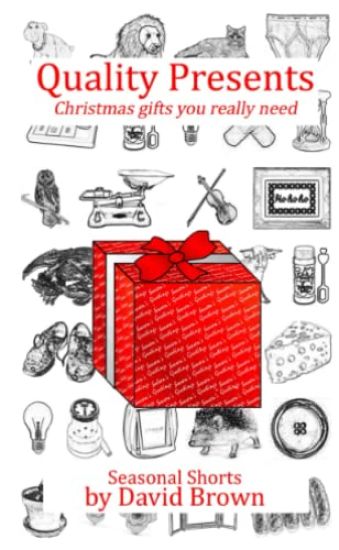
Many of us are lucky enough to be living in a post-peak-stuff world. We're past the point where we actually need anything else. We've all read about the psychology experiments which show us that increasing our possessions can't make us any happier. And this makes shopping for Christmas presents increasingly difficult. We'll trawl the shopping centres or catalogues, recognising that anything we might buy will be either unnecessary or unwanted, if not both. You can't buy happiness, of course... and we all learnt many years ago that money can't buy you love. But what if you discovered that you could buy improvements to your own personal qualities? Personality upgrades, if you like. What do you want to be given more of? Inspiration? Restraint? Optimism? But who knows you well enough to buy it for you? What would you buy them?
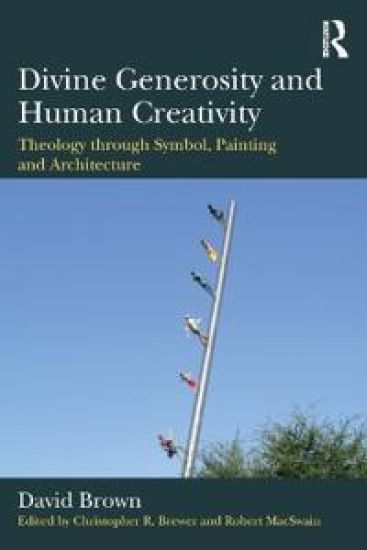
Partly in a desire to defend divine freedom and partly because it is seen as the only way of preserving a distinctive voice for theology, much contemporary theology has artificially restricted revelation and religious experience, effectively cutting off those who find God beyond the walls of the Church. Against this tendency, David Brown argues for divine generosity and a broader vision of reality that sees God deploying symbols (literary, visual and sacramental) as a means of mediating between the divine world and our own material existence. A sustained argument for divine interaction and more specifically the ways in which God speaks in the wider imaginative world, this volume calls for a careful listening exercise since symbols are richer and more open in their possibilities than their users often suppose. Not only is this true of the imagery of Scripture, even inanimate objects like buildings or hostile but creative artists can have important things to say to the believing Christian. An ideal introduction that also moves the conversation forward, this volume addresses foundations, the multivalent power of symbols, artists as theologians and meaning in religious architecture.
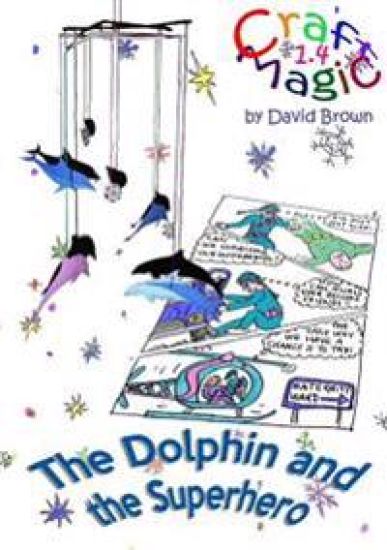
Amelia joins her school football team and learns a lot about teamwork from magical drawings of superheroes and dolphins. It is also time for her to finally tell someone about her amazing magical stationery.
This is not just more of the same - at least, not exactly the same. If anything, it's probably a bit less... of some things. Twenty scripts, articles and short stories about: Likes and dislikes. Similarities and differences. Spirituality and rationalism. Beer and darts. Lies and damn lies. (...and lots of answers )
This is not just more of the same - at least, not exactly the same. If anything, it's probably a bit less... of some things. Twenty scripts, articles and short stories about: Likes and dislikes. Similarities and differences. Spirituality and rationalism. Beer and darts. Lies and damn lies. (...and lots of answers!)
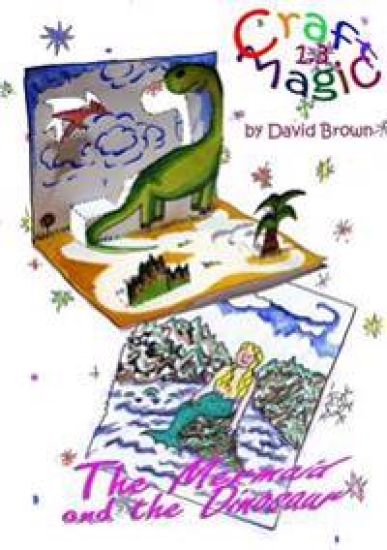
Greg uses a Mermaid picture from Amelia's magical drawing pad to bribe Finola into using Amelia's magical pencils to colour in her dinosaur homework. Meanwhile, Greg also uses his magical glue to stick together his 3D pop-up dinosaur homework. The conflicts that follow cause trouble for everyone.
Penal Culture and Hyperincarceration
Chris Cunneen; Eileen Baldry; David Brown; Mark Brown; Melanie Schwartz; Alex Steel
Routledge
2016
nidottu
What are the various forces influencing the role of the prison in late modern societies? What changes have there been in penality and use of the prison over the past 40 years that have led to the re-valorization of the prison? Using penal culture as a conceptual and theoretical vehicle, and Australia as a case study, this book analyses international developments in penality and imprisonment. Authored by some of Australia’s leading penal theorists, the book examines the historical and contemporary influences on the use of the prison, with analyses of colonialism, post colonialism, race, and what they term the ’penal/colonial complex,’ in the construction of imprisonment rates and on the development of the phenomenon of hyperincarceration. The authors develop penal culture as an explanatory framework for continuity, change and difference in prisons and the nature of contested penal expansionism. The influence of transformative concepts such as ’risk management’, ’the therapeutic prison’, and ’preventative detention’ are explored as aspects of penal culture. Processes of normalization, transmission and reproduction of penal culture are seen throughout the social realm. Comparative, contemporary and historical in its approach, the book provides a new analysis of penality in the 21st century.