Kirjojen hintavertailu – 12 903 732 kirjaa ja 27 kauppaa
Kirjailija
David C. Kimball
Kirjat ja teokset yhdessä paikassa: 10 kirjaa, julkaisuja vuosilta 2002–2023, suosituimpiin kuuluu Applied Sport Management Skills. Vertaile teosten hintoja ja tarkista saatavuus suomalaisista kirjakaupoista.
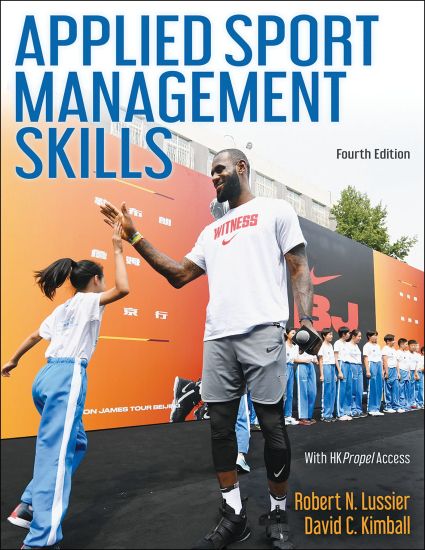
Applied Sport Management Skills, Fourth Edition With HKPropel Access, takes a practical approach for teaching students how to become strong leaders and managers in the world of sport. Organized around the central management functions of planning, organizing, leading, and controlling, and addressing the Commission on Sport Management Accreditation (COSMA) Common Professional Component topics and North American Society for Sport Management (NASSM) guidelines, the fourth edition has been extensively updated with hundreds of new references and sport examples. The text employs a three-pronged approach for teaching management theory, putting theories into practice, and developing students’ management skills. Timely discussions and case studies address the impacts of COVID-19; Black Lives Matter initiatives; name, image, and likeness rules; women in executive positions; corporate social responsibility; data analytics; and more. While other texts focus on learning about sport management, Applied Sport Management Skills enables students to apply the principles while developing the skills to become effective sport managers. Interactive online learning tools available through HKPropel complement activities found in each chapter:Flash-card activities help students learn key terms. Self-assessments, which ask students to identify their strengths and weaknesses and plan to improve shortcomings, are now assignable, trackable, and automatically scored. Applying the Concepts quizzes, which challenge students to identify management concepts illustrated in various situations, are now trackable and automatically scored. Time-Out features, in which students apply management concepts to their personal sport and work experiences, are now assignable instructor-scored assessments. Case studies are now supplemented by 10-question automatically scored quizzes and include three open-ended discussion questions. Additional assignments available in downloadable documents for students to complete and submit to the instructor further facilitate the application of the concepts presented in the text:Sport Management Professionals @ Work activities provide a cohesive thread to keep students focused on how sport managers use the concepts on the job. Skill-Builder Exercises present real-world scenarios designed to help future managers handle day-to-day situations such as setting priorities, conducting job interviews, handling conflict, and coaching employees. Sports and Social Media Exercises introduce students to the role of social media in managing sport organizations. Students review popular social media sites such as Facebook, Twitter, and LinkedIn and visit sport websites. Game Plan for Starting a Sport Business features ask students to perform managerial tasks such as developing an organization structure and brainstorming ideas for leading employees. With Applied Sport Management Skills, students will be primed for an exciting career in sport management by gaining a thorough understanding of management theories and developing the acumen to apply them. Note: A code for accessing HKPropel is included with this ebook.

As business schools expand their entrepreneurship programs and organizations seek people with entrepreneurial skills, it has become clear that the skills and mindset of an entrepreneur are highly valued in all business contexts. This latest edition of Entrepreneurship Skills for New Ventures continues to focus on helping students develop entrepreneurial skills, whether they seek to become entrepreneurs or employees. Focusing on the entrepreneurial start-up process, the fourth edition of Entrepreneurship Skills for New Ventures takes the reader through the steps of selecting, planning, financing, and controlling the new venture. The authors cover multiple forms of new ventures, as well as ways to utilize entrepreneurial skills in other contexts, encouraging students to engage with the material and apply it to their lives in ways that make sense for them. Skill development features include: New exercise on analyzing the lean entrepreneurship option Entrepreneurial profiles of small-business owners Personal applications for students to apply questions to their new venture or a current business Global and domestic cases Elevator pitch assignments that put students in the venture capitalist position Application exercises and situations covering specific text concepts Business plan prompts to help students construct a business plan over the course of a semesterFeaturing pedagogical tools like review questions and learning outcomes, as well as online materials that expand upon skill development and offer instructor resources, the fourth edition of Entrepreneurship Skills for New Ventures is the perfect resource for instructors and students of entrepreneurship.
Applied Sport Management Skills, Third Edition With Web Study Guide, takes a unique and effective approach to teaching students how to become strong leaders and managers in the world of sport. Organized around the central management functions—planning, organizing, leading, and controlling—this third edition addresses the Common Professional Component topics outlined by the Commission on Sport Management Accreditation (COSMA). The text explains important concepts but then takes the student beyond theories, to applying those management principles and developing management skills. This practical how-to approach, accompanied by unmatched learning tools, helps students put concepts into action as sport managers—developing the skills of creative problem solving and strategic planning, and developing the ability to lead, organize, and delegate. Applied Sport Management Skills, Third Edition, has been heavily revised and touts a full-color format with 1,300 new references. Content updates keep pace with industry trends, including deeper discussions of legal liability, risk management and equipment management, servant leadership, sport culture, and social media. Particularly valuable are the special elements and practical applications that offer students real opportunities to develop their skills: Features such as Reviewing Their Game Plan and Sport Management Professionals @ Work (new to this edition) provide a cohesive thread to keep students focused on how sport managers use the concepts on the job. Applying the Concept and Time-Out sidebars offer opportunities for critical thinking by having the student think about how specific concepts relate to a sport situation or to the student’s actual experiences in sports, including part-time jobs, full-time jobs, internships, and volunteer work. Self-Assessment exercises offer insight into students’ strengths and weaknesses and how to address shortcomings. An enhanced web study guide is integrated with the text to facilitate a more interactive setting with which to complete many of the learning activities. Several of the exercises require students to visit a sport organization and answer questions to gain a better understanding of sport management. Skill-Builder Exercises present a variety of scenarios and provide step-by-step guidance on handling day-to-day situations such as setting priorities, conducting job interviews, handling conflict, and coaching employees to better performance. Sports and Social Media Exercises offer Internet-based activities that expose students to the role of social media in managing a sport organization. Students are required to use popular social media sites such as Facebook, Twitter, and LinkedIn and visit sport websites. Game Plan for Starting a Sport Business cases put students in the driver’s seat and ask them to perform managerial activities such as developing an organization structure and formulating ideas on how to lead their employees. The web study guide allows students to complete most of the learning activities online or download them and then submit them to the instructor. Instructors will also have access to a suite of ancillaries: an instructor guide, test package, and presentation package. Applied Sport Management Skills, Third Edition, is a critical resource that provides students with a thorough understanding of the management principles used in sport organizations while also helping students developing their practical skills. Students will appreciate the opportunity to begin building a solid foundation for a fulfilling career in sport management.
A repeat of the Florida debacle in the 2000 presidential election is the fear of every election administrator. Despite the relatively complication-free 2008 election, we are working with fairly new federal legislation designed to ease election administration problems. The implementation of the Help America Vote Act of 2002 (HAVA) raises the question, how effective have reforms been? Could another Florida happen? Helping America Vote is focused on the conflict between values of access and integrity in U. S. election administration. Kropf and Kimball examine both what was included in HAVA and what was not. Widespread agreement that voting equipment was a problem made technology the centerpiece of the legislation, and it has remedied a number of pressing concerns. But there is still reason to be concerned about key aspects of electronic voting, ballot design, and the politics of partisan administrators. It takes a legitimacy crisis for serious election reforms to happen at the federal level, and seemingly, the crisis has passed. However, the risk is still very much present for the electoral process to fail. What are the implications for democracy when we attempt reform?
During the 2008 election season, politicians from both sides of the aisle promised to rid government of lobbyists' undue influence. For the authors of Lobbying and Policy Change, the most extensive study ever done on the topic, these promises ring hollow - not because politicians fail to keep them but because lobbies are far less influential than political rhetoric suggests. Based on a comprehensive examination of ninety-eight issues, this volume demonstrates that sixty percent of recent lobbying campaigns failed to change policy despite millions of dollars spent trying. Why? The authors find that resources explain less than five percent of the difference between successful and unsuccessful efforts. Moreover, they show, these attempts must overcome an entrenched Washington system with a tremendous bias in favor of the status quo. Though elected officials and existing policies carry more weight, lobbies have an impact too, and when advocates for a given issue finally succeed, policy tends to change significantly. The authors argue, however, that the lobbying community so strongly reflects elite interests that it will not fundamentally alter the balance of power unless its makeup shifts dramatically in favor of average Americans' concerns.
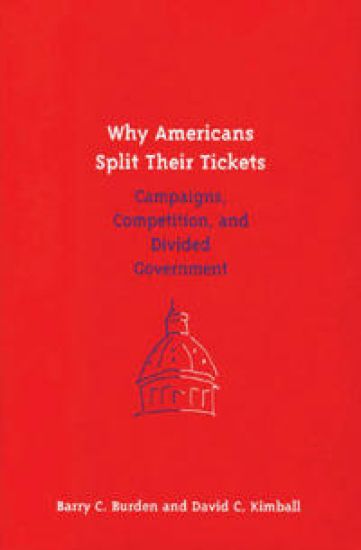
Why do some voters split their ballots, selecting a Republican for one office and a Democrat for another? Why do voters often choose one party to control the White House while the other controls the Congress? Barry Burden and David Kimball address these fundamental puzzles of American elections by explaining the causes of divided government and debunking the myth that voters prefer the division of power over one-party control. Why Americans Split Their Tickets links recent declines in ticket-splitting to sharpening policy differences between parties and demonstrates why candidates' ideological positions still matter in American elections." Burden and Kimball have given us the most careful and thorough analysis of split-ticket voting yet. It won't settle all of the arguments about the origins of ticket splitting and divided government, but these arguments will now be much better informed. Why Americans Split Their Tickets is essential reading for anyone interested in understanding the major trends in U. S. electoral politics of the past several decades."-Gary Jacobson, University of California, San Diego"When voters split their tickets or produce divided government, it is common to attribute the outcome as a strategic verdict or a demand for partisan balance. Burden and Kimball strongly challenge such claims. With a thorough and deft use of statistics, they portray ticket-splitting as a by-product of the separate circumstances that drive the outcomes of the different electoral contests. This will be the book to be reckoned with on the matter of ticket splitting."-Robert Erikson, Columbia University"[Burden and Kimball] offset the expansive statistical analysis by delving into the historical circumstances and results of recent campaigns and elections. ... [They] make a scholarly and informative contribution to the understanding of the voting habits of the American electorate-and the resulting composition of American government."-Shant Mesrobian, NationalJournal.com
In Why Americans Split Their Tickets, Barry C. Burden and David C. Kimball argue that divided government is produced unintentionally. Using a new quantitative method to analyze voting in presidential, House, and Senate elections from 1952 to 1996, they reject the dominant explanation for divided government, that ticket splitting is done to balance parties that are far from the center. The ideological positions of candidates do not matter in American elections, but voters favor centrist candidates rather than a mix of extremists. When candidates of opposing parties adopt similar platforms, ticket splitting arises. For voters, ideological differences between the parties blur and other considerations such as candidate characteristics exert a greater influence on their voting decisions. Among their other findings, the authors link changes in congressional campaigns--namely the rise of incumbency advantage and the greater importance of money in the 1960s and 1970s--to ticket splitting and argue, in addition, that the transformation of the South from a Democratic stronghold to a Republican-leaning environment has made regional factors less important. Burden and Kimball draw upon a diverse and unique range of data as evidence for their argument. Their analyses rely on survey data, aggregate election returns, and new ecological inference estimates for every House and Senate election from 1952 to 1996. This approach allows for the examination of divided voting in traditional ways, such as choosing a Democratic presidential candidate and a Republican House candidate on a single ballot, to less traditional forms, such as voting in a midterm House election and choosing a state's Senate delegation. Barry C. Burden is Assistant Professor of Government, Harvard University. David C. Kimball is Assistant Professor of Political Science, University of Missouri, St. Louis.