Kirjojen hintavertailu – 12 859 827 kirjaa ja 27 kauppaa

Kirjailija

David Crystal

Kirjat ja teokset yhdessä paikassa: 70 kirjaa, julkaisuja vuosilta 1964–2027, suosituimpiin kuuluu Word Traitors. Vertaile teosten hintoja ja tarkista saatavuus suomalaisista kirjakaupoista.

70 kirjaa

Kirjojen julkaisuvuodet: 1964–2027.

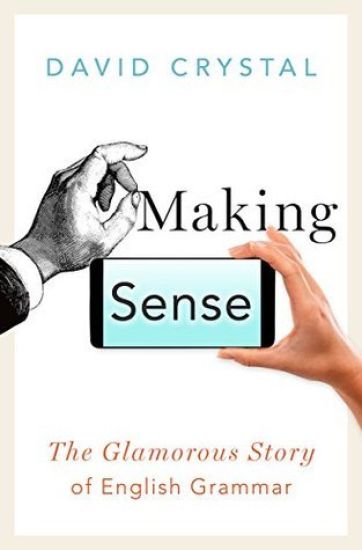
Making Sense: The Glamorous Story of English Grammar

Making Sense: The Glamorous Story of English Grammar

David Crystal

Oxford Univ Pr
2017
sidottu

Halvin toimitettuna 27,30 €

In Making Sense, David Crystal confronts the foe of many: grammar. Once taught relentlessly to all students in the English-speaking world, grammar disappeared from most school curricula, so that terms such as "preposition" and "conjunction" now often confound children and adults alike. Explaining the nuts and bolts of grammar presents a special challenge, because - far more than is the case with spelling and punctuation - the subject is burdened with a centuries-old history of educational practice that many will recall as anything but glamorous. One of the world's foremost authorities on the English language, Crystal sets out to rid grammar of its undeserved reputation as a dry and intimidating subject, pointing out how essential grammar is to clear and effective speech and writing. He moves briskly through the stages by which children acquire grammar, along the way demystifying grammar's rules and irregularities and showing us how to navigate its snares and pitfalls. He offers the fascinating history of grammar, explaining how it has evolved from the first grammarians in ancient Greece to our 21st century digital environment of blogging, emailing, and texting. Many find grammar to be a daunting subject, but in this breezy, entertaining book, Crystal proves that grammar doesn't need to make us uneasy-we can all make sense of how we make sense.
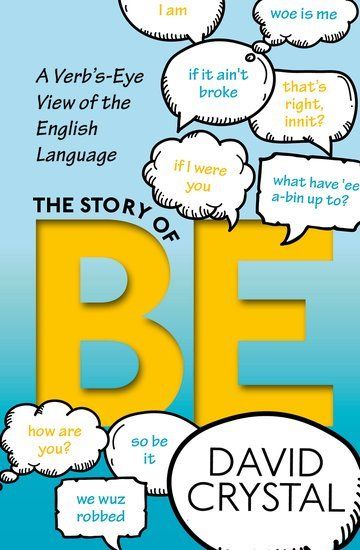
The Story of Be

The Story of Be

David Crystal

Oxford University Press
2017
sidottu
It's the most simple, unassuming, innocent-looking verb: 'to be'. Yet it is jam-packed with more different meanings, forms, and uses than any other English word. As he reveals be's multiple incarnations, David Crystal takes us to the heart of our flexible and changing language. He tells the intriguing story in 26 chapters, each linked to a particular usage. We meet circumstantial be ('how are you?'), numerical be ('two and two is four'), quotative be ('so I was like, "wow"'), and ludic be ('oh no he isn't!'), and a whole swarm of other meanings. Bringing the ideas to life are a host of examples from sources as varied as Beowulf, Jane Austen, pantomime, Hamlet (of course), and Star Wars, with cartoons from Ed McLachlan and Punch peppered throughout. Full of fascinating nuggets of information, it is a book to delight any lover of words and language.
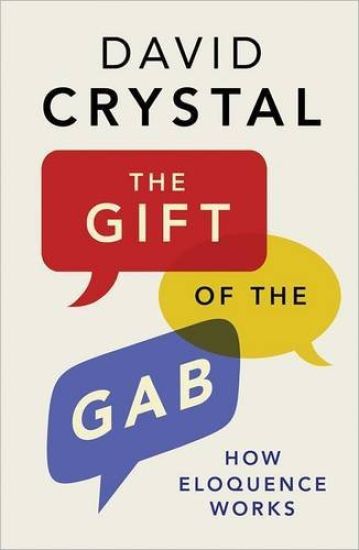
The Gift of the Gab

The Gift of the Gab

David Crystal

Yale University Press
2017
pokkari
A many-faceted exploration of spoken eloquence: how it works, how it has evolved, and how to tap its remarkable power We all know eloquence when we hear it. But what exactly is it? And how might we gain more of it for ourselves? This entertaining and, yes, eloquent book illuminates the power of language from a linguistic point of view and provides fascinating insights into the way we use words. David Crystal, a world-renowned expert on the history and usage of the English language, probes the intricate workings of eloquence. His lively analysis encompasses everyday situations (wedding speeches, business presentations, storytelling) as well as the oratory of great public gatherings. Crystal focuses on the here and now of eloquent speaking—from pitch, pace, and prosody to jokes, appropriateness, and how to wield a microphone. He explains what is going on moment by moment and examines each facet of eloquence. He also investigates topics such as the way current technologies help or hinder our verbal powers, the psychological effects of verbal excellence, and why certain places or peoples are thought to be more eloquent than others. In the core analysis of the book, Crystal offers an extended and close dissection of Barack Obama’s electrifying “Yes we can” speech of 2008, in which the president demonstrated full mastery of virtually every element of eloquence—from the simple use of parallelism and an awareness of what not to say, to his brilliant conclusion constructed around two powerful words: dreams and answers.
Investigating English Style

Investigating English Style

David Crystal; Derek Davy

Routledge
2017
sidottu
A series to meet the need for books on modern English that are both up-to-date and authoritative. For the scholar, the teacher, the student and the general reader, but especially for English-speaking students of language and linguistics in institutions where English is the language of instruction, or advanced specialist students of English in universities where English is taught as a foreign language.
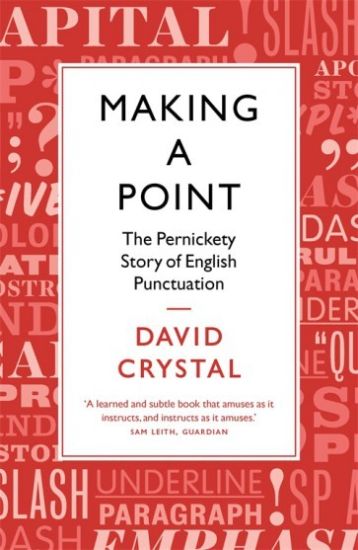
Making a Point

Making a Point

David Crystal

Profile Books Ltd
2016
pokkari
This 'engaging history of punctuation' (Wall Street Journal) is not only the first history of its kind, but a complete guide on how to use English punctuation. Behind every punctuation mark lies a thousand stories. The punctuation of English, marked with occasional rationality, is founded on arbitrariness and littered with oddities. For a system of a few dozen marks it generates a disproportionate degree of uncertainty and passion, inspiring organisations like the Apostrophe Protection Society and sending enthusiasts, correction-pens in hand, in a crusade against error. Professor Crystal leads us through this minefield with characteristic wit, clarity and commonsense. He gives a fascinating account of the origin and progress of every kind of punctuation mark over one and a half millennia, and he offers sound advice on how punctuation may be used to meet the needs of every occasion and context.
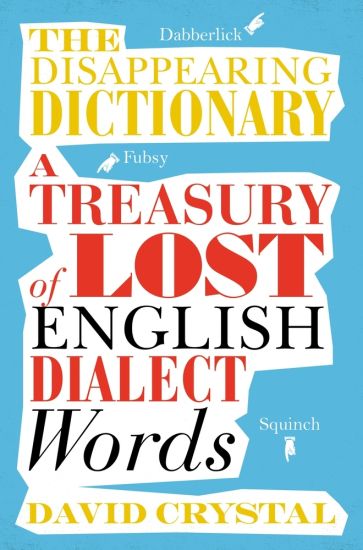
The Disappearing Dictionary

The Disappearing Dictionary

David Crystal

Pan Books
2016
pokkari
Wherever you go in the English-speaking world, there are linguistic riches from times past awaiting rediscovery. All you have to do is choose a location, find some old documents, and dig a little. In The Disappearing Dictionary, linguistics expert Professor David Crystal collects together delightful dialect words that either provide an insight into an older way of life, or simply have an irresistible phonetic appeal. Like a mirror image of The Meaning of Liff that just happens to be true, The Disappearing Dictionary unearths some lovely old gems of the English language, dusts them down and makes them live again for a new generation.dabberlick [noun, Scotland]A mildly insulting way of talking about someone who is tall and skinny. 'Where's that dabberlick of a child?'fubsy [adjective, Lancashire]Plump, in a nice sort of way. squinch [noun, Devon]A narrow crack in a wall or a space between floorboards. 'I lost sixpence through a squinch in the floor'.
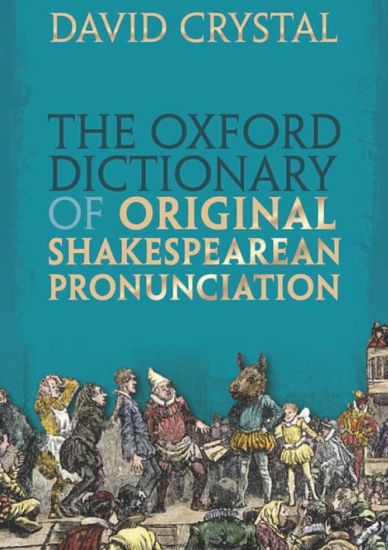
The Oxford Dictionary of Original Shakespearean Pronunciation

The Oxford Dictionary of Original Shakespearean Pronunciation

David Crystal

Oxford University Press
2016
sidottu

Halvin toimitettuna 33,80 €

This dictionary is the first comprehensive description of Shakespearean original pronunication (OP), enabling practitioners to deal with any queries about the pronunciation of individual words. It includes all the words in the First Folio, transcribed using IPA, and the accompanying website hosts sound files as a further aid to pronunciation. It also includes the main sources of evidence in the texts, notably all spelling variants (along with a frequency count for each variant) and all rhymes (including those occurring elsewhere in the canon, such as the Sonnets and long poems). An extensive introduction provides a full account of the aims, evidence, history, and current use of OP in relation to Shakespeare productions, as well as indicating the wider use of OP in relation to other Elizabethan and Jacobean writers, composers from the period, the King James Bible, and those involved in reconstructing heritage centres. It will be an invaluable resource for producers, directors, actors, and others wishing to mount a Shakespeare production or present Shakespeare's poetry in original pronunciation, as well as for students and academics in the fields of literary criticism and Shakespeare studies more generally.
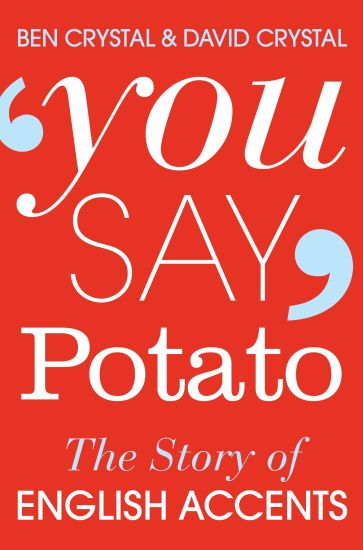
You Say Potato

You Say Potato

Ben Crystal; David Crystal

Pan Books
2015
pokkari
Some people say scohn, while others say schown. He says bath, while she says bahth. You say potayto. I say potahtoAnd--wait a second, no one says potahto. No one's ever said potahto. Have they? From reconstructing Shakespeare's accent to the rise and fall of Received Pronunciation, actor Ben Crystal and his linguist father David travel the world in search of the stories of spoken English. Everyone has an accent, though many of us think we don't. We all have our likes and dislikes about the way other people speak, and everyone has something to say about 'correct' pronunciation. But how did all these accents come about, and why do people feel so strongly about them? Are regional accents dying out as English becomes a global language? And most importantly of all: what went wrong in Birmingham? Witty, authoritative and jam-packed full of fascinating facts, You Say Potato is a celebration of the myriad ways in which the English language is spoken - and how our accents, in so many ways, speak louder than words.
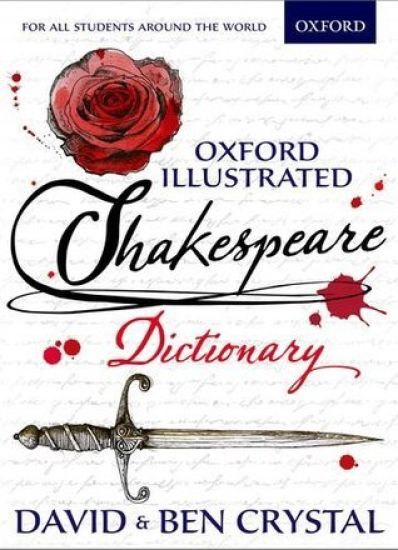
Oxford Illustrated Shakespeare Dictionary

Oxford Illustrated Shakespeare Dictionary

David Crystal; Ben Crystal

Oxford University Press
2015
nidottu

Halvin toimitettuna 23,70 €

Winner of Best Book, Publication, or Recording prize at the Falstaff Awards 2015 and shortlisted for the 2016 SLA Information Book Award. This innovative dictionary is written by leading experts in linguistics and Shakespeare, David and Ben Crystal. It provides students with invaluable support while they read and understand Shakespeare's plays. Key features include: • Over 4000 difficult words explained with clear definitions from the 12 most-studied plays including Macbeth, Hamlet, Romeo and Juliet, A Midsummer Night's Dream, and Henry V • Language and usage notes include fascinating insights into Shakespeare's world and the Elizabethan theatre • 24 full colour illustrated pages on themes such as dress, armour, maps, music and more, bringing Shakespearean times to life • Easy to use with its clear signposting, accessible design, and expertly levelled contemporary look and feel • For children aged 11-16 and a great supporting resource for GCSE preparation
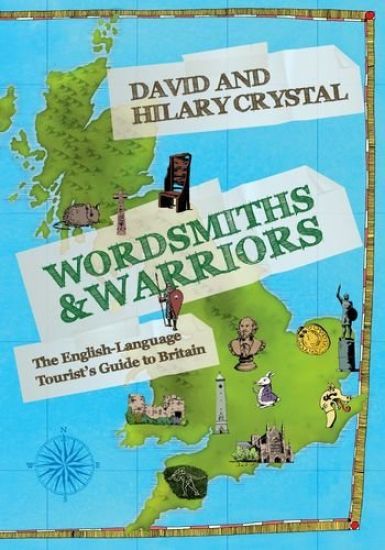
Wordsmiths and Warriors

Wordsmiths and Warriors

David Crystal; Hilary Crystal

Oxford University Press
2015
nidottu
Wordsmiths and Warriors explores the heritage of English through the places in Britain that shaped it. It unites the warriors, whose invasions transformed the language, with the poets, scholars, reformers, and others who helped create its character. The book relates a real journey. David and Hilary Crystal drove thousands of miles to produce this fascinating combination of English-language history and travelogue, from locations in south-east Kent to the Scottish lowlands, and from south-west Wales to the East Anglian coast. David provides the descriptions and linguistic associations, Hilary the full-colour photographs. They include a guide for anyone wanting to follow in their footsteps but arrange the book to reflect the chronology of the language. This starts with the Anglo-Saxon arrivals in Kent and in the places that show the earliest evidence of English. It ends in London with the latest apps for grammar. In between are intimate encounters with the places associated with such writers as Chaucer, Shakespeare, and Wordsworth; the biblical Wycliffe and Tyndale; the dictionary compilers Cawdrey, Johnson, and Murray; dialect writers, elocutionists, and grammarians, and a host of other personalities. Among the book's many joys are the diverse places that allow warriors such as Byrhtnoth and King Alfred to share pages with wordsmiths like Robert Burns and Tim Bobbin, and the unexpected discoveries that enliven every stage of the authors' epic journey.
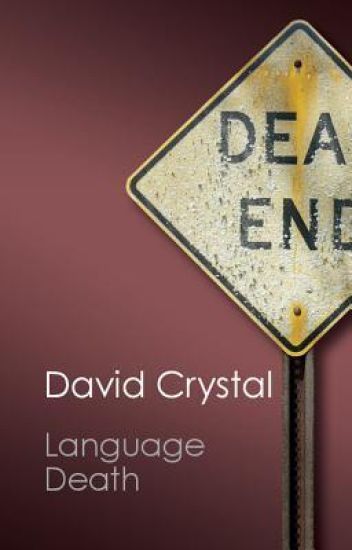
Language Death

Language Death

David Crystal

Cambridge University Press
2014
pokkari
The rapid endangerment and death of many minority languages across the world is a matter of widespread concern, not only among linguists and anthropologists but among all concerned with issues of cultural identity in an increasingly globalized culture. By some counts, only 600 of the 6,000 or so languages in the world are 'safe' from the threat of extinction. A leading commentator and popular writer on language issues, David Crystal asks the fundamental question, 'why is language death so important?', reviews the reasons for the current crisis, and investigates what is being done to reduce its impact. This book contains not only intelligent argument, but moving descriptions of the decline and demise of particular languages, and practical advice for anyone interested in pursuing the subject further.
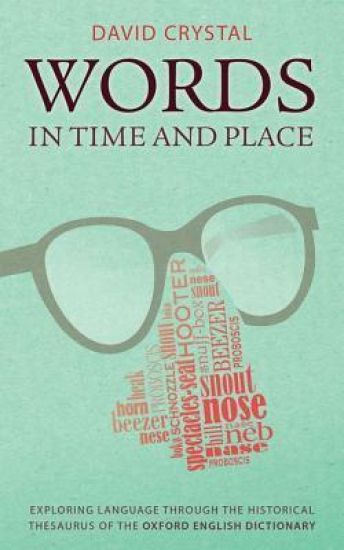
Words in Time and Place

Words in Time and Place

David Crystal

Oxford University Press
2014
sidottu

Halvin toimitettuna 35,90 €

Did you know that the English language has over 150 words for the adjective 'drunk' developed over 1,000 years? Be prepared to learn words you have never heard before, find out fascinating facts behind everyday words, and be surprised at how lively and varied the English language can be. Published to critical acclaim in 2009, the Historical Thesaurus of the Oxford English Dictionary is the first comprehensive thesaurus in the world to arrange words by meaning in order of first recorded use. Using its unique perspective on how the English language has developed, Words in Time and Place takes 15 themes and explores the language in these areas over time - explaining when new words appeared, where they came from, and what such changes say about times in which they emerged. The themes chosen are varied, universal topics and show the semantic range of the thesaurus and what it can tell us about the words used in areas of everyday life. Learn about the different words for dying and money, or types of pop music, as well as words for a privy, oaths, and words for being drunk. Written by the world's leading expert on the English language, David Crystal, the book carries his trademark style of engaging yet authoritative writing. Each chapter features an introduction to the language of that topic, followed by a timeline of vocabulary taken from the historical thesaurus showing all the synonyms arranged in chronological order. The timelines are annotated with additional quotations, facts, and social and historical context to give a clear sense of how words entered the English language, when, and in which context they were used. Words in Time and Place showcases the unique and excellent resource that is the Historical Thesaurus and reveals the linguistic treasures to be found within. This fascinating book will appeal to anyone with an interest in words and in the development of the English language.
Clinical Linguistics

Clinical Linguistics

David Crystal

Springer Verlag GmbH
2013
nidottu
This volume is one in a series of monographs being issued under the general title of "Disorders of Human Communication". Each monograph deals in detail with a particular aspect of vocal communication and its disorders, and is written by internationally distinguished experts. Therefore, the series will provide an authoritative source of up-to-date scientific and clinical informa­ tion relating to the whole field of normal and abnormal speech communication, and as such will succeed the earlier monumental work "Handbuch der Stimm­ und Sprachheilkunde" by R. Luchsinger and G. E. Arnold (last issued in 1970). This series will prove invaluable for clinicians, teachers and research workers in phoniatrics and logopaedics, phonetics and linguistics, speech pathology, otolaryngology, neurology and neurosurgery, psychology and psychiatry, paediatrics and audiology. Several of the monographs will also be useful to voice and singing teachers, and to their pupils. G. E. Arnold, Jackson, Miss. F. Winckel, Berlin B. D. Wyke, London Preface This book tries to illustrate the practice as well as the principles involved in applying linguistics to the analysis of language disability. In writing it, I have as­ sumed an audience of professional speech and hearing clinicians who have had little or no formal training in linguistics. Each Chapter therefore begins with a resu­ me of the main theoretical and descriptive principles needed in order to carry out a clinical linguistic analysis. The relevance oflanguage acquisition studies is a major theme within this resume.
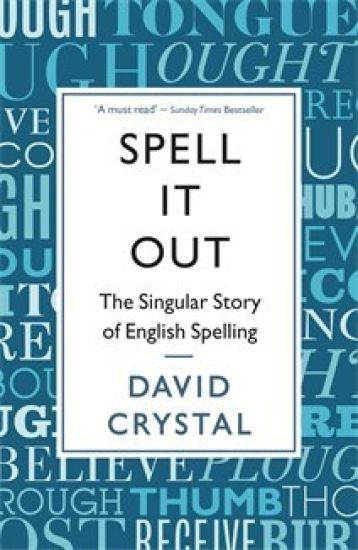
Spell It Out

Spell It Out

David Crystal

Profile Books Ltd
2013
pokkari

Halvin toimitettuna 20,90 €

Why is there an 'h' in ghost? William Caxton, inventor of the printing press and his Flemish employees are to blame: without a dictionary or style guide to hand in fifteenth century Bruges, the typesetters simply spelled it the way it sounded to their foreign ears, and it stuck. Seventy-five per cent of English spelling is regular but twenty-five per cent is complicated, and in Spell It Out our foremost linguistics expert David Crystal extends a helping hand to the confused and curious alike. He unearths the stories behind the rogue words that confound us, and explains why these peculiarities entered the mainstream, in an epic journey taking in sixth century monks, French and Latin upstarts, the Industrial Revolution and the internet. By learning the history and the principles, Crystal shows how the spellings that break all the rules become easier to get right.
Does Science Need a Global Language?

Does Science Need a Global Language?

Scott L. Montgomery; David Crystal

University of Chicago Press
2013
sidottu
In early 2012, the global scientific community erupted with news that the elusive Higgs boson had likely been found, providing potent validation for the Standard Model of how the universe works. Scientists from more than one hundred countries contributed to this discovery-proving, beyond any doubt, that a new era in science had arrived, an era of multinationalism and cooperative reach. Globalization, the Internet, and digital technology all play a role in making this new era possible, but something more fundamental is also at work. In all scientific endeavors lies the ancient drive for sharing ideas and knowledge, and now this can be accomplished in a single tongue - English. But is this a good thing? In "Does Science Need a Global Language?", Scott L. Montgomery seeks to answer this question by investigating the phenomenon of global English in science, how and why it came about, the forms in which it appears, what advantages and disadvantages it brings, and what its future might be. He also examines the consequences of a global tongue, considering especially emerging and developing nations, where research is still at a relatively early stage and English is not yet firmly established.
The Story of English in 100 Words

The Story of English in 100 Words

David Crystal

Profile Books Ltd
2012
pokkari
Featuring Latinate and Celtic words, weasel words and nonce-words, ancient words ('loaf') to cutting edge ('twittersphere') and spanning the indispensable words that shape our tongue ('and', 'what') to the more fanciful ('fopdoodle'), Crystal takes us along the winding byways of language via the rude, the obscure and the downright surprising. In this unique new history of the world's most ubiquitous language, linguistics expert David Crystal draws on words that best illustrate the huge variety of sources, influences and events that have helped to shape our vernacular since the first definitively English word was written down in the fifth century ('roe', in case you are wondering).
Think on my Words

Think on my Words

David Crystal

Cambridge University Press
2012
pokkari
For decades, people have been studying Shakespeare's life and times and in recent years there has been a renewed surge of interest in aspects of his language. So how can we better understand Shakespeare? David Crystal provides a lively and original introduction to Shakespeare's language, making his plays easily accessible to modern-day audiences. Covering the five main dimensions of language structure - writing system, pronunciation, grammar, vocabulary and conversational style - this book demonstrates how examining these linguistic 'nuts and bolts' can help us achieve a greater appreciation of Shakespeare's linguistic creativity.
English as a Global Language

English as a Global Language

David Crystal

Cambridge University Press
2012
pokkari

Halvin toimitettuna 27,00 €

David Crystal's classic English as a Global Language considers the history, present status and future of the English language, focusing on its role as the leading international language. English has been deemed the most 'successful' language ever, with 1500 million speakers internationally, presenting a difficult task to those who wish to investigate it in its entirety. However, Crystal explores the subject in a measured but engaging way, always backing up observations with facts and figures. Written in a detailed and fascinating manner, this is a book written by an expert both for specialists in the subject and for general readers interested in the English language.
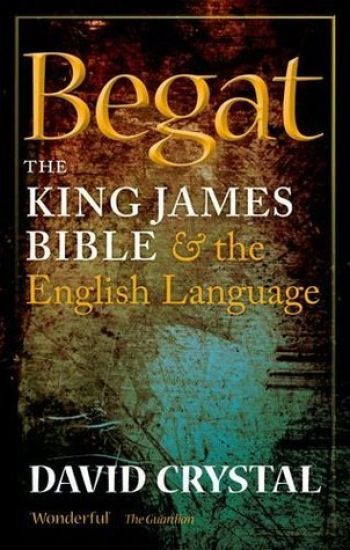
Begat

Begat

David Crystal

Oxford University Press
2011
nidottu
What do the following have in common? Let there be light - Whited sepulchres - A rod of iron - New wine into old bottles Lick the dust - How are the mighty fallen - A thorn in the flesh - Wheels within wheels They're all in the King James Bible. This astonishing book has 'contributed far more to English in the way of idiomatic or quasi-proverbial expressions than any other literary source.' wrote David Crystal in 2004. In Begat he returns to the subject: he asks how a work published in 1611 could have had such an influence on the language and looks closely at what that influence has been. He comes to some surprising conclusions. No other version of the Bible however popular (such as the Good News Bible) or imposed upon the church (like the New English Bible) has had anything like the same impact. David Crystal shows how its words and phrases got independent life in the work of poets, playwrights, novelists, and politicians, and how more recently they have been taken up by journalists, advertisers, Hollywood, and hip-hop. He reveals the great debt the King James Bible owes to its English forebears, especially John Wycliffe's in the fourteenth century and William Tyndale's in the sixteenth. He also shows that the revisions and changes made by King James's translators were crucial to its universal success. "A person who professes to be a critic in the delicacies of the English language ought to have the Bible at his finger's ends," Lord Macaulay advised Lady Holland in 1831. David Crystal shows how true this is. His book is a revelation.
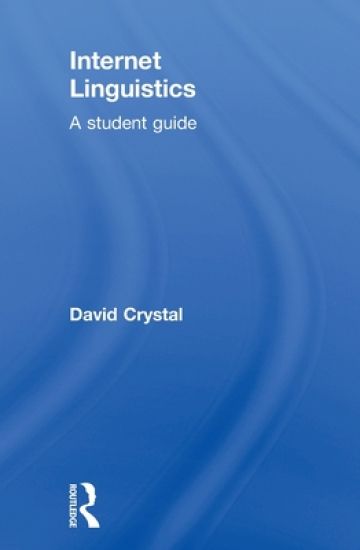
Internet Linguistics

Internet Linguistics

David Crystal

Routledge
2011
sidottu
The Internet is now an integral part of contemporary life, and linguists are increasingly studying its influence on language. In this student-friendly guidebook, leading language authority Professor David Crystal follows on from his landmark bestseller Language and the Internet and presents the area as a new field: Internet linguistics. In his engaging trademark style, Crystal addresses the online linguistic issues that affect us on a daily basis, incorporating real-life examples drawn from his own studies and personal involvement with Internet companies. He provides new linguistic analyses of Twitter, Internet security, and online advertising, explores the evolving multilingual character of the Internet, and offers illuminating observations about a wide range of online behaviour, from spam to exclamation marks. Including many activities and suggestions for further research, this is the essential introduction to a critical new field for students of all levels of English language, linguistics and new media.