Kirjojen hintavertailu – 12 859 827 kirjaa ja 27 kauppaa

Kirjailija

David Crystal

Kirjat ja teokset yhdessä paikassa: 70 kirjaa, julkaisuja vuosilta 1964–2027, suosituimpiin kuuluu Word Traitors. Vertaile teosten hintoja ja tarkista saatavuus suomalaisista kirjakaupoista.

70 kirjaa

Kirjojen julkaisuvuodet: 1964–2027.

Internet Linguistics

Internet Linguistics

David Crystal

Routledge
2011
nidottu
The Internet is now an integral part of contemporary life, and linguists are increasingly studying its influence on language. In this student-friendly guidebook, leading language authority Professor David Crystal follows on from his landmark bestseller Language and the Internet and presents the area as a new field: Internet linguistics. In his engaging trademark style, Crystal addresses the online linguistic issues that affect us on a daily basis, incorporating real-life examples drawn from his own studies and personal involvement with Internet companies. He provides new linguistic analyses of Twitter, Internet security, and online advertising, explores the evolving multilingual character of the Internet, and offers illuminating observations about a wide range of online behaviour, from spam to exclamation marks. Including many activities and suggestions for further research, this is the essential introduction to a critical new field for students of all levels of English language, linguistics and new media.
Begat

Begat

David Crystal

Oxford University Press
2010
sidottu
What do the following have in common? Let there be light - A fly in the ointment - A rod of iron - New wine in old bottles Lick the dust - How are the mighty fallen - Kick against the pricks - Wheels within wheels They are all in the King James Bible. This astonishing book "has contributed far more to English in the way of idiomatic or quasi-proverbial expressions than any other literary source." So wrote David Crystal in 2004. In Begat he returns to the subject not only to consider how a work published in 1611 could have had such influence on the language, but how it can still do so when few regularly hear the Bible and fewer still hear it in the language of Stuart England. No other version of the Bible however popular (such as the Good News Bible) or imposed upon the church (like the New English Bible) has had anything like the same influence. David Crystal shows how its words and phrases have over the centuries found independent life in the work of poets, playwrights, novelists, politicians, and journalists, and how more recently they have been taken up with enthusiasm by advertisers, Hollywood, and hip-hop. Yet the King James Bible owes much to earlier English versions, notably those by John Wycliffe in in the fourteenth century and William Tyndale in the sixteenth. David Crystal reveals how much that is memorable in the King James Bible stems from its forebears. At the same time he shows how crucial were the revisions made by King James's team of translators and editors. "A person who professes to be a critic in the delicacies of the English language ought to have the Bible at his finger's ends," Lord Macaulay advised Lady Holland in 1831. Begat shows how true that remains. It will be a revelation to all who read it.
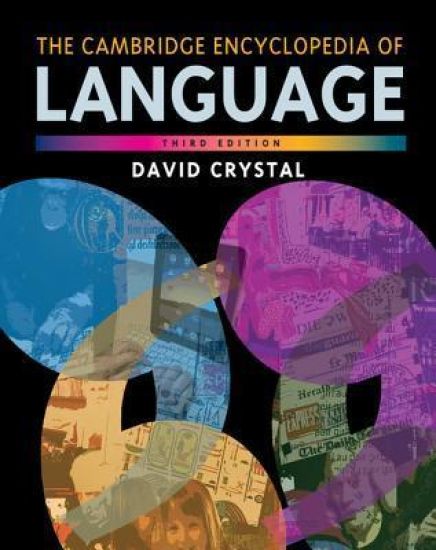
The Cambridge Encyclopedia of Language

The Cambridge Encyclopedia of Language

David Crystal

Cambridge University Press
2010
pokkari
This new, thoroughly revised edition of the acclaimed Cambridge Encyclopedia of Language incorporates the major developments in language study which have taken place since the mid 1990s. Two main new areas have been added: the rise of electronic communication in all its current forms from email to texting, and the crisis affecting the world's languages, of which half are thought to be so seriously endangered that they will die out this century. • All language statistics have been updated, and additional information provided about their linguistic affiliation • All topics involving technology have been revised to take account of recent developments, notably in phonetics, language disability, and computing • Maps have been revised to include new countries or country names • Special attention has been paid to fast-moving areas such as language teaching and learning • The text design has been completely updated with many new illustrations throughout
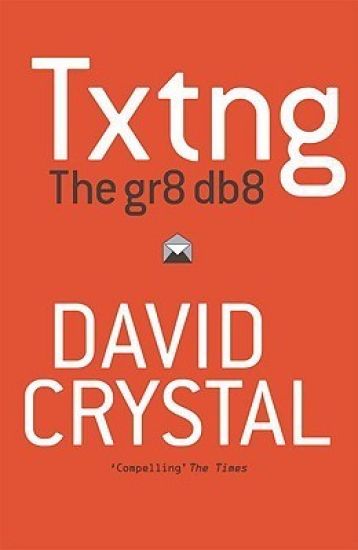
Txtng: The Gr8 Db8

Txtng: The Gr8 Db8

David Crystal

Oxford University Press
2009
nidottu
This book takes a long hard look at the text-messaging phenomenon and its effects on literacy, language, and society. Young people who seem to spend much of their time texting sometimes appear unable or unwilling to write much else. Media outrage has ensued. "It is bleak, bald, sad shorthand," writes a commentator in the UK Guardian. "It masks dyslexia, poor spelling, and mental laziness." Exam answers using textese and reports that examiners find them acceptable have led to headlines in the tabloids and leaders in the qualities. Do young people text as much as people think? Do adults? Does texting spell the end of literacy? Is there a panic in the media? David Crystal looks at the evidence. He investigates how texting began and who uses it, why and what for. He shows how to interpret its mix of pictograms, logograms, abbreviations, symbols, and wordplay, and how it works in different languages. He explores the ways similar devices have been used in different eras and discovers that the texting system of conveying sounds and meaning goes back a long way, all the way in fact to the origins of writing - and he concludes that far from hindering literacy, texting may turn out to help it. Contents List
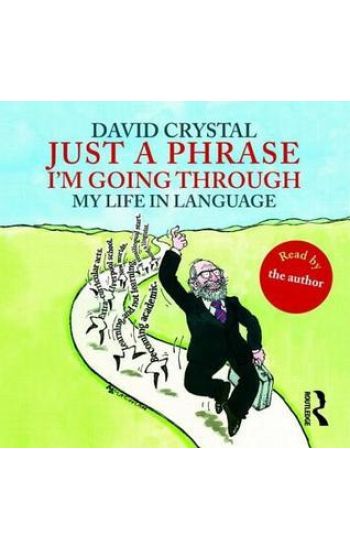
Just A Phrase I'm Going Through

Just A Phrase I'm Going Through

David Crystal

Routledge
2009
sidottu
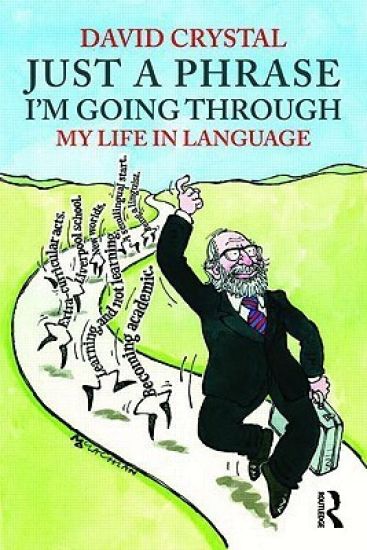
Kidnapping, attempted assassination, espionage … not the answers you’d expect to the question ‘what happens when you become a linguist?’ But now, reflecting on a long and hugely successful career at the forefront of the field of English Language and Linguistics, David Crystal answers this question and offers us a special look behind the scenes at the adventures, rewards, challenges and pitfalls of his life in language. Both an autobiography and a highly accessible introduction to the field of linguistics, Just a Phrase I’m Going Through illuminates and entertains us with its many insights into the ever-fascinating subject of language. David Crystal is synonymous with language, both as a great populariser and linguistic pioneer, and his contribution to the field is unparalleled. This is a book not just for students and teachers but for all lovers of language. For more about David Crystal at Routledge, visit: www.routledge.com/textbooks/9780415485746.
Just A Phrase I'm Going Through

Just A Phrase I'm Going Through

David Crystal

Routledge
2009
nidottu
Kidnapping, attempted assassination, espionage … not the answers you’d expect to the question ‘what happens when you become a linguist?’ But now, reflecting on a long and hugely successful career at the forefront of the field of English Language and Linguistics, David Crystal answers this question and offers us a special look behind the scenes at the adventures, rewards, challenges and pitfalls of his life in language. Both an autobiography and a highly accessible introduction to the field of linguistics, Just a Phrase I’m Going Through illuminates and entertains us with its many insights into the ever-fascinating subject of language. David Crystal is synonymous with language, both as a great populariser and linguistic pioneer, and his contribution to the field is unparalleled. This is a book not just for students and teachers but for all lovers of language. For more about David Crystal at Routledge, visit: www.routledge.com/textbooks/9780415485746.
Just A Phrase I'm Going Through
Kidnapping, attempted assassination, espionage…not the answers you’d expect to the question ‘what happens when you become a linguist?’ But now, reflecting on a long and hugely successful career at the forefront of the field of English Language and Linguistics, David Crystal answers this question and offers us a special look behind the scenes at the adventures, rewards, challenges and pitfalls of his life in language. Both an autobiography and a highly accessible introduction to the field of linguistics, Just a Phrase I’m Going Through illuminates and entertains us with its many insights into the ever-fascinating subject of language. David Crystal is synonymous with language, both as a great populariser and linguistic pioneer, and his contribution to the field is unparalleled. This audio book is not just for students and teachers but for all lovers of language.4 discs. Running time: 5 hours approx. Abridged.
A Dictionary of Linguistics and Phonetics

A Dictionary of Linguistics and Phonetics

David Crystal

Wiley-Blackwell (an imprint of John Wiley Sons Ltd)
2008
sidottu
David Crystal's A Dictionary of Linguistics and Phonetics has long been the standard single-volume reference for its field. Now available in its sixth edition, it has been revised and updated to reflect the latest terms in the field. Includes in excess of 5,100 terms, grouped into over 3,000 entriesCoverage reflects recommendations by a team of experts in phonetics, phonology, syntax, semantics, sociolinguistics and psycholinguistics, making it exceptionally comprehensiveIncorporates new ideas stemming from the minimalist programContains a separate table of abbreviations and table of symbols, along with an updated International Phonetic AlphabetUpdates entries to reflect the way established terms are now perceived in light of changes in the field, providing a unique insight into the historical development of linguisticsRemains the standard single-volume reference for the field of linguistics and phonetics.
By Hook Or By Crook

By Hook Or By Crook

David Crystal

HARPERCOLLINS PUBLISHERS
2008
nidottu
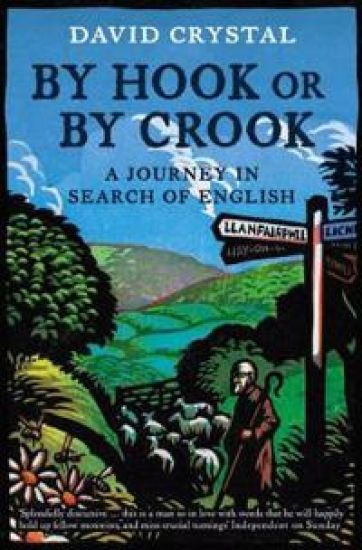
A delightfully discursive, Bill Bryson-esque and personal journey through the groves and the thickets of the English language, by our foremost scholar of the history and structure of the English language. David Crystal has been described (by the Times Higher Education Supplement) as a sort of 'latter day Dr Johnson', a populist linguist who has promoted the study of the English language in an academic and broadcasting career that has so far spanned 40 years and nearly 100 books. Now he has written an engaging travel book of more general appeal. Inspired by W. G. Sebald's ‘The Rings of Saturn’ and by Bill Bryson's books, he has combined personal reflections, historical allusions and traveller observations to create a mesmerising (and entertaining) narrative account of his encounters with the English language and its speakers throughout the world – from Bangor to Bombay and from Stratford to San Francisco. ‘By Hook or by Crook’ is an attempt to capture the exploratory, seductive, teasing, tantalising nature of language study. As such, it will appeal to the ever-growing market who like to be entertained as well as instructed.
Think On My Words

Think On My Words

David Crystal

Cambridge University Press
2008
sidottu
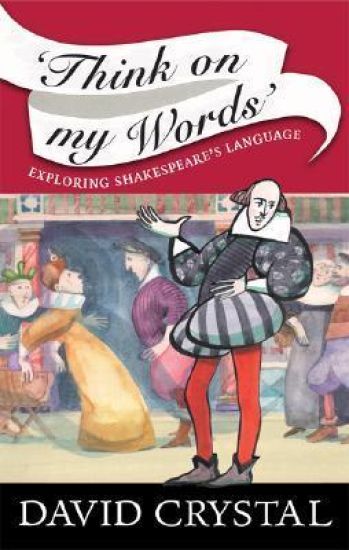
'You speak a language that I understand not.' Hermione's words to Leontes in The Winter's Tale are likely to ring true with many people reading or watching Shakespeare's plays today. For decades, people have been studying Shakespeare's life and times, and in recent years there has been a renewed surge of interest into aspects of his language. So how can we better understand Shakespeare? How did he manipulate language to produce such an unrivalled body of work, which has enthralled generations both as theatre and as literature? David Crystal addresses these and many other questions in this lively and original introduction to Shakespeare's language. Covering in turn the five main dimensions of language structure - writing system, pronunciation, grammar, vocabulary, and conversational style - the book shows how examining these linguistic 'nuts and bolts' can help us achieve a greater appreciation of Shakespeare's linguistic creativity.
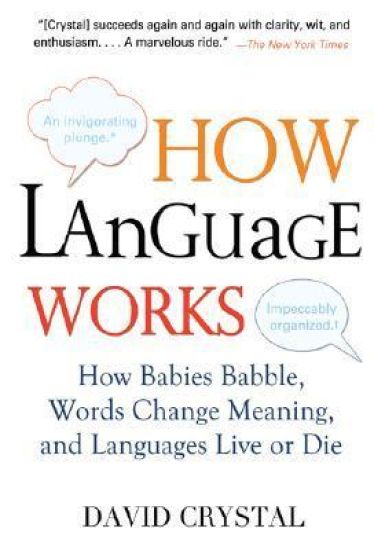
How Language Works: How Babies Babble, Words Change Meaning, and Languages Live or Die
Steven Pinker meets Bill Bryson in this landmark exploration of language. In the author's own words, "How Language Works is not about music, cookery, or sex. But it is about how we talk about music, cookery, and sex-or, indeed, anything at all." Language is so fundamental to everyday life that we take it for granted. But as David Crystal makes clear in this work of unprecedented scope, language is an extremely powerful tool that defines the human species. Crystal offers general readers a personal tour of the intricate workings of language. He moves effortlessly from big subjects like the origins of languages, how children learn to speak, and how conversation works to subtle but revealing points such as how email differs from both speech and writing in important ways, how language reveals a person's social status, and how we decide whether a word is rude or polite. Broad and deep, but with a light and witty touch, How Language Works is the ultimate layman's guide to how we communicate with one another.
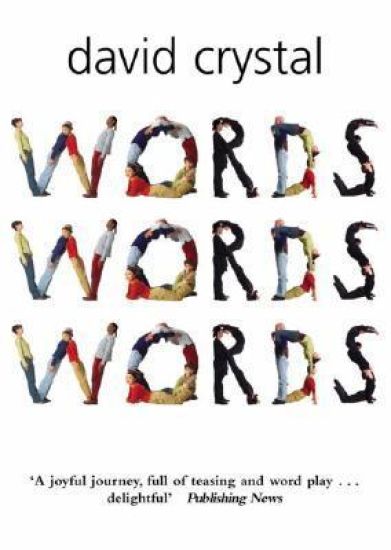
Words Words Words

Words Words Words

David Crystal

Oxford University Press
2007
nidottu
Words, Words, Words is all about the wonder of words. Drawing on a lifetime's experience, David Crystal explores language in all its rich varieties through words: the very building blocks of our communication. Language has no life of its own: it only exists in the mouths and ears, hands, eyes and brains of its users. As we are guided expertly and passionately through the mysteries and delights of word origins, histories, spellings, regional and social variations, taboo words, jargon, and wordplay, the contribution we all play in shaping the linguistic world around us becomes evident. Words, Words, Words is a celebration of what we say and how we say it. It invites us to engage linguistically with who we are: to understand what words tell us about where we come from and what we do. And as they continually shape our lives, it suggests ways that we can look at words anew and get involved with collecting and coining words ourselves.
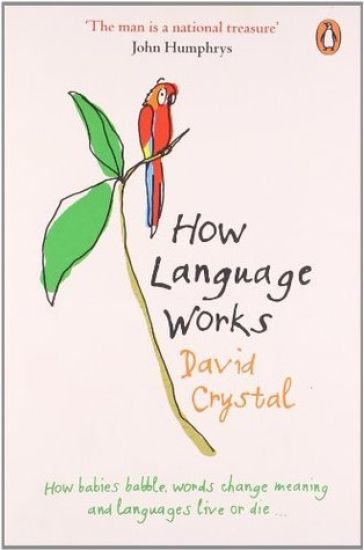
How Language Works

How Language Works

David Crystal

Penguin Books Ltd
2007
pokkari

Halvin toimitettuna 23,90 €

In this fascinating survey of everything from how sounds become speech to how names work, David Crystal answers every question you might ever have had about the nuts and bolts of language in his usual highly illuminating way. Along the way we find out about eyebrow flashes, whistling languages, how parents teach their children to speak, how politeness travels across languages and how the way we talk show not just how old we are but where we’re from and even who we want to be.
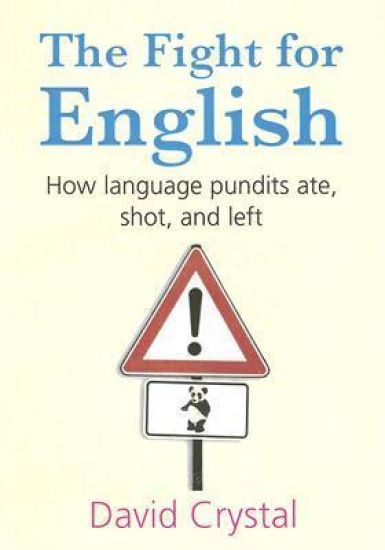
The Fight for English

The Fight for English

David Crystal

Oxford University Press
2006
sidottu
Tells the story of the battles surrounding English usage. This book combines a chronological survey of key influences in the area of usage with discussion of particular themes such as punctuation, spelling, and pronunciation.
Language and the Internet

Language and the Internet

David Crystal

Cambridge University Press
2006
sidottu
In recent years, the Internet has come to dominate our lives. E-mail, instant messaging and chat are rapidly replacing conventional forms of correspondence, and the Web has become the first port of call for both information enquiry and leisure activity. How is this affecting language? There is a widespread view that as 'technospeak' comes to rule, standards will be lost. In this book, David Crystal argues the reverse: that the Internet has encouraged a dramatic expansion in the variety and creativity of language. Covering a range of Internet genres, including e-mail, chat, and the Web, this is a revealing account of how the Internet is radically changing the way we use language. This second edition has been thoroughly updated to account for more recent phenomena, with a brand new chapter on blogging and instant messaging. Engaging and accessible, it will continue to fascinate anyone who has ever used the Internet.
The Stories of English

The Stories of English

David Crystal

Harry N. Abrams
2005
nidottu
A groundbreaking and entertaining history of worldwide English in all its dialects, differences, and linguistic delights. "A work of impeccable scholarship." --New York Times "Informative . . . distinctive . . . a spirited celebration." --The Guardian "Simply the best introductory history of the English language family that we have. The plan of the book is ingenious, the writing lively, the exposition clear, and the scholarly standard uncompromisingly high." --J. M. Coetzee, winner of the Nobel Prize in Literature In this "well-informed and appealing" work (Publishers Weekly), David Crystal provides a startlingly original view of where the richness, creativity, and diversity of the language truly lies--in the accents and dialects of English users all over the world. Whatever their regional, social, or ethnic background, each group has a story worth telling, whether it is in Scotland or Somerset, South Africa or Singapore. He reminds us that for several hundred wonderful years, there was no such thing as "incorrect" English--and traces the evolution of the language from a few thousand Anglo-Saxons to the 1.5 billion people who speak it today. Moving from Beowulf to Chaucer to Shakespeare to Dickens and the present day, Crystal puts regional speech and writing at center stage, giving a sense of the social realities behind the development of English. This significant shift in perspective enables us to understand for the first time the importance of everyday, previously marginalized, voices in our language--and provides an argument too for the way English should be taught in the future. "Learned and often provocative . . . demonstrates repeatedly that common conceptions about language are often historically inaccurate--split infinitives bothered no one until recently (likewise sentence-ending prepositions)." --Kirkus (starred review)
The Stories of English

The Stories of English

David Crystal

Penguin Books Ltd
2005
pokkari

Halvin toimitettuna 20,30 €

When and why did 'thou' disappear from Standard English? Would a Victorian Cockney have said 'observation' or 'hobservation'? Was Jane Austen making a mistake when she wrote 'Jenny and James are walked to Charmonth this afternoon'? This superbly well-informed - and also wonderfully entertaining - history of the English language answers all these questions, showing how the many strands of English (Standard English, dialect and slang among them) developed to create the richly-varied language of today.
Pronouncing Shakespeare

Pronouncing Shakespeare

David Crystal

Cambridge University Press
2005
sidottu
How did Shakespeare's plays sound when they were originally performed? How can we know, and could the original pronunciation ever be recreated? For three days in June 2004 Shakespeare's Globe presented their production of Romeo and Juliet in original, Shakespearian pronunciation. In an unusual blend of autobiography, narrative, and academic content, reflecting the unique nature of the experience, this 2005 book by David Crystal recounts the first attempt in over 50 years to mount a full-length Shakespeare play in original pronunciation. Crystal begins by discussing the Globe theatre's approach to 'original practices', which has dealt with all aspects of Elizabethan stagecraft - except pronunciation. A large section is devoted to the nature of the Early Modern English sound system. There are reports of how the actors coped with the task of learning the pronunciation, how it affected their performances and how the audiences reacted.
Making Sense of Grammar

Making Sense of Grammar

David Crystal

Pearson Education Limited
2004
pokkari
This is the ideal companion to Rediscover Grammar â?? which bridges the gap between understanding language structure and analysing it in different contexts. â?? An invaluable resource for teachers and students of A level English Literature and English Language and Literatureâ?¦â?Â John Shuttleworth, Chief Examiner English Language and Literature A Level.
Shakespeare's Words

Shakespeare's Words

Ben Crystal; David Crystal

Penguin Books Ltd
2004
nidottu
A vital resource for scholars, students and actors, this book contains glosses and quotes for over 14,000 words that could be misunderstood by or are unknown to a modern audience. Displayed panels look at such areas of Shakespeare's language as greetings, swear-words and terms of address. Plot summaries are included for all Shakespeare's plays and on the facing page is a unique diagramatic representation of the relationships within each play.