Kirjojen hintavertailu – 12 903 725 kirjaa ja 27 kauppaa

Kirjailija

David Davies

Kirjat ja teokset yhdessä paikassa: 35 kirjaa, julkaisuja vuosilta 1996–2026, suosituimpiin kuuluu The Regulation of Gender Stereotypes in Advertising. Vertaile teosten hintoja ja tarkista saatavuus suomalaisista kirjakaupoista.

35 kirjaa

Kirjojen julkaisuvuodet: 1996–2026.

The Regulation of Gender Stereotypes in Advertising
This book provides an innovative and policy-oriented analysis of gender stereotypes in advertising regulation from a socio-legal perspective. Examining the law and policy of the European Union and three case studies in Sweden, Spain and the UK, the book draws on interviews, focus group data and desk research to critically assess the legislation and regulation on the use of gender stereotypes in advertising. Its focus is on the largely neglected question of the EU’s competence in the area of gender. And to assess this, the book considers various forms of ‘good practice’ through legislation, regulation and policy. It also explores the proscribing of gender stereotypes in advertising through ‘soft law’ measures such as self-regulation at state level, and action programmes and roadmaps at EU level. Finally, it critiques the lack of progress in achieving a unified code on the regulation of gender stereotypes whilst imagining what such a code might look like. The book will appeal to academics with research and teaching interests in EU law, gender equality and comparative law, as well as academics and practitioners involved with media and advertising regulation, anti-discrimination law and freedom of expression.

The Regulation of Gender Stereotypes in Advertising
This book provides an innovative and policy-oriented analysis of gender stereotypes in advertising regulation from a socio-legal perspective. Examining the law and policy of the European Union and three case studies in Sweden, Spain and the UK, the book draws on interviews, focus group data and desk research to critically assess the legislation and regulation on the use of gender stereotypes in advertising. Its focus is on the largely neglected question of the EU’s competence in the area of gender. And to assess this, the book considers various forms of ‘good practice’ through legislation, regulation and policy. It also explores the proscribing of gender stereotypes in advertising through ‘soft law’ measures such as self-regulation at state level, and action programmes and roadmaps at EU level. Finally, it critiques the lack of progress in achieving a unified code on the regulation of gender stereotypes whilst imagining what such a code might look like. The book will appeal to academics with research and teaching interests in EU law, gender equality and comparative law, as well as academics and practitioners involved with media and advertising regulation, anti-discrimination law and freedom of expression.

An Ontology of Multiple Artworks

An Ontology of Multiple Artworks

David Davies

Oxford University Press
2024
sidottu
Multiple artworks are works that can have multiple 'instances' which can play a particular kind of role in the appreciation of those works: for example, there can be multiple copies of a novel, or multiple performances of a musical work. An Ontology of Multiple Artworks is the first book-length critical analytic treatment of the metaphysical issues relating to 'multiple' artworks for over three decades. David Davies takes various considerations to which authors have appealed in arguing for ontological understandings of works in particular multiple art-forms as putative explananda, arguing that an adequate ontology of multiple artworks should be reflectively accountable to these. After clarifying what 'multiplicity' in the arts amounts to, Davies critically assesses the 'Platonist' idea that multiple artworks must be abstract or generic entities of some sort ('types') that exist independently of our creative and appreciative practices. The evolution of this idea is traced, and its ability to deal with the different explananda in play in the literature is gauged. The methodological constraints that should govern this kind of inquiry are also assessed. On the basis of these investigations, it is concluded that Platonism about multiple artworks is seriously compromised. Different non-Platonist options are then considered, and it is argued that the account that best explains the weighted explananda is the 'Wollheimian type' theory, according to which multiple artworks are performances essentially embedded in artistic practices. Finally, sceptical challenges to the very idea that there are such things as multiple artworks are considered.
Sir David and the Green Card

Sir David and the Green Card

David Davies

Resource Publications (CA)
2023
pokkari
Sir David and the Green Card maps a journey through the twists of today's U. S. immigration system, with all its surreal demands and medieval burdens. From a dark beginning in cold British traffic to the seared highways of California, these poems recount a ten-year quest for permanence and the motley characters - real and imagined - met along the way. Join a vibrant tour through machinery suspected-yet-unknown, a story of remaining human inside political scaffolding, and a scrutiny of the complex privilege of navigating it all as an English-speaker.
Derailed

Derailed

David Davies

Peter Ward
2022
pokkari
Birdy makes bad choices in assembling his team of villains. One despises him, one stinks and the other is dating an informer for the Flying Squad. Surprisingly, their burglary on the Mail Rail succeeds in spite of a tragic accidental death. They have also annoyed a wealthy villain and the police are hot on their trail. They suffer bad luck, treachery and brutality before coming head-to-head with the law. And they take an innocent man down with them. There is only one winner.
The Boy and the Dystopian Realities

The Boy and the Dystopian Realities

David Davies

Authorhouse UK
2020
pokkari
Dystopia is imagined through todays films as being savage, barren and vivid apocalyptic world, so seemingly distant from the world we live in; but this book portrays subtle realities of our world through a boy's eyes where something else lurks only a slither of a veneer away. It is not necessarily about physical space; but also, a mental realm hinting at a boy's mental state, as what I refer to as the 'Apocalyptic Mind'. A boy so full of insecurities searching for love, dreams and a utopia, which conflicts with his way of life in a technological world. Through the love of Mother Nature David hints upon God, asking him 'Why', which shows his frustration in a painful and confused world that gives no answers. Philosophy gives us liberty to write about the things we see and experience to try and make sense of the world, hinting at homelessness, guns and technology, David plays with these ideas so fictional and at points ludicrous, where he blends the real with the imaginary.
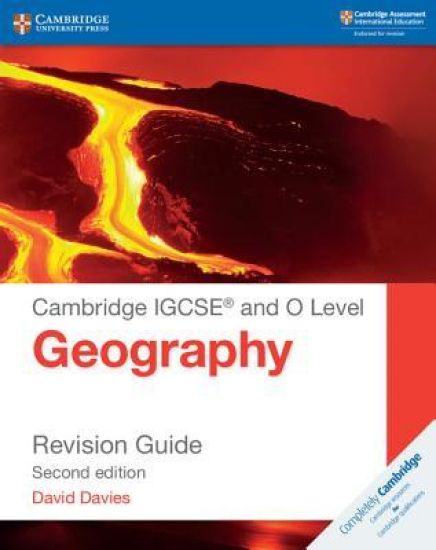
Cambridge IGCSE® and O Level Geography Revision Guide

Cambridge IGCSE® and O Level Geography Revision Guide

David Davies

Cambridge University Press
2018
pokkari
Cambridge IGCSE and O Level Geography has been written specifically for Cambridge International syllabuses 0460 and 2217. From tourism in Kenya to the summit of an active volcano in Japan, this revision guide helps students understand the processes that affect physical and human environments on a local, regional and global scale. The narrative style of the revision guide, with detailed explanations, complements the range of activities in the coursebook and reinforces understanding. Exam-style questions, international case studies and example maps give students practice with course content and skills in preparation for assessment. Sample answers to all the questions are in the back of the book.
Secret Sins

Secret Sins

David Davies

University of Wales Press
2012
nidottu
Sleepy rustic Carmarthenshire was secretly a hotbed of debauchery, violence and drunkenness according to Russell Davies in a new edition of his very successful book, Secret Sins. Behind the facade of idyllic rural life, there was a twilight world of mental illness, suicide, crime, vicious assaults, infanticide, cruelty and other assorted acts of depravity. This almost anecdotal historical study is often funny, sometimes disturbing, always revealing.
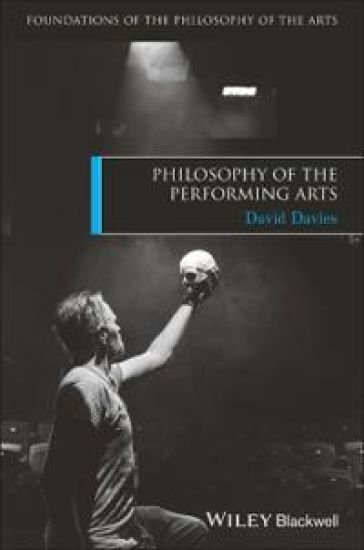
Philosophy of the Performing Arts

Philosophy of the Performing Arts

David Davies

Wiley-Blackwell (an imprint of John Wiley Sons Ltd)
2011
nidottu
PHILOSOPHY OF THE PERFORMING ARTS “David Davies’s Philosophy of the Performing Arts is long-awaited. Not since Paul Thom’s For an Audience has a book in the Anglo-American philosophical tradition focused so clearly, exclusively, informatively, and fairly on all the performing arts. I will use this book in my classes.” James Hamilton, Kansas State University, author of The Art of Theater “In this outstanding philosophical study, David Davies subjects the different, conflicting literatures characterizing works, performances, and their relationships to critical review en route to developing his own integrated theory. Covering classical music to jazz, Shakespeare to Brecht, dance to performance art, this is essential reading for anyone interested in the performing arts.” Stephen Davies, University of Auckland, author of The Philosophy of Art Philosophical inquiry concerning the performing arts has tended to focus on music – specifically classical music – which is assumed to provide a model for understanding the performing arts as a whole. This book engages with this belief and critically explores how the “classical paradigm” might be extended to other musical genres, to theater, and to dance. Taking in key components of artistic performance – improvisation, rehearsal, the role of the audience, the embodied nature of the artistic performer – the book examines similarities and differences between the performing art forms and presents the key philosophical issues that they bring into play. These reflections are then applied to the disputed issue of those contemporary artworks usually classified as “performance art.” Assuming no prior knowledge of the subject matter, this book provides an accessible, yet sophisticated, introduction to the field and a comprehensive framework for thinking about the performing arts.