Kirjailija
David Lyon
Kirjat ja teokset yhdessä paikassa: 32 kirjaa, julkaisuja vuosilta 1988–2026, suosituimpiin kuuluu Frommer's Spain. Vertaile teosten hintoja ja tarkista saatavuus suomalaisista kirjakaupoista.
32 kirjaa
Kirjojen julkaisuvuodet: 1988–2026.
Frommer's books aren't "written" by A. I., like so many others, or by travel writers who simply pop in briefly to a destination and then consider the job done. We use seasoned, locally-based journalists like Peter Barron (formerly of the BBC), along with writers who live part-time in Spain, like Patricia Harris, David Lyon and Murray Stewart. The four of them spent months checking out all of Spain's best hotels, attractions, shops, wineries, and restaurants in person, so they could offer authoritative, candid reviews that will help you find the venues that suit your tastes and budget. In short, use this book and you'll be eating in the places most tourists don't know about, visiting top attractions at times when the crowds are at their thinnest, and patronizing the bars and clubs Spaniards hold dear. Whether you're partying the night away in the Balearic Islands, exploring architecture and history in Barcelona or Bilbao, or walking the Camino de Santiago, this book will make your vacation better. We include advice the tourist board wouldn't approve of: which sites to skip, how to avoid the crowds, and how to stretch your travel budget further, whether you're on a lavish honeymoon or backpacking it. Inside the guide: Full-color photos and helpful maps, including a detachable foldout mapDetailed itineraries for planning your trip to suit your schedule and interests (and help you avoid lines and crowds)Candid reviews of the best restaurants, historic sights, museums, tours, shops, and experiences―and no-punches-pulled info on the ones not worth your time and moneyAccurate, up-to-date info on transportation, useful websites, telephone numbers, and moreCompelling cultural information so that you'll better understand the history, cuisine, and traditions of SpainBudget-planning help with the lowdown on prices and ways to save money, whether you're traveling on a shoestring or in the lap of luxuryAbout Frommer's: There's a reason Frommer's has been the most trusted name in travel for more than 65 years. Arthur Frommer created the best-selling guide series in 1957 to help American servicemen fulfill their dreams of travel in Europe, and since then, we have published thousands of titles, become a household name, and helped millions upon millions of people realize their own dreams of seeing our planet. Travel is easy with Frommer's.
Very Short Introductions: Brilliant, Sharp, Inspiring Surveillance permeates every aspect of our lives today. Once a more limited and often remote aspect of social life, today surveillance is central to political, economic, and everyday life. Every click on the keyboard, every call, text or email, every purchase, every contact with a doctor or the police or a government department, each time you walk under a video camera or pass through a security check, and in many other ways, you are recorded, identified, traced, and tracked. Who processes this free-flowing data, how, and with what consequences, is a critical question affecting everyone. This is not an alien conspiracy. It is the way today's digitally-dependent world works. Surveillance is not inherently good or bad but neither is it neutral. It urgently needs to be understood better because people's lives and life-chances depend on it. Today surveillance is central to doing business, meeting friends, organizing governance, maintaining security, and being entertained. Surveillance requires not just exploration and understanding but ethical guidance and political debate. How you get credit or welfare benefits or get on a no-fly list or are ranked as a consumer depends on surveillance. This Very Short Introduction investigates how surveillance makes people visible, how it grew to its present size and prevalence, how it came to rely on technologies of data-handling, and how it developed its own cultural features. Throughout, David Lyon also considers the ethics of surveillance, and explores its potential in prompting political struggles. ABOUT THE SERIES: The Very Short Introductions series from Oxford University Press contains hundreds of titles in almost every subject area. These pocket-sized books are the perfect way to get ahead in a new subject quickly. Our expert authors combine facts, analysis, perspective, new ideas, and enthusiasm to make interesting and challenging topics highly readable.
Frommer's Spain
Peter Barron; Jennifer Ceaser; Murray Stewart; Patricia Harris; David Lyon
Frommermedia
2023
pokkari
Frommer’s books aren’t written by committee, by A. I., or by travel writers who simply pop in briefly to a destination and then consider the job done. We use seasoned, locally-based journalists like Peter Barron and Jennifer Ceaser, along with writers who live part-time in Spain, like Patricia Harris, David Lyon and Murray Stewart. The five of them spent months checking out all of Spain’s best hotels, attractions, shops, wineries, and restaurants in person, so they could offer authoritative, candid reviews that will help you find the venues that suit your tastes and budget. In short, use this book and you’ll be eating in the places most tourists don’t know about, visiting top attractions at times when the crowds are at their thinnest, and patronizing the bars and clubs Spaniards hold dear. Whether you’re partying the night away in the Balearic Islands, exploring architecture and history in Barcelona or Bilbao, or running with the bulls in Pamplona, this book will make your vacation better. We also include advice the tourist board wouldn’t approve of: which sites to skip, how to avoid the crowds, and how to stretch your travel budget further, whether you’re on a lavish honeymoon or backpacking it. Inside the guide:Full-color photos and helpful maps, including a detachable foldout mapDetailed itineraries for planning your trip to suit your schedule and interests (and help you avoid lines and crowds)Candid reviews of the best restaurants, historic sights, museums, tours, shops, and experiences-and no-punches-pulled info on the ones not worth your time and moneyAccurate, up-to-date info on transportation, useful websites, telephone numbers, and moreCompelling cultural information so that you’ll better understand the history, cuisine, and traditions of SpainBudget-planning help with the lowdown on prices and ways to save money, whether you’re traveling on a shoestring or in the lap of luxuryAbout Frommer's: There’s a reason Frommer’s has been the most trusted name in travel for more than 65 years. Arthur Frommer created the best-selling guide series in 1957 to help American servicemen fulfill their dreams of travel in Europe, and since then, we have published thousands of titles, become a household name, and helped millions upon millions of people realize their own dreams of seeing our planet. Travel is easy with Frommer’s.
The COVID-19 pandemic has disrupted life as we knew it. Lockdowns, self-isolation and quarantine have become a normal part of everyday life. Pandemic surveillance allows governments and corporations to monitor and surveil the spread of the virus and to make sure citizens follow the measures they put in place. This is evident in the massive, unprecedented mobilization of public health data to contain and combat the virus, and the ballooning of surveillance technologies such as contact-tracing apps, facial recognition, and population tracking. This can also be seen as a pandemic of surveillance. In this timely book, David Lyon tracks the development of these methods, examining different forms of pandemic surveillance, in health-related and other areas, from countries around the world. He explores their benefits and disadvantages, their legal status, and how they relate to privacy protection, an ethics of care, and data justice. Questioning whether this new culture of surveillance will become a permanent feature of post-pandemic societies and the long-term negative effects this might have on social inequalities and human freedoms, Pandemic Surveillance highlights the magnitude of COVID-19-related surveillance expansion. The book also underscores the urgent need for new policies relating to surveillance and data justice in the twenty-first century.
What do the oldest black church in the country, an Arts-and-Crafts-style artists' studio building, a concrete football stadium, and an acoustically perfect performance space have in common? They are all National Historic Landmarks located in Boston. In fact, the city boasts more National Historic Landmarks per square mile than any other major city in the country. Given Boston's long history and record of accomplishments, it's really not surprising that 57 properties—from the nation's oldest subway tunnel to a floating lighthouse—have received this designation. Add in the adjoining cities of Cambridge and Brookline and the number swells. Historic Boston includes the most rewarding and easily visited landmarks. That's a lot of history in 103 square miles. The Secretary of the Interior designates the status of National Historic Landmark to places considered “exceptional because of their abilities to illustrate U. S. heritage.” More simply put, they are the places that resonate broadly with us, that we cherish, and want to pass on to future generations. The list is surprisingly diverse. In metro Boston, it includes an historic church with a stunning collection of Tiffany windows, a Transcendentalist community, a Grand Banks schooner, and the home and studio of landscape architect Frederick Law Olmsted.
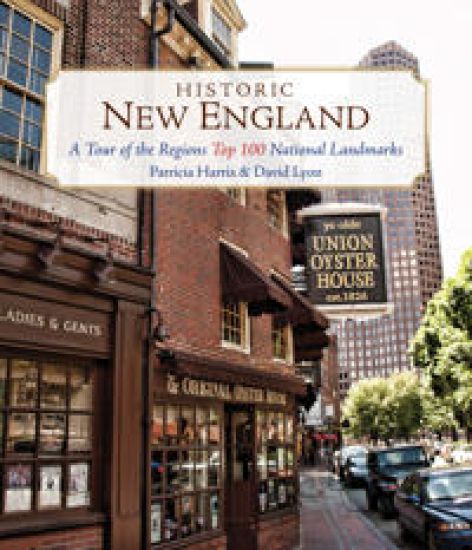
National Historic Landmarks are touchstones of our collective past that still resonate with our present. The six New England states have nearly 400 such places. However, important doesn't always translate into interesting and so we have Historic New England: A Tour of the Region’s Top 100 National Historic Landmarks––those with the most intriguing and rewarding history. In addition to historic houses, tall ships, and such quirky spots as one of the country's oldest weather stations, carousels, and sandy beaches. The book appeals to the historical enthusiast, the armchair traveler, and both local visitors and tourists alike.
From 9/11 to the Snowden leaks, stories about surveillance increasingly dominate the headlines. But surveillance is not only 'done to us' – it is something we do in everyday life. We submit to surveillance, believing we have nothing to hide. Or we try to protect our privacy or negotiate the terms under which others have access to our data. At the same time, we participate in surveillance in order to supervise children, monitor other road users, and safeguard our property. Social media allow us to keep tabs on others, as well as on ourselves. This is the culture of surveillance. This important book explores the imaginaries and practices of everyday surveillance. Its main focus is not high-tech, organized surveillance operations but our varied, mundane experiences of surveillance that range from the casual and careless to the focused and intentional. It insists that it is time to stop using Orwellian metaphors and find ones suited to twenty-first-century surveillance — from 'The Circle' or 'Black Mirror.' Surveillance culture, David Lyon argues, is not detached from the surveillance state, society and economy. It is informed by them. He reveals how the culture of surveillance may help to domesticate and naturalize surveillance of unwelcome kinds, and considers which kinds of surveillance might be fostered for the common good and human flourishing.
Facebook: Keeping you Secure is a practical and step by step guide to securing your Facebook account. Written in plain English by author David Lyon, this book focuses on explaining Facebook security settings, why they are important to you and how to implement them on your account. Some of the explained topics are: - Account Security - Login Alerts and Approvals - Setting up Friend Lists - Hiding Profile Information - Cleaning up Past Timeline Posts - Securing Future Profile Information Each section is explained in detail with step-by-step instructions and screen shots to make securing your account easy.
Android: Keeping you Secure is a practical and step by step guide to securing your Android device. Written in plain English by author David Lyon, this book focuses on explaining Android security measures, why they are important to you and how to implement them on your device. Some of the explained topics are: -Lock Screens -Encryption -Android Device Manager -Two Factor Authentication -Application Security -Wireless Network Security Each section is explained in detail with step-by-step instructions and screen shots to make securing your device easy. If you want to learn the importance of Android device and data security, look no further
In 2013, Edward Snowden revealed that the NSA and its partners had been engaging in warrantless mass surveillance, using the internet and cellphone data, and driven by fear of terrorism under the sign of ’security’. In this compelling account, surveillance expert David Lyon guides the reader through Snowden’s ongoing disclosures: the technological shifts involved, the steady rise of invisible monitoring of innocent citizens, the collusion of government agencies and for-profit companies and the implications for how we conceive of privacy in a democratic society infused by the lure of big data. Lyon discusses the distinct global reactions to Snowden and shows why some basic issues must be faced: how we frame surveillance, and the place of the human in a digital world. Surveillance after Snowden is crucial reading for anyone interested in politics, technology and society.
The ultimate guide to the food scene in Massachusetts provides the inside scoop on the best places to find, enjoy, and celebrate local culinary offerings. Written for residents and visitors alike to find producers and purveyors of tasty local specialties, as well as a rich array of other, indispensable food-related information including: food festivals and culinary events; specialty food shops; farmers' markets and farm stands; trendy restaurants and time-tested iconic landmarks; and recipes using local ingredients and traditions.
Food Lovers' Guides Indispensable handbooks to local gastronomic delights The ultimate guides to the food scene in their respective states or regions, these books provide the inside scoop on the best places to find, enjoy, and celebrate local culinary offerings. Engagingly written by local authorities, they are a one-stop for residents and visitors alike to find producers and purveyors of tasty local specialties, as well as a rich array of other, indispensable food-related information including: • Food festivals and culinary events• Farmers markets and farm stands• Specialty food shops• Places to pick your own produce• One-of-a-kind restaurants and landmark eateries• Recipes using local ingredients and traditions• The best wineries and brewpubs
‘Today the smallest details of our daily lives are tracked and traced more closely than ever before, and those who are monitored often cooperate willingly with the monitors. From London and New York to New Delhi, Shanghai and Rio de Janeiro, video cameras are a familiar and accepted sight in public places. Air travel now commonly involves devices such as body-scanners and biometric checks that have proliferated in the wake of 9/11. And every day Google and credit-card issuers note the details of our habits, concerns and preferences, quietly prompting customized marketing strategies with our active, all too often zealous cooperation. In today’s liquid modern world, the paths of daily life are mobile and flexible. Crossing national borders is a commonplace activity and immersion in social media increasingly ubiquitous. Today’s citizens, workers, consumers and travellers are always on the move but often lacking certainty and lasting bonds. But in this world where spaces may not be fixed and time is boundless, our perpetual motion does not go unnoticed. Surveillance spreads in hitherto unimaginable ways, responding to and reproducing the slippery nature of modern life, seeping into areas where it once had only marginal sway. In this book the surveillance analysis of David Lyon meets the liquid modern world so insightfully dissected by Zygmunt Bauman. Is a dismal future of moment-by-moment monitoring closing in, or are there still spaces of freedom and hope? How do we realize our responsibility for the human beings before us, often lost in discussions of data and categorization? Dealing with questions of power, technology and morality, this book is a brilliant analysis of what it means to be watched – and watching – today.
My Endeavor: The Life of the Jason Perkasie, Captain of the Falconer 121
David Lyon
Createspace Independent Publishing Platform
2011
nidottu