

Kirjailija
David Walters
Kirjat ja teokset yhdessä paikassa: 39 kirjaa, julkaisuja vuosilta 1985–2024, suosituimpiin kuuluu Francisco de Quevedo. Vertaile teosten hintoja ja tarkista saatavuus suomalaisista kirjakaupoista.
39 kirjaa
Kirjojen julkaisuvuodet: 1985–2024.

Tervetuloa Pohjoismaiden suurimpaan verkkokirjakauppaan! Adlibris kannattaa sananvapautta, ja haluamme edistää kirjallisuuden ja tiedon saatavuutta.

Life is Very Funny takes a wry look at the world and all the silly things that make it go round. Most of the rhymes are short but to the point and if theydon't make you smile then nothing will. David Walters was born in the East End of London in 1937. Despite humble beginnings he had a good education and qualified as an actuary. He became a merchant banker in the City of London and his work has taken him around the world. He has lived both in New York and California and visited many countries. He was married for over fifty years and has two children. Throughout his life his wry sense of humour has caused him to write lots of funny rhymes all of which are now collected in this book. He is retired but very active and lives in a retirement village in Hertfordshire.

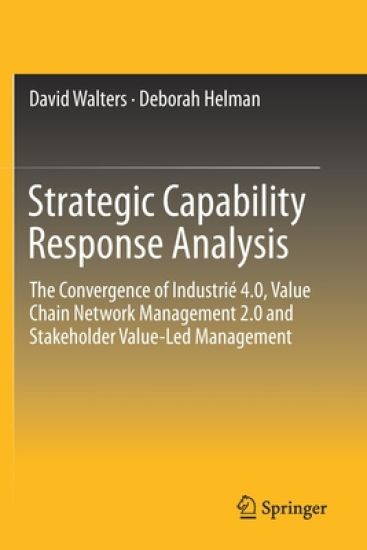
Strategic Capability Response Analysis
David Walters; Deborah Helman
Springer Nature Switzerland AG
2020
nidottu
This book integrates Industrié 4.0, Value Chain Network Management 2.0, and Stakeholder Value-Led Management into a method, offering organizations an opportunity to be more analytical when making strategic decisions for operations management activities. Strategic Capability Response Analysis embraces the value expectations of all stakeholders in a business enterprise and links them together with a demand-supply-response relationship. This convergence delivers a focused “agile-rolling-value proposition” that optimizes the expectations and the resources of its stakeholder constituents. The use of Strategic Capability Response Analysis considers the implications of the changing environment of value chain network management for the digital age. Industrié 4.0 has presented numerous opportunities across all industries to improve both the effectiveness of strategic decisions and the efficiency of their implementation to the network stakeholders. As Industrié 4.0 is changing the characteristics of decision making, the proposed model considers the impact of alternative solutions on the core business model components of performance, profitability, productivity, producibility, partnerships and preservation. The book includes case studies to highlight current management problems and how this approach can be used to help resolve those issues.
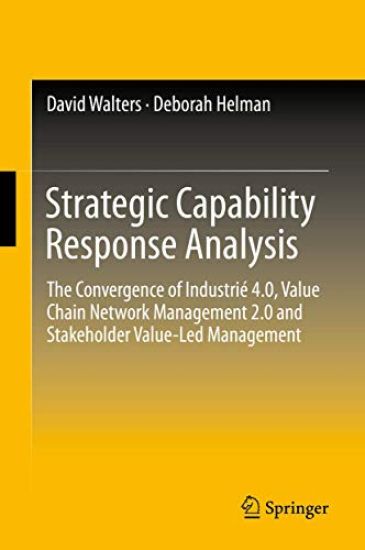
Strategic Capability Response Analysis
David Walters; Deborah Helman
Springer Nature Switzerland AG
2019
sidottu
This book integrates Industrié 4.0, Value Chain Network Management 2.0, and Stakeholder Value-Led Management into a method, offering organizations an opportunity to be more analytical when making strategic decisions for operations management activities. Strategic Capability Response Analysis embraces the value expectations of all stakeholders in a business enterprise and links them together with a demand-supply-response relationship. This convergence delivers a focused “agile-rolling-value proposition” that optimizes the expectations and the resources of its stakeholder constituents. The use of Strategic Capability Response Analysis considers the implications of the changing environment of value chain network management for the digital age. Industrié 4.0 has presented numerous opportunities across all industries to improve both the effectiveness of strategic decisions and the efficiency of their implementation to the network stakeholders. As Industrié 4.0 is changing the characteristics of decision making, the proposed model considers the impact of alternative solutions on the core business model components of performance, profitability, productivity, producibility, partnerships and preservation. The book includes case studies to highlight current management problems and how this approach can be used to help resolve those issues.

Introduction to Security
Robert Fischer; Edward Halibozek; David Walters
Butterworth-Heinemann Inc
2018
nidottu
Introduction to Security, Tenth Edition, provides an overview of the security industry with an emphasis on the theories of security and loss prevention that have shaped the profession. Security is covered in totality, providing readers with a glimpse of the various and diverse components that make up the security function. This updated book is the latest edition in what has historically been the go-to textbook on the subject for more than 30 years. While this fully updated edition continues to utilize the basic concepts that have made this text the premier primer in the security field, it also focuses heavily on current and future security issues.
Examines regulatory and other strategies for improving chemical risk management in small enterprises in the European Union. This book considers what supports are necessary to secure the implementation of these strategies and is particularly concerned with the role of chemical product supply as envisaged by REACH.
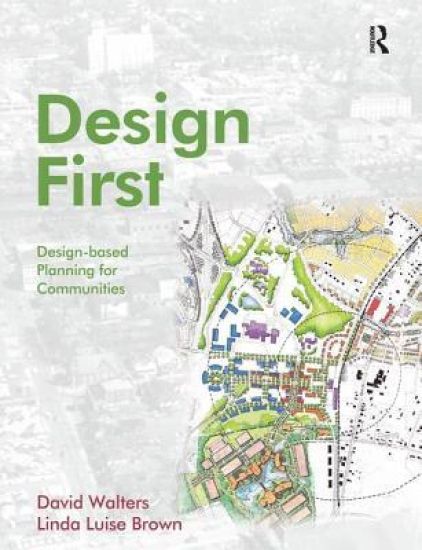
Well-grounded in the history and theory of Anglo-American urbanism, this illustrated textbook sets out objectives, policies and design principles for planning new communities and redeveloping existing urban neighborhoods. Drawing from their extensive experience, the authors explain how better plans (and consequently better places) can be created by applying the three-dimensional principles of urban design and physical place-making to planning problems. Design First uses case studies from the authors’ own professional projects to demonstrate how theory can be turned into effective practice, using concepts of traditional urban form to resolve contemporary planning and design issues in American communities. The book is aimed at architects, planners, developers, planning commissioners, elected officials and citizens -- and, importantly, students of architecture and planning -- with the objective of reintegrating three-dimensional design firmly back into planning practice.

Greenfield sites around towns and cities, and redevelopment infill sites in existing urban areas often become battlegrounds between the conflicting interests of developers and communities. In America, design charrettes (intensive design and planning workshops) have become widely used as a means of bringing together these divergent groups, using detailed design exercises to establish agreement around a development masterplan. Despite the increasing frequency of their use, charrettes are widely misunderstood and can be misapplied. This book provides a detailed guidance on the proper and most effective ways to use this helpful tool. The book combines charrette masterplanning with the creation of "design-based" codes (also known as "form-based" codes) to control the development's implementation in line with the design and planning principles established during the charrette process.

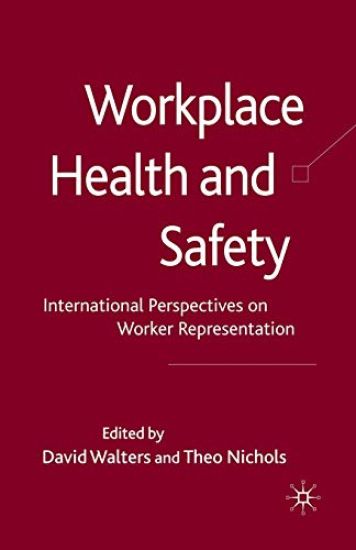
A cutting edge look at the experience of worker representation in the employment relations of workplace health and safety. Examining the extent to which existing arrangements deliver results, this book reflects on whether the effectiveness of worker representation is eroded or enhanced by current regulatory and organizational constructs.

Amazing Miracles Through The Hands Of Children
David Walters
Good News Fellowship Ministries
2015
nidottu

Redeemer: The Way of the Tiger 7
Mark Smith; Jamie Thomson; David Walters
Createspace Independent Publishing Platform
2015
nidottu


Samurai's Apprentice Books 3 & 4: Shogun's Apprentice & Samurai Master
David Walters
Createspace Independent Publishing Platform
2014
nidottu

Samurai's Apprentice: Books 1 & 2: Samurai's Apprentice & Ninja's Apprentice
David Walters
Createspace Independent Publishing Platform
2014
nidottu

Ninja: The Way of the Tiger 0
David Walters
Createspace Independent Publishing Platform
2014
nidottu

As the title Safety or Profit? suggests, health and safety at work needs to be understood in the context of the wider political economy. This book brings together contributions informed by this view from internationally recognized scholars. It reviews the governance of health and safety at work, with special reference to Australia, Canada, Sweden, and the United Kingdom. Three main aspects are discussed. The restructuring of the labor market: this is considered with respect to precarious work and to gender issues and their implications for the health and safety of workers. The neoliberal agenda: this is examined with respect to the diminished power of organized labor, decriminalization, and new governance theory, including an examination of how well the health-and-safety-at-work regimes put in place in many industrial societies about forty years ago have fared and how distinctive the recent emphasis on self-regulation in several countries really is. The role of evidence: there is a dearth of evidence-based policy. The book examines how policy on health and safety at work is formulated at both company and state levels. Cases considered include the scant regard paid to evidence by an official inquiry into future strategy in Canada; the lack of evidence-based policy and the reluctance to observe the precautionary principle with respect to work-related cancer in the United Kingdom; and the failure to learn from past mistakes in the Deepwater Horizon disaster in the Gulf of Mexico.

As the title Safety or Profit? suggests, health and safety at work needs to be understood in the context of the wider political economy. This book brings together contributions informed by this view from internationally recognized scholars. It reviews the governance of health and safety at work, with special reference to Australia, Canada, Sweden, and the United Kingdom. Three main aspects are discussed. The restructuring of the labor market: this is considered with respect to precarious work and to gender issues and their implications for the health and safety of workers. The neoliberal agenda: this is examined with respect to the diminished power of organized labor, decriminalization, and new governance theory, including an examination of how well the health-and-safety-at-work regimes put in place in many industrial societies about forty years ago have fared and how distinctive the recent emphasis on self-regulation in several countries really is. The role of evidence: there is a dearth of evidence-based policy. The book examines how policy on health and safety at work is formulated at both company and state levels. Cases considered include the scant regard paid to evidence by an official inquiry into future strategy in Canada; the lack of evidence-based policy and the reluctance to observe the precautionary principle with respect to work-related cancer in the United Kingdom; and the failure to learn from past mistakes in the Deepwater Horizon disaster in the Gulf of Mexico.