Kirjojen hintavertailu – 12 859 828 kirjaa ja 27 kauppaa
Kirjailija
David Walters
Kirjat ja teokset yhdessä paikassa: 39 kirjaa, julkaisuja vuosilta 1985–2024, suosituimpiin kuuluu Francisco de Quevedo. Vertaile teosten hintoja ja tarkista saatavuus suomalaisista kirjakaupoista.
Introduction to Security has been the leading text on private security for over thirty years. Celebrated for its balanced and professional approach, this new edition gives future security professionals a broad, solid base that prepares them to serve in a variety of positions. Security is a diverse and rapidly growing field that is immune to outsourcing. The author team as well as an outstanding group of subject-matter experts combine their knowledge and experience with a full package of materials geared to experiential learning. As a recommended title for security certifications, and an information source for the military, this is an essential reference for all security professionals. This timely revision expands on key topics and adds new material on important issues in the 21st century environment such as the importance of communication skills; the value of education; internet-related security risks; changing business paradigms; and brand protection.
An educational coloring book which enhances the mind of any child. Hours Of Coloring brought to you by Zini Graphics, LAWN Teaching Techniques and LAWD Teaching Tools.
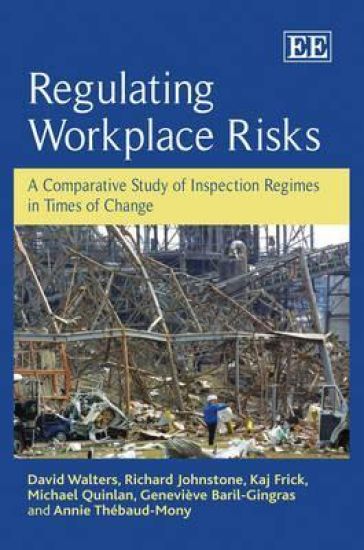
Regulating Workplace Risks is a study of regulatory inspection of occupational health and safety (OHS) and its management in five countries - Australia, Canada (Quebec), France, Sweden and the UK - during a time of major change. It examines the implications of the shift from specification to process based regulation, in which attention has been increasingly directed to the means of managing OHS more systematically at a time in which a major restructuring of work has occurred in response to the globalised economy. These changes provide both the context and material for a wider discussion of the nature of regulation and regulatory inspection and their role in protecting the health, safety and well-being of workers in advanced market economies. With its comparative nature and empirical studies, this book will appeal to OHS policy makers and regulators all over the world, as well as students in the field of occupational health and safety regulation internationally.
A cutting edge look at the experience of worker representation in the employment relations of workplace health and safety. Examining the extent to which existing arrangements deliver results, this book reflects on whether the effectiveness of worker representation is eroded or enhanced by current regulatory and organizational constructs.
Examines regulatory and other strategies for improving chemical risk management in small enterprises in the European Union. This book considers what supports are necessary to secure the implementation of these strategies and is particularly concerned with the role of chemical product supply as envisaged by REACH.
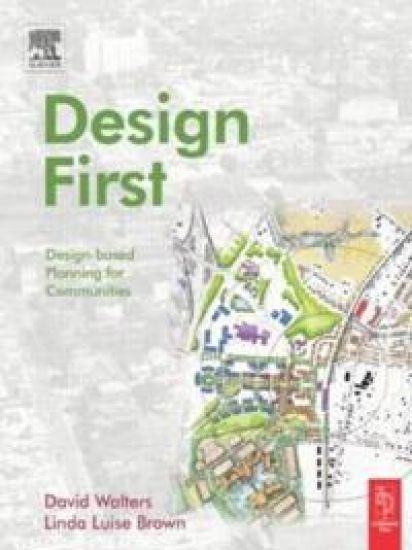
Greenfield sites around towns and cities, and redevelopment infill sites in existing urban areas often become battlegrounds between the conflicting interests of developers and communities. In America, design charrettes (intensive design and planning workshops) have become widely used as a means of bringing together these divergent groups, using detailed design exercises to establish agreement around a development masterplan. Despite the increasing frequency of their use, charrettes are widely misunderstood and can be misapplied. This book provides a detailed guidance on the proper and most effective ways to use this helpful tool. The book combines charrette masterplanning with the creation of "design-based" codes (also known as "form-based" codes) to control the development's implementation in line with the design and planning principles established during the charrette process.
The value chain framework has made its way to the forefront of management thought as a powerful analysis tool for strategic planning. Its ultimate goal is to maximize value creation while minimizing costs. In this book David Walters applies the framework to strategic decision making in the field of operations management.
Nearly one third of all occupational diseases recognised annually in the EU are related to exposure to chemical substances and it is widely accepted that this represents only a small fraction of the full extent of harm caused by occupational exposure to hazardous substances. The European chemical industry is the largest in the world but it is by no means the only source of occupational exposure to chemical hazards, because chemical products are both used and are bi-products in many diverse forms of work. This book is a study of strategic approaches to managing the risks of working with hazardous substances in Europe. Its central theme concerns the widening gap between debates and developments at national and international levels concerning safety in the use of chemical substances at work in the European Union and practices within workplaces especially within the small and medium-sized workplaces that constitute the vast majority of establishments in which people work in Europe. It sets out to discover what drives informed and competent risk management in chemical health and safety and what role occupational exposure limits play in this process. The subject is particularly topical in the light of emerging strategies on chemical risks at EU level, the future impact of REACH and the significant changes that are occurring in legislative approaches to setting and using exposure limits at national levels in most EU countries. The continuing expansion of the Community to include a range of new member states, with chemical health and safety systems that are considerably less sophisticated than those presently found in northern European member states, makes the book especially timely. It deals with a subject that is a core concern of national and EU level policy makers, regulators, OHS practitioners, employers and trade unions alike. The Authors David Walters is TUC Professor of Work Environment at Cardiff University and formerly Professor of Occupational and Environmental Health and Safety at South Bank University. Karola Grodzki, at the time her research for this book was undertaken, was Research Fellow at the Centre for Industrial and Environmental Safety and Health, South Bank University. She is currently employed by the European Commission. The views expressed in the book are purely those of the author/writer and may not in any circumstances be regarded as stating the official position of the European Commission.
This text explores in great depth marketing decisions that have implications for financial management. The emphasis on the financial management side of marketing makes the book relevant to a wide variety of advanced undergraduate and postgraduate courses. The book illustrates, uniquely, the interface between finance and management and, in particular, how strategic marketing decisions affect a company's financial management in terms of sales volume, profitability, return on investment and other indices of performance. The book is innovative and of a high standard with a strong authorial team in David Walters and Michael Halliday, who are both professors at the Sydney Graduate School of Management, Australia.
Well-grounded in the history and theory of Anglo-American urbanism, this illustrated textbook sets out objectives, policies and design principles for planning new communities and redeveloping existing urban neighborhoods. Drawing from their extensive experience, the authors explain how better plans (and consequently better places) can be created by applying the three-dimensional principles of urban design and physical place-making to planning problems. Design First uses case studies from the authors’ own professional projects to demonstrate how theory can be turned into effective practice, using concepts of traditional urban form to resolve contemporary planning and design issues in American communities. The book is aimed at architects, planners, developers, planning commissioners, elected officials and citizens -- and, importantly, students of architecture and planning -- with the objective of reintegrating three-dimensional design firmly back into planning practice.
This text is designed to be appropriate for Operations Strategy modules at both undergraduate and postgraduate level. It combines knowledge management, relationship management and advances in technology to inform the development of strategic advantage. The text adopts a value chain approach and contains a number of features to aid the learning process - chapter introductions, chapter summaries, further reading and boxed features.
Although Federico García Lorca is well-known to the English speaking public as a playwright and as the author of Romancero gitano and Poeta en Nueva York, his early poetry has received surprisingly scant critical consideration. D. Gareth Walters corrects this imbalance by concentrating on Lorca's work up to and including Canciones, the culmination of his early poetry, which was published in 1927. Beginning with a detailed survey of Lorca's juvenilia and early published poetry, Walters traces the development of Lorca's work up to Canciones and offers a full and detailed reading of that collection which explicates many poems often thought to be obscure or enigmatic. Rather than attempting to decode the poetry's symbols and images or interpret it by reference to extra-literary concerns, Walters focuses instead on the constitution of meaning in Lorca's work. He offers a valuable new way of reading Lorca that makes full use of modern scholarship while also placing the poetry in its poetic, cultural and intellectual contexts. 'Canciones' and the Early Poetry of Lorca is a pioneering reassessment of the early writing of one of the most significant Spanish writers of the twentieth century.
Managing productivity and profitability in retailing has taken on a particular role since the onset of the recession of the late 1980s. Productivity can be improved simply by rationalising low performing stores, merchandise ranges and by reducing the number of suppliers and employees. However, this is not necessarily a long term solution. The purpose of this text is to propose a means by which a more proactive approach may be taken to improving both productivity and profitability. The book develops a model based upon management ratios typically used in retailing businesses for planning and control purposes. The model encourages the use of existing performance data to evaluate overall company productivity and profitability together with performance characteristics of individual functions. An additional feature of the approach is the facility to explore the impact of changes to the retail offer suggested by customer research responses. To facilitate the use of the concepts and the model used, a disk is also available, containing the application of the model to a number of the case studies and a facility for the user to input their own data.
Managing productivity and profitability in retailing has taken on a particular role since the onset of the recession of the late 1980s. Productivity can be improved simply by rationalising low performing stores, merchandise ranges and by reducing the number of suppliers and employees. However, this is not necessarily a long term solution. The purpose of this text is to propose a means by which a more proactive approach may be taken to improving both productivity and profitability. The book develops a model based upon management ratios typically used in retailing businesses for planning and control purposes. The model encourages the use of existing performance data to evaluate overall company productivity and profitability together with performance characteristics of individual functions. An additional feature of the approach is the facility to explore the impact of changes to the retail offer suggested by customer research responses. To facilitate the use of the concepts and the model used, a disk is also available, containing the application of the model to a number of the case studies and a facility for the user to input their own data.
The purpose of this book is to explore the implementation issues of strategic and operational retailing management decisions. It does so first by examining how the retail business functions and the structural influences on decision making. Retailing is a customer-led business. An understanding of customer decision making, influences and motivations are essential components. The book develops some alternative methods for making this a more effective activity. Resource allocation, costing and managing resource allocation to achieve corporate performance are essential activities in the implementation process. Recent developments in management accounting are introduced to facilitate decision making. A worked case study/example illustrates the concepts introduced.