Kirjojen hintavertailu – 12 903 729 kirjaa ja 27 kauppaa

Kirjailija

David Wolff

Kirjat ja teokset yhdessä paikassa: 7 kirjaa, julkaisuja vuosilta 1995–2018, suosituimpiin kuuluu OpenGL 4 Shading Language Cookbook -. Vertaile teosten hintoja ja tarkista saatavuus suomalaisista kirjakaupoista.

7 kirjaa

Kirjojen julkaisuvuodet: 1995–2018.

OpenGL 4 Shading Language Cookbook

OpenGL 4 Shading Language Cookbook

David Wolff

Packt Publishing Limited
2018
nidottu

Halvin toimitettuna 66,40 €

Over 70 recipes that cover advanced techniques for 3D programming such as lighting, shading, textures, particle systems, and image processing with OpenGL 4.6Key FeaturesExplore techniques for implementing shadows using shadow maps and shadow volumesLearn to use GLSL features such as compute, geometry, and tessellation shadersUse GLSL to create a wide variety of modern, realistic visual effectsBook DescriptionOpenGL 4 Shading Language Cookbook, Third Edition provides easy-to-follow recipes that first walk you through the theory and background behind each technique, and then proceed to showcase and explain the GLSL and OpenGL code needed to implement them. The book begins by familiarizing you with beginner-level topics such as compiling and linking shader programs, saving and loading shader binaries (including SPIR-V), and using an OpenGL function loader library. We then proceed to cover basic lighting and shading effects. After that, you'll learn to use textures, produce shadows, and use geometry and tessellation shaders. Topics such as particle systems, screen-space ambient occlusion, deferred rendering, depth-based tessellation, and physically based rendering will help you tackle advanced topics. OpenGL 4 Shading Language Cookbook, Third Edition also covers advanced topics such as shadow techniques (including the two of the most common techniques: shadow maps and shadow volumes). You will learn how to use noise in shaders and how to use compute shaders. The book provides examples of modern shading techniques that can be used as a starting point for programmers to expand upon to produce modern, interactive, 3D computer-graphics applications. What you will learnCompile, debug, and communicate with shader programsUse compute shaders for physics, animation, and general computingLearn about features such as shader storage buffer objects and image load/storeUtilize noise in shaders and learn how to use shaders in animationsUse textures for various effects including cube maps for reflection or refractionUnderstand physically based reflection models and the SPIR-V Shader binaryLearn how to create shadows using shadow maps or shadow volumesCreate particle systems that simulate smoke, fire, and other effectsWho this book is forIf you are a graphics programmer looking to learn the GLSL shading language, this book is for you. A basic understanding of 3D graphics and programming experience with C++ are required.
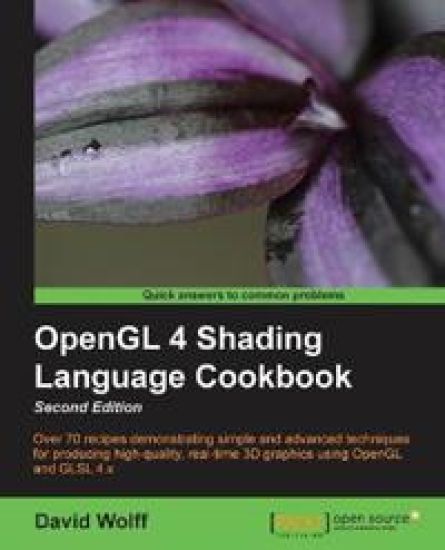
OpenGL 4 Shading Language Cookbook -

OpenGL 4 Shading Language Cookbook -

David Wolff

Packt Publishing Limited
2013
nidottu
OpenGL Shading Language 4 Cookbook is a hands-on guide that gets straight to the point - actually creating graphics, instead of just theoretical learning. Each recipe is specifically tailored to satisfy your appetite for producing real-time 3-D graphics using the latest GLSL specification. This book is for OpenGL programmers looking to use the modern features of GLSL 4 to create real-time, three-dimensional graphics. Familiarity with OpenGL programming, along with the typical 3D coordinate systems, projections, and transformations is assumed. It can also be useful for experienced GLSL programmers who are looking to implement the techniques that are presented here.
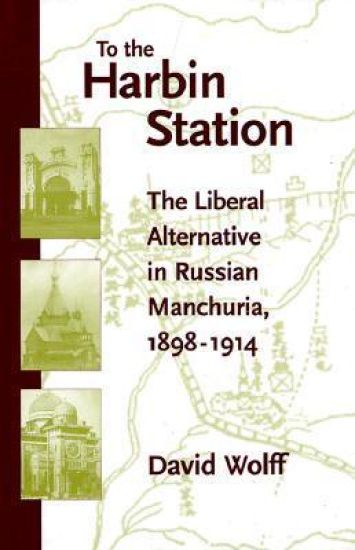
To the Harbin Station

To the Harbin Station

David Wolff; Nicholas V. Riasanovsky

Stanford University Press
1999
sidottu
In 1898, near the projected intersection of the Chinese Eastern Railroad (the last leg of the Trans-Siberian) and China's Sungari River, Russian engineers founded the city of Harbin. Between the survey of the site and the profound dislocations of the 1917 revolution, Harbin grew into a bustling multiethnic urban center with over 100,000 inhabitants. In this area of great natural wealth, Russian, Chinese, Japanese, Korean, and American ambitions competed and converged, and sometimes precipitated vicious hostilities. Drawing on the archives, both central and local, of seven countries, this history of Harbin presents multiple perspectives on Imperial Russia's only colony. The Russian authorities at Harbin and their superiors in St. Petersburg intentionally created an urban environment that was tolerant not only toward their Chinese host, but also toward different kinds of "Russians." For example, in no other city of the Russian Empire were Jews and Poles, who were numerous in Harbin, encouraged to participate in municipal government. The book reveals how this liberal Russian policy changed the face and fate of Harbin. As the history of Harbin unfolds, the narrative covers a wide range of historiographic concerns from several national histories. These include: the role of the Russian finance minister Witte, the building of the Trans-Siberian Railroad, the origins of Stolypin's reforms, the development of Siberia and the Russian Far East, the 1905 Revolution, the use of ethnicity as a tool of empire, civil-military conflict, strategic area studies, Chinese nationalism, the Japanese decision for war against the Russians, Korean nationalism in exile, and the rise of the soybean as an international commodity. In all these concerns, Harbin was a vibrant source of creative, unorthodox policy and turbulent economic and political claims.
Rediscovering Russia in Asia

Rediscovering Russia in Asia

Stephen Kotkin; David Wolff

M.E. Sharpe
1995
sidottu
This work presents a trans-Siberian expedition to rediscover the peoples, cultures and riches of Russia's eastern frontiers. It addresses such questions as: who are the people of the region?; have they a distinct culture?; and does the area have a future as part of the Pacific Rim?
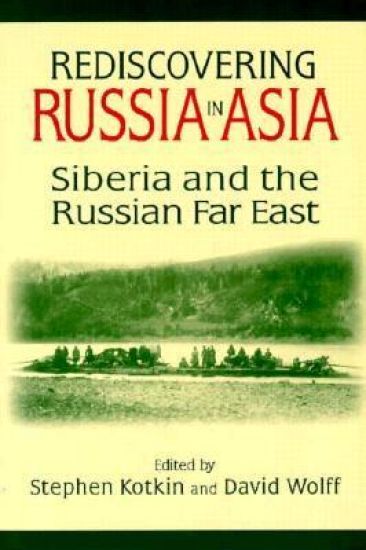
Rediscovering Russia in Asia

Rediscovering Russia in Asia

Stephen Kotkin; David Wolff

M.E. Sharpe
1995
nidottu
This work presents a trans-Siberian expedition to rediscover the peoples, cultures and riches of Russia's eastern frontiers. It addresses such questions as: who are the people of the region?; have they a distinct culture?; and does the area have a future as part of the Pacific Rim?