Kirjojen hintavertailu – 12 859 829 kirjaa ja 27 kauppaa

Kirjailija

Department of Defense

Kirjat ja teokset yhdessä paikassa: 439 kirjaa, julkaisuja vuosilta 1989–2024, suosituimpiin kuuluu Nike Zeus: The U.S. Army's First Antiballistic Missile. Vertaile teosten hintoja ja tarkista saatavuus suomalaisista kirjakaupoista.

439 kirjaa

Kirjojen julkaisuvuodet: 1989–2024.

Strategic Plan for Combating Trafficking in Persons (CTIP) 2014 - 2018 (Black and White)

Strategic Plan for Combating Trafficking in Persons (CTIP) 2014 - 2018 (Black and White)

Department of Defense

Createspace Independent Publishing Platform
2015
nidottu
More than 20 million men, women, and children throughout the world are victims of trafficking in persons. The U. S. Government (USG), which maintains a zero-tolerance policy for government employees and contractors engaging in trafficking in persons, views human trafficking as a serious human rights abuse which is modern-day slavery. DoD policy centers on deterrence of any activities of Service members, civilian employees, indirect hires, contractor personnel, and command-sponsored dependents that facilitate or support trafficking in persons in both domestic and overseas environments. This includes activities such as enabling prostitution or patronizing a prostitute, even though such activities may be legal within a host nation. In the last ten years, a number of trafficking in persons allegations occurred in conjunction with contracting and subcontracting services tied to overseas contingency operations. In response, President Obama issued EO 13627, "Strengthening Protections Against Trafficking in Persons in Federal Contracts," which calls for stronger prohibitions on contractor engagement in human trafficking-related activities, new tailored compliance measures particularly in at-risk industries and sectors, and additional training in support of monitoring, identification, and compliance efforts. The USG recognizes the need to further strengthen barriers and monitoring to ensure such affronts to human dignity are not committed in association with government activities. The Department is dedicated to eliminating human trafficking not only because it is a crime against humanity, but also because it disrupts the stability of U. S. national security interests at home and abroad. Left unchecked, human trafficking fuels organized crime and other illegal activity that disrupts democratic transitions and intensifies conflict. This DoD Strategic Plan for Combating Trafficking in Persons provides a vision and mission for the Department in its collective effort to eliminate human trafficking across the defense enterprise. The Plan provides a strategic framework underpinned by four goals and nine objectives-all focused on realizing the Department's vision to eliminate human trafficking.
National Information Exchange Model Electronic Biometric Transmission Specification Information Exchange Package Documentation

National Information Exchange Model Electronic Biometric Transmission Specification Information Exchange Package Documentation

Biometrics Identity Management Agency; Department of Defense

Createspace Independent Publishing Platform
2015
nidottu
The National Information Exchange Model (NIEM) is an XML-based standard for information exchange. The NIEM is a United States (US) government-sponsored initiative to facilitate information sharing within government organizations and their business partners. The NIEM can help organizations meet the requirements of HSPD-5, Homeland Security Presidential Directive 5: Management of Domestic Incidents 5], and associated Executive Orders. HSPD-5 directs the Department of Defense (DoD) to establish appropriate relationships and mechanisms for cooperation and coordination with other departments and agencies responsible for protecting national security. The DoD Electronic Biometric Transmission Specification (EBTS) Information Exchange Package (IEP) is a collection of XML schemas, XML instance documents, and other information artifacts that document the rules governing the exchange of biometric information with the United States DoD. This Information Exchange Package Documentation (IEPD) is based on the DoD EBTS 3.0 standard 4]. This IEPD is the document that describes the contents and use of all the artifacts included in the package.
Task Force Report: Resilient Military Systems and the Advanced Cyber Threat (Color)

Task Force Report: Resilient Military Systems and the Advanced Cyber Threat (Color)

Technology and Logistics; Department of Defense; Office of the Under Secretary of Defense

Createspace Independent Publishing Platform
2014
nidottu
After conducting an 18-month study, this Task Force concluded that the cyber threat is serious and that the United States cannot be confident that our critical Information Technology (IT) systems will work under attack from a sophisticated and well-resourced opponent utilizing cyber capabilities in combination with all of their military and intelligence capabilities (a "fullspectrum" adversary). While this is also true for others (e.g. Allies, rivals, and public/private networks), this Task Force strongly believes the DoD needs to take the lead and build an effective response to measurably increase confidence in the IT systems we depend on (public and private) and at the same time decrease a would-be attacker's confidence in the effectiveness of their capabilities to compromise DoD systems. This conclusion was developed upon several factors, including the success adversaries have had penetrating our networks; the relative ease that our Red Teams have in disrupting, or completely beating, our forces in exercises using exploits available on the Internet; and the weak cyber hygiene position of DoD networks and systems. The Task Force believes that the recommendations of this report create the basis for a strategy to address this broad and pervasive threat.
The Noncommissioned Officer and Petty Officer: Backbone of the Armed Forces

The Noncommissioned Officer and Petty Officer: Backbone of the Armed Forces

Department of Defense

Createspace Independent Publishing Platform
2014
nidottu
To be a member of the United States Armed Forces-to wear the uniform of the Nation and the stripes, chevrons, or anchors of the militaryServices-is to continue a legacy of service, honor, and patriotism that transcends generations. Answering the call to serve is to join the long line of selfless patriots who make up the Profession of Arms. This profession does not belong solely to the United States. It stretches across borders and time to encompass a culture of service, expertise, and, in most cases, patriotism. Today, the Nation's young men and women voluntarily take an oath to support and defend the Constitution of the United States and fall into formation with other proud and determinedindividuals who have answered the call to defend freedom. This splendid legacy, forged in crisis and enriched during times of peace, is deeply rooted in a time-tested warrior ethos. It is inspired by the notion of contributing to something larger, deeper, and more profound than one's own self.
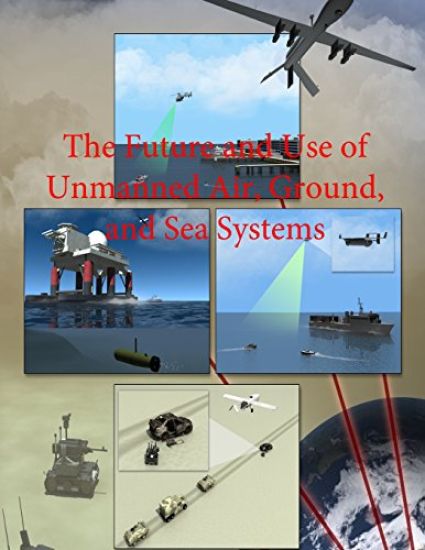
The Future and Use of Unmanned Air, Ground, and Sea Systems

The Future and Use of Unmanned Air, Ground, and Sea Systems

Department of Defense

Createspace Independent Publishing Platform
2014
nidottu
Unmanned systems continue to deliver new and enhanced battlefield capabilities to the warfighter. While the demand for unmanned systems continues unabated today, a number of factors will influence unmanned program development in the future. Three primary forces are driving the Department of Defense's (DoD) approach in planning for and developing unmanned systems.1. Combat operations in Southwest Asia have demonstrated the military utility of unmanned systems on today's battlefields and have resulted in the expeditious integration of unmanned technologies into the joint force structure. However, the systems and technologies currently fielded to fulfill today's urgent operational needs must be further expanded (as described in this Roadmap) and appropriately integrated into Military Department programs of record (POR) to achieve the levels of effectiveness, efficiency, affordability, commonality, interoperability, integration, and other key parameters needed to meet future operational requirements.2. Downward economic forces will continue to constrain Military Department budgets for the foreseeable future. Achieving affordable and cost-effective technical solutions is imperative in this fiscally constrained environment.3. The changing national security environment poses unique challenges. A strategic shift in national security to the Asia-Pacific Theater presents different operational considerations based on environment and potential adversary capabilities that may require unmanned systems to operate in anti-access/area denial (A2/AD) areas where freedom to operate is contested. Similarly, any reallocation of unmanned assets to support other combatant commanders (CCDRs) entails its own set of unique challenges, which will likely require unmanned systems to operate in more complex environments involving weather, terrain, distance, and airspace while necessitating extensive coordination with allies and host nations. The combination of these primary forces requires further innovative technical solutions that are effective yet affordable for program development. The purpose of this Roadmap is to articulate a vision and strategy for the continued development, production, test, training, operation, and sustainment of unmanned systems technology across DoD. This "Unmanned Systems Integrated Roadmap" establishes a technological vision for the next 25 years and outlines actions and technologies for DoD and industry to pursue to intelligently and affordably align with this vision. The Roadmap articulates this vision and strategy in eight chapters:
Task Force Report: Resilient Military Systems and the Advanced Cyber Threat (Black and White)

Task Force Report: Resilient Military Systems and the Advanced Cyber Threat (Black and White)

Defense Science Board; Department of Defense

Createspace Independent Publishing Platform
2014
nidottu
After conducting an 18-month study, this Task Force concluded that the cyber threat is serious and that the United States cannot be confident that our critical Information Technology (IT) systems will work under attack from a sophisticated and well-resourced opponent utilizing cyber capabilities in combination with all of their military and intelligence capabilities (a "fullspectrum" adversary). While this is also true for others (e.g. Allies, rivals, and public/private networks), this Task Force strongly believes the DoD needs to take the lead and build an effective response to measurably increase confidence in the IT systems we depend on (public and private) and at the same time decrease a would-be attacker's confidence in the effectiveness of their capabilities to compromise DoD systems. This conclusion was developed upon several factors, including the success adversaries have had penetrating our networks; the relative ease that our Red Teams have in disrupting, or completely beating, our forces in exercises using exploits available on the Internet; and the weak cyber hygiene position of DoD networks and systems. The Task Force believes that the recommendations of this report create the basis for a strategy to address this broad and pervasive threat.
Sexual Harassment and Assault Response and Prevention (SHARP) Guidebook

Sexual Harassment and Assault Response and Prevention (SHARP) Guidebook

Department of Defense

Createspace Independent Publishing Platform
2014
nidottu
The Sexual Harassment/Assault Response and Prevention (SHARP) guidebook is a company-level reference tool for company commanders and Soldiers, Department of the Army (DA) Civilians, and Family members to use in sexual harassment and sexual assault prevention and response efforts. This guidebook consolidates current Army and DoD policy and recently published directives pertaining to the SHARP program. It does not supersede, rescind, or amend any published policy of the Department. Roles, responsibilities, and process steps are laid out to assist in handling sexual harassment complaints and sexual assault reports. Quick reference sheets are also provided for portability and ease of use. This guidebook is intended solely to provide personnel with an overview of the SHARP program and applicable procedures. It should not be construed or referenced as an authoritative source for SHARP regulations or policy. If the contents of this guidebook conflict or contradict the contents of any published document, the content of the published document is the controlling policy. The Army's policies and practices in this area are evolving and subject to change. This guidebook will be updated periodically to reflect changes in Army policy.
UFC 4-440-01, Warehouses and Storage Facilities: Unified Facilities Criteria UFC 4-440-01

UFC 4-440-01, Warehouses and Storage Facilities: Unified Facilities Criteria UFC 4-440-01

Department of Defense

Createspace Independent Publishing Platform
2014
nidottu
This Unified Facilities Criteria (UFC), UFC 4-440-01, contains criteria for planners, engineers, and architects on the planning, engineering, and design of Department of Defense (DoD) storage facilities. The information in this UFC applies to the design of all new construction projects, to include additions, alterations, and renovation projects in the continental Unites States (CONUS) and outside the continental US (OCONUS). Alteration and renovation projects must update existing facilities to meet the guidance and criteria contained in this UFC within budgetary constraints. Includes a list of applicable NIST, UFC, and MIL-HDBK cybersecurity publications for consideration. Why buy a book you can download for free? First you gotta find a good clean (legible) copy and make sure it's the latest version (not always easy). Some documents found on the web are missing some pages or the image quality is so poor, they are difficult to read. We look over each document carefully and replace poor quality images by going back to the original source document. We proof each document to make sure it's all there - including all changes. If you find a good copy, you could print it using a network printer you share with 100 other people (typically its either out of paper or toner). If it's just a 10-page document, no problem, but if it's 250-pages, you will need to punch 3 holes in all those pages and put it in a 3-ring binder. Takes at least an hour. It's much more cost-effective to just order the latest version from Amazon.com This book is published by 4th Watch Books and includes copyright material. We publish compact, tightly-bound, full-size books (8 1/2 by 11 inches), with glossy covers. 4th Watch Books is a Service Disabled Veteran-Owned Small Business (SDVOSB). For more titles published by 4th Watch Books, please visit: cybah.webplus.net UFC 2-100-01 Installation Master Planning UFC 3-120-01 Design: Sign Standards UFC 3-101-01 Architecture UFC 3-440-01 Facility-Scale Renewable Energy Systems UFC 3-201-02 Landscape Architecture UFC 3-501-01 Electrical Engineering UFC 3-540-08 Utility-Scale Renewable Energy Systems UFC 3-550-01 Exterior Electrical Power Distribution UFC 3-550-07 Operation and Maintenance (O&M) Exterior Power Distribution Systems UFC 3-560-01 Electrical Safety, O & M UFC 3-520-01 Interior Electrical Systems UFC 4-010-06 Cybersecurity of Facility-Related Control Systems UFC 4-021-02 Electronic Security Systems by Department of Defense FC 4-141-05N Navy and Marine Corps Industrial Control Systems Monitoring Stations UFC 4-010-01 DoD Minimum Antiterrorism Standards for Buildings UFC 4-020-01 DoD Security Engineering Facilities Planning Manual UFC 3-430-08N Central Heating Plant UFC 3-410-01 Heating, Ventilating, and Air Conditioning Systems UFC 3-810-01N Navy and Marine Corps Environmental Engineering for Facility Construction UFC 3-730-01 Programming Cost Estimates for Military Construction UFC 1-200-02 High-Performance and Sustainable Building Requirements UFC 3-301-01 Structural Engineering UFC 3-430-02FA Central Steam Boiler Plants UFC 3-430-11 Boiler Control Systems NIST SP 800-82 Guide to Industrial Control Systems (ICS) Security Whitepaper NIST Framework for Improving Critical Infrastructure Cybersecurity NISTIR 8170 The Cybersecurity Framework FC 4-141-05N Navy and Marine Corps Industrial Control Systems Monitoring Stations DoD Energy Manager's Handbook FEMP Operations & Maintenance Best Practices UFC 4-020-01 DoD Security Engineering Facilities Planning Manual UFC 4-021-02 Electronic Security Systems
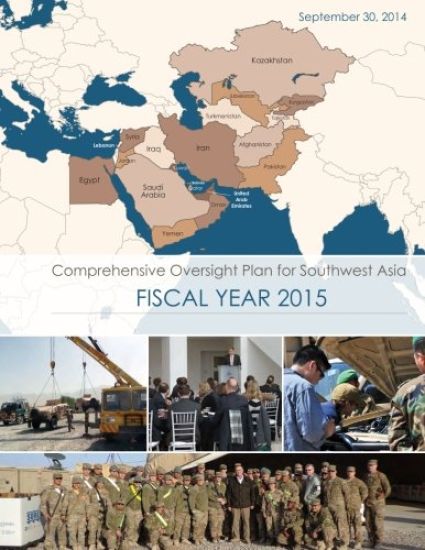
Comprehensive Oversight Plan for Southwest Asia: Fiscal Year 2015

Comprehensive Oversight Plan for Southwest Asia: Fiscal Year 2015

Department of Defense

Createspace Independent Publishing Platform
2014
nidottu
The participating U. S. Department of Defense (DoD) and Federal oversight agencies, which comprise the Southwest Asia Joint Planning Group, are pleased to present the Fiscal Year 2015 Comprehensive Oversight Plan for Southwest Asia (FY 2015 COPSWA). This annual plan reflects essential interagency collaboration within the oversight community to provide comprehensive reviews of contingency expenditures, to identify whether critical oversight gaps exist, and to recommend actions to address those gaps. The FY 2015 COPSWA incorporates the planned and ongoing oversight by the Inspectors General of the DoD (DoD OIG), U. S. Department of State (DOS OIG), and the U. S. Agency for International Development (USAID OIG); the Special Inspector General for Afghanistan Reconstruction (SIGAR); the U. S. Army Audit Agency (AAA); the Naval Audit Service (NAVAUDSVC); and the U. S. Air Force Audit Agency (AFAA). The FY 2015 update also includes ongoing oversight efforts by the U. S. Government Accountability Office (GAO) related to Southwest Asia. This oversight plan is as of September 1, 2014. Although the COPSWA does not report law enforcement efforts and outcomes, it is important to note that when criminal activity is suspected during the course of an audit, evaluation, or inspection, the allegations are referred to the respective law enforcement component. Specifically, these components are the Defense Criminal Investigative Service, which is the law enforcement arm of the DoD OIG; the SIGAR Investigations Directorates; the Offices of Investigations for the DOS OIG and the USAID OIG; the U. S. Army Criminal Investigative Command, Major Procurement Fraud Unit; the Air Force Office of Special Investigations; and the Naval Criminal Investigative Service. Each of these agencies is a member of the International Contract Corruption Task Force, which combines agency resources to collectively and efficiently deconflict and investigate public corruption and contract fraud in Southwest Asia. Because of the significance of ongoing U. S. missions in Afghanistan, the COPSWA includes the updated FY 2015 Joint Strategic Oversight Plan for Afghanistan that reflects planning activities for the remaining seven strategic oversight issue areas to be addressed post-2014, as the combat mission continues to drawdown in Afghanistan. Beyond 2014, the United States will maintain a commitment to Afghanistan's sovereignty and security, and will continue to equip, train, advise, and assist the Afghan National Security Forces (ANSF); support economic development and governance efforts; and pursue counterterrorism goals against al-Qaeda and its affiliated groups. At the beginning of 2015, and contingent upon the Afghans signing a Bilateral Security Agreement and a status of forces agreement with NATO, the United States will execute the Resolute Support train, advise, and assist mission, with 9,800 service members in different parts of the country, along with NATO allies and partners. By the end of 2015, the United States will reduce that presence by roughly half, and by the end of 2016, the United States will drawdown to a normal embassy presence in Kabul, with a security assistance component, as was done in Iraq. As the DoD mission in Afghanistan downsizes through the end of 2014, some of the in-country presence of the DoD oversight entities in Afghanistan will diminish. However, this diverse oversight community is committed to completing necessary oversight and maintaining effective working relationships to minimize duplication of efforts. Section 1 of the FY 2015 COPSWA lists the ongoing and planned oversight projects in Afghanistan by agency. As of September 1, 2014, both AFAA and NAVAUDSVC reviewed the scope of their decreased oversight missions in Afghanistan and did not have projects to submit for Section 1. However, each will monitor conditions in Afghanistan throughout the year and identify oversight projects for inclusion in this joint plan, as appropriate.
Progress Toward Security and Stability in Afghanistan

Progress Toward Security and Stability in Afghanistan

Department of Defense

Createspace Independent Publishing Platform
2014
nidottu
The conflict in Afghanistan has shifted into a fundamentally new phase. For the past 11 years, the United States and our coalition partners have led the fight against the Taliban, but now Afghan forces are conducting almost all combat operations. The progress made by the International Security Assistance Force (ISAF)-led surge over the past three years has put the Government of the Islamic Republic of Afghanistan (GIRoA) firmly in control of all of Afghanistan's major cities and 34 provincial capitals and driven the insurgency into the countryside. ISAF's primary focus has largely transitioned from directly fighting the insurgency to training, advising and assisting the Afghan National Security Forces (ANSF) in their efforts to hold and build upon these gains, enabling a U. S. force reduction of roughly 34,000 personnel- half the current force in Afghanistan-by February 2014. As agreed by President Obama and President Karzai at their January 2013 meeting in Washington, D. C., and in line with commitments made at the Lisbon and Chicago NATO summits, "Milestone 2013" was announced on June 18, 2013, marking ISAF's official transition to its new role. The ANSF has grown to approximately 96 percent of its authorized end-strength of 352,000 personnel and is conducting almost all operations independently. As a result, ISAF casualties are lower than they have been since 2008. The majority of ISAF bases has been transferred to the ANSF or closed (although most large ISAF bases remain), and construction of most ANSF bases is complete. Afghanistan's populated areas are increasingly secure; the ANSF has successfully maintained security gains in areas that have transitioned to Afghan lead responsibility. To contend with the continuing Taliban threat, particularly in rural areas, the ANSF will require training and key combat support from ISAF, including in extremis close air support, through the end of 2014. Challenges with the economy and governance will continue to foster uncertainty about the longterm prospects for stability. Afghanistan has made some progress over the past decade, as reflected in the recently released United Nations Development Programme Human Development Index, which cited Afghanistan as making the largest percentage gain in the world over the last 10 years. Moreover, the economy grew 12 percent in 2012, and the Afghan government is increasingly able to execute parts of its budget and deliver very basic goods and services. Nonetheless, Afghanistan remains one of the poorest countries in the world and will remain heavily dependent on outside aid. The government has yet to reduce corruption or extend governance to many rural areas effectively. Given the expected decline in international assistance, Afghanistan will need to embrace new sources of future economic growth and government revenue.
DoD Transfer of Night Vision Devices (NVDs) Handbook

DoD Transfer of Night Vision Devices (NVDs) Handbook

Department of Defense

Createspace Independent Publishing Platform
2014
nidottu
This handbook is issued in support of the April 21, 2014, Night Vision Export Policy Implementation Guidance (Confidential) and the June 12, 2009, Department of Defense Policy for International Transfer and Export Control of Night Vision Systems, Equipment, Components, Services, Technical Data, and Related Technology. It provides information for the preparation, coordination, and evaluation of government-to-government transfers of Night Vision Devices (NVDs). These guidelines will promote consistency in the processing of NVD requests for transfer via Foreign Military Sales (FMS) and related programs. This handbook will assist the Defense Security Cooperation Agency (DSCA), Joint Staff (JS), Office of the Under Secretary of Defense for Acquisition, Technology, and Logistics (USD)AT&L, Military Departments (MILDEPs), Implementing Agencies (IAs), Combatant Commands (CCMDs), Country Team (CT), and Security Cooperation Organizations (SCOs) in processing NVD requests. It contains information from the DSCA Manual 5105.38-M, Security Assistance Management Manual (SAMM) and should be used to supplement the SAMM. In the event of any discrepancies or inconsistencies between these two documents, the SAMM will take precedence over this handbook.
2014: Progress Toward Security and Stability in Afghanistan

2014: Progress Toward Security and Stability in Afghanistan

Department of Defense

Createspace Independent Publishing Platform
2014
nidottu
Afghan security forces held their own against the insurgency, sustained the gains made in the 2013 fighting season and successfully secured the presidential and provincial council elections on April 5, 2014. Afghan National Security Forces (ANSF) capabilities continued to expand during the reporting period, while insurgent territorial influence and kinetic capabilities remained static. The ANSF and Afghan election institutions laid the groundwork for a successful election, registering millions of voters and securing thousands of polling sites, with minimal international assistance. These preparations far surpassed Afghanistan's efforts in the 2009 and 2010 elections. Despite insurgent intent to disrupt the election process, ANSF layered security operations prevented high-profile attacks across the country and voter turnout was high. The large rise in attacks preceding previous Afghan elections did not occur. The Government of the Islamic Republic of Afghanistan (GIRoA) remains in control of its 34 provincial capitals and all major cities. Most insurgent-initiated violence still occurs away from populated areas and polling shows the majority of Afghans hold a favorable view of their soldiers and police. While the number of ANSF operations during the reporting period nearly doubled as compared to the same time period the prior year, the ANSF now conduct virtually all of these operations independently. U. S. and coalition casualties significantly dropped in 2013 - a quarter of what they were in 2010. Several violence indicators are lower in this reporting period than they were a year ago, including decreases of 2 percent in enemy-initiated attacks, 8 percent in complex attacks, and 24 percent in improvised explosive device (IED) events. Despite substantial progress, the ANSF continued to face several challenges during the reporting period. ANSF logistics and sustainment capabilities remained underdeveloped, Afghan National Army (ANA) attrition was higher than its target, and corruption continued. Although the International Security Assistance Force (ISAF) continues to develop capabilities, ANSF requires more time and effort to close four key high-end capability gaps that will remain after the ISAF mission ends on December 31, 2014: air support; intelligence enterprise; special operations; and Afghan security ministry capacity. International funding and coalition force assistance will be critical to sustaining the force after 2014. If a second-round runoff election is required, securing the runoff during the summer fighting season will be a major test of the ANSF. Opinion polling during the reporting period showed that Afghans remain largely optimistic about their country's trajectory. However, the ANSF's need for post-2014 assistance, the President of Afghanistan's refusal to sign the U. S.-Afghanistan Bilateral Security Agreement (BSA), the consequent lack of U. S. and NATO post-2014 presence decisions, and simultaneous political, security, and economic transitions generated uncertainty throughout Afghan society. The Taliban tried to capitalize on Afghan uncertainty and fear of abandonment by the coalition through propaganda, without much success.