Kirjojen hintavertailu – 12 903 724 kirjaa ja 27 kauppaa
Kirjailija
Department Of the Army
Kirjat ja teokset yhdessä paikassa: 587 kirjaa, julkaisuja vuosilta 1982–2021, suosituimpiin kuuluu Airdrop fo Supplies and Equipment: Rigging Landing Field Mat (FM 10-579 / TO 13C7-50-1). Vertaile teosten hintoja ja tarkista saatavuus suomalaisista kirjakaupoista.
This manual is primarily written for US Army long-range surveillance units (LRSU) and other Infantry reconnaissance and surveillance (R&S) units. It is also provided for use by corps, division, brigade combat team (BCT); battlefield surveillance brigade (BFSB); and reconnaissance and surveillance squadron commanders and staffs; instructors of US Army corps, division, and BCT intelligence, surveillance and reconnaissance (ISR) operations. In addition, many of the subjects covered should be a ready and useful reference for other branches of the US Army and US military, and for multinational forces working in a joint environment. This manual defines the organization, roles, operational requirements, mission tasks, battlefield functions, and command and control (C2) relationships of LRSCs organic to the R&S squadron of the BFSB. It also provides the doctrine for LRSU to use in combat training and combat. It establishes a common base of tactical knowledge from which leaders can develop specific solutions to LRSU tactical problems. It increases the effectiveness of LRSU operations by also providing doctrinal principles and selected battlefield-proven tactics, techniques, and procedures (TTPs). The Digital Training Management System (DTMS) contains the LRSC combined arms training strategies (CATS) and collective tasks for training the LRSU. Before leaders can use this manual to develop and execute training for, and to plan, coordinate, and execute LRS missions, they must first know FM 3-21.8, Infantry Rifle Platoon and Squad, and LRSC CATS.
Field Manual (FM) 3-22 provides doctrine for Army support to Department of Defense security cooperation. Itexplains how Army forces conduct security cooperation, from theater army through brigade level, includingsupport from Headquarters, Department of the Army, functional Army Service component commands, majorcommands, and direct reporting units. Army modularity allows commanders to add selective capabilities toassist the brigade as it conducts security cooperation activities. The brigade and any additional augmentationrequired from higher echelons provide the framework for advisors to function and accomplish the mission-building partner capacity and capability-to achieve the desired end state. This discussion builds on the doctrine in Army Doctrine Publication (ADP) 3-0 and Army Doctrine ReferencePublication (ADRP) 3-0, Unified Land Operations. FM 3-22 establishes context for Army missions byexplaining how security cooperation activities are an integral component of unified land operations, jointoperations, and unified action. It shows how Army support to security cooperation is nested with nationalstrategic direction. FM 3-22 is consistent and compatible with joint doctrine and emphasizes unified action. Ituses text and concepts developed with North Atlantic Treaty Organization and American, British, Canadian, Australian Armies Program partners. The principal audience for FM 3-22 is theater army security cooperation planners, division and brigade leadersand staffs, and Soldiers assigned or attached as advisors to brigades that execute security cooperation missions. Commanders and staffs of Army headquarters serving as joint task force or multinational headquarters shouldalso refer to applicable joint or multinational doctrine concerning the range of military operations and joint ormultinational forces. Trainers and educators throughout the Army will also use this manual
This field manual/Marine Corps warfighting publication establishes doctrine (fundamental principles) for militaryoperations in a counterinsurgency (COIN) environment. It is based on lessons learned from previous counterinsurgenciesand contemporary operations. It is also based on existing interim doctrine and doctrine recentlydeveloped. Counterinsurgency operations generally have been neglected in broader American military doctrine and nationalsecurity policies since the end of the Vietnam War over 30 years ago. This manual is designed to reversethat trend. It is also designed to merge traditional approaches to COIN with the realities of a new internationalarena shaped by technological advances, globalization, and the spread of extremist ideologies-some of themclaiming the authority of a religious faith. The manual begins with a description of insurgencies and counterinsurgencies. The first chapter includes a setof principles and imperatives necessary for successful COIN operations. Chapter 2 discusses nonmilitary organizationscommonly involved in COIN operations and principles for integrating military and civilian activities. Chapter 3 addresses aspects of intelligence specific to COIN operations. The next two chapters discuss thedesign and execution of those operations. Developing host-nation security forces, an essential aspect of successfulCOIN operations, is the subject of chapter 6. Leadership and ethical concerns are addressed in chapter7. Chapter 8, which concerns sustainment of COIN operations, concludes the basic manual. The appendixescontain useful supplemental information. Appendix A discusses factors to consider during the planning, preparation, execution, and assessment of a COIN operation. Appendixes B and C contain supplemental intelligenceinformation. Appendix D addresses legal concerns. Appendix E describes the role of airpower
FM 3-35 is the Army's authoritative doctrine for planning, organizing, executing, and supporting deploymentand redeployment. This manual represents the culmination of our efforts to consolidate all deployment doctrine(FM 100-17, FM 100-17-3, FM 3-35.4, FM 100-17-5, and FM 4-01.011) into a single manual to align Armydeployment doctrine with joint deployment doctrine. FM 3-35 has five chapters and 12 appendices.- Chapter 1 presents an overview of force projection and the deployment process.- Chapter 2 spells out activities units engage in prior to being alerted for deployment.- Chapter 3 outlines the procedures involved in the movement of units from home station to theport of embarkation (POE) and from the POE to the port of debarkation (POD).- Chapter 4 details the process of reception, staging, onward movement, and integration(RSOI).- Chapter 5 explains redeployment.
This manual establishes the doctrinal framework for the Army prepositioned stocks (APS) program. It describesthe missions, duties, and responsibilities of all parties involved in moving APS to an operational area andhanding it off to designated Army units. This manual supersedes Field Manual (FM) 100-17-1 and FM 100-17-2. The changing world environment has led to significant changes in how the Army structures its forces. No singlesolution will succeed when confronting an adaptive adversary. The Army must retain a wide range ofcapabilities while significantly improving its agility and versatility. Building a joint and expeditionary Armywill require versatile forces that can execute smaller, shorter duration operations without degrading itstraditional role in a major combat operation. At the core of this philosophy is having the ability to rapidly project predominately continental United States(CONUS)-based forces to an area of operations (AO), requiring the involvement of numerous military Services, agencies, departments, and organizations. Its credibility depends on the capability to deploy, in a timelymanner, an appropriate military force capable of accomplishing the mission
Chapter 1 shortens the discussion of the operational environment found on the now obsolete 2011 FM 3-0, Change 1, and emphasizes military operations. This chapter provides a framework of variables of an operationalenvironment that shape their nature and affect outcomes. The chapter then discusses unified action and joint operations as well as land operations. Finally, this chapter discusses law of land warfare and combined arms. Chapter 2 introduces the Army's new operational concept of unified land operations. It discusses how commanders apply landpower as part of unified action to defeat the enemy on land and establish conditions that achieve the joint force commander's end state. Chapter 2 discusses how commanders demonstrate the Army's new core competencies of combined arms maneuver and wide area security conducted through decisive action. Chapter 3 discusses combat power and the warfighting functions used to generate combat power in support of unified land operations. As in the now obsolete 2011 FM 3-0, Change 1, chapter 3 discusses the eight elements of combat power that include the six warfighting functions with leadership and information. Lastly, it discusseshow Army forces achieve combined arms through force tailoring, task organization, and mutual support. Chapter 4 discusses the elements of operational art and the meaning of operational art to Army forces. It elaborates on commanders and staffs applying the elements of operational art to understand, visualize, and describe how to establish conditions to achieve a desired end state. It discusses how operational art represents a creative approach to dealing with the direction of military forces and expresses an informed vision across the levels of war.
This field manual establishes doctrine (fundamental principles) for tactical counterinsurgency (COIN) operations at the company, battalion, and brigade level. It is based on lessons learned from historic counterinsurgencies and current operations. This manual continues the efforts of FM 3-24, Counterinsurgency, in combining the historic approaches to COIN with the realities of today's operational environment (OE)-an environment modified by a population explosion, urbanization, globalization, technology, the spread of religious fundamentalism, resource demand, climate change and natural disasters, and proliferation of weapons of mass destruction. This manual is generic in its geographic focus and should be used with other doctrinal sources. - Chapter 1, Operational Environment of Counterinsurgency, defines insurgent and counterinsurgent while using the operational variables and mission variables to describe the OE. Finally, it stresses developing a culture capability for Soldiers and leaders. - Chapter 2, Foundations of Insurgency, categorizes insurgent groups by their components- elements, dynamics, and strategies and their manifestations-tactics, strengths, and vulnerabilities. - Chapter 3, Foundations of Counterinsurgency, covers the seven lines of effort, tactical considerations, clear-hold-build operations, and counterinsurgency phases. - Chapter 4, Planning in Counterinsurgency, arguably the most important chapter, covers planning for tactical units during counterinsurgency operations. It also covers planning horizons and targeting. - Chapter 5, Offensive Operations in Counterinsurgency, addresses offensive techniques used by tactical units during counterinsurgency operations. - Chapter 6, Defensive Operations in Counterinsurgency, addresses defensive techniques used by tactical units during counterinsurgency operations. - Chapter 7, Stability Operations in Counterinsurgency, addresses stability techniques used by tactical units during counterinsurgency operations. - Chapter 8, Working with Host Nation Security Forces, covers the seven steps (MORTEAM) units use to train, advise, and partner with Host Nation security forces.
FM 3-97.6 describes the tactics, techniques, and procedures that the United States (US) Armyuses to fight in mountainous regions. It is directly linked to doctrinal principles found in FM 3-0and FM 3-100.40 and should be used in conjunction with them. It provides key information andconsiderations for commanders and staffs regarding how mountains affect personnel, equipment, and operations. It also assists them in planning, preparing, and executing operations, battles, and engagements in a mountainous environment. Army units do not routinely train for operations in a mountainous environment. Therefore, commanders and trainers at all levels should use this manual in conjunction with TC 90-6-1, Army Training and Evaluation Program (ARTEP) mission training plans, and the trainingprinciples in FM 7-0 and FM 7-10 when preparing to conduct operations in mountainous terr
Field Manual (FM) 3-19.15 addresses continental United States (CONUS) and outsidecontinental United States (OCONUS) civil disturbance operations. Today, United States (US)forces are deployed on peacekeeping, peace enforcement, and humanitarian assistance operationsworldwide. During these operations, US forces are often faced with unruly and violent crowdsintent on disrupting peace and the ability of US forces to maintain peace. Worldwide instabilitycoupled with increasing US military participation in peacekeeping and related operationsrequires that US forces have access to the most current doctrine and tactics, techniques, andprocedures (TTP) necessary to quell riots and restore public order. In addition to covering civil unrest doctrine for OCONUS operations, FM 3-19.15 addressesdomestic unrest and the military role in providing assistance to civil authorities requesting it forcivil disturbance operations. It provides the commander and his staff guidance for preparing andplanning for such operations. The principles of civil disturbance operations, planning and trainingfor such operations, and the TTP employed to control civil disturbances and neutralize specialthreats are discussed in this manual. It also addresses special planning and preparation that areneeded to quell riots in confinement facilities are also discussed. In the past, commanders were limited to the type of force they could apply to quell a riot. Riotbatons, riot control agents, or lethal force were often used. Today, there is a wide array ofnonlethal weapons (NLW) available to the commander that extends his use of force along theforce continuum. This manual addresses the use of nonlethal (NL) and lethal forces when quellinga riot.
***Book 1 of 2: Chapters 1 thru 10***Rather than providing rote solutions, this manual provides a doctrinal framework of principles; tactics, techniques, and procedures (TTP); terms; and symbols for the employment of the Infantry rifle company. Thisframework will help Infantry rifle company leaders effectively-- Exploit capabilities unique to the Infantry. Reduce the vulnerability of the unit. Plan and conduct full-spectrum operations. Accomplish their missions in various tactical situations, from stability and civil support tohigh-intensity combat. Win on the battlefield. The Infantry companies of the SBCT and HBCT mostly use the same doctrine, but cover more specific doctrinein their own manuals. The main target audience for this manual includes Infantry rifle company commanders, executive officers, firstsergeants, platoon sergeants and platoon leaders. Military instructors, evaluators, training and doctrinedevelopers will also find it useful, as will other Infantry company commanders (HHC and weapons company), Infantry battalion staff officers, service school instructors, and commissioning source instructor
Chapter 1 introduces theoretical and historical perspectives of urban operations that serve as the underlying basis for the rest of the manual. While this manual has incorporated lessons learned from recent and ongoing operations, it has deliberately taken a broad and varied historical perspective in order to remain relevant to future threats and circumstance differing from those that the Army currently faces. Chapter 2 discusses the characteristics of urban centers and populations as well as their impact on operations. It is unlikely that Army forces will ever operate in a benign urban environment; therefore, Chapter 3 discusses the varied nature of potential urban threats. Chapter 4 describes the effects of the urban environment on warfighting functions and tactics. An understanding of the complexities of the urban environment, the nature of the enemy as an adaptive, learning opponent, and the effects of the environment on warfighting capabilities and skills is essential to sound decision making. Chapters 5 and 6 discuss the potential costs of urban operations and risk reduction measures that the commander and his staff must consider early in their planning. These chapters also outline an urban operational framework and specific urban considerations that create the foundations necessary for successfully applying operational doctrine to an urban environment. The second part of the manual (Chapters 7 - 10) discusses how urban operations are conducted and resourced. Urban operations include major offensive and defensive operations in urban environments as well as stability or civil support operations ranging from peace operations and counterterrorism to disaster relief and humanitarian assistance. For the different types of operations-offense, defense, and stability or civil support-the purpose, characteristics, organization, and considerations are discussed. However, commanders consider that most urban operations will normally involve the simultaneous execution of offense and defense with stability or civil support (although proportional emphasis will shift over time) and plan accordingly.
***Book 2 of 2: Chapters 11 thru Index***Rather than providing rote solutions, this manual provides a doctrinal framework of principles; tactics, techniques, and procedures (TTP); terms; and symbols for the employment of the Infantry rifle company. Thisframework will help Infantry rifle company leaders effectively-- Exploit capabilities unique to the Infantry. Reduce the vulnerability of the unit. Plan and conduct full-spectrum operations. Accomplish their missions in various tactical situations, from stability and civil support tohigh-intensity combat. Win on the battlefield. The Infantry companies of the SBCT and HBCT mostly use the same doctrine, but cover more specific doctrinein their own manuals. The main target audience for this manual includes Infantry rifle company commanders, executive officers, firstsergeants, platoon sergeants and platoon leaders. Military instructors, evaluators, training and doctrinedevelopers will also find it useful, as will other Infantry company commanders (HHC and weapons company), Infantry battalion staff officers, service school instructors, and commissioning source instructor
This publication applies to the Active Army, the Army National Guard (ARNG)/ArmyNational Guard of the United States (ARNGUS), and the US Army Reserve (USAR)unless otherwise stated. It provides guidance on the operation and marksmanship of theM9, 9-mm pistol and the M11, 9-mm pistol. It reflects current Army standards inweapons qualification. It is a guide for the instructor to develop training programs, plans, and lessons that meet the objectives of the US Army Marksmanship program fordeveloping combat-effective marksmen. The Soldier develops confidence, knowledge, and skills by following the guidelines in this manu
This manual provides doctrinal guidance, techniques, and procedures governing the employment of human intelligence (HUMINT) collection and analytical assets in support of the commander's intelligence needs. It outlines-HUMINT operations. The HUMINT collector's role within the intelligence operating system. The roles and responsibilities of the HUMINT collectors and the roles of those providing the command, control, and technical support of HUMINT collection operations. This manual provides the doctrinal guidance for HUMINT collectors and commanders and staffs of the MI organizations responsible for planning and executing HUMINT operations. This manual also serves as a reference for personnel developing doctrine, tactics, techniques, and procedures (TTP); materiel and force structure; institutional and unit training; and standing operating procedures (SOPs), for HUMINT operations at all army echelons. In accordance with TRADOC Regulation 25-36, the doctrine in this field manual is not policy (in and of itself), but is"...a body of thought on how Army forces operate... It provides an authoritative guide for leaders and soldiers, while allowing freedom to adapt to circumstances.
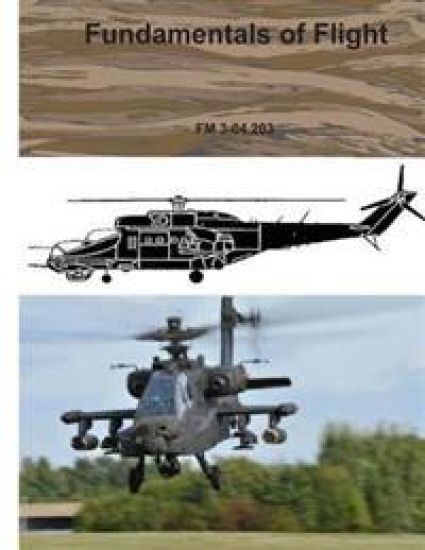
One of the underlying premises of Army aviation is if crewmembers understand 'why' they will be better prepared to 'do' when confronted with the unexpected. FM 3-04.203 endeavors to ensure that crewmembers understand the basic physics of flight, and the dynamics associated with fixed- and rotary-wing aircraft. A comprehensive understanding of these principles will better prepare a crewmember for flight, transition training, and tactical flight operations. Because the U. S. Army prepares its Soldiers to operate anywhere in the world, this publication describes the unique requirements and flying techniques crewmembers will use to successfully operate in extreme environments, not always encountered in home station training. As a full-time force, the U. S. Army is capable of using the advantages of its superior night operation technologies to leverage combat power. To that end, Army crewmembers must be familiar and capable of performing their mission proficiently and tactically at night. The information on night vision systems (NVSs) and night operations in this circular will provide the basis for acquiring these skills. Every aviator understands that the primary purpose is to operate aircraft safely. Every crewmember must perform the mission effectively and decisively in tactical and combat operations. FM 3-04.203 also covers basic tactical flight profiles, formation flight, and air combat maneuvers. FM 3-04.203 is an excellent reference for Army crewmembers; however, it can not be expected that this circular is all inclusive or a full comprehension of the information will be obtained by simply reading the text. A firm understanding will begin to occur as crewmembers become more experienced in their particular aircraft, study the tactics, techniques, and procedures (TTP) of their units, and study other sources of information. Crewmembers honing skills should review FM 3-04.203 periodically to gain new insights.
This manual is a dual-Service US Army and US Marine Corps publication introducing new terms and definitions and updating existing definitions as reflected in the latest editions of Army field manuals and Marine Corps doctrinal, warfighting, and reference publications. It complies with DOD Military Standard 2525. When communicating instructions to subordinate units, commanders and staffs from company through corps should use this manual as a dictionary of operational terms and military graphics. This manual incorporates changes in joint terminology and definitions as reflected in JP 1-02 (asamended through June 2003) and provides a single standard for developing and depicting handdrawnand computer-generated military symbols for situation maps, overlays, and annotatedaerial photographs for all types of military operations. The symbology chapters of this manualfocus primarily on land military symbols applicable for the Army and Marine Corps. In additionto terminology, this manual includes the following updated lists: - Approved acronyms and abbreviations with their expansions.- Two-letter country codes.- Brevity codes and their meanings.- Procedural words.- Tactical tasks. This manual applies to the Active Army, the US Army Reserves, the Army National Guard andthe US Marine Corps.
Field Manual (FM) 3-19.15 addresses continental United States (CONUS) and outsidecontinental United States (OCONUS) civil disturbance operations. Today, United States (US)forces are deployed on peacekeeping, peace enforcement, and humanitarian assistance operationsworldwide. During these operations, US forces are often faced with unruly and violent crowdsintent on disrupting peace and the ability of US forces to maintain peace. Worldwide instabilitycoupled with increasing US military participation in peacekeeping and related operationsrequires that US forces have access to the most current doctrine and tactics, techniques, andprocedures (TTP) necessary to quell riots and restore public order. In addition to covering civil unrest doctrine for OCONUS operations, FM 3-19.15 addressesdomestic unrest and the military role in providing assistance to civil authorities requesting it forcivil disturbance operations. It provides the commander and his staff guidance for preparing andplanning for such operations. The principles of civil disturbance operations, planning and trainingfor such operations, and the TTP employed to control civil disturbances and neutralize specialthreats are discussed in this manual. It also addresses special planning and preparation that areneeded to quell riots in confinement facilities are also discussed. In the past, commanders were limited to the type of force they could apply to quell a riot. Riotbatons, riot control agents, or lethal force were often used. Today, there is a wide array ofnonlethal weapons (NLW) available to the commander that extends his use of force along theforce continuum. This manual addresses the use of nonlethal (NL) and lethal forces when quellinga riot