Kirjojen hintavertailu – 12 903 724 kirjaa ja 27 kauppaa

Kirjailija

Department Of the Army

Kirjat ja teokset yhdessä paikassa: 587 kirjaa, julkaisuja vuosilta 1982–2021, suosituimpiin kuuluu Airdrop fo Supplies and Equipment: Rigging Landing Field Mat (FM 10-579 / TO 13C7-50-1). Vertaile teosten hintoja ja tarkista saatavuus suomalaisista kirjakaupoista.

587 kirjaa

Kirjojen julkaisuvuodet: 1982–2021.

Army Physical Readiness Training: FM 7-22

Army Physical Readiness Training: FM 7-22

Department of the Army

Createspace Independent Publishing Platform
2014
nidottu
The Army assesses, plans, prepares, and executes training and leader development through training based on tasks, conditions, and standards. Knowing the task, assessing the level of proficiency against the standard and developing asustained or improved training plan is the essence of all Army training. Army training overall prepares Soldiers, leaders, and units to fight in the full spectrum of operations. Combatreadiness is the Army's primary focus as it transitions to a more agile, versatile, lethal, and survivable force. Physical readiness training prepares Soldiers and units for the physical challenges of fulfilling the mission in theface of a wide range of threats, in complex operational environments, and with emerging technologies. Part I, Philosophy, covers approach, system, and leadership. Part II, Strategy, covers types of programs, planning considerations, and special conditioningprograms. Part III, Activities, covers execution of training, preparation and recovery, strength and mobility, andendurance and mobility. Appendix A is the Army Physical Fitness Test. Appendix B discusses climbing bars. Appendix C discusses posture and body mechanics. Appendix D discusses environmental considerations. Appendix E discusses obstacle negotiatio
Weapons of Mass Destruction- Civil Support Team Operations: FM 3-11.22

Weapons of Mass Destruction- Civil Support Team Operations: FM 3-11.22

Department of the Army

Createspace Independent Publishing Platform
2014
nidottu
The potential for terrorist activities directed against United States (U. S.) citizens and interests worldwide hasbecome an increasingly serious threat. In an effort to counter this threat, the U. S. Government has implementeda number of measures to enhance the Nation's ability to deter, prevent, respond to, and recover from terroristactivities within the United States, its territories, and possessions. The establishment of the Weapons of MassDestruction (WMD)-Civil Support Team (CST) program is one of the measures that has been implemented tosupport the defense of the Homeland. The WMD-CST program mission is to support civil authorities at domestic chemical, biological, radiological, nuclear, and high-yield explosives (CBRNE) incident sites by identifying CBRNE agents and substances, assessing current and projected consequences, advising on response measures, and assisting with appropriaterequests for additional support. This includes the intentional or unintentional release of CBRNE and natural orman-made disasters in the United States that result, or could result, in the catastrophic loss of life or property. As the "state governors' 911 forces for WMD," WMD-CSTs provide direct support to the front lines of local, state, and federal emergency response organizations. WMD-CST operations are conducted primarily in civilenvironments-urban, rural, industrial, or suburban areas-and in hot or cold weather. WMD-CSTs currentlyoperate within the United States, its territories, and possessions while in Title 10 U. S. Code (USC) or Title 32USC status. This manual serves as the foundation for WMD-CST doctrine and focuses on the organization, mission, command and control (C2), and operations of the WMD-CST. It discusses employment concepts, planningconsiderations, capabilities, and the type of support that WMD-CSTs can provide during a response. Thisinformation should be shared with key decision makers at local, state, and federal lev
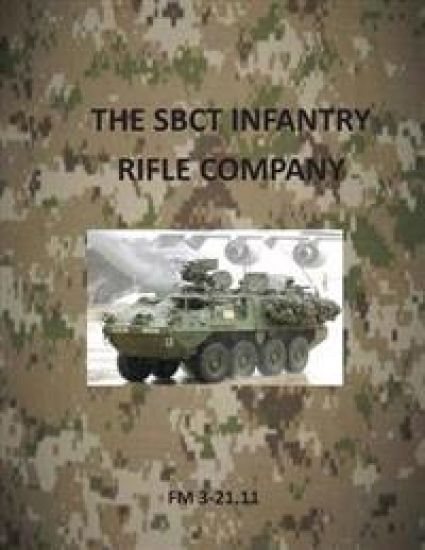
SBCT Infantry Rifle Company: FM 3-21.11

SBCT Infantry Rifle Company: FM 3-21.11

Department of the Army

Createspace Independent Publishing Platform
2014
nidottu
FM 3-21.11 describes the doctrinal and tactical employment principles for the Strykerbrigade combat team (SBCT) infantry rifle company, which is an element of the SBCTbattalion. This field manual responds to a need for emerging doctrine, tactics, andtechniques for the infantry companies of the SBCT. The fundamental shift and focus forthe manual is the combination of an infantry-centric organization, three full platoons, anda mobile gun system (MGS) platoon. This is a departure from the light and mechanizedinfantry concept. This manual provides the company commander with tactics and techniques to exploitthe infantry capabilities, to reduce vulnerabilities, and to enable the unit to win on thebattlefield. This manual borrows from "nested" concepts found in FM 7-10 and FM 71-1and reemphasizes information from other manuals that are of critical importance.
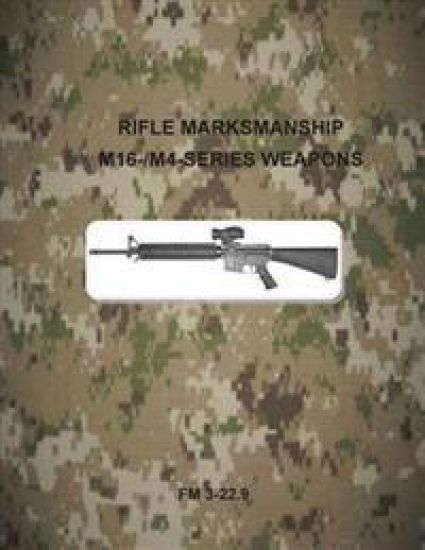
Rifle Marksmanship M16-/M4-Series Weapons: FM 3-22.9

Rifle Marksmanship M16-/M4-Series Weapons: FM 3-22.9

Department of the Army

Createspace Independent Publishing Platform
2014
nidottu
An effective marksmanship program can be measured by the unit's ability to puteffective fire on a target. This chapter provides a proven strategy for establishing andconducting an effective rifle marksmanship training program. The strategy beginswith the progressive individual training periods taught during initial entry training(IET) and culminates with advanced rifle marksmanship (ARM) skills. Refreshertraining is conducted only when necessary. A Soldier's marksmanship proficiency depends on proper training and application ofthe basic marksmanship fundamentals. During initial marksmanship training, emphasis is placed on learning the firing fundamentals, which are taught in fourphases-preliminary marksmanship instruction (PMI), downrange feedback, fieldfiring, and advanced firing exercises. This prepares Soldiers for advanced optic andlaser training for combat-type collective exercises and real-world deployments
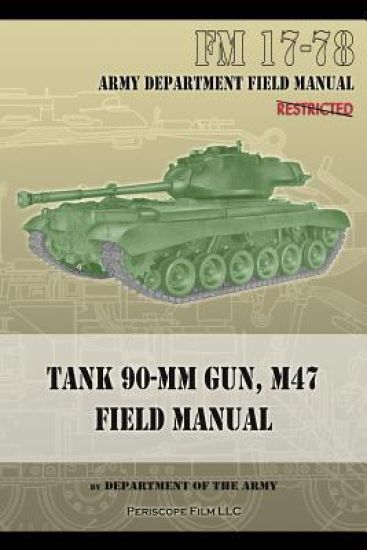
Tank 90-MM Gun, M47 Field Manual: FM 17-78

Tank 90-MM Gun, M47 Field Manual: FM 17-78

Department of the Army

Periscope Film LLC
2013
nidottu
The M47 Patton is an American medium tank, the second tank to be named after General George S. Patton, commander of the U. S. Third Army during World War II and one of the earliest American supporters of tanks in battle. It was a further development of the M46 Patton tank. The M47 was the U. S. Army's and Marine Corps' primary tank, intended to replace the M46 Patton and M4 Sherman medium tanks. The M47 was the only Patton series tank that never saw combat while in United States service. Many different M47 Patton models remain in service internationally. The M47 Patton was developed by the Detroit Arsenal, and entered production in 1951. Its main gun was the M36 (T119E1) 90-mm gun with an M12 optical rangefinder fitted. The secondary armament consisted of two .30cal Browning machine guns, one in the bow of the hull and one coaxial machine gun in the turret, and a .50cal Browning M2 on a pintle mount on the turret roof. The M47was the last American designed tank to include a bow machine gun. Created in 1955, this field manual reveals a great deal about the Tank, 90-mmGun, M47's design and capabilities. Intended as a manual for those responsible for both learning and teaching its characteristics, it details many aspects of the M47's fire commands, firing duties, crew drill and service of the piece. Originally labeled restricted, this manual was declassified long ago and is here reprinted in book form. Care has been taken to preserve the integrity of the text.
Medical and Surgical Technicians: Technical Manual TM 8-230

Medical and Surgical Technicians: Technical Manual TM 8-230

Department of the Army

Literary Licensing, LLC
2013
sidottu
The book ""Medical And Surgical Technicians: Technical Manual TM 8-230"" is a comprehensive guide for medical and surgical technicians. Published by the Department of the Army, this technical manual provides detailed information on the procedures and techniques used in medical and surgical settings. The manual covers a wide range of topics, including anatomy and physiology, surgical instruments, wound care, patient care, and emergency procedures. It also includes detailed instructions on how to properly use medical equipment and supplies, as well as guidelines for maintaining a sterile environment. The book is designed to be an essential resource for medical and surgical technicians, as well as for anyone involved in the healthcare industry. It is written in clear and concise language, making it easy to understand and follow. Overall, ""Medical And Surgical Technicians: Technical Manual TM 8-230"" is a valuable reference guide for anyone working in the medical field. This scarce antiquarian book is a facsimile reprint of the old original and may contain some imperfections such as library marks and notations. Because we believe this work is culturally important, we have made it available as part of our commitment for protecting, preserving, and promoting the world's literature in affordable, high quality, modern editions, that are true to their original work.