
Kirjailija
Desiderius Erasmus
Kirjat ja teokset yhdessä paikassa: 315 kirjaa, julkaisuja vuosilta 1933–2026, suosituimpiin kuuluu Ulrich Von Hutten Gegen Desiderius Erasmus, Und Desiderius Erasmus Gegen Ulrich Von Hutten. Vertaile teosten hintoja ja tarkista saatavuus suomalaisista kirjakaupoista.
315 kirjaa
Kirjojen julkaisuvuodet: 1933–2026.

The Whole Familiar Colloquies of Desiderius Erasmus of Rotterdam
Desiderius Erasmus; Nathan (TRN) Bailey
Kessinger Pub
2006
pokkari
In 1520, the reading public witnessed the eruption of a simmering conflict between Erasmus, the foremost advocate of the new biblical humanism, and Edward Lee, a younger scholar at the University of Louvain and spokesman for the traditionalists in matters of biblical interpretation and church discipline. When Erasmus (perhaps unconsciously) subsumed criticisms Lee had sent to him of his 1516 Annotations on the New Testament into the second edition (1519) without properly crediting their source, Lee resorted to publication of his collection of criticisms. Erasmus responded immediately with the Apologia which is neither arrogant nor biting nor angry nor aggressive, and which responds to the two invectives of Edward Lee, describing his version of the history of the dispute with Lee, and less than two months later produced Responses to Lee's criticisms. This new volume in the Collected Works of Erasmus series contains the first-ever English translations of the Apology and the Responses. These two pieces display Erasmus the humanist in the thick of academic turmoil, deploying all the rhetorical weapons at his command. The volume is an entertaining and informative look into Erasmus as a scholar and as a man. Volume 72 of the Collected Works of Erasmus series.
This new volume of the CWE presents three of Erasmus' polemic works against Alberto Pio, Prince of Carpi. A leading diplomat of the period, patron of artists and humanists, and conservative Catholic, Pio continually angered Erasmus by criticizing him for his denunciations of church practices and officials, and by accusing him of supporting Luther and holding dangerous opinions. The texts are lucid, passionate, and even vitriolic at times. The introduction by Nelson H. Minnich provides a biography of Pio, an overview of the controversy and related texts, and a bibliographical conspectus of source-texts. The translation is by Daniel J. Sheerin. The annotation by Minnich and Sheerin is wide-ranging and informative, answering questions posed by the text and placing the reader firmly in the sixteenth-century context of the dispute. This is the first English translation of the Alberto Pio controversies. In the CWE series it follows on volumes 71-83, which contain Erasmus' controversies with other critics on theological, political, social, philological, and educational matters. Volume 84 of the Collected Works of Erasmus series.
This fifth of seven volumes on the Adages continues from where the Collected Works of Erasmus volume 34 left off and includes 900 more adages from III iv 1 to IV ii 100. The aim of the Adages volumes in the CWE is to provide a fully annotated, accurate, and readable English version of the more than 4000 adages gathered, and commented on by Erasmus, sometimes in a few lines and sometimes in full-scale essays. Following in the tradition of meticulous scholarship for which the Collected Works of Erasmus is widely known, the notes to this volume identify the classical sources and illustrate how Erasmus' reading and thinking developed over twenty-five years, a period spanned by eight revisions of the first edition of the work which appeared in 1508 and won immediate acclaim. Many of the proverbs cited by Erasmus are still in use today. Volume 35 of the Collected Works of Erasmus series.
Between 1515 and 1533 Erasmus wrote commentaries on eleven psalms, his only treatment of texts from the Old Testament. His principal aim was, as in his Paraphrases, to contribute, through the exposition of the Bible, to the renewal of preaching and devotional literature. This second of three volumes of the Expositions of the Psalms in the Collected Works of Erasmus, continues the chronological sequence of composition, containing commentaries on psalms 85, 22, 28 (the De bello Turcico), and 33. Erasmus wrote these expositions between August 1528 and February 1531, a time of growing anxiety for him as the bitterly contested issues of Reformation theology began to slip beyond hope for reconciliation. The expositions clarify his own fidelity to a moderate and conciliatory line of argument, and expose his constant preoccupation with the rediscovery of the spiritual dimension in Christian practice through ruminative meditation, which was the ultimate goal of these works. The expositions offer an absorbing range of nuances on the critical issues of the time, many of which have been neglected or obscured by partisan accounts of the Reformation crisis. Together, these three volumes open new sources for Erasmus scholars interested in humanist scriptural interpretation, the patristic heritage, and the religious and intellectual history of the Renaissance and Reformation. Volume 64 of the Collected Works of Erasmus series.
Erasmus yearned to make the Bible an effective instrument of reform in society, church, and everyday life, and to this end he composed the Paraphrases, in which the words of Holy Scripture provide the core of a text, vastly expanded to embrace the reforming 'philosophy of Christ.' The Paraphrases were successful beyond all expectations, and were quickly translated into French, English, and other languages. Paraphrase on Luke is the second of two Luke volumes (Volume 47 forthcoming) and the sixth to be published in the New Testament Scholarship series in the Collected Works of Erasmus. The Paraphrase on Luke is an expanded version of the original book in the voice of its original author. The scriptural discourse or narrative is supplemented by Erasmus' explication of the moral, theological, and allegorical meanings; amplification of the dramatic setting with psychological, historical, and geographical detail; and rhetorical elaboration in language and style. Classical authors, earlier Biblical commentators, various theological issues, Erasmus' debts to the traditions of exegesis on this Gospel, and relevant contemporary church controversies all colour the paraphrases, and annotations on these points construct a mosaic portrait of the mind of Erasmus as he confronted Scripture and his readership. Volume 48 of the Collected Works of Erasmus series.
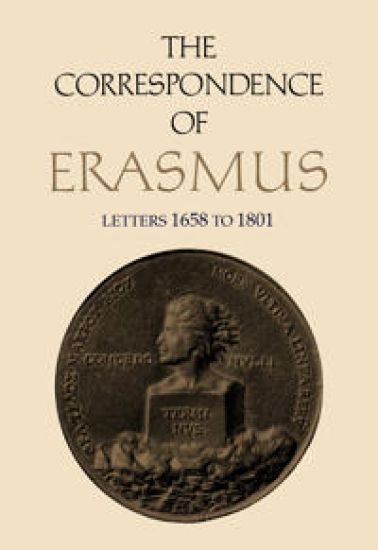
The letters in Volume 12 cover Erasmus' correspondence for all of 1526 and roughly the first quarter of 1527. This was a difficult period for Erasmus for various reasons, including two bouts of illness serious enough to cause him to draw up his first will in January 1527, and the fact that the Reformers were gaining more and more influence over religious policy in Basel, where he resided. Tension caused by Erasmus' open opposition to this trend was multiplied by the continuing decline in his relations with Oecolampadius, Pellicanus, and Zwingli, all of them former friends or even collaborators in his scholarly editions. These many distractions slowed but did not stop his continuing biblical, patristic, and classical scholarship. Fearing that the Lutherans might gain complete control of public discourse on the disputed issue of free will, Erasmus rushed to complete his rebuttal to Luther's De servo arbitrio in March 1526. He also felt deeply aggrieved by the attacks launched against him by conservative Catholics at a time when he was actively engaged in opposing the spread of heresy in Germany and Switzerland. His most redoubtable antagonist was Nodl BTda of the University of Paris, who pressed ahead with his plans for a condemnation of Erasmus by the faculty, which he achieved in December 1527. Erasmus' critics at Louvain were more discreet than BTda; their published works obliquely criticized his publications but did not attack him by name. The letters of 1526-1527 also reflect Erasmus' growing fame in Spain, where not only the Latinate intellectuals but also readers of the new Spanish translations of his spiritual writings and satirical works were attracted to his ideas of spiritual renewal. CWE 12 also contains translations of his earliest will and selections from correspondence among his Spanish admirers during the years 1522-1527. An important and extremely useful appendix, 'Money, Wages, and Real Incomes in the Age of Erasmus,' by John H. Munro, analyzes the purchasing power of money in the period 1500-1540. Volume 12 of the Collected Works of Erasmus series.
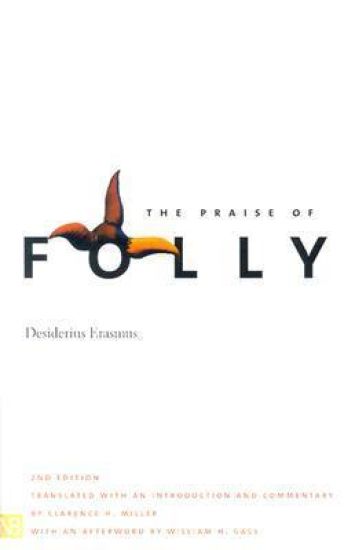
First published in Paris in 1511, The Praise of Folly hasenjoyed enormous and highly controversial success from the author’s lifetime down to our own day. It hasno rival, except perhaps Thomas More’s Utopia, as the most intense and lively presentation of the literary, social, and theological aims and methods of Northern Humanism. Clarence H. Miller’s highly praised translation of The Praise of Folly, based on the definitive Latin text, echoes Erasmus’ own lively style while retaining the nuances of the original text. In his introduction, Miller places the work in the context of Erasmus as humanist and theologian. In a new afterword, William H. Gass playfully considers the meaning, or meanings, of folly and offers fresh insights into one of the great books of Western literature. Praise for the earlier edition:“An eminently reliable and fully annotated edition based on the Latin text.”—Library Journal“Exciting and brilliant, this is likely to be the definitive translation of The Praise of Folly intoEnglish.”—Richard J. Schoeck
The correspondence of Erasmus has never been completely translated into English, although it has long been acknowledged to be one of the most illuminating sources for the history of northern humanism and the first two decades of the Protestant Reformation. In his letters, to and from scholars and religions leaders, printers and patrons, princes and prelates in every country of western Europe, the interests and issues of that critical era found free expression. They are connected by the thread of Erasmus' personal experience, his joys and sorrows, triumphs and tribulations, and his uninhibited conversation with his friends. Erasmus himself regarded his letters as a form of literature, and they were valued in his time, as they are now, as much for their style as for their content. In The Study of Good Letters (Clarendon 1963), H. W. Garrod wrote: 'As a document of the history of the times the Letters have primary importance. Yet they ar to be valued, ultimately, not as they enable us to place Erasmus in history, but as they help us to disengage him from it, to redeem him out of history into literature, placing him where, in truth, he longed to be. Not the Folly nor the Colloquies but the Letters, are his best piece of literature. What he did in scholarship, whether biblical, patristic, or classical has been superseded - though not the fine temper of it. That fine free temper shines also in the Letters, being indeed one of the elements of literature… In the immortality of their readableness Erasmus lives securely, immune from the discredits of circumstances.' The volume of the correspondence is enormous, and its cumulative effect fully justifies the claims that have been made for its importance. Erasmus was from his youth on an indefatigable correspondent, although he was careless about preserving his own letters or those written to him until he became famous and found printers eager to publish them. As a consequence, 85 per cent of the surviving letters were written after he reached the age of forty-five. Even when he had no thought of publication, however, he strove ceaselessly to make his letters models of elegant classical latinity, while adjusting the style of each letter to fit its purpose, content, and recipient. Even the earliest letters of volume 1 bear evidence of this concern. This volume includes a number of youthful rhetorical attempts, letters describing his early vicissitudes as he struggled to maintain himself as a scholar, letters to friends and letters about enemies, letters to patrons and prospective patrons, and the beginnings of the more serious intellectual correspondence of his later years in an exchange of letters with John Colet on the subject of Christ's agony. Volume 1 of the Collected Works of Erasmus series.
Erasmus' controversies with French, Italian, Spanish, and German critics on theological, social, philological, educational, and other matters are contained in volumes 71-84 of the Collected Works. CWE 76 includes two of his most important disputes with Luther, A Discussion of Free Will and the first part of the Hyperaspistes (usually translated as 'protector' or 'shield-bearer'). Erasmus writes in response to Luther's The Enslaved Will and rebukes Luther for what he considers his high-handed arrogance and his insulting charge that Erasmus is an atheist. In CWE 76, Hyperaspistes 1 deals with a number of general considerations in approaching the question of free will. In CWE 77, Hyperaspistes 2 examines in detail the biblical passages put forth in defence of free will in A Discussion of Free Will and Luther's refutation of that defence in The Enslaved Will. In these two volumes of bitter dispute with Luther, Erasmus shows once again that he is a humanist in his theology and a theologian in this humanism. Volume 77 of the Collected Works of Erasmus series.
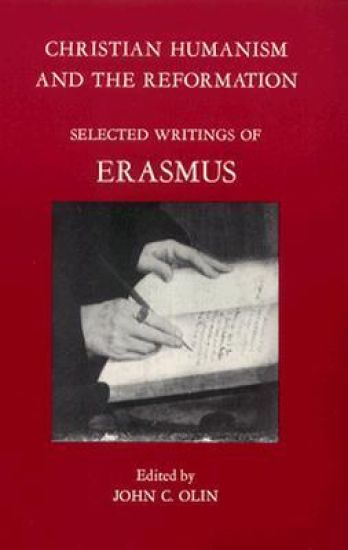
Christian Humanism and the Reformation
John C. Olin; Desiderius Erasmus
Fordham University Press
2000
pokkari
Third and expanded edition with a new biography of Erasmus.
The ten pieces in this volume are among the twenty selected for inclusion in volumes 66-70 of the Collected Works of Erasmus, the series of spiritualia and pastoralia. Like many of the other works in the series, they represent an Erasmus that, despite the recent growth of interest in him, has remained largely unfamiliar-the Erasmus of the works 'pertaining to the pietas.' Volume 69 is special in that it contains seven examples of a genre important to Erasmus, the genre of prayer. The prayers here include an effusive and lyrical early triad, a 'paraphrase' entitled The Lord's Prayer, the highly formalized Liturgy of Loreto, the heartfelt Prayer for Peace in the Church, and a collection of short prayers published the year before Erasmus' death. The volume is special also in that it contains many pieces about women, prompted by women, or addressed to women. Among these are A Comparision of the Virgin and the Martyr, Letter of Comfort in Adversity, and the Marian prayers, all of which directly or indirectly treat the subjects of virginity and marriage. The longest piece, The Institution of Christian Matrimony, is a work of towering importance in the history of writing on marriage. In the words of the translator, Erasmus has written a treatise 'profoundly serious and deeply researched ... a detailed and painstaking examination of the institution from every conceivable angle.' Professor O'Malley's introduction provides background and context for each of the selections, and emphasizes Erasmus' subtle but influential refashioning of the genres in which he wrote. Volume 69 of the Collected Works of Erasmus series.
Erasmus' controversies with French, Italian, Spanish, and German critics on theological, social, philological, educational, and other matters are contained in volumes 71-84 of the Collected Works of Erasmus. Volume 76 includes two of his most important disputes with Luther, A Discussion of Free Will and the first part of Hyperaspistes (usually translated as 'protector' or 'shield-bearer'). Erasmus writes in response to Luther's The Enslaved Will and rebukes Luther for his arrogance and for his insulting charge that Erasmus is an atheist. In these works, Erasmus sets out in detail his views on important questions of scripture and church doctrine and tradition in his eloquent defence of free will. A masterly introduction by Professor Trinkaus provides the necessary background for the reader's understanding and appreciation of the struggle between Erasmus and Luther. The second part of Hyperaspistes appears in volume 77, as does the index to both volumes 76 and 77. Volume 76 of the Collected Works of Erasmus series.
The five pieces in this volume are among the twenty selected for inclusion in volumes 66-70 of the Collected Works of Erasmus, the series of spiritualia and pastoralia. Like many of the other works in this series, they represent an Erasmus that, despite the recent growth of interest in him, has remained largely unfamiliar - the Erasmus of the works 'pertaining to pietas.' As Professor O'Malley's introduction makes clear, Erasmian pietas assumes an intrinsic relationship among spirituality, theology, and ministry, and the five works in volume 70 characteristically develop the implications of that relationship. Professor O'Malley provides background and context for each of the selections, and shows how over the course of the years Erasmus gives pietas a theological base and centre by grounding it ever more firmly in the mystery of Christ's death and resurrection. Volume 70 includes A Short Debate Concerning the Distress, Alarm and Sorrow of Jesus; A Sermon on the Immense Mercy of God; On Praying to God; An Explanation of the Apostles' Creed; and Preparing for Death. Volume 70 of the Collected Works of Erasmus series.
Volumes 71-84 of the Collected Works of Erasmus contain Erasmus' arguments with his numerous critics - English, French, German, Spanish, and Italian, both Catholic and Protestant, - on a range of theological, educational, literary, classical, social, and philological topics. Volume 83 includes four treatises: Apology against Jacques Lef¦vre d'Etaples; An Appendix on the Writings of Josse Clichtove; Refutation of the Accusations of Josse Clichtove against the Suasoria of Desiderius Erasmus of Rotterdam in Praise of Marriage; and The Reply of Erasmus to the Disputation of a Certain Phimostomus on Divorce. In these essays Erasmus discusses popular concerns such as the relations between the sexes, celibacy, marriage, divorce, and how to live a good life. Modern readers will be surprised to discover how close the problems that preoccupied Erasmus are to our own concerns today. Professor Bedouelle's introduction provides an indispensable guide to the major points of controversy between Erasmus and Lef¦vre, Clichtove, and Dietenberger. Volume 83 of the Collected Works of Erasmus series.