

Kirjailija
Dipesh Chakrabarty
Kirjat ja teokset yhdessä paikassa: 25 kirjaa, julkaisuja vuosilta 2000–2025, suosituimpiin kuuluu Klima og historie. Vertaile teosten hintoja ja tarkista saatavuus suomalaisista kirjakaupoista.
25 kirjaa
Kirjojen julkaisuvuodet: 2000–2025.

Das Klima der Geschichte im planetarischen Zeitalter
Dipesh Chakrabarty
SUHRKAMP VERLAG
2025
pokkari

Passage 90
Adam Paulsen; Agnethe Bennedsgaard; Dipesh Chakrabarty; Erik Granly Jensen; Malte Damgaard Hansen; Rikke Andersen Krarup og Sebastian Egholm Lund
Aarhus Universitetsforlag
2024
nidottu
I løbet af de sidste 20 år er "det planetære" blevet en fagterm inden for litteratur- og kulturstudierne. Her udgør planeten horisonten for en fornyet interesse i de mange uforudsigelige, komplekse og transnationale forviklinger, der binder mennesket, dyrene, teknologien, materialiteten, kulturer og kapitalismen sammen. Det er fra dette vibrerende ståsted, at Passage 90 udspringer. Under overskriften "Planeten" bringer nummeret otte artikler, der på forskellig vis anlægger planetære perspektiver på studiet af litteratur: Hvilken rolle spiller den globale etablering af undersøiske telegrafkabler for forståelsen af den moderne romanform? Hvad gør Günter Kunerts satellitpoesi for vores bevidsthed om Jorden? Og hvordan skriver man i det hele taget planetær litteraturhistorie? Ved at stille sådanne og lignende spørgsmål bidrager Passage 90: Planeten med nye idéer om sammenhængen mellem planeten og litteraturstudiet – historisk, samtidigt og fremtidigt
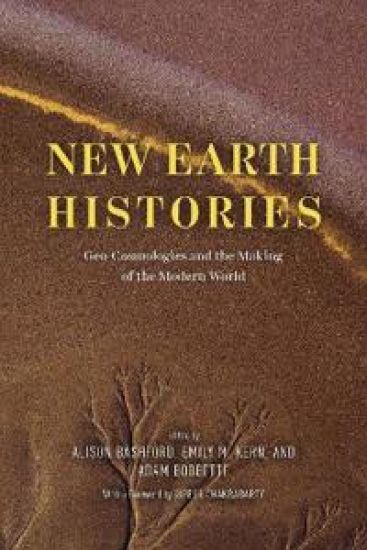
A kaleidoscopic rethinking of how we come to know the earth. This book brings the history of the geosciences and world cosmologies together, exploring many traditions, including Chinese, Pacific, Islamic, South and Southeast Asian conceptions of the earth’s origin and makeup. Together the chapters ask: How have different ideas about the sacred, animate, and earthly changed modern environmental sciences? How have different world traditions understood human and geological origins? How does the inclusion of multiple cosmologies change the meaning of the Anthropocene and the global climate crisis? By carefully examining these questions, New Earth Histories sets an ambitious agenda for how we think about the earth. The chapters consider debates about the age and structure of the earth, how humans and earth systems interact, and how empire has been conceived in multiple traditions. The methods the authors deploy are diverse—from cultural history and visual and material studies to ethnography, geography, and Indigenous studies—and the effect is to highlight how earth knowledge emerged from historically specific situations. New Earth Histories provides both a framework for studying science at a global scale and fascinating examples to educate as well as inspire future work. Essential reading for students and scholars of earth science history, environmental humanities, history of science and religion, and science and empire.
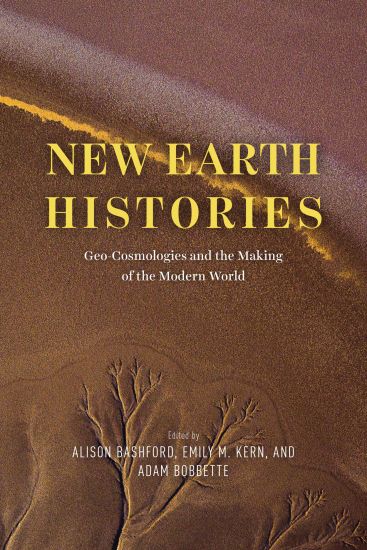
New Earth Histories
Dipesh Chakrabarty
THE UNIVERSITY OF CHICAGO PRESS
2023
nidottu
Halvin toimitettuna 43,80 €
A kaleidoscopic rethinking of how we come to know the earth. This book brings the history of the geosciences and world cosmologies together, exploring many traditions, including Chinese, Pacific, Islamic, South and Southeast Asian conceptions of the earth’s origin and makeup. Together the chapters ask: How have different ideas about the sacred, animate, and earthly changed modern environmental sciences? How have different world traditions understood human and geological origins? How does the inclusion of multiple cosmologies change the meaning of the Anthropocene and the global climate crisis? By carefully examining these questions, New Earth Histories sets an ambitious agenda for how we think about the earth. The chapters consider debates about the age and structure of the earth, how humans and earth systems interact, and how empire has been conceived in multiple traditions. The methods the authors deploy are diverse—from cultural history and visual and material studies to ethnography, geography, and Indigenous studies—and the effect is to highlight how earth knowledge emerged from historically specific situations. New Earth Histories provides both a framework for studying science at a global scale and fascinating examples to educate as well as inspire future work. Essential reading for students and scholars of earth science history, environmental humanities, history of science and religion, and science and empire.
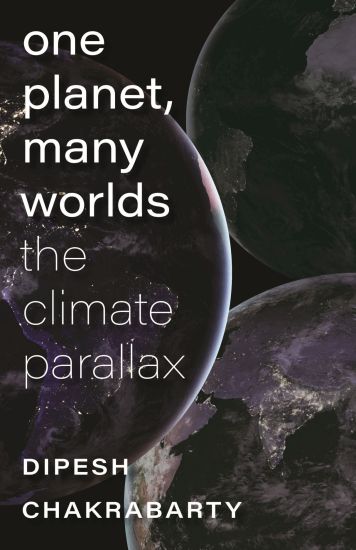
One Planet, Many Worlds – The Climate Parallax
Dipesh Chakrabarty
Brandeis University Press
2023
nidottu
Halvin toimitettuna 31,10 €
A historian offers a unique look at the pandemic, climate change, and the human versus nonhuman. Climate change represents a deep conundrum for humans. It is difficult for humans to give up the unequal and yet accelerating pursuit of a good life based on an insatiable appetite for energy sourced mainly from fossil fuel. But the same pursuit, scientists insist, damages the geobiological system that supports the existence of interrelated forms of life, including ours, on this planet. The planet, seen thus, is one. The global sway of financial and extractive capital connects humans technologically, but they remain divided along multiple axes of inequality. Their worlds are many and their politics still global rather than planetary. In the narrative presented here, Chakrabarty continues to explore the temporal and intellectual fault lines that mark the collapse of the global and the planetary in human history.
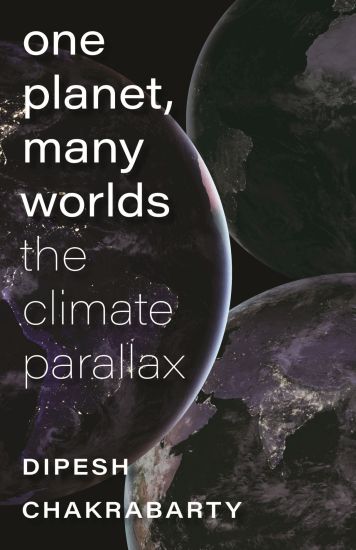
One Planet, Many Worlds: The Climate Parallax
Dipesh Chakrabarty
Brandeis University Press
2023
sidottu
A historian offers a unique look at the pandemic, climate change, and the human versus nonhuman. Climate change represents a deep conundrum for humans. It is difficult for humans to give up the unequal and yet accelerating pursuit of a good life based on an insatiable appetite for energy sourced mainly from fossil fuel. But the same pursuit, scientists insist, damages the geobiological system that supports the existence of interrelated forms of life, including ours, on this planet. The planet, seen thus, is one. The global sway of financial and extractive capital connects humans technologically, but they remain divided along multiple axes of inequality. Their worlds are many and their politics still global rather than planetary. In the narrative presented here, Chakrabarty continues to explore the temporal and intellectual fault lines that mark the collapse of the global and the planetary in human history.
Das Klima der Geschichte im planetarischen Zeitalter
Dipesh Chakrabarty
SUHRKAMP VERLAG
2022
sidottu
The Climate of History in a Planetary Age
Dipesh Chakrabarty
University of Chicago Press
2021
sidottu
For the past decade, historian Dipesh Chakrabarty has been one of the most influential scholars addressing the meaning of climate change. Climate change, he argues, upends long-standing ideas of history, modernity, and globalization. The burden of The Climate of History in a Planetary Age is to grapple with what this means and to confront humanities scholars with ideas they have been reluctant to reconsider—from the changed nature of human agency to a new acceptance of universals. Chakrabarty argues that we must see ourselves from two perspectives at once: the planetary and the global. This distinction is central to Chakrabarty’s work—the globe is a human-centric construction, while a planetary perspective intentionally decenters the human. Featuring wide-ranging excursions into historical and philosophical literatures, The Climate of History in a Planetary Age boldly considers how to frame the human condition in troubled times. As we open ourselves to the implications of the Anthropocene, few writers are as likely as Chakrabarty to shape our understanding of the best way forward.
The Climate of History in a Planetary Age
Dipesh Chakrabarty
University of Chicago Press
2021
nidottu
Halvin toimitettuna 34,50 €
For the past decade, historian Dipesh Chakrabarty has been one of the most influential scholars addressing the meaning of climate change. Climate change, he argues, upends long-standing ideas of history, modernity, and globalization. The burden of The Climate of History in a Planetary Age is to grapple with what this means and to confront humanities scholars with ideas they have been reluctant to reconsider—from the changed nature of human agency to a new acceptance of universals. Chakrabarty argues that we must see ourselves from two perspectives at once: the planetary and the global. This distinction is central to Chakrabarty’s work—the globe is a human-centric construction, while a planetary perspective intentionally decenters the human. Featuring wide-ranging excursions into historical and philosophical literatures, The Climate of History in a Planetary Age boldly considers how to frame the human condition in troubled times. As we open ourselves to the implications of the Anthropocene, few writers are as likely as Chakrabarty to shape our understanding of the best way forward.
Gesellschaftstheorie im Anthropozän
Dipesh Chakrabarty; Benno Fladvad; Jürgen Scheffran
Campus Verlag GmbH
2020
nidottu
Unish Shotoke Banglar Shromik Itihaser Koyekti Dik
Dipesh Chakrabarty; Late Ranajit Dasgupta
OUP India
2019
sidottu
Part of the 'Occasional Papers' series of CSSSC, this essay is a brief, and sharply posed, exchange between Dipesh Chakrabarty and Ranajit Das Gupta on working class consciousness in Bengal. it posits that this consciousness is not a mechanical outcome of the capitalist mode of production, it is not a thing but a process; that even failure must be taken on board in order to flesh out that process; that not only was the working class present (and therefore conscious) of its own making, but drew from rich pre-capitalist cultural traditions of dissent, rebellion and republicanism. The essay asks pertinent questions about the morality of labour, history of peasant revolts, capitalist intervention, religious discrimination among labourers etc.
Some Aspects of Labour History of Bengal in the Nineteenth Century
Dipesh Chakrabarty; Ranajit Dasgupta
OUP India
2019
sidottu
Part of the 'Occasional Papers' series of CSSSC, this essay is a brief, and sharply posed, exchange between Dipesh Chakrabarty and Ranajit Das Gupta on working class consciousness in Bengal. it posits that this consciousness is not a mechanical outcome of the capitalist mode of production, it is not a thing but a process; that even failure must be taken on board in order to flesh out that process; that not only was the working class present (and therefore conscious) of its own making, but drew from rich pre-capitalist cultural traditions of dissent, rebellion and republicanism. the essay asks pertinent questions about the morality of labour, history of peasant revolts, capitalist intervention, religious discrimination among labourers etc.
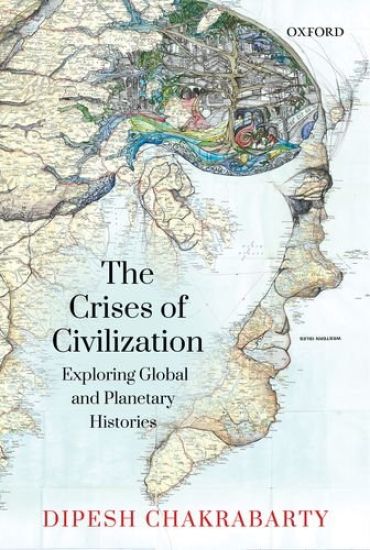
Societies that have long wrestled with the legacies of colonialism now confront both a crisis of globalization and a crisis of climate. This collection of essays by a leading scholar of postcolonial studies and environmental humanities examines these distinct - but interrelated - crises side by side. The first series of essays, 'Global Worlds', details how varied ideas of civilization and humanism have shaped ideas about a global humanity in the lingering twilight of the European empires - and outlines the conflicts and connections that arise from global encounters in our postcolonial age. The essays of 'The Planetary Human' explore the significance of planetary climate change for humanistic and postcolonial thought. The crisis of climate change demands not only critiques of capitalism and inequality, but also new thinking about the human species as a whole -- and about our patterns of justice, our writing of history, and our relationship with nature in the age of the Anthropocene.
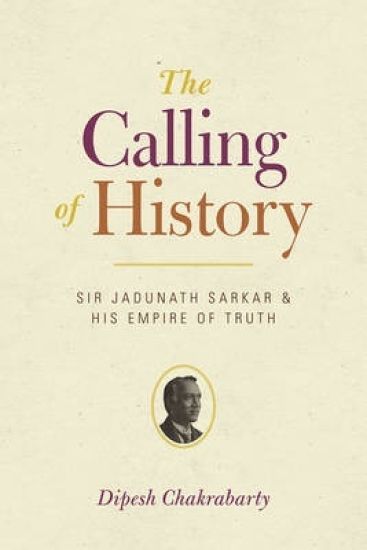
Features a leading scholar in early twentieth-century India, Sir Jadunath Sarkar (1870-1958) was knighted in 1929 and became the first Indian historian to gain honorary membership in the American Historical Association. By the end of his lifetime, however, he had been marginalized by the Indian history establishment, as postcolonial historians embraced alternative approaches in the name of democracy and anti-colonialism. The Calling of History examines Sarkar's career - and poignant obsolescence - as a way in to larger questions about the discipline of history and its public life. Through close readings of more than twelve hundred letters to and from Sarkar along with other archival documents, Dipesh Chakrabarty demonstrates that historians in colonial India formulated the basic concepts and practices of the field via vigorous-and at times bitter and hurtful-debates in the public sphere. He furthermore shows that because of its non-technical nature, the discipline as a whole remains susceptible to pressure from both the public and the academy even today. Methodological debates and the changing reputations of scholars like Sarkar, he argues, must therefore be understood within the specific contexts in which particular histories are written. Insightful and with far-reaching implications for all historians, The Calling of History offers a valuable look at the double life of history and how tensions between its public and private sides played out in a major scholar's career.
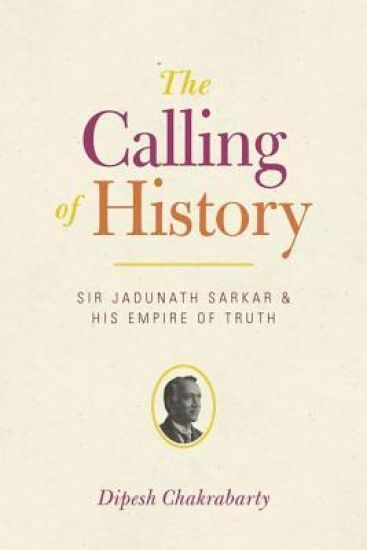
Features a leading scholar in early twentieth-century India, Sir Jadunath Sarkar (1870-1958) was knighted in 1929 and became the first Indian historian to gain honorary membership in the American Historical Association. By the end of his lifetime, however, he had been marginalized by the Indian history establishment, as postcolonial historians embraced alternative approaches in the name of democracy and anti-colonialism. The Calling of History examines Sarkar's career - and poignant obsolescence - as a way in to larger questions about the discipline of history and its public life. Through close readings of more than twelve hundred letters to and from Sarkar along with other archival documents, Dipesh Chakrabarty demonstrates that historians in colonial India formulated the basic concepts and practices of the field via vigorous - and at times bitter and hurtful-debates in the public sphere. He furthermore shows that because of its non-technical nature, the discipline as a whole remains susceptible to pressure from both the public and the academy even today. Methodological debates and the changing reputations of scholars like Sarkar, he argues, must therefore be understood within the specific contexts in which particular histories are written. Insightful and with far-reaching implications for all historians, The Calling of History offers a valuable look at the double life of history and how tensions between its public and private sides played out in a major scholar's career.

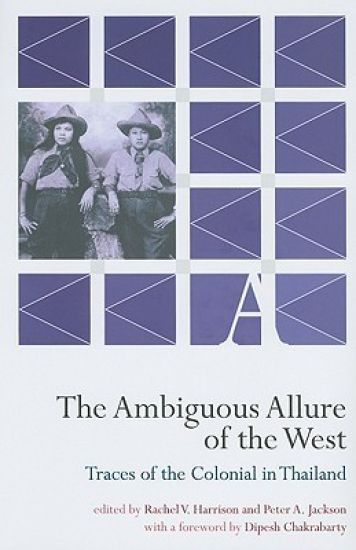
The Ambiguous Allure of the West
Dipesh Chakrabarty
Southeast Asia Program Publications, Cornell University
2010
sidottu
The Ambiguous Allure of the West examines the impact of Western imperialism on Thai cultural development from the 1850s to the present and highlights the value of postcolonial analysis for studying the ambiguities, inventions, and accommodations with the West that continue to enrich Thai culture. Since the mid-nineteenth century, Thais have adopted and adapted aspects of Western culture and practice in an ongoing relationship that may be characterized as semicolonial. As they have done so, the notions of what constitutes "Thainess" have been inflected by Western influence in complex and ambiguous ways, producing nuanced, hybridized Thai identities. The Ambiguous Allure of the West brings together Thai and Western scholars of history, anthropology, film, and literary and cultural studies to analyze how the protean Thai self has been shaped by the traces of the colonial Western Other. Thus, the book draws the study of Siam/Thailand into the critical field of postcolonial theory, expanding the potential of Thai Studies to contribute to wider debates in the region and in the disciplines of cultural studies and critical theory. The chapters in this book present the first sustained dialogue between Thai cultural studies and postcolonial analysis. By clarifying the distinctive position of semicolonial societies such as Thailand in the Western-dominated world order, this book bridges and integrates studies of former colonies with studies of the Asian societies that retained their political independence while being economically and culturally subordinated to Euro-American power.

The Ambiguous Allure of the West
Dipesh Chakrabarty
Southeast Asia Program Publications, Cornell University
2010
pokkari
The Ambiguous Allure of the West examines the impact of Western imperialism on Thai cultural development from the 1850s to the present and highlights the value of postcolonial analysis for studying the ambiguities, inventions, and accommodations with the West that continue to enrich Thai culture. Since the mid-nineteenth century, Thais have adopted and adapted aspects of Western culture and practice in an ongoing relationship that may be characterized as semicolonial. As they have done so, the notions of what constitutes "Thainess" have been inflected by Western influence in complex and ambiguous ways, producing nuanced, hybridized Thai identities. The Ambiguous Allure of the West brings together Thai and Western scholars of history, anthropology, film, and literary and cultural studies to analyze how the protean Thai self has been shaped by the traces of the colonial Western Other. Thus, the book draws the study of Siam/Thailand into the critical field of postcolonial theory, expanding the potential of Thai Studies to contribute to wider debates in the region and in the disciplines of cultural studies and critical theory. The chapters in this book present the first sustained dialogue between Thai cultural studies and postcolonial analysis. By clarifying the distinctive position of semicolonial societies such as Thailand in the Western-dominated world order, this book bridges and integrates studies of former colonies with studies of the Asian societies that retained their political independence while being economically and culturally subordinated to Euro-American power.
Provincializing Europe
Dipesh Chakrabarty
Princeton University Press
2007
pokkari
Halvin toimitettuna 38,30 €
First published in 2000, Dipesh Chakrabarty's influential Provincializing Europe addresses the mythical figure of Europe that is often taken to be the original site of modernity in many histories of capitalist transition in non-Western countries. This imaginary Europe, Dipesh Chakrabarty argues, is built into the social sciences. The very idea of historicizing carries with it some peculiarly European assumptions about disenchanted space, secular time, and sovereignty. Measured against such mythical standards, capitalist transition in the third world has often seemed either incomplete or lacking. Provincializing Europe proposes that every case of transition to capitalism is a case of translation as well--a translation of existing worlds and their thought--categories into the categories and self-understandings of capitalist modernity. Now featuring a new preface in which Chakrabarty responds to his critics, this book globalizes European thought by exploring how it may be renewed both for and from the margins.