Kirjojen hintavertailu – 12 903 725 kirjaa ja 27 kauppaa

Kirjailija

Donald Keene

Kirjat ja teokset yhdessä paikassa: 33 kirjaa, julkaisuja vuosilta 1969–2024, suosituimpiin kuuluu The First Modern Japanese. Vertaile teosten hintoja ja tarkista saatavuus suomalaisista kirjakaupoista.

33 kirjaa

Kirjojen julkaisuvuodet: 1969–2024.

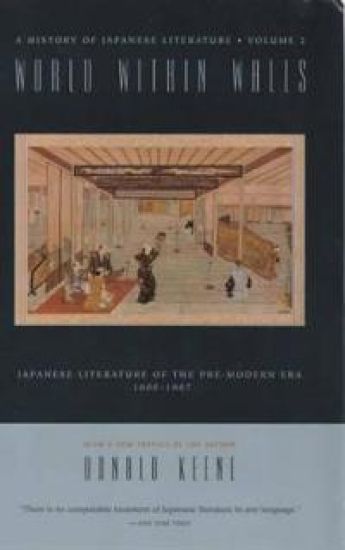
World Within Walls

World Within Walls

Donald Keene

Columbia University Press
1999
pokkari
The Tokugawa family held the shogunate from 1603 to 1867, ruling Japan and keeping the island nation isolated from the rest of the world for more than 250 years. Donald Keene looks within the "walls" of isolation and meticulously chronicles the period's vast literary output, providing both lay readers and scholars with the definitive history of premodern Japanese literature. World Within Walls spans the age in which Japanese literature began to reach a popular audience-as opposed to the elite aristocratic readers to whom it had previously been confined. Keene comprehensively treats each of the new, popular genres that arose, including haiku, Kabuki, and the witty, urbane prose of the newly ascendant merchant class.
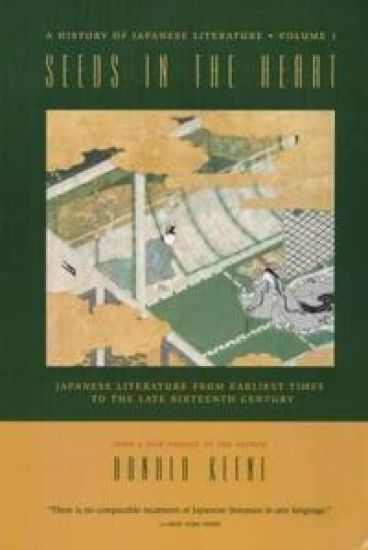
Seeds in the Heart

Seeds in the Heart

Donald Keene

Columbia University Press
1999
pokkari
Donald Keene employs his prodigious wealth of knowledge, critical insight, and narrative aplomb to guide readers through the first nine hundred years of Japanese literature-a period that not only defined the unique properties of Japanese prosody and prose but also produced some of its greatest works. Covering courtly fiction, Buddhist writings, war tales, diaries, poems, and more, Seeds in the Heart explores a vast and variegated treasury of writings. Detailed textual examinations of classic texts-from the Kojiki to The Tale of Genji, from The Pillow Book of Sei Shonagon to Zeami's No plays-allow students, lay readers, and scholars a new understanding and enjoyment of this great literature.
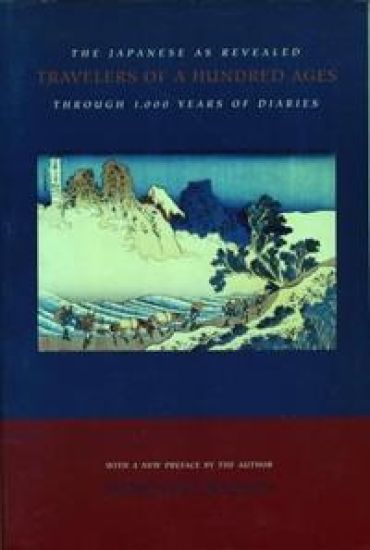
Travelers of a Hundred Ages

Travelers of a Hundred Ages

Donald Keene

Columbia University Press
1999
pokkari
Donald Keene, hailed in the New York Times Book Review as "the century's leading expert on Japanese literature," presents here a collection of premodern Japanese diaries that is both a literary history of this genre and a source of insight into Japanese life of the last thousand years. Ranging from objective to confessional, selections such as "The Poetic Memoirs of Lady Daibu" and "Diaries of Seventeenth-Century Courtiers" offer unparalleled glimpses into the lives of diverse writers from the Kamakura dynastic period to the Tokugawa period. Illuminating the hidden and largely unknown worlds of imperial courts, Buddhist monasteries, country inns, and merchants' houses, Travelers of a Hundred Ages is an intimate account of the diarists' lives and a testimony to the struggles and advances of Japanese culture.
Modern Japanese Diaries

Modern Japanese Diaries

Donald Keene

Columbia University Press
1999
pokkari
This is a collection of journals written by Japanese men and women--from samurai and other government officials to novelists and poets--who journeyed to America, Europe, and China between 1860 and 1920. The diaries faithfully record personal views of the countries and their cultures and sentiments that range from delight to disillusionment. At once an intimate account of the travellers' lives and a testimony to the greater struggles and advances of their cultures, Donald Keene's eloquent translation and commentary invites the reader to partake in the world as each person experienced it.
Dawn to the West: A History of Japanese Literature

Dawn to the West: A History of Japanese Literature

Donald Keene

Columbia University Press
1999
pokkari
This is the third book in a multivolume history of modern Japanese literature by the world's authoritative translator and scholar of Japanese culture and literature. The Columbia paperback edition, with Donald Keene's new preface, includes an introduction, an appendix, glossary, index, and a selected list of translations into English.
The Blue-Eyed Tarokaja

The Blue-Eyed Tarokaja

Donald Keene

Columbia University Press
1996
sidottu
The preeminent Western authority on Japanese literature a presents a collection of personal essays and literary vignettes that offers a fresh and personal insight into his prolific career as a writer and translator, traveler and social observer.
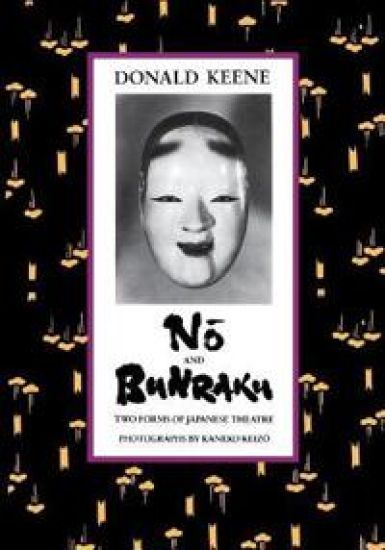
No and Bunraku

No and Bunraku

Donald Keene

Columbia University Press
1991
pokkari
Donald Keene combines informative works on two forms of classical Japanese theater into a single volume. The No text looks at all aspects of this traditional theater form including its history, its stage and props, the use of music and dance in its performances, the plays as literature, and the aesthetics of No. Also discussed are Kyogen, the comic farces that are typically interspersed with the solemn No dramas.
The Pleasures of Japanese Literature

The Pleasures of Japanese Literature

Donald Keene

Columbia University Press
1988
sidottu
Perhaps no one is more qualified to write about Japanese culture than Donald Keene, considered the leading interpreter of that nation's literature to the Western world. The author, editor, or translator of nearly three dozen books of criticism and works of literature, Keene now offers an enjoyable and beautifully written introduction to traditional Japanese culture for the general reader. The book acquaints the reader with Japanese aesthetics, poetry, fiction, and theater, and offers Keene's appreciations of these topics. Based on lectures given at the New York Public Library, The Metropolitan Museum of Art, and the University of California, Los Angeles, the essays -though written by a renowned scholar- presuppose no knowledge of Japanese culture. Keene's deep learning, in fact, enables him to construct an overview as delightful to read as it is informative. His insights often illuminate aspects of traditional Japanese culture that endure today. One of these is the appreciation of "perishability." this appreciation os seen in countless little bits of Japanese life: in temples made of wood instead of durable materials; in the preference for objects -such as pottery- that are worn, broken, or used rather than new; and in the national love of the delicate cherry blossom, which normally falls after a brief three days of flowering. Keene quotes the fourteenth-century Buddhist monk Kenko, who wrote that "the most precious thing about life is its uncertainty." Throughout the volume, Keene demonstrates that the rich artistic and social traditions of Japan can indeed be understood by readers from our culture. This book will enlighten anyone interested in Japanese literature and culture.

The Japanese Discovery of Europe, 1720-1830

The Japanese Discovery of Europe, 1720-1830

Donald Keene

Stanford University Press
1969
pokkari
This is an account of the growth and uses of Western learning in Japan from 1720 to 1830. These are the dates of the beginning of official interest in Western learning and of the expulsion of Siebold from the country, the first stage of a crisis that could be resolved only by the opening of the country of the West. The century and more included by the two dates was a most important period in Japanese history, when intellectuals, rebelling at the isolation of their country, desperately sought knowledge from abroad. The amazing energy and enthusiasm of men like Honda Toshiaki made possible the spectacular changes in Japan, which are all too often credited to the arrival of Commodore Perry. The author chose Honda Toshiaki (1744-1821) as his central figure. A page from any one of Honda's writings suffices to show that with him one has entered a new age, that of modern Japan. One finds in his books a new spirit, restless, curious and receptive. There is in him the wonder at new discoveries, the delight in widening horizons. Honda took a kind of pleasure even in revealing that Japan, after all, was only a small island in a large world. To the Japanese who had thought of Chinese civilization as being immemorial antiquity, he declared that Egypt's was thousands of years older and far superior. The world, he discovered, was full of wonderful things, and he insisted that Japan take advantage of them. Honda looked at Japan as he thought a Westerner might, and saw things that had to be changed, terrible drains on the country's moral and physical strength. Within him sprang the conviction that Japan must become one of the great nations of the world.