Kirjailija
E. M. Forster
Kirjat ja teokset yhdessä paikassa: 336 kirjaa, julkaisuja vuosilta 1950–2027, suosituimpiin kuuluu A Passage to India. Vertaile teosten hintoja ja tarkista saatavuus suomalaisista kirjakaupoista.
Nimi esiintyy myös muodoissa: E M Forster, E.M. Forster, E. M Forster, E.M Forster
336 kirjaa
Kirjojen julkaisuvuodet: 1950–2027.
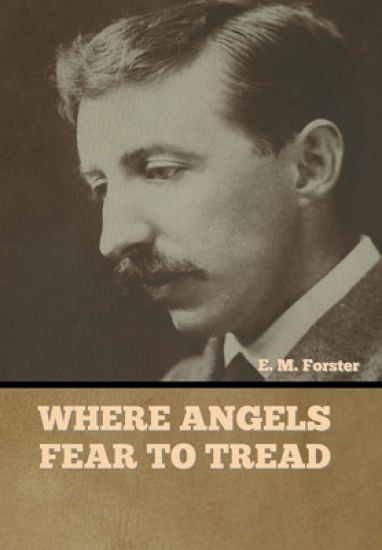
The E. M. Forster's book ''Where Angels Fear to Tread'' was published in 1905. The phrase "For fool's rush in where angels fear to tread" appears in Alexander Pope's essay on criticism, which serves as the source of the title. In 1966, the BBC produced a play of the month based on the book for television. Charles Sturridge turned it into a movie in 1991, with Rupert Graves, Giovanni Guidelli, Helen Mirren, Helena Bonham Carter, and Judy Davis in the lead roles. BBC Radio 4 aired a ten-part radio dramatization of the book. The Peabody Institute of Music hosted the world premiere of a Mark Weiser opera in 1999, while Opera San Jose had the opera's professional premiere in 2015. Her in-laws are not amused when the young English widow Lilia Herriton embarks on a world tour and weds an impoverished Italian while there. It is only natural that the marriage would break down and poor Lilia would pass very tragically. But Philip Harriton, his gloomy sister Harriet, and their well-intentioned acquaintance Miss Abbott must act quickly to correct Lilia's untimely pregnancy and the baby's upbringing as an Italian. The story's action starts at a train station, where Lilia Herriton is bidding farewell before leaving for an Italian vacation.
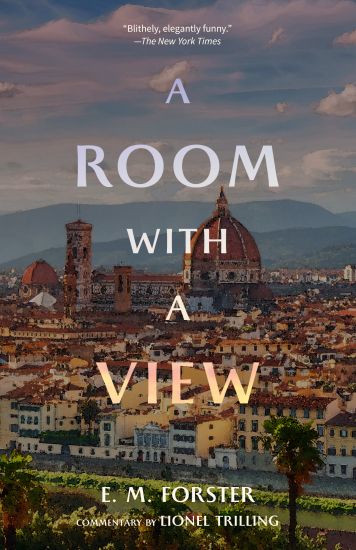
A Room with a View (Warbler Classics Annotated Edition)
E M Forster
Warbler Classics
2021
pokkari
Halvin toimitettuna 17,30 €
Howards End is considered by many to be E. M. Forster's masterpiece. First published in 1910, this beguiling and completely captivating tale explores social conventions, codes of conduct, and relationships in turn-of-the-century Edwardian England. The story revolves around three families: the Wilcoxes, rich capitalists with a fortune made in the colonies; the half-German Schlegel siblings, whose cultural pursuits have much in common with the Bloomsbury Group-a loose collective of friends and relatives who were united by an abiding belief in the importance of the arts; and the Basts, an impoverished young couple from a lower-class background. A chance encounter, impetuous youth, love, and ambition play into the inheritance of Howards End, the Wilcox's charming country home. Howards End was adapted as a film in 1992 by the Merchant-Ivory team, starring Vanessa Redgrave, Emma Thompson, Anthony Hopkins, and Helena Bonham-Carter. This Warbler Classics edition includes a biographical timeline of E. M. Forster's life and work.
Among the greatest novels of the twentieth century, E. M. Forster's sweeping tale of prejudice and racial tension is set in colonial India at the turn of the century. As the Indian independence movement is gaining momentum but while the country is still under the rule of the British Raj, Dr. Aziz, a young Indian Muslim physician, befriends several English tourists in spite of expressions of caution from his Indian friends. What begins as an unexceptional but well-meaning sightseeing outing to a famous cave erupts into a misunderstanding with devastating consequences.
A Passage to India (1924) is a novel by English author E. M. Forster. Written during the rise of the Indian independence movement against the British Raj, A Passage to India is considered one of the greatest novels of twentieth century English literature. The novel has also been an important work for postcolonial theorists and literary critics for its inherent Orientalism and treatment of race, gender, and imperialism. The novel begins with the arrival of a young British teacher named Adela Quested and her friend Mrs. Moore in India. When Adela visits a mosque, she is approached by Dr. Aziz, a young Muslim physician, who accosts her before noticing her respect and understanding of local customs. At a party arranged by a local tax collector, who has invited a group of Indians out of curiosity, Fielding, a college principal, invites Dr. Aziz to a tea party with Adela and Mrs. Moore. There, they make plans to visit the Marabar caves, but are interrupted by Ronny Heaslop, who is to be engaged to Adela. When the day of the journey arrives, only Adela and Mrs. Moore are able to make the trip, and Dr. Aziz accompanies them alone. At the caves, Adela is frightened by a strange echo and stumbles before convincing herself that Dr. Aziz has assaulted her. The ensuing trial divides the fictional city of Chandrapore along racial lines, exposing the prejudices and tensions that dominate life during the British Raj. A Passage to India explores themes of romance, friendship, race, and custom while critiquing the British conquest of India and illuminating the rise of the Indian independence movement. With a beautifully designed cover and professionally typeset manuscript, this edition of E. M. Forster’s A Passage to India is a classic of English literature reimagined for modern readers.
The Longest Journey (1907) is a novel by English author E. M. Forster. Despite its critical success, the novel was a commercial failure for Forster, but has since grown in reputation and readership to help cement his reception as one of twentieth century England’s most talented writers. Rickie Elliot enters Cambridge as a young man, exploring his interests in poetry and art and joining a circle of intellectuals centered around a philosopher named Stewart Ansell. An orphan, Rickie cherishes his small number of friends, including Agnes and her brother Herbert, who were his only companions as a youth. When Agnes’s fiancé dies in a football match, Rickie steps in to console her, and the two become engaged. Shortly afterward, a visit to Rickie’s elderly Aunt leads to his discovery of a stepbrother named Stephen, and the young scholar is plunged into the past and forced to face his family’s secret history. While Agnes, now his wife, encourages him to reject Stephen, Rickie struggles with his feelings and takes his frustration out on his pupils at the dormitory school where he has been appointed to teach classics. Cut off from his Cambridge friends, and growing apart from Agnes, Rickie makes an effort to connect with Stephen, who has grown to be a troubled young man. Between literary fame and married life, the bonds of family and friendship, Rickie’s story of hardship and personal development poses poignant questions regarding social conventions, infidelity, and the life of a struggling artist. The Longest Journey is a powerful bildungsroman and the second novel published by English literary icon E. M. Forster. With a beautifully designed cover and professionally typeset manuscript, this edition of E. M. Forster’s The Longest Journey is a classic of English literature reimagined for modern readers.
Where Angels Fear to Tread (1905) is a novel by English author E. M. Forster. The work was Forster’s first novel, and its success helped launch his lengthy and critically acclaimed career as a writer of literary fiction. Where Angels Fear to Tread—the title is drawn from Alexander Pope’s An Essay on Criticism (1711)—is a moving meditation on class, gender, social convention, and the grieving process. Following the death of her husband, a widow named Lilia Herriton travels to Tuscany with her friend Caroline Abbott. In Italy, Lilia falls in love with a young Italian named Gino, with whom she decides to remain. This prompts a fierce backlash among members of her deceased husband’s family, who privilege their honor and name over Lilia’s happiness. Although they send Philip, her brother-in-law, to Italy in order to retrieve her, Lilia has already married Gino, and is pregnant with their child. When she dies in childbirth, however, a fight ensues over the care of the boy, whom the Herritons want to be raised as an Englishman in their midst. Philip returns to Italy with his sister Harriet, meeting Caroline and devising a plan to wrest control of the boy from Gino, a loving and caring father. Where Angels Fear to Tread is a novel that traces the consequences of selfish decisions, the politics of family life, and the social conventions which hold women prisoner to those who claim to support them. The novel was an immensely successful debut for Forster, who would go on to become one of England’s most popular and critically acclaimed novelists of the twentieth century. With a beautifully designed cover and professionally typeset manuscript, this edition of E. M. Forster’s Where Angels Fear to Tread is a classic of English literature reimagined for modern readers.
E. M. Forster's "A Room with a View" is a richly woven narrative that explores the transformative journey of Lucy Honeychurch, a young woman awakening to her desires amid the constraints of Edwardian society. Through a masterful blend of vivid characterizations and poignant social commentary, Forster employs a juxtaposition of the repressive English culture and the liberating Italian landscapes to evoke a sense of both personal and cultural awakening. The novel's stylistic nuances, from its ironic humor to its deep emotional resonance, position it as a seminal work in the canon of early 20th-century literature, exemplifying the transition from traditionalism to modernity. Forster, born into a middle-class family in 1879, was profoundly influenced by his own travels in Italy and his experiences with a diverse array of social classes. His dedication to exploring human connections and critiquing the societal norms of his time is evident in this work. Forster's advocacy for personal freedom and his reflections on love and social conventions in "A Room with a View" stem from his own struggles with identity and sexuality in an era of strict moral codes. This novel is highly recommended for readers who appreciate intricate character development and social critique. Forster's incisive observations on the interplay of love, class, and the quest for authenticity resonate timelessly. Whether novice or aficionado, readers will find in "A Room with a View" an engaging narrative that invites reflection on the complexities of personal growth and societal expectations.
The Machine Stops: Science Fiction Dystopia - A Doomsday Saga of Humanity under the Control of Machines
E. M. Forster
OK Publishing
2021
nidottu
In E. M. Forster's prescient novella, "The Machine Stops," the reader is drawn into a dystopian future where humanity has retreated underground, relying entirely on a vast, omnipotent Machine for every need and desire. Forster's prose intricately weaves a narrative that explores themes of isolation, the dangers of technological dependency, and the fragility of human connection. The novella's vivid allegorical style reflects the anxieties of a rapidly industrializing society, evoking parallels to contemporary discussions about the impact of technology on human existence and freedom. The stark contrast between the sterile, automated world and the yearning for authentic relationships echoes throughout, emphasizing the importance of individualism and human resilience against dehumanizing forces. E. M. Forster, an influential figure of 20th-century British literature, was deeply invested in the exploration of human relationships and societal structures. Rooted in his experiences with the early 20th-century socio-political climate and burgeoning technological advancements, Forster penned this work as both a cautionary tale and a heartfelt plea for authentic human connections. His keen observations on the human condition highlight the complexities of dependence and autonomy in an evolving world. "The Machine Stops" is essential reading for those intrigued by speculative fiction and the philosophical implications of a technologically dominated future. Forster's foresight invites readers to reflect on their own relationship with technology and the necessity of genuine human interactions, making this novella a timeless exploration of what it means to be truly alive.
E. M. Forster's novels, "A Room with a View" and "Howards End," intricately weave themes of social class, personal freedom, and human connection within the context of early 20th-century England. Forster's literary style is characterized by flowing prose, rich character development, and sharp social commentary, creating a tapestry that captures the tensions between desire and societal expectation. In "A Room with a View," the idyllic backdrop of Florence serves as a contrast to the restrictive conventions of Edwardian society, while "Howards End" presents a more complex interplay of class relations, emphasizing the need for kinship and understanding amidst materialism and division. Forster, an openly gay man in a repressive era, was influenced by his own experiences of class distinction and societal constraints. His education at Cambridge and formative travels abroad informed his worldview, allowing him to critique the limitations placed upon individuals by societal norms. His empathetic portrayal of characters seeking authenticity amidst their circumstances underscores his belief in the importance of personal connections over societal expectations. For readers engrossed in the nuances of human relationships and social issues, both novels are essential explorations of love, class, and self-discovery. Forster's ability to craft compelling narratives that challenge societal norms makes these works timeless recommendations for anyone seeking profound moral insight and beautifully rendered storytelling.
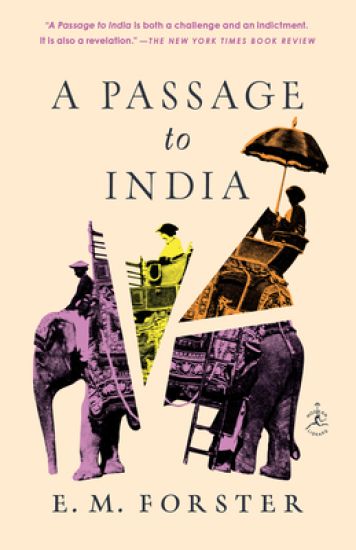
The richest and most ambitious novel by one of the greatest writers of the twentieth century, this masterpiece counts the human cost of British-occupied India, a society afflicted by imperialism and racism. "A Passage to India is both a challenge and an indictment. It is also a revelation."--The New York Times Book Review When Adela Quested arrives in the city of Chandrapore in search of "the real India," she quickly grows disillusioned with its prejudiced colonial community. Determined to escape the insular English enclave, she and her elderly companion, Mrs. Moore, seek the guidance of the charming and well-respected Dr. Aziz, a young Muslim physician. But a mysterious incident occurs while they are exploring the Marabar caves with Aziz, and the doctor finds himself at the center of a scandal that rocks Chandrapore to its core. E. M. Forster's beautifully rendered characters illuminate the tensions of British-occupied India and make A Passage to India a masterpiece not only of historical impact but of deep humanity.
A tour of Italy takes young Lucy Honeychurch out of her predictable life in Edwardian England and places her into a new world that even her chaperoning spinster aunt cannot control. Encountering everything from unlikely traveling companions to street violence, Lucy faces the greatest challenge in understanding her own shifting emotions toward a most unsuitable suitor. Since it first appeared in 1908 A Room With a View has been recognized as a masterful depiction of character and conflict. Known to many through Merchant Ivory’s lush 1985 film adaptation, which won multiple awards including the Oscar for Best Adapted Screenplay, the novel provides an even richer experience. Lucy’s journey toward a fresh, true understanding of herself and her passions make a compelling story, leavened by both an unexpected dry humor and a belief in the power of love. With an eye-catching new cover, and professionally typeset manuscript, this edition of A Room With a View is both modern and readable.
Howards End (1910) is a novel by English author E. M. Forster. Inspired by his interactions with the famous Bloomsbury Group of writers and intellectuals, as well as by his personal experience growing up with a large inheritance on the family estate of Rooks Nest, Howards End has been recognized as one of the finest novels ever written in English. The story loosely follows the lives of three families: the Wilcoxes, whose wealth derives from the exploitation of British colonies; the Basts, an impoverished couple; and the Schlegels, half-German sisters who find themselves set between the vastly opposing classes of their peers. Much of the novel is set on the Wilcox estate, known as Howards End, a symbol of fortune and a reminder of the generational implications of hoarded wealth. When Ruth Wilcox moves to London, she befriends her neighbor Margaret Schlegel. On her deathbed, and in secret, Ruth leaves a note instructing that Howards End be left to Margaret in her will, bypassing her family entirely. When her son Henry, a widower, finds out, he destroys the note, ensuring that the estate remains within the family. Years later, when the two meet again, Henry proposes to Margaret, bringing the Wilcox and Schlegel families closer together. But when her sister Helen brings the struggling Leonard and Jacky Bast to a party at Howards End, Henry, who recognizes Jacky as a former mistress, believes he is being set up, and breaks off the engagement. Although they reconcile, Margaret is driven apart from her sisters, who resent the Wilcoxes and distrust Henry. But when Helen becomes pregnant by Leonard, and a tragic event destroys several lives, the families are brought together once more, and both Margaret and Henry are forced to choose between the fortune they stand to gain and the love they stand to lose. E. M. Forster’s Howards End is a masterpiece, a brilliant study of family, wealth, romance, and secrecy that captures the depravity of the English aristocracy without losing what sets it apart—an undeterred sense of humanity. With a beautifully designed cover and professionally typeset manuscript, this edition of E. M. Forster’s Howards End is a classic of English literature reimagined for modern readers.
Where Angels Fear to Tread (1905) is a novel by English author E. M. Forster. The work was Forster’s first novel, and its success helped launch his lengthy and critically acclaimed career as a writer of literary fiction. Where Angels Fear to Tread—the title is drawn from Alexander Pope’s An Essay on Criticism (1711)—is a moving meditation on class, gender, social convention, and the grieving process. Following the death of her husband, a widow named Lilia Herriton travels to Tuscany with her friend Caroline Abbott. In Italy, Lilia falls in love with a young Italian named Gino, with whom she decides to remain. This prompts a fierce backlash among members of her deceased husband’s family, who privilege their honor and name over Lilia’s happiness. Although they send Philip, her brother-in-law, to Italy in order to retrieve her, Lilia has already married Gino, and is pregnant with their child. When she dies in childbirth, however, a fight ensues over the care of the boy, whom the Herritons want to be raised as an Englishman in their midst. Philip returns to Italy with his sister Harriet, meeting Caroline and devising a plan to wrest control of the boy from Gino, a loving and caring father. Where Angels Fear to Tread is a novel that traces the consequences of selfish decisions, the politics of family life, and the social conventions which hold women prisoner to those who claim to support them. The novel was an immensely successful debut for Forster, who would go on to become one of England’s most popular and critically acclaimed novelists of the twentieth century. With a beautifully designed cover and professionally typeset manuscript, this edition of E. M. Forster’s Where Angels Fear to Tread is a classic of English literature reimagined for modern readers.