Kirjojen hintavertailu – 12 859 818 kirjaa ja 27 kauppaa
Kirjailija
E. M. Forster
Kirjat ja teokset yhdessä paikassa: 336 kirjaa, julkaisuja vuosilta 1950–2027, suosituimpiin kuuluu A Passage to India. Vertaile teosten hintoja ja tarkista saatavuus suomalaisista kirjakaupoista.
Nimi esiintyy myös muodoissa: E M Forster, E.M. Forster, E. M Forster, E.M Forster
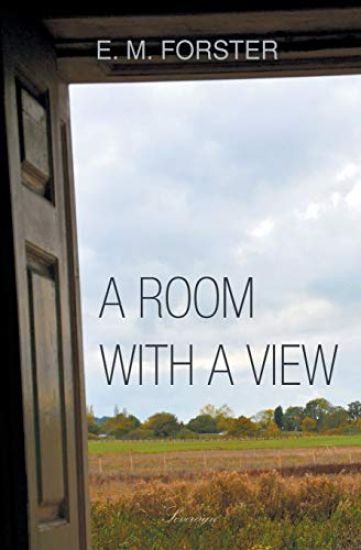
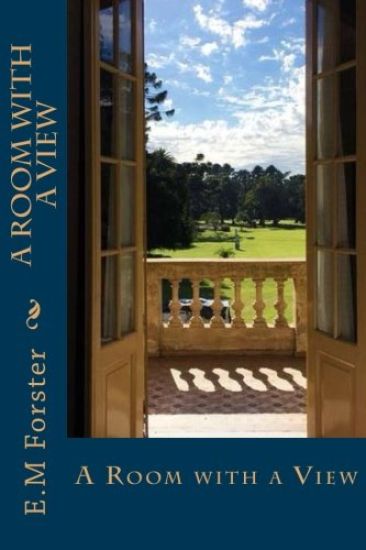
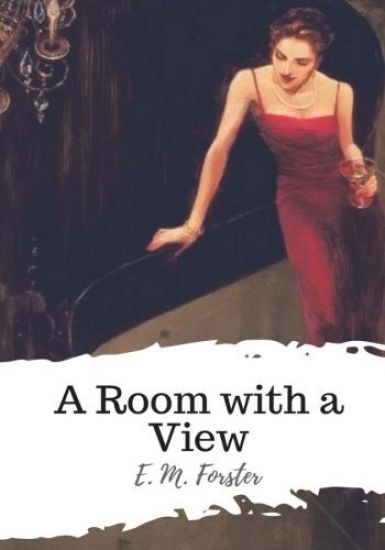
A Room with a View is a 1908 novel by English writer E. M. Forster, about a young woman in the restrained culture of Edwardian era England. Set in Italy and England, the story is both a romance and a critique of English society at the beginning of the 20th century. Merchant Ivory produced an award-winning film adaptation in 1985. The Modern Library ranked A Room with a View 79th on its list of the 100 best English-language novels of the 20th century (1998).
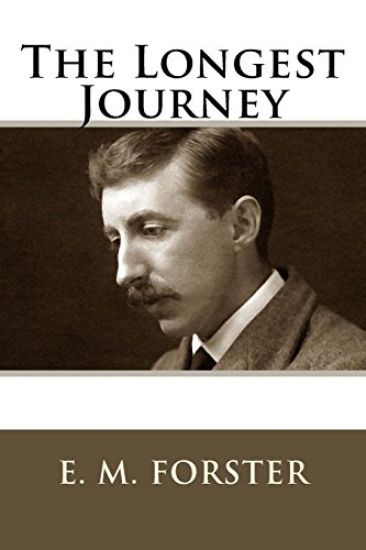
Trilling described The Longest Journey as "perhaps the most brilliant, the most dramatic, and the most passionate" of E. M. Forster's works. Certainly it's the most autobiographical - but its form confuses many. Full of sudden death, hopeless love, and quaintly doomed relationships - and yet for all that, it's an enormously engaging work. It was Forster's own favourite of his works; he felt that in Stephen he had created a living being
The novel follows lives of three families in England at the beginning of the 20th century: the Wilcoxes, rich capitalists with a fortune made in the Colonies; the half German Schlegels, whose cultural pursuits have much in common with the real-life Bloomsbury Group; and the Basts, an impoverished young couple from a lower middle class background. The idealistically motivated, well read, highly intelligent Schlegel sisters seek to help the struggling Basts, wishing at the same time to rid the Wilcoxes of some of their deep-seated social and economic prejudices.
A Room with a View is a 1908 novel by English writer E. M. Forster, about a young woman in the restrained culture of Edwardian era England. Set in Italy and England, the story is both a romance and a critique of English society at the beginning of the 20th century. Merchant Ivory produced an award-winning film adaptation in 1985. The Modern Library ranked A Room with a View 79th on its list of the 100 best English-language novels of the 20th century (1998).
Eustace's career - if career it can be called - certainly dates from that afternoon in the chestnut woods above Ravello. I confess at once that I am a plain, simple man, with no pretensions to literary style. Still, I do flatter myself that I can tell a story without exaggerating, and I have therefore decided to give an unbiased account of the extraordinary events of eight years ago. Ravello is a delightful place with a delightful little hotel in which we met some charming people. There were the two Miss Robinsons, who had been there for six weeks with Eustace, their nephew, then a boy of about fourteen. Mr. Sandbach had also been there some time. He had held a curacy in the north of England, which he had been compelled to resign on account of ill-health, and while he was recruiting at Ravello he had taken in hand Eustace's education - which was then sadly deficient - and was endeavoring to fit him for one of our great public schools. Then there was Mr. Leyland, a would-be artist, and, finally, there was the nice landlady, Signora Scafetti, and the nice English-speaking waiter, Emmanuele - though at the time of which I am speaking Emmanuele was away, visiting a sick father.
In this short science fiction story, Forster describes a world in which almost all humans have lost the ability to live on the surface of the Earth. Each individual lives in isolation in a 'cell', with all bodily and spiritual needs met by the omnipotent, global Machine. Most humans welcome this development, as they are skeptical and fearful of first-hand experience. People forget that humans created the Machine, and treat it as a mystical entity whose needs supersede their own. Those who do not accept the deity of the Machine are viewed as 'unmechanical' and are threatened with 'Homelessness'. Eventually, the Machine apocalyptically collapses, and the civilization of the Machine comes to an end.
E. M. Forster's personal favorite of his own novels. The novel follows the lives of school friends from Cambridge University as they mature and enter society, seeking love, marriage and professional fulfillment. Forster comments on the pressures and expectations of class politics within English society.
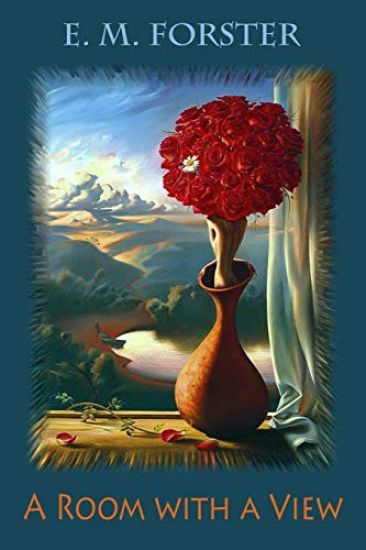
This Edwardian social comedy explores love and prim propriety among an eccentric cast of characters assembled in an Italian pensione and in a corner of Surrey, England. A charming young English woman, Lucy Honeychurch, faints into the arms of a fellow Britisher when she witnesses a murder in a Florentine piazza. Attracted to this man, George Emerson-who is entirely unsuitable and whose father just may be a Socialist-Lucy is soon at war with the snobbery of her class and her own conflicting desires. Back in England she is courted by a more acceptable, if stifling, suitor, and soon realizes she must make a startling decision that will decide the course of her future: she is forced to choose between convention and passion. We are delighted to publish this classic book as part of our extensive Classic Library collection. Many of the books in our collection have been out of print for decades, and therefore have not been accessible to the general public. The aim of our publishing program is to facilitate rapid access to this vast reservoir of literature, and our view is that this is a significant literary work, which deserves to be brought back into print after many decades. The contents of the vast majority of titles in the Classic Library have been scanned from the original works. To ensure a high quality product, each title has been meticulously hand curated by our staff. Our philosophy has been guided by a desire to provide the reader with a book that is as close as possible to ownership of the original work. We hope that you will enjoy this wonderful classic work, and that for you it becomes an enriching experience.
Trieste Publishing has a massive catalogue of classic book titles. Our aim is to provide readers with the highest quality reproductions of fiction and non-fiction literature that has stood the test of time. The many thousands of books in our collection have been sourced from libraries and private collections around the world. The titles that Trieste Publishing has chosen to be part of the collection have been scanned to simulate the original. Our readers see the books the same way that their first readers did decades or a hundred or more years ago. Books from that period are often spoiled by imperfections that did not exist in the original. Imperfections could be in the form of blurred text, photographs, or missing pages. It is highly unlikely that this would occur with one of our books. Our extensive quality control ensures that the readers of Trieste Publishing's books will be delighted with their purchase. Our staff has thoroughly reviewed every page of all the books in the collection, repairing, or if necessary, rejecting titles that are not of the highest quality. This process ensures that the reader of one of Trieste Publishing's titles receives a volume that faithfully reproduces the original, and to the maximum degree possible, gives them the experience of owning the original work. We pride ourselves on not only creating a pathway to an extensive reservoir of books of the finest quality, but also providing value to every one of our readers. Generally, Trieste books are purchased singly - on demand, however they may also be purchased in bulk. Readers interested in bulk purchases are invited to contact us directly to enquire about our tailored bulk rates.
This Edwardian social comedy explores love and prim propriety among an eccentric cast of characters assembled in an Italian pensione and in a corner of Surrey, England. A charming young Englishwoman, Lucy Honeychurch, faints into the arms of a fellow Britisher when she witnesses a murder in a Florentine piazza. Attracted to this man, George Emerson-who is entirely unsuitable and whose father just may be a Socialist-Lucy is soon at war with the snobbery of her class and her own conflicting desires. Back in England, she is courted by a more acceptable, if stifling, suitor and soon realizes she must make a startling decision that will decide the course of her future: she is forced to choose between convention and passion.
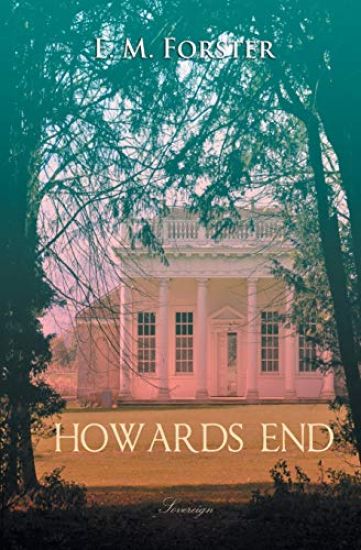
First published in 1910, Howards End is the novel that earned E. M. Forster recognition as a major writer. At its heart lie two families--the wealthy and business-minded Wilcoxes and the cultured and idealistic Schlegels. When the beautiful and independent Helen Schlegel begins an impetuous affair with the ardent Paul Wilcox, a series of events is sparked--some very funny, some very tragic--that results in a dispute over who will inherit Howards End, the Wilcoxes' charming country home. As much about the clash between individual wills as the clash between the sexes and the classes, Howards End is a novel whose central tenet, "Only connect," remains a powerful prescription for modern life.
A traveler steps off the road and finds himself in an alternate reality. A sullen boy accidentally summons a spirit. A man gets more than he bargained for when he buys his fianc e a plot of wooded land. These six stories deal with transformations, the truth of the imagination, and the effect of the unseen on ordinary lives. By juxtaposing the Edwardian English with pagan mythology, E. M. Forster created in this collection a work of lasting strangeness and great beauty.
The disregard of a dying woman's bequest, a girl's attempt to help an impoverished clerk, and the marriage of an idealist and a materialist - all intersect at an estate called Howards End. The fate of this country home symbolizes the future of England in an exploration of social, economic, and philosophical trends during the post-Victorian era
The Machine Stops is a short science fiction story. It describes a world in which almost all humans have lost the ability to live on the surface of the Earth. Each individual lives in isolation in a 'cell', with all bodily and spiritual needs met by the omnipotent, global Machine. Most humans welcome this development, as they are skeptical and fearful of first-hand experience. People forget that humans created the Machine, and treat it as a mystical entity whose needs supersede their own. Those who do not accept the deity of the Machine are viewed as 'unmechanical' and are threatened with "Homelessness". Eventually, the Machine apocalyptically collapses, and the civilization of the Machine comes to an end.
This Edwardian social comedy explores love and prim propriety among an eccentric cast of characters assembled in an Italian pensione and in a corner of Surrey, England. A charming young Englishwoman, Lucy Honeychurch, faints into the arms of a fellow Britisher when she witnesses a murder in a Florentine piazza. Attracted to this man, George Emerson-who is entirely unsuitable and whose father just may be a Socialist-Lucy is soon at war with the snobbery of her class and her own conflicting desires. Back in England, she is courted by a more acceptable, if stifling, suitor and soon realizes she must make a startling decision that will decide the course of her future: she is forced to choose between convention and passion.
This Edwardian social comedy explores love and prim propriety among an eccentric cast of characters assembled in an Italian pensione and in a corner of Surrey, England. A charming young Englishwoman, Lucy Honeychurch, faints into the arms of a fellow Britisher when she witnesses a murder in a Florentine piazza. Attracted to this man, George Emerson-who is entirely unsuitable and whose father just may be a Socialist-Lucy is soon at war with the snobbery of her class and her own conflicting desires. Back in England, she is courted by a more acceptable, if stifling, suitor and soon realizes she must make a startling decision that will decide the course of her future: she is forced to choose between convention and passion.