

Kirjailija
E. M. Forster
Kirjat ja teokset yhdessä paikassa: 336 kirjaa, julkaisuja vuosilta 1950–2027, suosituimpiin kuuluu A Passage to India. Vertaile teosten hintoja ja tarkista saatavuus suomalaisista kirjakaupoista.
Nimi esiintyy myös muodoissa: E M Forster, E.M. Forster, E. M Forster, E.M Forster
336 kirjaa
Kirjojen julkaisuvuodet: 1950–2027.
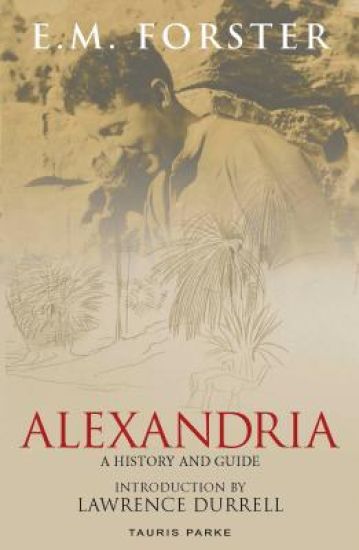
With a novelist's pen, Forster brings to life the fabled, romantic city of Alexander the Great, capital of Graeco-Roman Egypt, beacon of light and culture symbolised by the Pharos, where the doomed love affair of Antony and Cleopatra was played out and the greatest library the world has ever known was built. In the autumn of 1915, in a 'slightly heroic mood', E. M. Forster arrived in Alexandria, full of lofty ideals as a volunteer for the Red Cross. Yet most of his time was spent exploring 'the magic, antiquity and complexity' of the place in order to cope with living in what he saw as a 'funk-hole'. Threading 3,000 years of history with vibrant strands of literature and punctuating the narrative with his own experiences, Forster immortalised Alexandria in this book, painting an incomparable portrait of the great city and, inadvertently, himself.
Howards End is a novel by E. M. Forster, first published in 1910, about social conventions, codes of conduct and relationships in turn-of-the-century England. Howards End is considered by some to be Forster's masterpiece. The book was conceived in June 1908 and worked on throughout the following year; it was completed in July 1910. In 1998, the Modern Library ranked Howards End 38th on its list of the 100 best English-language novels of the 20th century. Zadie Smith's On Beauty is a modern retelling of the novel, as well as an homage to it.
Howards End is a novel by E. M. Forster, first published in 1910, about social conventions, codes of conduct and relationships in turn-of-the-century England. Howards End is considered by some to be Forster's masterpiece. The book was conceived in June 1908 and worked on throughout the following year; it was completed in July 1910. In 1998, the Modern Library ranked Howards End 38th on its list of the 100 best English-language novels of the 20th century. Zadie Smith's On Beauty is a modern retelling of the novel, as well as an homage to it. (wikipedia.org)
Reflecting Forster's view of the moral and emotional weaknesses of the English upper class, this novel deals with a country house called Howards End and its influence on the lives of the wealthy and materialistic Wilcoxes; the cultured, idealistic Schlegel sisters; and the poor bank clerk Leonard Bast. Illustrating Forster's key aphorism, "Only connect," it brings together people from different classes and nations through sympathetic insight and understanding. As Lionel Trilling noted, it "eloquently addresses the question 'Who shall inherit England?'"
A stunning new edition of Forster's beloved classic novel, with a new introduction by David Nicholls, bestselling author of You Are Here'A social comedy, often delightful . . . with energy, curiosity and wit'DAVID NICHOLLS'Forster's masterpiece'THE TIMES'The present flowed by them like a stream. The tree rustled. It had made music before they were born, and would continue after their deaths, but its song was of the moment.'Howards End, the country home of the Wilcoxes, overlooks a fertile garden and a meadow beyond, the boundary marked by a majestic wych-elm tree. Great red poppies bloom, cherry and plum trees flower and the scent of cut hay perfumes the air. In the spring of 1905, within those vine-covered walls, a brief romance between Helen Schlegel and Paul Wilcox brings the pragmatic, bourgeois Wilcoxes into conflict with the liberal, idealistic Schlegels. When Helen befriends Leonard Bast, a young bank clerk on the edge of ruin, a chain of events is set in motion that brings the Schlegel, Wilcox and Bast families together irrevocably, for better or for worse, and leads back, in the end, to where it all began, Howards End.
E. M. Forster's 1924 political and philosophical masterpiece, 'A Passage to India', is among the greatest novels of the twentieth century. The book mirrors the troubled politics of colonialism and questions whether a friendship between a British person and an Indian would have been possible in those prejudiced times. Adela Quested and her fellow British travelers, set to experience the 'real' India, develop a friendship with the suave Dr. Aziz. A mysterious incident occurs while they are exploring the Marabar Caves, and the trip results in a shocking accusation on the well-respected doctor that throws Chandrapore into a fever of racial tension and results in a devastating series of events, revealing how deeply the bigotry has taken root. A powerful depiction of a society in the grasp of imperialism, 'A Passage to India' portraits the future of individuals caught between the major political and cultural conflicts of the modern world.
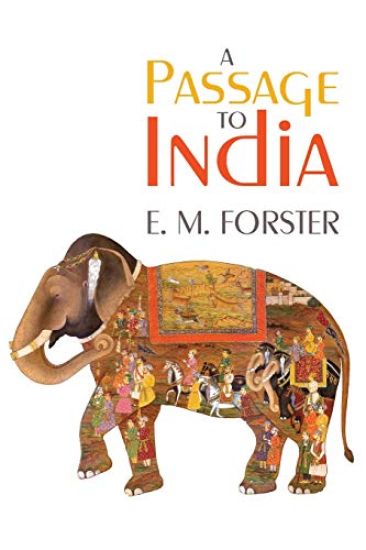
Based on author E. M. Forster's real-life experiences, A Passage to India is a mind-opening tale set against the backdrop of the British Raj and the Indian independence movement of the 1920s. It was selected as one of the 100 great works of 20th-century English literature by the Modern Library and won the 1924 James Tait Black Memorial Prize for fiction. Time magazine included the novel in its "All-Time 100 Novels" list.
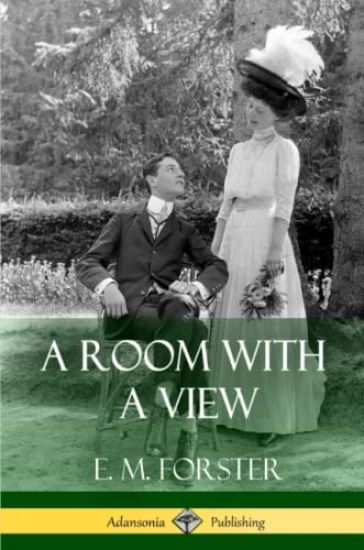
A Room with a View follows Lucy Honeychurch, a young lady living within the constraining society of Edwardian England. First published in 1908, this novel acts both as an inspiring romance and drama as well as a sharp critique of the social mores cultivated during the Edwardian era. The story itself commences in the Italian city of Florence, where the differences in environment and culture leave a lasting impression upon the young Lucy, despite the presence of her obtrusive elder cousin Charlotte. Lucy later encounters George, a sensitive young man who instinctively acts to awaken Lucy to break free of her stifling social situation and savour a different culture and life. George is deeply contrasted with Lucy's other suitor, the proper and courteous Cecil, who in many ways personifies the stifling Edwardian society in which much of the novel takes place.
E. M. Forster and Virginia Woolf were members of the Bloomsbury Group and key literary figures at the forefront of an artistic movement known as Modernism in the early twentieth century, a movement which for English literature meant the innovative re-shaping of boundaries in form, narrative and language. Originally published in 1942, this book presents the historic text of the Rede Lecture, which was delivered by E. M. Forster in the Senate House, Cambridge on 29th May 1941, two months after Woolf's death. The lecture was also given in an alternate form at the Royal Institution of Great Britain on 5th March 1942. In this lecture Forster celebrates Woolf's colossal contribution to literature as well as challenges her work as both a fellow writer and friend. Capturing and illuminating the shifting mood and interests in literature at the time, this landmark lecture is a must-read for all literature scholars.
Passage to India
E M Forster; E.M. Forster
Penguin Books Ltd.
2015
pokkari
Halvin toimitettuna 16,20 €
When Adela Quested and her elderly companion Mrs Moore arrive in the Indian town of Chandrapore, they quickly feel trapped by its insular and prejudiced 'Anglo-Indian' community. Determined to escape the parochial English enclave and explore the 'real India', they seek the guidance of the charming and mercurial Dr Aziz, a cultivated Indian Muslim.
Dr Aziz is a young Muslim physician in the British Indian town of Chandrapore. One evening he comes across an English woman, Mrs Moore, in the courtyard of a local mosque; she and her younger travelling companion Adela are disappointed by claustrophobic British colonial culture and wish to see something of the 'real' India. But when Aziz kindly offers to take them on a tour of the Marabar caves with his close friend Cyril Fielding, the trip results in a shocking accusation that throws Chandrapore into a fever of racial tension.
"No, Mother, Lilia was really keen on going to Italy " said Philip, finding the situation full of whimsical romance. There was something half attractive, half repellent in the thought of this vulgar woman journeying to places he loved and revered. But why should she not be transfigured by her journeys? The same had happened to the Goths When a man or woman is "neither well-bred, nor well-connected, nor handsome, nor clever, nor rich," what chance does he or she have for success, in turn-of-the-century England -- at least in that portion of London society almost ridiculously proper and well-behaved? The Philistines, the vulgar, the ones talented in making absurd impressions when in public . . . could they do well for themselves? Horrid thought