Kirjailija
E. M. Forster
Kirjat ja teokset yhdessä paikassa: 336 kirjaa, julkaisuja vuosilta 1950–2027, suosituimpiin kuuluu A Passage to India. Vertaile teosten hintoja ja tarkista saatavuus suomalaisista kirjakaupoista.
Nimi esiintyy myös muodoissa: E M Forster, E.M. Forster, E. M Forster, E.M Forster
336 kirjaa
Kirjojen julkaisuvuodet: 1950–2027.
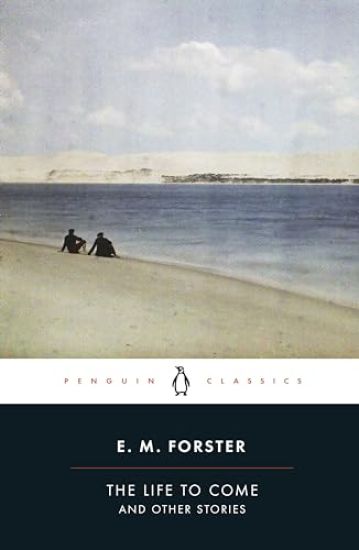
A searing collection of E. M. Forster’s short stories about forbidden sexuality and desire‘Madness, isn’t it? What can it matter to anyone else if you and I don’t mind?’Exploratory, experimental and pioneering, the short stories collected in this volume show E. M. Forster writing about love between men with sensitivity, honesty, anger and humour. Written between 1903 and 1958, only two of the fourteen stories here appeared in print in Forster’s lifetime; most remained unpublished while homosexuality was a crime. They range from light-hearted, satirical pieces to moving, highly charged depictions of desire and shared intimacy – a Christian missionary tormented by longing in ‘The Life to Come’; a fateful woodland encounter in ‘Arthur Snatchfold’; an illicit affair between a young English officer and his Indian friend in ‘The Other Boat’ – and explore the gap between private and public selves, and the places where love, class, race and sexuality collide. Edited by Oliver StallybrassWith an Introduction by Diarmuid Hester
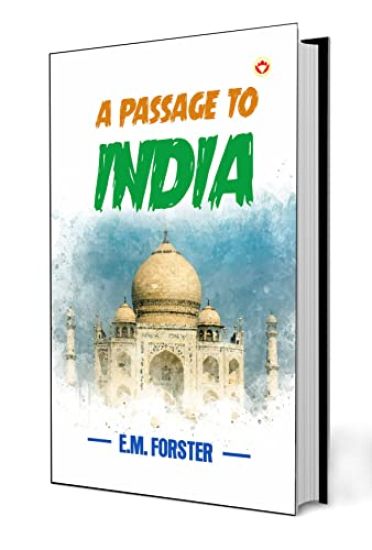
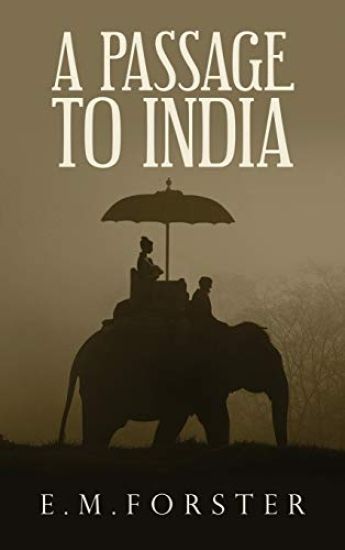
A Passage To India (Edition2024)
E M Forster
Neelkanth Prakashan
2024
nidottu
Halvin toimitettuna 30,50 €
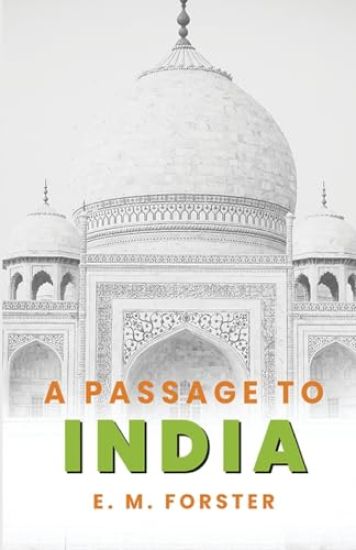
This novel is set during the British colonial rule of India and deals with the racial tensions and prejudices between the British and the Indian populations. The story revolves around an accusation of assault made by an Englishwoman, Miss Adela Quested, against an Indian doctor, Dr. Aziz. The novel delves deeply into the complexities of British-Indian relationships, exploring themes of cultural misunderstanding, racism, and the ambiguous nature of truth. It's one of Forster's most celebrated works, offering a critique of imperialism.
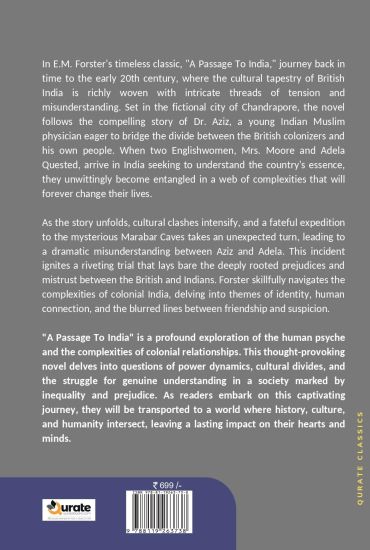
Introducing the timeless literary classic, ""A Passage To India,"" penned by the renowned author E. M. Forster. Embark on a captivating journey through the mystical landscapes of India, where cultures collide and friendships are tested amidst the backdrop of colonial British India. Set in the early 20th century, the novel follows the enthralling tale of Dr. Aziz, a young Indian physician, and his encounter with two Englishwomen, Mrs. Moore and her young friend Adela Quested. As they venture into the heart of India's enigmatic terrain, they confront the complexities of cultural misunderstandings and the deep-rooted prejudices that divide East and West. E. M. Forster's brilliant prose weaves a tapestry of emotions, exploring the themes of friendship, identity, and the clash of ideologies in a colonial setting. As the characters navigate through societal norms and personal beliefs, ""A Passage To India"" delves into the intricacies of human relationships and the transformative power of experiences. This literary masterpiece has stood the test of time, resonating with readers for generations and leaving an indelible mark on the world of literature. Immerse yourself in the rich tapestry of India's vibrant landscapes and human connections as you turn each page of this thought-provoking and soul-stirring novel. Whether you're a seasoned reader or a newcomer to classic literature, ""A Passage To India"" promises an unforgettable reading experience that will leave you pondering its profound themes long after you've reached the final chapter. Add this timeless gem to your collection and embark on an intellectual journey like no other. Order your copy of ""A Passage To India"" by E. M. Forster today and unlock the secrets of a world that still resonates with relevance in our modern times.
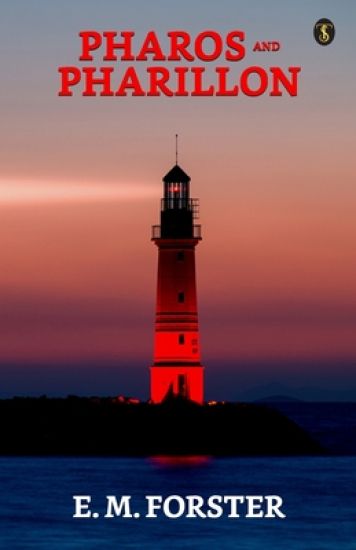
"Pharos and Pharillon" is a non-fiction book by E. M. Forster, first published in 1923. The book is a collection of essays and travel writings based on Forster's experiences in Alexandria, Egypt. The title refers to two lighthouses that stand at either end of the city's harbor. In the book, Forster reflects on a wide range of topics related to his travels, including the history and culture of Egypt, the relationship between the East and the West, and the role of the British Empire in the region. He also offers observations on art, literature, and society, drawing on his experiences in Alexandria to explore these themes. The book is notable for its nuanced and sensitive portrayal of Arab and Egyptian culture, and for its exploration of the complex and often fraught relationship between Europe and the Middle East.
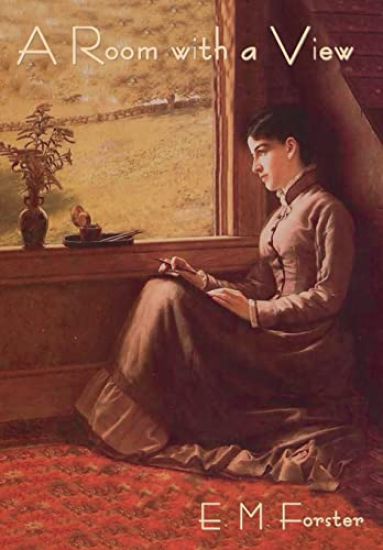
A Room with a View is a 1908 novel by English writer E. M. Forster, about a young woman in the restrained culture of Edwardian era England. Set in Italy and England, the story is both a romance and a humorous critique of English society at the beginning of the 20th century. Merchant Ivory produced an award-winning film adaptation in 1985. The Modern Library ranked A Room with a View 79th on its list of the 100 best English-language novels of the 20th century (1998). Stage, film, radio, and television adaptations The novel was first adapted for the theatre by Richard Cottrell with Lance Severling for the Prospect Theatre Company, and staged at the Albery Theatre on 27 November 1975 by directors Toby Robertson and Timothy West. Merchant Ivory produced an award-winning film adaptation in 1985 directed by James Ivory and starring Maggie Smith as "Charlotte Bartlett", Helena Bonham Carter as "Lucy Honeychurch", Judi Dench as "Eleanor Lavish", Denholm Elliott as "Mr Emerson", Julian Sands as "George Emerson", Daniel Day-Lewis as "Cecil Vyse" and Simon Callow as "The Reverend Mr Beebe". BBC Radio 4 produced a four-part radio adaptation written by David Wade and directed by Glyn Dearman (released commercially as part of the BBC Radio Collection) in 1995 starring Sheila Hancock as "Charlotte Bartlett", Cathy Sara as "Lucy Honeychurch", John Moffat as "Mr Emerson", Gary Cady as "George Emerson" and Stephen Moore as "The Reverend Mr Beebe". The production was rebroadcast on BBC7 in June 2007, April 2008, June 2009 and March 2010 and on BBC Radio 4 Extra in August 2012 and March 2017. In 2006, Andrew Davies announced that he was to adapt A Room with a View for ITV. This was first shown on ITV1 on 4 November 2007. It starred father and son actors Timothy and Rafe Spall as Mr Emerson and George, together with Elaine Cassidy (Lucy Honeychurch), Sophie Thompson (Charlotte Bartlett), Laurence Fox (Cecil Vyse), Sin ad Cusack (Miss Lavish), Timothy West (Mr Eager) and Mark Williams (Reverend Beebe). This adaptation was broadcast in the US on many PBS stations on Sunday 13 April 2008. A musical version of the novel, directed by Scott Schwartz, opened at San Diego's Old Globe Theatre in previews on March 2, 2012 with opening night March 10, and ran through April 15. Conceived by Marc Acito, the production featured music and lyrics by Jeffrey Stock and additional lyrics by Acito. The cast included Karen Ziemba (Charlotte Bartlett), Ephie Aardema (Lucy Honeychurch), Kyle Harris (George Emerson) and Will Reynolds (Cecil Vyse). A reworked version of the musical opened at Seattle's 5th Avenue Theatre on April 15, 2014, following two weeks of previews, and ran through May 11. Directed by David Armstrong (director), the show's cast featured Louis Hobson (George Emerson), Laura Griffith (Lucy Honeychurch), Allen Fitzpatrick (Mr. Emerson), Patti Cohenour (Charlotte Bartlett), and Richard Gray (Reverend Beebe). In 2020, Kevin Kwan released his novel "Sex and Vanity," a contemporary adaptation, in which the characters are well-connected aristocrats, and some are Crazy Rich Asians. (wikipedia.org)

Young Lucy Honeychurch leaves Edwardian England for a tour of Italy, where she becomes immersed in an exotic new environment full of unexpected possibilities. A Room With a View by E. M. Forster is an influential classic that follows Lucy as she encounters characters and events far outside her previous experience and must see through the clash of cultures and personalities to recognize both herself and whom she loves.
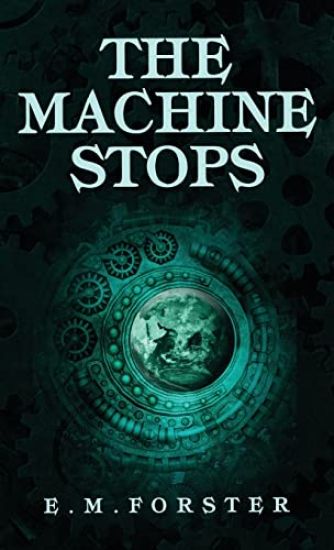
In our modern era, we like to congratulate ourselves for our sophistication, knowing that we have doubtless created a world that our feckless ancestors could never have imagined. Actually reading the works of those ancestors would disabuse us of any such notion, and E. M. Forster's The Machine Stops is a case in point. Not only does it seem that Forster has contemplated the ubiquitous 'Zoom' call, but he correctly sensed the deadening of the soul that would accompany the faux-mastery of Nature, expressing itself through technology. In The Machine Stops the height of mankind's advances was The Machine, and it cared for every aspect of human experience, and anticipated every human need, until such time that there was nothing left for humans to do except eat, and, if the algorithm approved, procreate; and when the algorithm decided Euthanasia was due, then Euthanasia was happily accepted. The Machine was not just the pinnacle of human ingenuity, it was Progress Incarnate. And then... the Machine Stopped. Today, we hail our own progress, technological and societal. If our machine stops, what then? Do we really suppose it is eternal?
First published in 1908, 'A Room with A View' is a coming of age story of a young woman, by E. M. Forster, an English fiction writer, essayist, and librettist. Many of his novels examined class differences and hypocrisy. Set against the stunning setting of Florence, Italy, during the Edwardian period, young Lucy Honeychurch travels the district with her domineering, old-fashioned cousin, Charlotte Bartlett. When Lucy meets the strange Emerson family, she forms an awkward friendship with their son, George. Through her relationship with the Emersons, and with other tourists, Lucy encounters the criticisms of society and must choose between a life of harmony and one of love. The lasting pleasure of this tale of romance is embedded in Forster's vibrant characters, including absurd spinsters, superior clergypersons, and candid patriots. It is one of E. M. Forster's earliest and most outstanding works.
A Passage To India, ' the greatest novel of all time, depicts a scenario set in pre-independence India, when British restrictions were obeyed. The premise centers around the question of whether Indians and Brits can ever be friends. Through the friendship between Aziz and Fielding, Forster utilizes this subject as a framework to explore the general issue of Britain's governmental domination of India on a more intimate level. It also untangles the rising racial tensions between Indians, who are wary of colonial power at best, and the British, who are mostly ignorant of and scornful of the community they are penetrating. Forster effectively defined the friendship between British and Indians and also discuss the Indian-British-Muslim interaction, culture, and religion in India through this Novel.
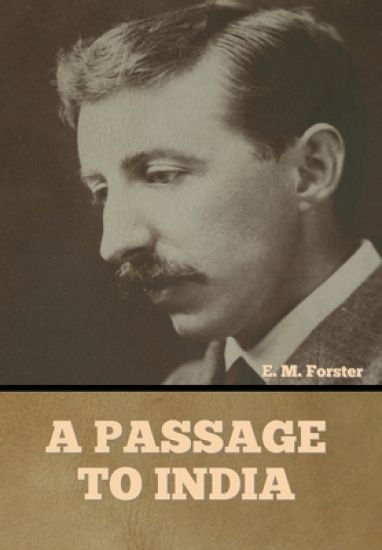
This book has been considered important throughout the human history, and so that this work is never forgotten we have made efforts in its preservation by republishing this book in a modern format for present and future generations. This whole book has been reformatted, retyped and designed. These books are not made of scanned copies of their original work and hence the text is clear and readable.
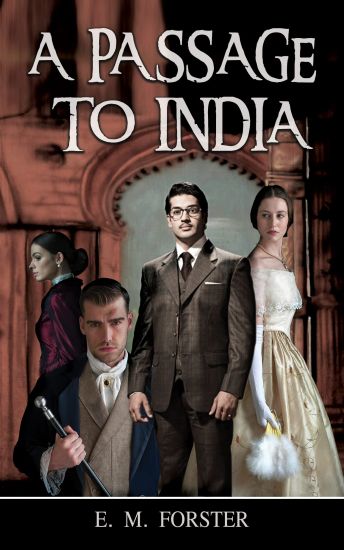
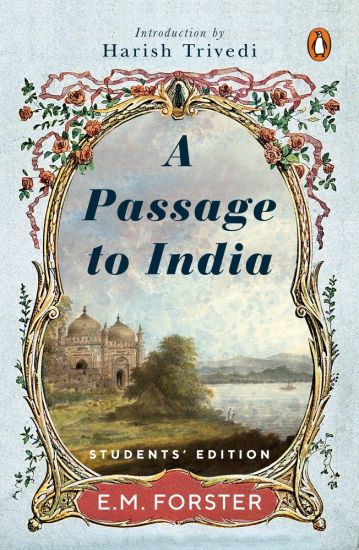
Among the greatest novels of the twentieth century, A Passage to India is set in pre-Independence India. A compelling portrait of a society in the grip of imperialism, this classic depicts the fate of individuals caught in the great political and cultural conflicts of their age. It begins when Adela and her elderly companion Mrs. Moore arrive in the Indian town of Chandrapore, and feel trapped by its insular and prejudiced British community. Determined to explore the 'real India,' they seek the guidance of the charming and mercurial Dr. Aziz. But a mysterious incident occurs while they are exploring the Marabar caves, and the well-respected doctor soon finds himself at the centre of a scandal. The introduction by Harish Trivedi provides the required scholarly context for the English literature course.
This book has been considered by academicians and scholars of great significance and value to literature. This forms a part of the knowledge base for future generations. So that the book is never forgotten we have represented this book in a print format as the same form as it was originally first published. Hence any marks or annotations seen are left intentionally to preserve its true nature.
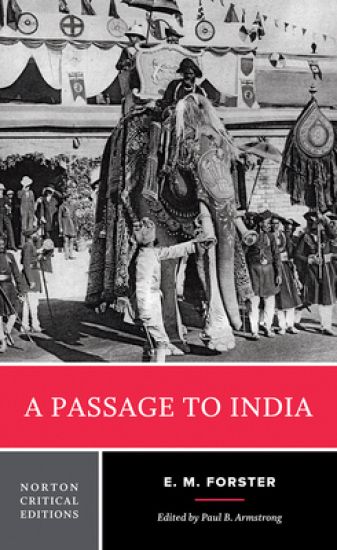
This Norton Critical Edition includes: The text of E. M. Forster's 1924 masterpiece, accompanied by Paul B. Armstrong's masterful introduction and expert annotations. Carefully chosen illustrations and a textual appendix to deepen student appreciation for and understanding of the novel. A rich collection of background and contextual materials thematically organized to encourage classroom discussion. Topics include "India and Empire," "The Author and India," and "The Author and the Novel." "Criticism," including thirteen contemporary responses from both Indian and British voices as well as eleven wide-ranging modern essays by, among others, Lionel Trilling, Wilfred Stone, Brenda R. Silver, Sara Suleri, Homi K. Bhabha, Benita Parry, Stuart Christie, Amardeep Singh, Carey J. Snyder, and Ambreen Hai. Earl G. Ingersoll's consideration of the David Lean film adaptation of A Passage to India. A chronology and a selected bibliography. About the Series Read by more than 12 million students over fifty-five years, Norton Critical Editions set the standard for apparatus that is right for undergraduate readers. The three-part format--annotated text, contexts, and criticism--helps students to better understand, analyze, and appreciate the literature, while opening a wide range of teaching possibilities for instructors. Whether in print or in digital format, Norton Critical Editions provide all the resources students need.