Kirjojen hintavertailu – 12 859 818 kirjaa ja 27 kauppaa
Kirjailija
E. M. Forster
Kirjat ja teokset yhdessä paikassa: 336 kirjaa, julkaisuja vuosilta 1950–2027, suosituimpiin kuuluu A Passage to India. Vertaile teosten hintoja ja tarkista saatavuus suomalaisista kirjakaupoista.
Nimi esiintyy myös muodoissa: E M Forster, E.M. Forster, E. M Forster, E.M Forster
Among the greatest novels of the twentieth century and the basis for director David Lean's Academy Award-winning film. A Passage to India (1924) is a novel by English author E. M. Forster set against the backdrop of the British Raj and the Indian independence movement in the 1920s. The story is set in pre-Independence India, when it was ruled by the British, and it questions whether a friendship between a British person and an Indian would have been possible in those prejudiced times. A Passage To India was selected as one of the 100 great works of 20th century English literature by the Modern Library
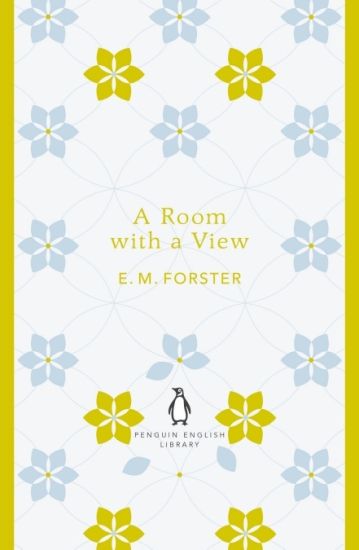
Ranked as Modern Library's list of the 100 best English-language novels of the 20th century. A Room with a View is about a young woman in the restrained culture of Edwardian era England. Set in Italy and England, the story is both a romance and a humorous critique of English society at the beginning of the 20th century. Lucy Honeychurch travels to Florence, Italy, with her cousin and they were assured they would receive a room with a view of the River Arno, but instead are given a room overlooking a dull courtyard. A one Mr. Emerson and his son George offer their room, which as the desirable view, to the two ladies. From this opening sequence, A Room with a View sets off following young Lucy as she vigates through the proprieties of Edwardian-era society.
Forster connects personal relationships with the politics of colonialism through the story of the Englishwoman Adela Quested, the Indian Dr. Aziz, and the question of what did or did not happen between them in the Marabar Caves. Forster was President of the Cambridge Humanists from 1959 until his death and a member of the Advisory Council of the British Humanist Association from 1963 until his death. His views as a humanist are at the heart of his work, which often depicts the pursuit of personal connections in spite of the restrictions of contemporary society. His humanist attitude is expressed in the non-fictional essay What I Believe (reprinted with two other humanist essays - and an introduction and notes by Nicolas Walter - as What I Believe, and other essays by the secular humanist publishers G. W. Foote & Co. in 1999). Forster's two best-known works, A Passage to India and Howards End, explore the irreconcilability of class differences. A Room with a View also shows how questions of propriety and class can make human connection difficult. The novel is his most widely read and accessible work, remaining popular long after its original publication. His posthumous novel Maurice explores the possibility of class reconciliation as one facet of a homosexual relationship. Sexuality is another key theme in Forster's works. Some critics have argued that a general shift from heterosexual to homosexual love can be observed through the course of his writing career. The foreword to Maurice describes his struggle with his homosexuality, while he explored similar issues in several volumes of short stories. Forster's explicitly homosexual writings, the novel Maurice and the short story collection The Life to Come, were published shortly after his death. Forster is noted for his use of symbolism as a technique in his novels, and he has been criticized (as by his friend Roger Fry) for his attachment to mysticism. One example of his symbolism is the wych elm tree in Howards End. The characters of Mrs. Wilcox in that novel and Mrs. Moore in A Passage to India have a mystical link with the past, and a striking ability to connect with people from beyond their own circles.
Edward Morgan Forster OM CH (1 January 1879 - 7 June 1970) was an English novelist, short story writer, essayist and librettist. Many of his novels examined class difference and hypocrisy, including A Room with a View (1908), Howards End (1910) and A Passage to India (1924). The last brought him his greatest success. He was nominated for the Nobel Prize in Literature in 16 different years. Forster's first novel, Where Angels Fear to Tread, was described by reviewers as "astonishing" and "brilliantly original". The Manchester Guardian (forerunner of The Guardian) noted "a persistent vein of cynicism which is apt to repel," though "the cynicism is not deep-seated." The novel is labelled "a sordid comedy culminating, unexpectedly and with a real dramatic force, in a grotesque tragedy." Lionel Trilling remarked on this first novel as "a whole and mature work dominated by a fresh and commanding intelligence". Subsequent books were similarly received on publication. The Manchester Guardian commented on Howards End, describing it as "a novel of high quality written with what appears to be a feminine brilliance of perception... witty and penetrating." An essay by David Cecil in Poets and Storytellers (1949) describes Forster as "pulsing with intelligence and sensibility", but primarily concerned with an original moral vision: "He tells a story as well as anyone who ever lived". US interest in Forster and appreciation for him were spurred by Lionel Trilling's E. M. Forster: A Study, which called him "the only living novelist who can be read again and again and who, after each reading, gives me what few writers can give us after our first days of novel-reading, the sensation of having learned something." (Trilling 1943)Criticism of his works has included comment on unlikely pairings of characters who marry or get engaged, and the lack of realistic depiction of sexual attraction. (wikipedia.org)
Edward Morgan Forster OM CH (1 January 1879 - 7 June 1970) was an English novelist, short story writer, essayist and librettist. Many of his novels examined class difference and hypocrisy, including A Room with a View (1908), Howards End (1910) and A Passage to India (1924). The last brought him his greatest success. He was nominated for the Nobel Prize in Literature in 16 different years. Forster's first novel, Where Angels Fear to Tread, was described by reviewers as "astonishing" and "brilliantly original". The Manchester Guardian (forerunner of The Guardian) noted "a persistent vein of cynicism which is apt to repel," though "the cynicism is not deep-seated." The novel is labelled "a sordid comedy culminating, unexpectedly and with a real dramatic force, in a grotesque tragedy." Lionel Trilling remarked on this first novel as "a whole and mature work dominated by a fresh and commanding intelligence". Subsequent books were similarly received on publication. The Manchester Guardian commented on Howards End, describing it as "a novel of high quality written with what appears to be a feminine brilliance of perception... witty and penetrating." An essay by David Cecil in Poets and Storytellers (1949) describes Forster as "pulsing with intelligence and sensibility", but primarily concerned with an original moral vision: "He tells a story as well as anyone who ever lived". US interest in Forster and appreciation for him were spurred by Lionel Trilling's E. M. Forster: A Study, which called him "the only living novelist who can be read again and again and who, after each reading, gives me what few writers can give us after our first days of novel-reading, the sensation of having learned something." (Trilling 1943)Criticism of his works has included comment on unlikely pairings of characters who marry or get engaged, and the lack of realistic depiction of sexual attraction. (wikipedia.org)
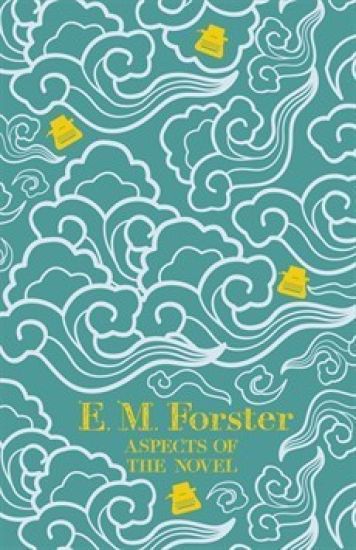
Full of Forster's renowned wit and perceptiveness, ASPECTS OF THE NOVEL offers a rare insight into the art of fiction from one of our greatest novelists.'His is a book to encourage dreaming.' Virginia Woolf Forster pares down the novel to its essential elements as he sees them: story, people, plot, fantasy, prophecy, pattern and rhythm. He illustrates each aspect with examples from their greatest exponents, not hesitating as he does so to pass controversial judgement on the works of, among others, Sir Walter Scott, Charles Dickens and Henry James.
Lucy has her rigid, middle-class life mapped out for her until she visits Florence with her uptight cousin Charlotte, and finds her neatly ordered existence thrown off balance. Lucy finds herself torn between the intensity of life in Italy and the repressed morals of Edwardian England, personified in her terminally dull fiance Cecil Vyse.
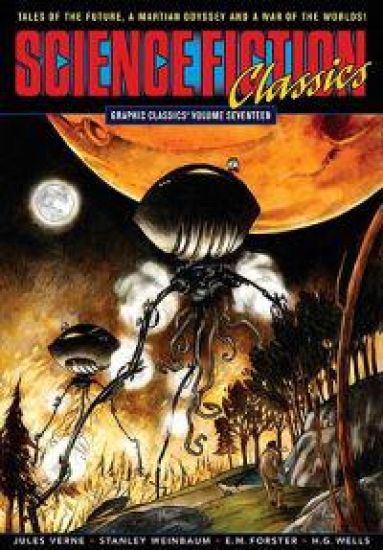
H. G. Wells; Jules Verne; Arthur Conan Doyle; Stanley Weinbaum; Lord Dunsany; E. M. Forster; Hans Christian Anderson; Rich Rainey; Ben Avery; Rod Lott; Antonella Caputo
The first full-color volume in the "Graphic Classics" series features an all-new comics adaptation of H. G. Wells' "The War of the Worlds" by Rich Rainey and Micah Farritor. Also E. M. Forster's dark vision of the future "The Machine Stops", illustrated by Ellen Lindner. Plus stories by Jules Verne, Stanley Weinbaum, Lord Dunsany and Arthur Conan Doyle, with art by Brad Teare, George Sellas, Roger Langridge, Johnny Ryan and Hunt Emerson.
E. M. Forsters berømte kjærlighetsroman forteller om unge Lucy Honeychurch som må bruke både hjertet og hjernen når hun søker etter den store, ekte kjærligheten. Hennes begjær, hennes drømmer og hennes jakt på sannheten og ærligheten gjør ikke livet lett når hun må velge mellom sine to beundrere: Den kyniske og velstående Cecil - og George, som er mer upolert og som kommer fra enklere kår. Med sitt skarpe, men også vare og følsomme blikk, ser og avslører Forster den britiske middelklassens stive omgangsform - både i utlandet og hjemme. At Forster ofte er underfundig og vittig, preger boken. Fortellingen utspiller seg både i det romantiske Firenze og på den engelske landsbygda. Boken utkom første gang i London i 1908 og er aldri tidligere utgitt på norsk. Mange har imidlertid sett filmen Et rom med utsikt med Helena Bonham Carter og Maggie Smith. Oversatt av Kirsti Øvergaard.
Rickie Elliot, a sensitive and intelligent young man with an intense imagination and a certain amount of literary talent, sets out from Cambridge full of hopes to become a writer. But when his stories are not successful he decides instead to marry the beautiful but shallow Agnes, agreeing to abandon his writing and become a schoolmaster at a second-rate public school. Giving up his hopes and values for those of the conventional world, he sinks into a world of petty conformity and bitter disappointments.
Although he is best known for his exquisite novels, E. M. Forster also wrote remarkable short stories. He referred to his stories as ‘fantasies’ and his attraction to myth and magic is apparent in many of them. Like his novels, the stories – whether they are set in Italy, Greece, India, and other places Forster visited, or in England itself – contrast the freedom of paganism with the restraints of English civilization, the personal, sensual delights of the body with the impersonal, inhibiting rules imposed by society. Rich in irony and alive with sharp observations on the surprises life holds, the stories often feature violent events, discomforting coincidences, and other disruptive happenings that throw the characters’ perceptions and beliefs off balance. This volume includes all twelve stories published during Forster’s lifetime.
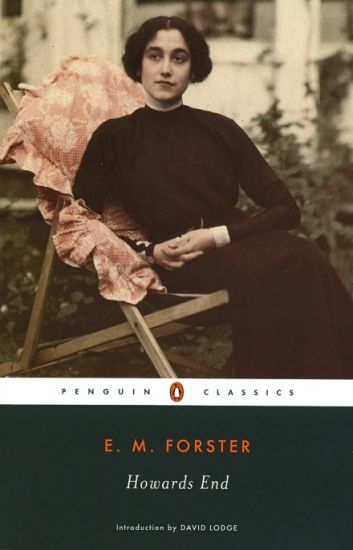
A meticulously-observed drama of class warfare, E. M. Forster's Howards End explores the conflict inherent within English society, unveiling the character of a nation as never before. This Penguin Classics edition includes an introduction and notes by David Lodge.'Only connect...'A chance acquaintance brings together the preposterous bourgeois Wilcox family and the clever, cultured and idealistic Schlegel sisters. As clear-eyed Margaret develops a friendship with Mrs Wilcox, the impetuous Helen brings into their midst a young bank clerk named Leonard Bast, who lives at the edge of poverty and ruin. When Mrs Wilcox dies, her family discovers that she wants to leave her country home, Howards End, to Margaret. Thus as Forster sets in motion a chain of events that will entangle three different families, he brilliantly portrays their aspirations to personal and social harmony. David Lodge's introduction provides an absorbing and eloquent overture to the 1910 novel that established Forster's reputation as an important writer, and that he himself later referred to as 'my best novel'. This edition also contains a note on the text, suggestions for further reading, and explanatory notes. E. M. Forster (1879-1970) was a noted English author and critic and a member of the Bloomsbury group. His first novel, Where Angels Fear To Tread appeared in 1905. The Longest Journey appeared in 1907, followed by A Room With A View (1908), based partly on the material from extended holidays in Italy with his mother. Howards End (1910) was a story that centered on an English country house and dealt with the clash between two families, one interested in art and literature, the other only in business. Maurice was revised several times during his life, and finally published posthumously in 1971. If you enjoyed Howard's End, you might like Forster's A Room with a View, also available in Penguin Classics.
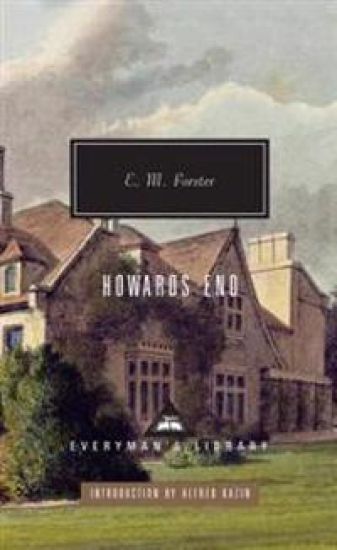
First published in 1910, Howards End is the novel that earned E. M. Forster recognition as a major writer. Soon to be a limited series on Starz. At its heart lie two families--the wealthy and business-minded Wilcoxes and the cultured and idealistic Schlegels. When the beautiful and independent Helen Schlegel begins an impetuous affair with the ardent Paul Wilcox, a series of events is sparked--some very funny, some very tragic--that results in a dispute over who will inherit Howards End, the Wilcoxes' charming country home. As much about the clash between individual wills as the clash between the sexes and the classes, Howards End is a novel whose central tenet, "Only connect," remains a powerful prescription for modern life. Introduction by Alfred Kazan(Book Jacket Status: Not Jacketed)
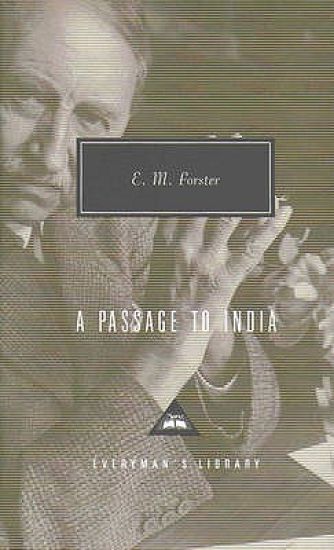
Adela and her elderly companion Mrs Moore arrive in the Indian town of Chandrapore, and feel trapped by its insular and prejudiced British community. Determined to explore the 'real India', they seek the guidance of the charming and mercurial Dr Aziz. But a mysterious incident occurs while they are exploring the Marabar caves, and the well-respected doctor soon finds himself at the centre of a scandal.