Kirjojen hintavertailu – 12 859 824 kirjaa ja 27 kauppaa
Kirjailija
Edgar Allan Poe
Kirjat ja teokset yhdessä paikassa: 2 091 kirjaa, julkaisuja vuosilta 1840–2027, suosituimpiin kuuluu Heureka ja muita kirjoituksia. Vertaile teosten hintoja ja tarkista saatavuus suomalaisista kirjakaupoista.
"Le Chat Noir" (titre original en anglais: The Black Cat) est une histoire d'horreur de l' crivain am ricain Edgar Allan Poe, publi e dans le journal Saturday Evening Post de Philadelphia dans son num ro du 19 ao t 1843. Les critiques le consid rent l'un des plus effrayants de l'histoire de la litt rature. "El gato negro" (t tulo original en ingl s: The Black Cat) es un cuento de horror del escritor estadounidense Edgar Allan Poe, publicado en el peri dico Saturday Evening Post de Filadelfia en su n mero del 19 de agosto de 1843. La cr tica lo considera uno de los m s espeluznantes de la historia de la literatura.
"The Black Cat" is a short story by Edgar Allan Poe. It was first published in the August 19, 1843, edition of The Saturday Evening Post. It is a study of the psychology of guilt, often paired in analysis with Poe's "The Tell-Tale Heart". In both, a murderer carefully conceals his crime and believes himself unassailable, but eventually breaks down and reveals himself, impelled by a nagging reminder of his guilt.
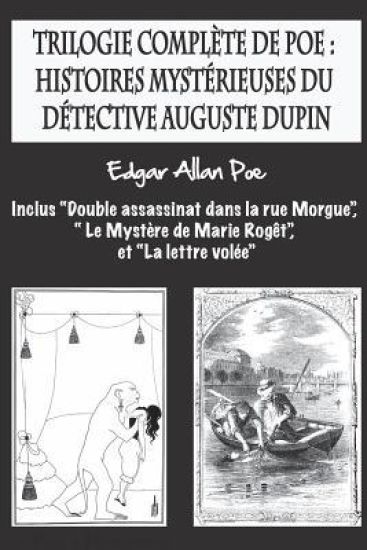
Entre 1841 et 1844, Edgar Allan Poe a invent le genre de la fiction polici re avec trois histoires fascinantes d'un jeune homme excentrique nomm C. Auguste Dupin. Introduisant la litt rature le concept de l'application de la raison pour r soudre un crime, ces histoires ont donn la gloire et la fortune de Poe. "Double assassinat dans la rue Morgue" est une nouvelle d'Edgar Allan Poe publi e dans le Graham's Magazine en 1841. On pr tend qu'elle est la premi re histoire de d tective; Poe l'a d sign e comme l'une de ses histoires de raisonnement . tant le premier vrai d tective de fiction, le personnage de Dupin a tabli de nombreux dispositifs litt raires qui seraient utilis s dans les futurs d tectives fictifs, y compris Sherlock Holmes et Hercule Poirot. Beaucoup de personnages plus tard, par exemple, suivent le mod le Poe du d tective brillant, son ami personnel qui sert de narrateur, et la r v lation finale pr sent e avant le raisonnement qui y conduit. Le m me Dupin r appara t dans "Le myst re de Marie Rog t" et dans "La lettre vol e".
The name Poe brings to mind images of murderers and madmen, premature burials, and mysterious women who return from the dead. His works have been in print since 1827 and include such literary classics as The Tell-Tale Heart, The Raven, and The Fall of the House of scientific theory, and hundreds of essays and book reviews. He is widely acknowledged as the inventor of the modern detective story and an innovator in the science fiction genre, but he made his living as america s first great literary critic and theoretician. F Collier & Son published a five volume collection of Poe's work in hardback in 1903. This is volume 3.
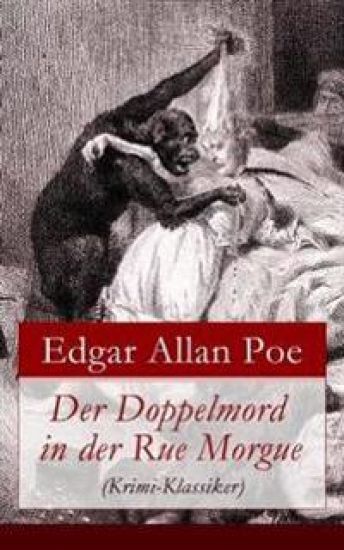
Der Doppelmord in der Rue Morgue ist eine Geschichte des US-amerikanischen Schriftstellers Edgar Allan Poe. Sie ist die erste von drei Geschichten, die sich um den deduktiv analysierenden Krimihelden C. Auguste Dupin drehen. Zur Inhalt: Zusammen mit seinem Partner untersucht C. Auguste Dupin unerkl rliche Morde an zwei Pariser Frauen. Diese wurden im vierten Stockwerk ihres ansonsten leer stehenden Hauses auf bestialische Weise ermordet. Doch der Fall ist zun chst nicht aufkl rbar: Alle T ren und Fenster sind von innen verriegelt, und daher ist es der Polizei ein R tsel, wie der oder die M rder vom Tatort fl chten konnten. Doch Dupin untersucht den Fall selbst und dank seines brillanten analytischen Verstandes kann er der Sache auf den Grund gehen und feststellen, wem die Morde zuzuschreiben sind. Edgar Allan Poe (1809-1849) war ein US-amerikanischer Schriftsteller. Er pr gte entscheidend die Genres der Kriminalliteratur, der Science-Fiction und der Horrorliteratur. Seine Poesie wurde zum Fundament des Symbolismus und damit der modernen Dichtung.
Edgar Allan Poe born Edgar Poe; January 19, 1809 - October 7, 1849) was an American writer, editor, and literary critic. Poe is best known for his poetry and short stories, particularly his tales of mystery and the macabre. He is widely regarded as a central figure of Romanticism in the United States and American literature as a whole, and he was one of the country's earliest practitioners of the short story. Poe is generally considered the inventor of the detective fiction genre and is further credited with contributing to the emerging genre of science fiction. 1] He was the first well-known American writer to try to earn a living through writing alone, resulting in a financially difficult life and career. Poe was born in Boston, the second child of two actors. His father abandoned the family in 1810, and his mother died the following year. Thus orphaned, the child was taken in by John and Frances Allan of Richmond, Virginia. They never formally adopted him, but Poe was with them well into young adulthood. Tension developed later as John Allan and Edgar repeatedly clashed over debts, including those incurred by gambling, and the cost of secondary education for the young man. Poe attended the University of Virginia for one semester but left due to lack of money. Poe quarreled with Allan over the funds for his education and enlisted in the Army in 1827 under an assumed name. It was at this time that his publishing career began, albeit humbly, with the anonymous collection Tamerlane and Other Poems (1827)
Edgar Allan Poe born Edgar Poe; January 19, 1809 - October 7, 1849) was an American writer, editor, and literary critic. Poe is best known for his poetry and short stories, particularly his tales of mystery and the macabre. He is widely regarded as a central figure of Romanticism in the United States and American literature as a whole, and he was one of the country's earliest practitioners of the short story. Poe is generally considered the inventor of the detective fiction genre and is further credited with contributing to the emerging genre of science fiction. 1] He was the first well-known American writer to try to earn a living through writing alone, resulting in a financially difficult life and career. Poe was born in Boston, the second child of two actors. His father abandoned the family in 1810, and his mother died the following year. Thus orphaned, the child was taken in by John and Frances Allan of Richmond, Virginia. They never formally adopted him, but Poe was with them well into young adulthood. Tension developed later as John Allan and Edgar repeatedly clashed over debts, including those incurred by gambling, and the cost of secondary education for the young man. Poe attended the University of Virginia for one semester but left due to lack of money. Poe quarreled with Allan over the funds for his education and enlisted in the Army in 1827 under an assumed name. It was at this time that his publishing career began, albeit humbly, with the anonymous collection Tamerlane and Other Poems (1827)
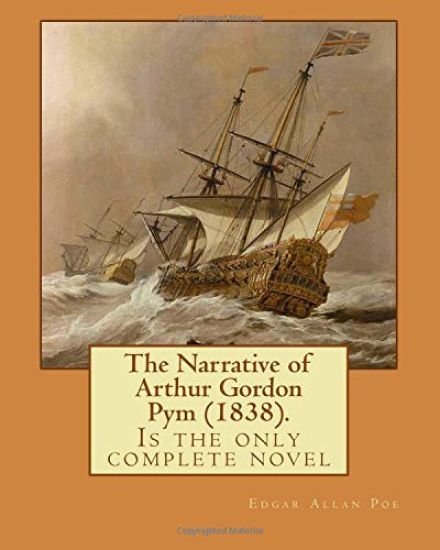
The Narrative of Arthur Gordon Pym of Nantucket (1838) is the only complete novel written by American writer Edgar Allan Poe. The work relates the tale of the young Arthur Gordon Pym, who stows away aboard a whaling ship called the Grampus. Various adventures and misadventures befall Pym, including shipwreck, mutiny, and cannibalism, before he is saved by the crew of the Jane Guy. Aboard this vessel, Pym and a sailor named Dirk Peters continue their adventures farther south. Docking on land, they encounter hostile black-skinned natives before escaping back to the ocean. The novel ends abruptly as Pym and Peters continue toward the South Pole. The story starts out as a fairly conventional adventure at sea, but it becomes increasingly strange and hard to classify. Poe, who intended to present a realistic story, was inspired by several real-life accounts of sea voyages, and drew heavily from Jeremiah N. Reynolds and referenced the Hollow Earth theory. He also drew from his own experiences at sea. Analyses of the novel often focus on the potential autobiographical elements as well as hints of racism and the symbolism in the final lines of the work.
Das Geheimnis der Marie Rog t ist eine Geschichte des US-amerikanischen Schriftstellers Edgar Allan Poe. Sie ist eine von Poes drei Detektivgeschichten um C. Auguste Dupin, zu denen auch Der Doppelmord in der Rue Morgue und Der entwendete Brief z hlen. Die Geschichte basiert auf dem tats chlichen Mord an Mary Cecilia Rogers in New York City. Rogers war eine sehr h bsche, beliebte junge Frau und durch ihre Stelle in einem Zigarrenladen in der Stadt bekannt. Wenige Tage nach ihrem Verschwinden im Juli 1841 wurde ihre Leiche im Hudson River gefunden. Zur Inhalt: Marie Rog t, Angestellte in einem Parfumgesch ft in Paris, verschwindet spurlos. Nach vier Tagen wird ihre Leiche in der Seine gefunden. Ihre Angeh rigen, wie auch die Polizei tappen im Dunkeln. Daher bittet der Pr fekt Dupin nach seinen Ermittlungserfolgen im Fall des Doppelmord in der Rue Morgue um Hilfe. Zusammen mit seinem Partner, dem namenlosen Erz hler, analysiert Dupin Zeitungsartikel, Polizeiberichte und Zeugenaussagen rund um den Mord. Allein durch das Aufdecken von Fehlannahmen und Missdeutungen in den Berichten kommt Dupin zu dem Schluss, dass es sich um einen einzelnen T ter handeln muss und nicht wie bisher angenommen um eine Gruppe. Der M rder muss das M dchen an einer Stoffschlinge zum Ufer geschleppt und mit Hilfe eines Bootes in den Fluss geworfen haben.
In una notte, in un appartamento al quarto piano di un vecchio stabile in Rue Morgue a Parigi, vengono barbaramente assassinate l'anziana Madame L'Espanaye, trovata nel cortile interno orrendamente mutilata e con la gola brutalmente tagliata, e sua figlia Camille, strangolata e nascosta nella cappa del camino. La porta chiusa dall'interno e i soccorritori, richiamati dalle urla delle vittime e di due sconosciuti, devono sfondarla per entrare. La polizia brancola nel buio...
"The Murders in the Rue Morgue" is a short story by Edgar Allan Poe published in Graham's Magazine in 1841. It has been claimed as the first detective story; Poe referred to it as one of his "tales of ratiocination". Similar works predate Poe's stories, including Das Fr ulein von Scuderi (1819) by E. T. A. Hoffmann and Zadig (1748) by Voltaire. C. Auguste Dupin is a man in Paris who solves the mysterious brutal murder of two women. Numerous witnesses heard a suspect, though no one agrees on what language was spoken. At the murder scene, Dupin finds a hair that does not appear to be human. As the first true detective in fiction, the Dupin character established many literary devices which would be used in future fictional detectives including Sherlock Holmes and Hercule Poirot. Many later characters, for example, follow Poe's model of the brilliant detective, his personal friend who serves as narrator, and the final revelation being presented before the reasoning that leads up to it. Dupin himself reappears in "The Mystery of Marie Roget" and "The Purloined Letter".
Double assassinat dans la rue Morgue est une nouvelle d'Edgar Allan Poe, parue en avril 1841 dans le Graham's Magazine, traduite en fran ais d'abord par Isabelle Meunier puis, en 1856, par Charles Baudelaire dans le recueil Histoires extraordinaires. C'est la premi re apparition du d tective invent par Poe, le Chevalier Dupin qui doit faire face une histoire de meurtre incompr hensible pour la police.
El Cuervo es un poema narrativo escrito por Edgar Allan Poe, que fue publicado por primera vez en 1845 y constituye su composici n po tica m s famosa. Son notables su musicalidad, su lenguaje estilizado y su atm sfera sobrenatural. El poema habla de la misteriosa visita de un cuervo parlante a la casa de un amante afligido y del lento descenso hacia la locura de este ltimo. El amante, que a menudo se ha identificado como un estudiante, llora la p rdida de su amada, Leonor. El negro cuervo, posado sobre un busto de Palas, parece azuzar su sufrimiento con la constante repetici n de las palabras Nunca mas. En el poema, Poe hace alusi n al folklore y a varias obras cl sicas.
Dieses Werk ist der einzige Roman von Edgar Allan Poe, erstmals ver ffentlicht im Jahre 1838. Er beschreibt das Leben des A. G. Pym, der von seiner Jugend an Abenteuer auf See sucht und berlebt, die allm hlich seine Einstellung zum Leben ver ndern. Die Art der Abenteuer sind zum Teil realistisch (Schiffbruch und Meuterei), zum Teil phantastisch (hei e Str mungen und Stromschnellen im Ozean des S dens). Der Roman ist das l ngste Prosawerk Poes und gilt als eine seiner r tselhaftesten Arbeiten. Zur Inhalt: Pym und sein Freund Augustus Barnard unternehmen schon als Jugendliche auf Pyms Segelboot die tollsten Streiche. Pym versteckt sich im Bauch des Walf ngers "Grampus," den Augustus' Vater als Kapit n f hren und den Augustus begleiten soll. In der Dunkelheit unter Deck, zwischen den ausd nstenden Tranf ssern und ohne gen gend Wasser und Nahrung verliert Pym fast den Verstand. Nach einigen vergeblichen Befreiungsversuchen gibt sich Pym schon auf, aber Augustus befreit ihn nach 11 Tagen aus dem Dunkel: Er hatte es nicht fr her tun k nnen, da eine Meuterei auch ihn gefangen gesetzt und fast das Leben gekostet hatte. Die R ckeroberung des Schiffes durch Augustus, Pym und ihren neuen Freund, Dirk Peters, einen fr heren Meuterer, gelingt. Die Meuterer werden dadurch berrascht, dass sich Pym als Gespenst eines von seinen Kameraden ermordeten Meuterers verkleidet. Parallel zum Kampf der Menschen tobt der n chste Kampf der Naturkr fte, der n chste Sturm, der das Schiff in ein treibendes Wrack verwandelt....
The Narrative of Arthur Gordon Pym of Nantucket (1838) is the only complete novel written by American writer Edgar Allan Poe. The work relates the tale of the young Arthur Gordon Pym, who stows away aboard a whaling ship called the Grampus. Various adventures and misadventures befall Pym, including shipwreck, mutiny, and cannibalism, before he is saved by the crew of the Jane Guy. Aboard this vessel, Pym and a sailor named Dirk Peters continue their adventures farther south. Docking on land, they encounter hostile black-skinned natives before escaping back to the ocean. The novel ends abruptly as Pym and Peters continue toward the South Pole. The story starts out as a fairly conventional adventure at sea, but it becomes increasingly strange and hard to classify. Poe, who intended to present a realistic story, was inspired by several real-life accounts of sea voyages, and drew heavily from Jeremiah N. Reynolds and referenced the Hollow Earth theory. He also drew from his own experiences at sea. Analyses of the novel often focus on the potential autobiographical elements as well as hints of racism and the symbolism in the final lines of the work. Difficulty in finding literary success early in his short story-writing career inspired Poe to pursue writing a longer work. A few serialized installments of The Narrative of Arthur Gordon Pym of Nantucket were first published in the Southern Literary Messenger, though never completed. The full novel was published in July 1838 in two volumes. Some critics responded negatively to the work for being too gruesome and for cribbing heavily from other works, while others praised its exciting adventures. Poe himself later called it "a very silly book". In the years since its publication, The Narrative of Arthur Gordon Pym of Nantucket became an influential work, notably for Herman Melville and Jules Verne.... Edgar Allan Poe ( born Edgar Poe; January 19, 1809 - October 7, 1849) was an American writer, editor, and literary critic. Poe is best known for his poetry and short stories, particularly his tales of mystery and the macabre. He is widely regarded as a central figure of Romanticism in the United States and American literature as a whole, and he was one of the country's earliest practitioners of the short story. Poe is generally considered the inventor of the detective fiction genre and is further credited with contributing to the emerging genre of science fiction. 1] He was the first well-known American writer to try to earn a living through writing alone, resulting in a financially difficult life and career. 2] Poe was born in Boston, the second child of two actors. His father abandoned the family in 1810, and his mother died the following year. Thus orphaned, the child was taken in by John and Frances Allan of Richmond, Virginia. They never formally adopted him, but Poe was with them well into young adulthood. Tension developed later as John Allan and Edgar repeatedly clashed over debts, including those incurred by gambling, and the cost of secondary education for the young man. Poe attended the University of Virginia for one semester but left due to lack of money. Poe quarreled with Allan over the funds for his education and enlisted in the Army in 1827 under an assumed name. It was at this time that his publishing career began, albeit humbly, with the anonymous collection Tamerlane and Other Poems (1827), credited only to "a Bostonian". With the death of Frances Allan in 1829, Poe and Allan reached a temporary rapprochement. However, Poe later failed as an officer cadet at West Point, declaring a firm wish to be a poet and writer, and he ultimately parted ways with John Allan....
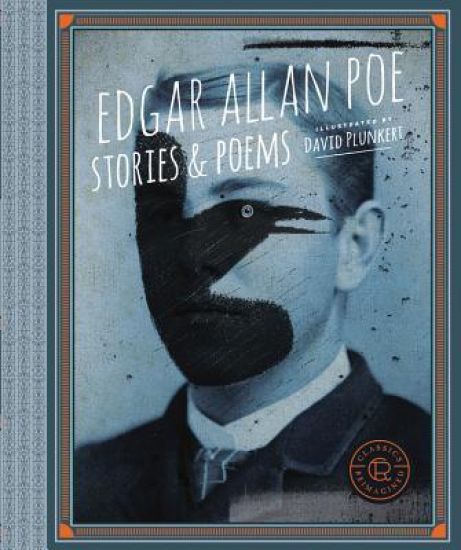
Retold with illustrations by distinguished artist David Plunkert, this paperback edition of Classics Reimagined, Edgar Allan Poe will beguile your sad soul into smiling once again. Baltimore-based artist David Plunkert takes you on a dark journey into the gothic stories and poetry of Edgar Allan Poe. Classic stories of the macabre take on a whole new meaning when you experience them accompanied by David Plunkert's mystical, and sometimes haunting, interpretations. With this edition of the Classics Reimagined series, you'll find these densely written classics boring…nevermore. The Classics Reimagined series is a library of stunning collector's editions of unabridged classic novels illustrated by contemporary artists from around the world. Each artist offers his or her own unique, visual interpretation of the most well-loved, widely read, and avidly collected literature from renowned authors. From The Adventures of Sherlock Holmes to The Wonderful Wizard of Oz and from Jane Austen to the Brothers Grimm, collect every beautiful volume.