Kirjailija
Edgar Allan Poe
Kirjat ja teokset yhdessä paikassa: 2 091 kirjaa, julkaisuja vuosilta 1840–2027, suosituimpiin kuuluu Heureka ja muita kirjoituksia. Vertaile teosten hintoja ja tarkista saatavuus suomalaisista kirjakaupoista.
Nimi esiintyy myös muodoissa: Edgar-Allan Poe
2 091 kirjaa
Kirjojen julkaisuvuodet: 1840–2027.
The story follows a man of "a noble descent" who calls himself William Wilson because, although denouncing his profligate past, he does not accept blame dubious - discuss]for his actions, saying that "man was never thus ...] tempted before". After several paragraphs, the narration then segues into a description of Wilson's boyhood, which was spent in a school "in a misty-looking village of England". William meets another boy in his school who shared the same name, who had roughly the same appearance, and who was even born on exactly the same date (January 19, Poe's own birthday). William's name (he asserts that his actual name is only similar to "William Wilson") embarrasses him because it sounds "plebeian" or common, and he is irked that he must hear the name twice as much on account of the other William. The boy also dresses like William, walks like him, and even looks like him, but he could only speak in a whisper, he imitates that whisper exactly. He begins to give orders to William of an unspecified nature, which he refuses to obey, resenting the boy's "arrogance". One night he stole into the other William's bedroom and saw that the boy's face had suddenly become different. Upon seeing this, William left the academy immediately in horror, and in the same week, the other boy followed him. William eventually attends Eton and Oxford, gradually becoming more debauched and performing what he terms "mischief". For example, he stole from a man by cheating at cards. The other William appeared, his face covered, whispered a few words sufficient to alert others to William's behavior, and leaves with no others seeing his face. In his latest caper, he tries to seduce a married woman but the other William stops him at a ball in Rome; the enraged William drags his "unresisting" double-who was wearing identical clothes-into an antechamber, and stabs him fatally. After William does this, a large mirror suddenly seems to appear. Reflected at him, he sees "mine own image, but with features all pale and dabbled in blood" apparently the dead double, "but he spoke no longer in a whisper". The narrator feels as if he is pronouncing the words: "In me didst thou exist-and in my death, see ...] how utterly thou hast murdered thyself."
The oblong box: (low cost). Limited edition
Edgar Allan Poe
Createspace Independent Publishing Platform
2015
nidottu
El cajón oblongo: (low cost). Edición limitada
Edgar Allan Poe
Createspace Independent Publishing Platform
2015
nidottu
La historia se inicia con un narrador sin nombre que relata una traves a marina estival desde Charleston (Carolina del Sur) a Nueva York a bordo de buque Independence. El narrador, mediante la lista de pasajeros, se entera que su ex compa ero de universidad Cornelius Wyatt se encuentra a bordo de la embarcaci n junto a su mujer y las hermanas de sta, aunque ha reservado tres cabinas. Despu s de conjeturar que la habitaci n adicional era para un sirviente o para equipaje extra, se da cuenta que su amigo ha comprado a bordo una caja de pino oblonga en la que, primeramente, piensa que Wyatt oculta valiosas pinturas para vender en Nueva York. Avanzada la historia, el narrador descubre que la esposa de su amigo hab a muerto un d a antes de abordar y la llevaba en la caja, adem s, las mujeres que se encontraban con l eran sus sirvientas.
In 1831, Edgar Allan Poe went to New York City where he had some of his poetry published. He submitted stories to a number of magazines, but they were all rejected. Poe had no friends, no job, and was in financial trouble. He sent a letter to John Allan begging for help but none came. John Allan died in 1834 and did not mention Edgar in his will at all. This was the beginning of Poe's writing career, which was financially unrewarding during his lifetime. Herein are 6 short stories and 6 poems that will not only make you scream, but prove - beyond a shadow of a doubt - that Poe was, is, and shall forever be, the Master of Horror.
Un poema en prosa, a manera de ensayo, que le dedic Poe al cient fico Alexander von Humboldt y que nos muestra una faceta del escritor que nadie conoce, su pasi n por la astronom a, el cosmos y los grandes personajes relacionados a ello como Kepler o Newton. En el poema Eureka, Poe nos habla del cosmos en toda su magnitud, la metaf sica, la astronom a, las matem ticas pero tambi n del esp ritu del mismo, y como todo persigue un nico fin, encontrar la verdad ltima.
El corazón delator y otras historias
Edgar Allan Poe
Createspace Independent Publishing Platform
2015
nidottu
Este libro contiene: El coraz n delator El entierro prematuro El cottage de landor El demonio de la perversidad El barril de amontillado Coloquio entre Monos y Una El hundimiento de la Casa Usher El pozo y el p ndulo
The tell-tale heart and other tales
Edgar Allan Poe
Createspace Independent Publishing Platform
2015
nidottu
The black cat and other tales
Edgar Allan Poe
Createspace Independent Publishing Platform
2015
nidottu
This book contains: The black cat The man of the crowd The power of words The oval portrait The masque of the red death The facts in the M. Valdemar's case The oblong box The devil in the belfry The purloined letter A descent into the Maesltr m
The murders in the rue morgue and other tales
Edgar Allan Poe
Createspace Independent Publishing Platform
2015
nidottu
La historia se inicia con un narrador sin nombre que relata una traves a marina estival desde Charleston (Carolina del Sur) a Nueva York a bordo de buque Independence. El narrador, mediante la lista de pasajeros, se entera que su ex compa ero de universidad Cornelius Wyatt se encuentra a bordo de la embarcaci n junto a su mujer y las hermanas de sta, aunque ha reservado tres cabinas. Despu s de conjeturar que la habitaci n adicional era para un sirviente o para equipaje extra, se da cuenta que su amigo ha comprado a bordo una caja de pino oblonga en la que, primeramente, piensa que Wyatt oculta valiosas pinturas para vender en Nueva York. Avanzada la historia, el narrador descubre que la esposa de su amigo hab a muerto un d a antes de abordar y la llevaba en la caja, adem s, las mujeres que se encontraban con l eran sus sirvientas.
La Carta Robada, es un cuento de g nero policial, su historia transcurre en Par s en los a os 1800. Un prefecto de la polic a recurre al detective Dupin y a su amigo, el narrador, con el objetivo de resolver el caso de una carta robada en las c maras reales, la cual, el ladr n usa para obtener poder sobre l con fines pol ticos. El ladr n, es el Ministro D***, el cual fue visto por la v ctima y un tercero, robando la carta. Dupin se niega a tomar el caso, dando consejos al Prefecto de c mo revisar la propiedad del ladr n, a efectos de hallar la carta en cuesti n, ya que han sido infructuosas las cuantiosas b squedas efectuadas. El prefecto procede a realizar una serie de allanamientos en la mansi n del ministro D***, inspeccionando con microscopio cada rinc n, mueble y objeto posible de la casa, donde la carta podr a haber sido escondida, pero sus intentos, tal como la primera vez, fueron en vano. Sin saber qu m s hacer o d nde buscar, el Prefecto vuelve por la ayuda de Dupin, ofreci ndole una gran recompensa por resolver el caso. Dupin acepta, para entregarle la carta que l ya hab a recuperado por sus propios medios, utilizando procedimientos m s simples que los del prefecto. Dupin se puso en lugar del ladr n, lo analiz , y dedujo que ste no ser a capaz de esconderla en lugares donde posiblemente la polic a podr a revisar, sino en el sitio m s simple y visible, donde, por la naturaleza expuesta del lugar, la carta no ser a buscada ni sospechada. Encontr la carta en un tarjetero, muy manchada y arrugada, se hallaba rota, casi en dos, por el medio, como si una primera intenci n de hacerla pedazos por su nulo valor hubiera sido cambiado y detenido. Dupin rob la carta y la reemplaz f cilmente por otra que hab a preparado cuidadosamente en casa, imitando el monograma de D***, con mucha facilidad, por medio de un sello de miga de pan... Seh
Yes, my friends, Edgar Allan Poe is not only the Master of Horror, but he is also known as the Father of the American Mystery His prime detective, C. Auguste Dupin, is the epitome of all detectives And not only was Dupin the obvious inspiration for Sir Arthur Conan Doyle
The Mystery of Marie Roget (annotated)
Edgar Allan Poe
Createspace Independent Publishing Platform
2015
nidottu
This classic detective mystery story by Edgar Allan Poe is a sequel to "The Murders in the Rue Morgue." Poe's detective character C. Auguste Dupin and his assistant, the unnamed narrator, undertake the unsolved murder of Marie Rog t in Paris. The body of Rog t, a perfume shop employee, is found in the Seine, and the press takes a keen interest in the mystery. Dupin remarks that the newspapers "create a sensation ... rather] than to further the cause of truth". Even so, he uses the newspaper reports to get into the mind of the murderer.
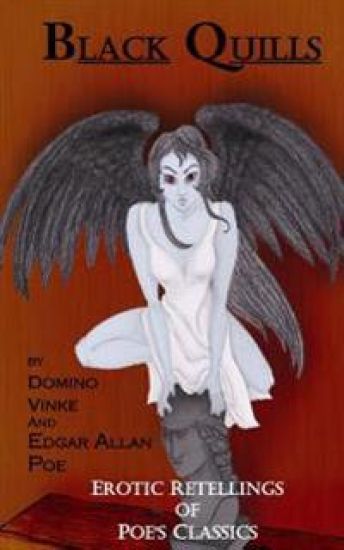
Black Quills: Erotic Retellings of Poe's Classics
Edgar Allan Poe; Domino Vinke
Createspace Independent Publishing Platform
2015
nidottu
El cajón oblongo/The oblong box: Edición bilingüe/Bilingual edition
Edgar Allan Poe
Createspace Independent Publishing Platform
2015
nidottu
La historia se inicia con un narrador sin nombre que relata una traves a marina estival desde Charleston (Carolina del Sur) a Nueva York a bordo de buque Independence. El narrador, mediante la lista de pasajeros, se entera que su ex compa ero de universidad Cornelius Wyatt se encuentra a bordo de la embarcaci n junto a su mujer y las hermanas de sta, aunque ha reservado tres cabinas. Despu s de conjeturar que la habitaci n adicional era para un sirviente o para equipaje extra, se da cuenta que su amigo ha comprado a bordo una caja de pino oblonga en la que, primeramente, piensa que Wyatt oculta valiosas pinturas para vender en Nueva York. Avanzada la historia, el narrador descubre que la esposa de su amigo hab a muerto un d a antes de abordar y la llevaba en la caja, adem s, las mujeres que se encontraban con l eran sus sirvientas. The story opens with the unnamed narrator recounting a summer sea voyage from Charleston, South Carolina to New York City aboard the ship Independence. The narrator learns that his old college friend Cornelius Wyatt is aboard with his wife and two sisters, though he has reserved three state-rooms. After conjecturing the extra room was for a servant or extra baggage, he learns his friend has brought on board an oblong pine box: "It was about six feet in length by two and a half in breadth." The narrator notes its peculiar shape and especially an odd odor coming from it. Even so, he presumes his friend has acquired an especially valuable copy of The Last Supper. The box, the narrator is surprised to learn, shares the state-room with Wyatt and his wife, while the second room is shared by the two sisters. However, for several nights, the narrator witnesses his friend's surprisingly unattractive wife leaving the state-room every night around 11 o'clock and going into the third state-room before returning first thing in the morning. While she is gone, the narrator believes he hears his friend opening the box and sobbing, which he attributes to "artistic enthusiasm."
William Wilson: Edición bilingüe/Bilingual edition
Edgar Allan Poe
Createspace Independent Publishing Platform
2015
nidottu
La historia comienza con el narrador que se hace llamar William Wilson, denunciando su pasado derrochador, aunque ste no se siente culpable, pues entiende que ning n otro hombre ha sido tentado de igual manera antes. Narra la infancia y juventud de William en un colegio isabelino. Relata que all conoci a otro chico con su mismo nombre, parecido a l y nacido el mismo d a, el 19 de enero, fecha de cumplea os del mismo autor. Compite con este muchacho, pero l le supera f cilmente, de manera que lo considera prueba de su aut ntica superioridad. Este chico comienza a imitar la forma de vestir, la manera de andar e incluso la forma de hablar del protagonista (aunque tiene un defecto en el habla que solo le permite hablar susurrando), y llega un momento en que William descubre que ste tiene exactamente su misma cara. Al ver esto, William abandona inmediatamente la academia, s lo para descubrir que su doble se ha marchado el mismo d a. William con el tiempo estudia en Eton y Oxford, haci ndose cada vez m s depravado y ganando enormes cantidades de dinero mediante enga os al jugar a las cartas con un pobre noble y la seducci n de una mujer casada. En esta etapa aparece su doble de nuevo, con la cara siempre cubierta, susurrando unas pocas palabras que alertan a otros sobre el comportamiento de William. En el ltimo de estos incidentes, en un baile en Roma, William arrastra a su doble a una antec mara y lo apu ala. Tras la acci n de William, aparece un enorme espejo en el que ste ve el rostro del fallecido, momento en el que el narrador siente que est pronunciando las palabras: en m exist as, y en mi muerte, ve cu n profundamente te has asesinado a ti mismo. The story follows a man of "a noble descent" who calls himself William Wilson because, although denouncing his profligate past, he does not accept blame dubious - discuss]for his actions, saying that "man was never thus ...] tempted before". After several paragraphs, the narration then segues into a description of Wilson's boyhood, which was spent in a school "in a misty-looking village of England". William meets another boy in his school who shared the same name, who had roughly the same appearance, and who was even born on exactly the same date (January 19, Poe's own birthday). William's name (he asserts that his actual name is only similar to "William Wilson") embarrasses him because it sounds "plebeian" or common, and he is irked that he must hear the name twice as much on account of the other William. The boy also dresses like William, walks like him, and even looks like him, but he could only speak in a whisper, he imitates that whisper exactly. He begins to give orders to William of an unspecified nature, which he refuses to obey, resenting the boy's "arrogance". One night he stole into the other William's bedroom and saw that the boy's face had suddenly become different. Upon seeing this, William left the academy immediately in horror, and in the same week, the other boy followed him. William eventually attends Eton and Oxford, gradually becoming more debauched and performing what he terms "mischief". For example, he stole from a man by cheating at cards. The other William appeared, his face covered, whispered a few words sufficient to alert others to William's behavior, and leaves with no others seeing his face. In his latest caper, he tries to seduce a married woman but the other William stops him at a ball in Rome; the enraged William drags his "unresisting" double-who was wearing identical clothes-into an antechamber, and stabs him fatally. After William does this, a large mirror suddenly seems to appear. Reflected at him, he sees "mine own image, but with features all pale and dabbled in blood": apparently the dead double, "but he spoke no longer in a whisper". The narrator feels as if he is pronouncing the words: "In me didst thou exist-and in my death, see ...] how utterly thou hast murdered thyself."

The Works of Edgar Allan Poe Volume 2
Edgar Allan Poe
Createspace Independent Publishing Platform
2015
nidottu
Includes The Purloined Letter, The Thousand-and-Second Tale of Scheherazade, A Descent into the Maelstr m, Von Kempelen and his Discovery, Mesmeric Revelation, The Facts in the Case of M. Valdemar, The Black Cat, The Fall of the House of Usher, Silence--a Fable, The Masque of the Red Death, The Cask of Amontillado, The Imp of the Perverse, The Island of the Fay, The Assignation, The Pit and the Pendulum, The Premature Burial, The Domain of Arnheim, Landor's Cottage, William Wilson, The Tell-Tale Heart, Berenice, Eleonora