Kirjojen hintavertailu – 12 859 819 kirjaa ja 27 kauppaa

Kirjailija

Edgar Allan Poe

Kirjat ja teokset yhdessä paikassa: 2 091 kirjaa, julkaisuja vuosilta 1840–2027, suosituimpiin kuuluu Heureka ja muita kirjoituksia. Vertaile teosten hintoja ja tarkista saatavuus suomalaisista kirjakaupoista.

Nimi esiintyy myös muodoissa: Edgar-Allan Poe

2 091 kirjaa

Kirjojen julkaisuvuodet: 1840–2027.

William Wilson

William Wilson

Edgar Allan Poe

Createspace Independent Publishing Platform
2015
nidottu
La historia comienza con el narrador que se hace llamar William Wilson, denunciando su pasado derrochador, aunque ste no se siente culpable, pues entiende que ning n otro hombre ha sido tentado de igual manera antes. Narra la infancia y juventud de William en un colegio isabelino. Relata que all conoci a otro chico con su mismo nombre, parecido a l y nacido el mismo d a, el 19 de enero, fecha de cumplea os del mismo autor. Compite con este muchacho, pero l le supera f cilmente, de manera que lo considera prueba de su aut ntica superioridad. Este chico comienza a imitar la forma de vestir, la manera de andar e incluso la forma de hablar del protagonista (aunque tiene un defecto en el habla que solo le permite hablar susurrando), y llega un momento en que William descubre que ste tiene exactamente su misma cara. Al ver esto, William abandona inmediatamente la academia, s lo para descubrir que su doble se ha marchado el mismo d a. William con el tiempo estudia en Eton y Oxford, haci ndose cada vez m s depravado y ganando enormes cantidades de dinero mediante enga os al jugar a las cartas con un pobre noble y la seducci n de una mujer casada. En esta etapa aparece su doble de nuevo, con la cara siempre cubierta, susurrando unas pocas palabras que alertan a otros sobre el comportamiento de William. En el ltimo de estos incidentes, en un baile en Roma, William arrastra a su doble a una antec mara y lo apu ala. Tras la acci n de William, aparece un enorme espejo en el que ste ve el rostro del fallecido, momento en el que el narrador siente que est pronunciando las palabras: en m exist as, y en mi muerte, ve cu n profundamente te has asesinado a ti mismo.

La carta robada/The purloined letter: Edición bilingüe/Bilingual edition

La carta robada/The purloined letter: Edición bilingüe/Bilingual edition

Edgar Allan Poe

Createspace Independent Publishing Platform
2015
nidottu
La carta robada, es un cuento de g nero policial, su historia transcurre en Par s en los a os 1800. Un prefecto de la polic a recurre al detective Dupin y a su amigo, el narrador, con el objetivo de resolver el caso de una carta robada en las c maras reales, la cual, el ladr n usa para obtener poder sobre l con fines pol ticos. El ladr n, es el Ministro D***, el cual fue visto por la v ctima y un tercero, robando la carta. Dupin se niega a tomar el caso, dando consejos al Prefecto de c mo revisar la propiedad del ladr n, a efectos de hallar la carta en cuesti n, ya que han sido infructuosas las cuantiosas b squedas efectuadas. El prefecto procede a realizar una serie de allanamientos en la mansi n del ministro D***, inspeccionando con microscopio cada rinc n, mueble y objeto posible de la casa, donde la carta podr a haber sido escondida, pero sus intentos, tal como la primera vez, fueron en vano. Sin saber qu m s hacer o d nde buscar, el Prefecto vuelve por la ayuda de Dupin, ofreci ndole una gran recompensa por resolver el caso. Dupin acepta, para entregarle la carta que l ya hab a recuperado por sus propios medios, utilizando procedimientos m s simples que los del prefecto. Dupin se puso en lugar del ladr n, lo analiz , y dedujo que ste no ser a capaz de esconderla en lugares donde posiblemente la polic a podr a revisar, sino en el sitio m s simple y visible, donde, por la naturaleza expuesta del lugar, la carta no ser a buscada ni sospechada. Encontr la carta en un tarjetero, muy manchada y arrugada, se hallaba rota, casi en dos, por el medio, como si una primera intenci n de hacerla pedazos por su nulo valor hubiera sido cambiado y detenido. Dupin rob la carta y la reemplaz f cilmente por otra que hab a preparado cuidadosamente en casa, imitando el monograma de D***, con mucha facilidad, por medio de un sello de miga de pan... Seh The unnamed narrator is discussing with the famous Parisian amateur detective C. Auguste Dupin some of his most celebrated cases when they are joined by the Prefect of the Police, a man known as G-. The Prefect has a case he would like to discuss with Dupin. A letter has been stolen from the boudoir of an unnamed female by the unscrupulous Minister D-. It is said to contain compromising information. D- was in the room, saw the letter, and switched it for a letter of no importance. He has been blackmailing his victim. The Prefect makes two deductions with which Dupin does not disagree: The contents of the letter have not been revealed, as this would have led to certain circumstances that have not arisen. Therefore, Minister D- still has the letter in his possession. The ability to produce the letter at a moment's notice is almost as important as actual possession of the letter. Therefore, he must have the letter close at hand.
El gato negro y otras historias

El gato negro y otras historias

Edgar Allan Poe

Createspace Independent Publishing Platform
2015
nidottu
Este libro contiene El gato negro El hombre de la multitud El poder de las palabras El retrato oval La m scara de la muerte roja Los hechos en el caso de M. Valdemar El caj n oblongo El diablo en el campanario La carta robada Un descenso al Maelstr m
Krkavec

Krkavec

Edgar Allan Poe; Vojen Koreis

Booksplendour
2015
pokkari
Vojen Koreis vid Poeovu b seň jako onu př slovečnou Mount Everest, kter je zde proto aby byla zdol na Proč ta změna n zvu na Krkavce? Poe věděl dobře, jak ho pt ka n m předv d , proto tak nazval svou b seň The Raven. Raven ale neznamen česky havran, n brz krkavec. Kdyby byl měl b sn k na mysli havrana, byl by napsal the rook. V severn Americe se nav c havrani nevyskytuj . Jak se mohlo st t, ze se havran, dostal na takov v sostn m sto v česk ch překladech, kde se pevně drz uz bezm la půldruh ho stolet ? Předevs m za to asi můze neznalost anglick ho jazyka a snad i trochu nedbalost prvn ho překladatele t to b sně do čestiny V. K. Sembery. Ti, kteř n sledovali, mezi nimi Vrchlick či Nezval, buď tak nevěděli nebo uz neměli př lis na v běr. Havran byl př lis zakotven v mysl ch česk ch čten řů. Teprve v ned vn době se objevily překlady, kter stav přesnost nad pochybnou tradici.
The Murders In The Rue Morgue (annotated)

The Murders In The Rue Morgue (annotated)

Edgar Allan Poe

Createspace Independent Publishing Platform
2015
nidottu
"The Murders in the Rue Morgue" is a short story by Edgar Allan Poe published in Graham's Magazine in 1841. It has been recognized as the first modern detective story; Poe referred to it as one of his "tales of ratiocination". The story opens with a lengthy explanation of ratiocination. Dupin demonstrates his prowess by deducing his companion's thoughts as if through apparent supernatural power. The story then turns to the baffling double murder of Madame L'Espanaye and her daughter at their home in the Rue Morgue, a fictional street in Paris. According to newspaper accounts, the mother was found in a yard behind the house, with multiple broken bones and her throat so deeply cut that her head fell off when the body was moved. The daughter was found strangled to death and stuffed upside down into a chimney. The murders occurred in a fourth-floor room that was locked from the inside; on the floor were found a bloody straight razor, several bloody tufts of gray hair, and two bags of gold coins. Several witnesses reported hearing two voices at the time of the murder, one male and French, but disagreed on the language spoken by the other. The speech was unclear, and every witness admits that he does not know the language he claims to have heard. Paris natives Dupin and his friend, the unnamed narrator of the story, read these newspaper accounts with interest. The two live in seclusion and allow no visitors. They have cut off contact with "former associates" and venture outside only at night. "We existed within ourselves alone", the narrator explains. When a bank clerk named Adolphe Le Bon is arrested even though no evidence exists pointing to his guilt (other than his delivering the gold coins to the two ladies the day before), Dupin becomes intrigued and remembers a service that Le Bon once performed for him. He decides to offer his assistance to "G-", the prefect of police. Because none of the witnesses can agree on the language the murderer spoke, Dupin concludes they were not hearing a human voice at all. He and the narrator examine the house thoroughly; the following day, Dupin dismisses the idea of both Le Bon's guilt and a robbery motive, citing the fact that the gold was not taken from the room. He also points out that the murderer would have had to have superhuman strength to force the daughter's body up the chimney. He formulates a method by which the murderer could have entered the room and killed both women, involving an agile climb up a lightning rod and a leap to a set of open window shutters. Poe biographer Jeffrey Meyers sums up the significance of "The Murders in the Rue Morgue": " it] changed the history of world literature." Often cited as the first detective fiction story, the character of Dupin became the prototype for many future fictional detectives, including Arthur Conan Doyle's Sherlock Holmes and Agatha Christie's Hercule Poirot. The genre is distinctive from a general mystery story in that the focus is on analysis. Poe's role in the creation of the detective story is reflected in the Edgar Awards, given annually by the Mystery Writers of America. "The Murders in the Rue Morgue" also established many tropes that would become common elements in mystery fiction: the eccentric but brilliant detective, the bumbling constabulary, the first-person narration by a close personal friend. Poe also portrays the police in an unsympathetic manner as a sort of foil to the detective. Poe also initiates the storytelling device where the detective announces his solution and then explains the reasoning leading up to it. It is also the first locked room mystery in detective fiction.
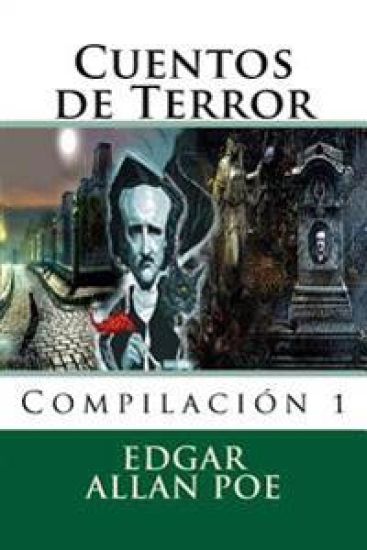
Cuentos de Terror: Compilacion 1

Cuentos de Terror: Compilacion 1

Martin Hernandez B.; Edgar Allan Poe

Createspace Independent Publishing Platform
2015
nidottu
Edgar Allan Poe (Boston, Estados Unidos, 19 de enero de 1809-Baltimore, Estados Unidos, 7 de octubre de 1849) fue un escritor, poeta, cr tico y periodista rom ntico estadounidense, generalmente reconocido como uno de los maestros universales del relato corto, del cual fue uno de los primeros practicantes en su pa s. Fue renovador de la novela g tica, recordado especialmente por sus cuentos de terror. Considerado el inventor del relato detectivesco, contribuy asimismo con varias obras al g nero emergente de la ciencia ficci n. Por otra parte, fue el primer escritor estadounidense de renombre que intent hacer de la escritura su modus vivendi, lo que tuvo para l lamentables consecuencias. La figura del escritor, tanto como su obra, marc profundamente la literatura de su pa s y puede decirse que de todo el mundo. Ejerci gran influencia en la literatura simbolista francesa y, a trav s de sta, en el surrealismo, pero su impronta llega mucho m s lejos: son deudores suyos toda la literatura de fantasmas victoriana y, en mayor o menor medida, autores tan dispares e importantes como Charles Baudelaire, Fedor Dostoyevski, William Faulkner, Franz Kafka, H. P. Lovecraft, Arthur Conan Doyle, M. R. James, Ambrose Bierce, Guy de Maupassant, Thomas Mann, Jorge Luis Borges, Clemente Palma, Julio Cort zar, quien tradujo casi todos sus textos en prosa y escribi extensamente sobre su vida y obra, etc. El poeta nicarag ense Rub n Dar o le dedic un ensayo en su libro Los raros. Edgar Allan Poe, escritor, periodista, cr tico literario americano, es conocido por su narrativa de horror rom ntica y su maestr a del relato de influencia g tica, siendo considerado uno de los grandes maestros de la literatura universal y padre del g nero detectivesco.
A Trilogy of Terror (annotated)

A Trilogy of Terror (annotated)

Edgar Allan Poe

Createspace Independent Publishing Platform
2015
nidottu
A Trilogy of Terror is a gripping American horror story collection that contains a trilogy of horror classics from Edgar Allan Poe including the following titles: The Raven, The Masque of the Red Death, and The Cask of Amontillado. "The Raven" is a narrative poem by American writer Edgar Allan Poe. First published in January 1845, the poem is often noted for its musicality, stylized language, and supernatural atmosphere. It tells of a talking raven's mysterious visit to a distraught lover, tracing the man's slow fall into madness. The lover, often identified as being a student, is lamenting the loss of his love, Lenore. Sitting on a bust of Pallas, the raven seems to further instigate his distress with its constant repetition of the word "Nevermore." The poem makes use of folk, mythological, religious, and classical references. Poe claimed to have written the poem logically and methodically, intending to create a poem that would appeal to both critical and popular tastes, as he explained in his 1846 follow-up essay, "The Philosophy of Composition." The poem was inspired in part by a talking raven in the novel Barnaby Rudge: A Tale of the Riots of 'Eighty by Charles Dickens. 3] Poe borrows the complex rhythm and meter of Elizabeth Barrett's poem "Lady Geraldine's Courtship," and makes use of internal rhyme as well as alliteration throughout. "The Raven" was first attributed to Poe in print in the New York Evening Mirror on January 29, 1845. Its publication made Poe popular in his lifetime, although it did not bring him much financial success. The poem was soon reprinted, parodied, and illustrated. Critical opinion is divided as to the poem's literary status, but it nevertheless remains one of the most famous poems ever written. "The Raven" follows an unnamed narrator on a dreary night in December who sits reading "forgotten lore" by a dying fire as a way to forget the death of his beloved Lenore. A "tapping at his] chamber door" reveals nothing, but excites his soul to "burning." The tapping is repeated, slightly louder, and he realizes it is coming from his window. When he goes to investigate, a raven flutters into his chamber. Paying no attention to the man, the raven perches on a bust of Pallas above the door.
The Raven and Other Tales by Edgar Allan Poe: Code Keepers - Secret Personal Diary

The Raven and Other Tales by Edgar Allan Poe: Code Keepers - Secret Personal Diary

John Daily; Edgar Allan Poe

Createspace Independent Publishing Platform
2015
nidottu
THE PERFECT HALLOWEEN GIFT Hidden in plain sight A secret personal diary disguised as a classic work of literature. Keep all of your diary entries hidden, cleverly disguised so prying eyes will never find them. Works perfectly when placed on a bookshelf among other books. Continues to work even if you just leave it out on your desk. Prying eyes will never discover your secret stash of personal thoughts. This book contains a fully illustrated version of "The Raven" by Edgar Allan Poe. The story's illustrations were restored from original etchings by Gustave Dor from an 1884 printing of the book. Inside you will also find the following Edgar Allan Poe stories without illustrations: - The Raven - The Tell-Tale Heart - The Black Cat - The Masque of the Red Death - The Pit and the Pendulum - The Premature Burial - The Thousand-and-Second Tale of Scheherazade - Landor's Cottage - The Assignation - Berenice - The Fall of the House of Usher In the middle of the book you will also find pages specifically designed to be used as a secret personal diary. - Each page of the diary contains lined spaces for writing your personal thoughts. - A date box at the top of each page keeps your entries organized. - Numbered diary pages let you reference your entries. - A decorative boarder dresses up your diary pages. See a preview of the book's diary pages here: http: //www.elysianpress.com/code-keepers-diary/
Narrative of A. Gordon Pym (annotated)

Narrative of A. Gordon Pym (annotated)

Edgar Allan Poe

Createspace Independent Publishing Platform
2015
nidottu
Narrative of A. Gordon Pym of Nantucket Comprising the details of a mutiny and atrocious butchery on board the American brig Grampus, on her way to the south seas, in the month of June, 1827. is a classic sea adventure/horror story by Edgar Allan Poe. The work relates the tale of the young Arthur Gordon Pym who stows away aboard a whaling ship called Grampus. Various adventures and mis-adventures befall Pym including shipwreck, mutiny and cannibalism. The story starts out as a fairly conventional adventure at sea, but it becomes increasingly strange and hard to classify in later chapters, involving religious symbolism and the Hollow Earth.
The Raven and Other Poems

The Raven and Other Poems

Edgar Allan Poe

Broken Column Press
2015
pokkari
Edgar Allan Poe's poems are some of the most fascinating in the canon of American literature. Such classics as "The Raven" and "Annabel Lee" are taught in schools all over the country and are loved by readers for the demonstrated mastery of rhyme and meter. However, this mastery is simply a vehicle by which the reader is lured into committing part of his subconscious mind for the percolation of Poe's works. The more they gnaw at your cortex, the more deeply entrenched they become." The Raven" and "Annabel Lee" are but two of Poe's most popular poems. This volume contains 54 of Poe's best-known poems and is a wonderful addition to any library.
The masque of the red death: (low cost). limited edition

The masque of the red death: (low cost). limited edition

Edgar Allan Poe

Createspace Independent Publishing Platform
2015
nidottu
The story takes place at the castellated abbey of the "happy and dauntless and sagacious" Prince Prospero. Prospero and one thousand other nobles have taken refuge in this walled abbey to escape the Red Death, a terrible plague with gruesome symptoms that has swept over the land. Victims are overcome by "sharp pains," "sudden dizziness," and sweat blood. The plague is said to kill within half an hour. Prospero and his court are indifferent to the sufferings of the population at large. They intend to await the end of the plague in luxury and safety behind the walls of their secure refuge, having welded the doors shut. One night, Prospero holds a masquerade ball to entertain his guests in six colored rooms of the abbey. Each of the first six rooms is decorated and illuminated in a specific color: blue, purple, green, orange, white, and violet. The last room is decorated in black and is illuminated by a scarlet light, "a deep blood color". Because of this chilling pairing of colors, very few guests are brave enough to venture into the seventh room. The same room is the location of a large ebony clock that ominously clangs at each hour, upon which everyone stops talking or dancing and the orchestra stops playing. Once the chiming stops, everyone immediately resumes the masquerade.
Metzengerstein: (low cost). Edición limitada

Metzengerstein: (low cost). Edición limitada

Edgar Allan Poe

Createspace Independent Publishing Platform
2015
nidottu
La historia se centra en el joven Frederick, el ltimo descendiente de la familia Metzengerstein, que carga con una prolongada rivalidad con la familia Berlifitzing. Sospechoso de haber causado un incendio que mat al patriarca de los Berlifitzing, Frederick se obsesiona con un caballo salvaje que no hab a notado anteriormente. Metzengerstein es castigado por su crueldad cuando su propio hogar se incendia y el caballo lo lleva hasta las llamas. La historia sigue muchas de las convenciones de la ficci n g tica, pero a veces cae en la s tira o en la parodia del g nero.
A descent into the Maelström: (low cost). limited edition

A descent into the Maelström: (low cost). limited edition

Edgar Allan Poe

Createspace Independent Publishing Platform
2015
nidottu
Inspired by the Moskstraumen, it is couched as a story within a story, a tale told at the summit of a mountain climb in Lofoten, Norway. The story is told by an old man who reveals that he only appears old-"You suppose me a very old man," he says, "but I am not. It took less than a single day to change these hairs from a jetty black to white, to weaken my limbs, and to unstring my nerves." The narrator, convinced by the power of the whirlpools he sees in the ocean beyond, is then told of the "old" man's fishing trip with his two brothers a few years ago. Driven by "the most terrible hurricane that ever came out of the heavens," their ship was caught in the vortex. One brother was pulled into the waves; the other was driven mad by the horror of the spectacle, and drowned as the ship was pulled under. At first the narrator only saw hideous terror in the spectacle. In a moment of revelation, he saw that the Maelstr m is a beautiful and awesome creation. Observing how objects around him were attracted and pulled into it, he deduced that "the larger the bodies, the more rapid their descent" and that spherical-shaped objects were pulled in the fastest. Unlike his brother, he abandoned ship and held on to a cylindrical barrel until he was saved several hours later. The "old" man tells the story to the narrator without any hope that the narrator will believe it.
The premature burial: (low cost). limited edition

The premature burial: (low cost). limited edition

Edgar Allan Poe

Createspace Independent Publishing Platform
2015
nidottu
In "The Premature Burial", the first-person unnamed narrator describes his struggle with things such as "attacks of the singular disorder which physicians have agreed to term catalepsy," a condition where he randomly falls into a death-like trance. This leads to his fear of being buried alive ("The true wretchedness," he says, is "to be buried while alive."). He emphasizes his fear by mentioning several people who have been buried alive. In the first case, the tragic accident was only discovered much later, when the victim's crypt was reopened. In others, victims revived and were able to draw attention to themselves in time to be freed from their ghastly prisons. The narrator reviews these examples in order to provide context for his nearly crippling phobia of being buried alive. As he explains, his condition made him prone to slipping into a trance state of unconsciousness, a disease that grew progressively worse over time. He became obsessed with the idea that he would fall into such a state while away from home, and that his state would be mistaken for death. He extracts promises from his friends that they will not bury him prematurely, refuses to leave his home, and builds an elaborate tomb with equipment allowing him to signal for help in case he should awaken after "death".
Un descenso al Maesltröm: (low cost). Edición limitada

Un descenso al Maesltröm: (low cost). Edición limitada

Edgar Allan Poe

Createspace Independent Publishing Platform
2015
nidottu
Est inspirado por el fen meno del Maelstr m, un remolino que se produce en las costas de Noruega, formado por la conjunci n de las fuertes corrientes que atraviesan el estrecho de Moskenstraumen y la gran amplitud de las mareas. El relato en s se trata de una historia dentro de otra historia, contada desde lo alto de un abismo. Est narrada por un anciano que afirma no serlo, pese a su apariencia: "No hizo falta m s que un d a para transformar mis cabellos negros en canas, debilitar mis miembros y destrozar mis nervios." El narrador cuenta que un d a se hizo a la mar con dos de sus hermanos, cuando se desat un terrible hurac n, que atrap el barco en su v rtice. Los dos hermanos murieron, mientras que el narrador ca a al centro del remolino y se quedaba maravillado ante lo que ve a. Se arroj al agua, sujet ndose a un barril. Al cabo de un tiempo impreciso, fue izado a la borda de un barco de conocidos suyos que no le reconocieron.
La máscara de la muerte roja: (low cost). Edición limitada

La máscara de la muerte roja: (low cost). Edición limitada

Edgar Allan Poe

Createspace Independent Publishing Platform
2015
nidottu
La historia sucede en una regi n imaginaria, cuyos habitantes estaban siendo afectados por una terrible pandemia, "la Muerte Roja", que se caracterizaba, aparte de por la velocidad con la que infectaba a las v ctimas, por la gran cantidad de sangre que perd an los que la sufr an. Pero esto no le importaba mucho al pr ncipe Pr spero, gobernador de este reino, quien decidi refugiarse, con sus amigos y cortesanos en una abad a fortificada. Aislados y ajenos a lo que ocurr a en el mundo exterior, Pr spero abasteci a la abad a con todo tipo de diversiones, desde bufones, m sicos y bailarines a abundante comida y vino. Tras seis meses de aislamiento, Pr spero decidi organizar un baile de m scaras en su extravagante abad a. Hizo uso de los siete salones en hilera de los que dispone el recinto, s lo que, a diferencia de lo que ocurre en los palacios, en los que los salones constituyen largas perspectivas en l nea recta, dejando que la mirada atraviese sin obst culo todas las estancias hasta el fondo cuando las puertas est n abiertas, las de la abad a estaban colocadas de una manera irregular, pudi ndose ver s lo una sala cada vez, sin perspectiva. Estos salones ten an dos ventanas g ticas a los lados con vidrieras de color que armonizaban con el color dominante de la sala: el primero ten a vidrieras de un azul vivo y la decoraci n de la sala tambi n lo era, las del segundo eran p rpuras, la sala tambi n, el tercero era verde, el cuarto naranja, el quinto blanco y el sexto violeta. A esto se a ad a que los salones no ten an luz natural, sino que estaban iluminados por unos braseros colocados justo delante de las ventanas. La norma se interrump a con el s ptimo, forrado con telas negras cuyas ventanas eran de un color rojo escarlata. La iluminaci n y la combinaci n de los colores en este sal n creaban unas sombras fant sticas y siniestras, tanto que nadie se atrev a a entrar en el cuando ca a la noche.