Kirjojen hintavertailu – 12 859 819 kirjaa ja 27 kauppaa

Kirjailija

Edgar Allan Poe

Kirjat ja teokset yhdessä paikassa: 2 091 kirjaa, julkaisuja vuosilta 1840–2027, suosituimpiin kuuluu Heureka ja muita kirjoituksia. Vertaile teosten hintoja ja tarkista saatavuus suomalaisista kirjakaupoista.

Nimi esiintyy myös muodoissa: Edgar-Allan Poe

2 091 kirjaa

Kirjojen julkaisuvuodet: 1840–2027.

El hundimiento de la casa Usher/The fall of the House of Usher: Edición bilingüe/Bilingual edition
Un joven caballero es invitado al viejo caser n de un amigo de la infancia, Roderick Usher, artista enfermizo y exc ntrico que vive completamente recluido en compa a de su hermana, Lady Madeline, tambi n delicada de salud. Usher vive presa de una enfermedad indefinible, lo que hace a todos temer por su vida. La que acaba muriendo es su hermana. Sus restos mortales son depositados en una cripta, pero no tardan en producirse terribles acontecimientos que desembocar n en un tr gico final. The story begins with the unnamed narrator arriving at the house of his friend, Roderick Usher, having received a letter from him in a distant part of the country complaining of an illness and asking for his help. Although Poe wrote this short story before the invention of modern psychological science, Roderick's condition can be described according to its terminology. It includes a form of sensory overload known as hyperesthesia (hypersensitivity to textures, light, sounds, smells, and tastes), hypochondria (an excessive preoccupation or worry about having a serious illness), and acute anxiety. It is revealed that Roderick's twin sister, Madeline, is also ill and falls into cataleptic, deathlike trances. The narrator is impressed with Roderick's paintings, and attempts to cheer him by reading with him and listening to his improvised musical compositions on the guitar. Roderick sings "The Haunted Palace," then tells the narrator that he believes the house he lives in to be alive, and that this sentience arises from the arrangement of the masonry and vegetation surrounding it.

The facts of M. Valdemar's case

The facts of M. Valdemar's case

Edgar Allan Poe

Createspace Independent Publishing Platform
2014
nidottu
The narrator presents the facts of the extraordinary case of Valdemar which have incited public discussion. He is interested in Mesmerism, a pseudoscience involving bringing a patient into a hypnagogic state by the influence of magnetism, a process which later developed into hypnotism. He points out that, as far as he knows, no one has ever been mesmerized at the point of death, and he is curious to see what effects mesmerism would have on a dying person. He considers experimenting on his friend Ernest Valdemar, an author whom he had previously mesmerized, and who has recently been diagnosed with phthisis (tuberculosis). Valdemar consents to the experiment and informs the narrator by letter that he will probably die in twenty-four hours. Valdemar's two physicians inform the narrator of their patient's poor condition. After confirming again that Valdemar is willing to be part of the experiment, the narrator comes back the next night with two nurses and a medical student as witnesses. Again, Valdemar insists he is willing to take part and asks the narrator to hurry, for fear he has "deferred it for too long". Valdemar is quickly mesmerized, just as the two physicians return and serve as additional witnesses. In a trance, he reports first that he is dying - then that he is dead. The narrator leaves him in a mesmeric state for seven months, checking on him daily. During this time Valdemar is without pulse, heartbeat or perceptible breathing, his skin cold and pale.
La conversación de Eiros y Charmion/The conversation of Eiros and Charmion: Edición bilingüe/Bilingual edition
Eiros.- Por qu me llamas Eiros? Charmion.- As te llamar s desde ahora y para siempre. A tu vez, debes olvidar mi nombre terreno y llamarme Char-mion. Eiros.- Esto no es un sue o Charmion.- Ya no hay sue os entre nosotros; pero deje-mos para despu s estos misterios. Me alegro de verte due o de tu raz n, y tal como si estuvieras vivo. EIROS. Why do you call me Eiros? CHARMION. So henceforth will you always be called. You must forget, too, my earthly name, and speak to me as Charmion. EIROS. This is indeed no dream CHARMION. Dreams are with us no more;-but of these mysteries anon. I rejoice to see you looking life-like and rational. The film of the shadow has already passed from off your eyes. Be of heart and fear nothing. Your allotted days of stupor have expired; and, to-morrow, I will myself induct you into the full joys and wonders of your novel existence.
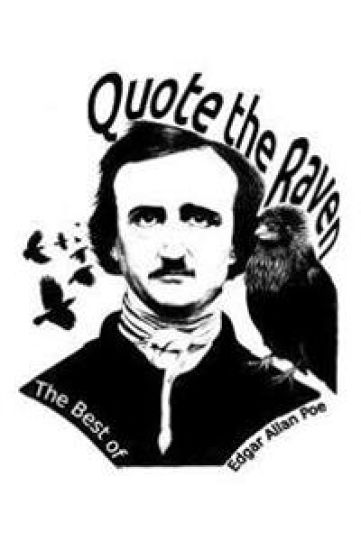
Quote the Raven: The Best of Edgar Allan Poe
Quote the Raven includes seven of Poe's best, and most well-known works. There are six short stories in this collection: The Black Cat, The Cask Of Amontillado, The Fall of the House of Usher, The Murders in the Rue Morgue (which is widely regarded as the first modern detective story), The Purloined Letter, and The Tell-Tale Heart. This "Best of" collection also includes Poe's narrative poem, The Raven.
El pozo y el péndulo

El pozo y el péndulo

Edgar Allan Poe

Createspace Independent Publishing Platform
2014
nidottu
El pozo y el p ndulo es uno de los cuentos de terror m s famosos de los ltimos tiempos y uno de los m s destacados de Edgar Allan Poe. Es considerado como uno de los relatos m s espeluznantes dentro de la literatura de terror, pues transmite el abandono, la desorientaci n, el desconcierto y la desesperanza de una persona que sabe que va a morir y es poco lo que puede hacer...
El poder de las palabras/The power of words: Edición bilingüe/Bilingual edition

El poder de las palabras/The power of words: Edición bilingüe/Bilingual edition

Edgar Allan Poe

Createspace Independent Publishing Platform
2014
nidottu
Oinos.-Perdona, Agathos, la flaqueza de un esp ritu reci n ornado con las alas de la inmortalidad. Agathos.-Nada has dicho, Oinos m o, por lo que debas pedir perd n. Ni siquiera aqu el conocimiento es cosa de intuici n. La sabidur a s , la sabidur a p desela libremente a los ngeles, que te podr ser concedida. Oinos.-Pero yo hab a so ado que en esta existencia ser a sabedor de todas las cosas al mismo tiempo, y as al punto feliz por conocerlo todo. Agathos.- Ah, la felicidad no est en el conocimiento, sino en la adquisici n del conocimiento La bienaventuranza eterna reside en conocer m s y m s, pero conocer todo ser a la maldici n de un demonio. OINOS. Pardon, Agathos, the weakness of a spirit new-fledged with immortality AGATHOS. You have spoken nothing, my Oinos, for which pardon is to be demanded. Not even here is knowled-ge thing of intuition. For wisdom, ask of the angels freely, that it may be given OINOS. But in this existence, I dreamed that I should be at once cognizant of all things, and thus at once be happy in being cognizant of all. AGATHOS. Ah, not in knowledge is happiness, but in the acquisition of knowledge In for ever knowing, we are for ever blessed; but to know all were the curse of a fiend.
Los hechos en el caso de M. Valdemar/The facts of M. Valdemar's case: Edición bilingüe/Bilingual edition
El narrador, llamado P..., describe el inter s creciente en el mesmerismo, una pseudociencia consistente en imbuir al paciente en un estado hipn tico mediante la influencia del magnetismo (el mesmerismo evolucionar a m s adelante en la hipnosis). Se ala que, hasta donde l sabe, nadie ha mesmerizado a un voluntario en el umbral de su muerte, y tiene curiosidad por conocer sus efectos en un moribundo. Su amigo Valdemar, enfermo terminal de tuberculosis, consiente en realizar el experimento. Mientras Valdemar cae en trance, afirma primero que est muriendo, luego que est muerto. P... le deja en un estado mesm rico durante siete meses, durante los cuales carece de pulso y respiraci n perceptible, y su piel se aprecia p lida y fr a. The narrator presents the facts of the extraordinary case of Valdemar which have incited public discussion. He is interested in Mesmerism, a pseudoscience involving bringing a patient into a hypnagogic state by the influence of magnetism, a process which later developed into hypnotism. He points out that, as far as he knows, no one has ever been mesmerized at the point of death, and he is curious to see what effects mesmerism would have on a dying person. He considers experimenting on his friend Ernest Valdemar, an author whom he had previously mesmerized, and who has recently been diagnosed with phthisis (tuberculosis). Valdemar consents to the experiment and informs the narrator by letter that he will probably die in twenty-four hours. Valdemar's two physicians inform the narrator of their patient's poor condition. After confirming again that Valdemar is willing to be part of the experiment, the narrator comes back the next night with two nurses and a medical student as witnesses. Again, Valdemar insists he is willing to take part and asks the narrator to hurry, for fear he has "deferred it for too long". Valdemar is quickly mesmerized, just as the two physicians return and serve as additional witnesses. In a trance, he reports first that he is dying - then that he is dead. The narrator leaves him in a mesmeric state for seven months, checking on him daily. During this time Valdemar is without pulse, heartbeat or perceptible breathing, his skin cold and pale.
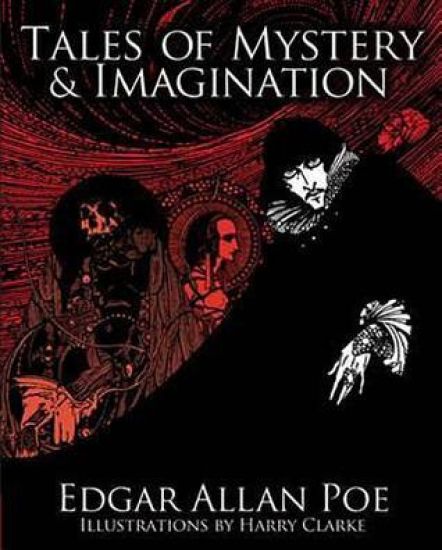
Edgar Allan Poe: Tales of Mystery & Imagination

Edgar Allan Poe: Tales of Mystery & Imagination

Edgar Allan Poe

Arcturus Publishing Ltd
2014
sidottu
This edition includes well-known stories such as "The Fall of the House of Usher" and "The Murders in the Rue Morgue." Eye-catching, full-page images by Harry Clarke accompany every story, with additional vignettes throughout the book. The book is presented in an elegant slipcase, with cloth-bound binding. It will be successful n both the gift and reference markets.
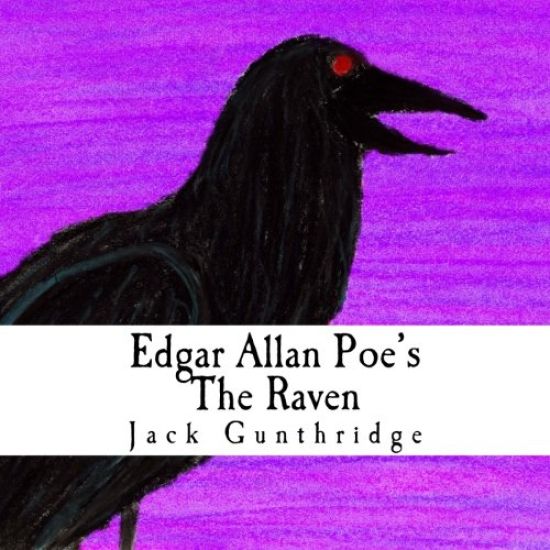
Edgar Allan Poe's The Raven

Edgar Allan Poe's The Raven

Edgar Allan Poe

Createspace Independent Publishing Platform
2014
nidottu
Jack Gunthridge has illustrated Edgar Allan Poe's "The Raven". As a children's book, he wanted to have a book parents could read to their children where the rhyming wasn't with words like cat, hat, bat, etc. He also wanted to have a book parents would enjoy reading to their children. Poe's original language has been retained in this story. It is intended to be read to children.