Kirjojen hintavertailu – 12 859 819 kirjaa ja 27 kauppaa

Kirjailija

Edith Wharton

Kirjat ja teokset yhdessä paikassa: 1 534 kirjaa, julkaisuja vuosilta 1913–2026, suosituimpiin kuuluu Box with four Summer Stories. Vertaile teosten hintoja ja tarkista saatavuus suomalaisista kirjakaupoista.

Nimi esiintyy myös muodoissa: Edith. Wharton

1 534 kirjaa

Kirjojen julkaisuvuodet: 1913–2026.

Italian backgrounds. Edith Wharton (Original Version)

Italian backgrounds. Edith Wharton (Original Version)

Edith Wharton

Createspace Independent Publishing Platform
2016
nidottu
Edith Wharton born Edith Newbold Jones; January 24, 1862 - August 11, 1937) was a Pulitzer Prize-winning American novelist, short story writer, and designer. She was nominated for the Nobel Prize in Literature in 1927, 1928 and 1930. Wharton combined her insider's view of America's privileged classes with a brilliant, natural wit to write humorous, incisive novels and short stories of social and psychological insight. She was well acquainted with many of her era's other literary and public figures, including Theodore Roosevelt. Edith Wharton was born Edith Newbold Jones to George Frederic Jones and Lucretia Stevens Rhinelander at their brownstone at 14 West Twenty-third Street in New York City. She had two much older brothers, Frederic Rhinelander, who was sixteen, and Henry Edward, who was eleven. She was baptized April 20, 1862, Easter Sunday, at Grace Church. To her friends and family she was known as "Pussy Jones". The saying "keeping up with the Joneses" is said to refer to her father's family. 4] She was also related to the Rensselaer family, the most prestigious of the old patroon families. She had a lifelong lovely friendship with her Rhinelander niece, landscape architect Beatrix Farrand of Reef Point in Bar Harbor, Maine. Edith was born during the Civil War; she was three years old when the South surrendered. After the war, the family traveled extensively in Europe. From 1866 to 1872, the Jones family visited France, Italy, Germany, and Spain. During her travels, the young Edith became fluent in French, German, and Italian. At the age of ten, she suffered from typhoid fever while the family was at a spa in the Black Forest. After the family returned to the United States in 1872, they spent their winters in New York and their summers in Newport, Rhode Island. While in Europe, she was educated by tutors and governesses. She rejected the standards of fashion and etiquette that were expected of young girls at the time, intended to enable women to marry well and to be displayed at balls and parties. She thought these requirements were superficial and oppressive. Edith wanted more education than she received, so she read from her father's library and from the libraries of her father's friends. Her mother forbade her to read novels until she was married, and Edith complied with this command.

The descent of man, and other stories. By: Edith Wharton (Original Version)

The descent of man, and other stories. By: Edith Wharton (Original Version)

Edith Wharton

Createspace Independent Publishing Platform
2016
nidottu
Edith Wharton born Edith Newbold Jones; January 24, 1862 - August 11, 1937) was a Pulitzer Prize-winning American novelist, short story writer, and designer. She was nominated for the Nobel Prize in Literature in 1927, 1928 and 1930. Wharton combined her insider's view of America's privileged classes with a brilliant, natural wit to write humorous, incisive novels and short stories of social and psychological insight. She was well acquainted with many of her era's other literary and public figures, including Theodore Roosevelt. Edith Wharton was born Edith Newbold Jones to George Frederic Jones and Lucretia Stevens Rhinelander at their brownstone at 14 West Twenty-third Street in New York City. She had two much older brothers, Frederic Rhinelander, who was sixteen, and Henry Edward, who was eleven. She was baptized April 20, 1862, Easter Sunday, at Grace Church. To her friends and family she was known as "Pussy Jones". The saying "keeping up with the Joneses" is said to refer to her father's family. 4] She was also related to the Rensselaer family, the most prestigious of the old patroon families. She had a lifelong lovely friendship with her Rhinelander niece, landscape architect Beatrix Farrand of Reef Point in Bar Harbor, Maine. Edith was born during the Civil War; she was three years old when the South surrendered. After the war, the family traveled extensively in Europe. From 1866 to 1872, the Jones family visited France, Italy, Germany, and Spain. During her travels, the young Edith became fluent in French, German, and Italian. At the age of ten, she suffered from typhoid fever while the family was at a spa in the Black Forest. After the family returned to the United States in 1872, they spent their winters in New York and their summers in Newport, Rhode Island. While in Europe, she was educated by tutors and governesses. She rejected the standards of fashion and etiquette that were expected of young girls at the time, intended to enable women to marry well and to be displayed at balls and parties. She thought these requirements were superficial and oppressive. Edith wanted more education than she received, so she read from her father's library and from the libraries of her father's friends. Her mother forbade her to read novels until she was married, and Edith complied with this command.
Ethan Frome

Ethan Frome

Edith Wharton

Createspace Independent Publishing Platform
2016
nidottu
Set against the bleak winter landscape of New England, Ethan Frome is the story of a poor farmer, lonely and downtrodden, his wife Zeena, and her cousin, the enchanting Mattie Silver. In the playing out of this short novel's powerful and engrossing drama, Edith Wharton constructed her least characteristic and most celebrated book. In her Introduction, the distinguished critic Elaine Showalter discusses the background to the novel's composition and the reasons for its enduring success.
French ways and their meaning. Edith Wharton (Original Version)

French ways and their meaning. Edith Wharton (Original Version)

Edith Wharton

Createspace Independent Publishing Platform
2016
nidottu
Edith Wharton born Edith Newbold Jones; January 24, 1862 - August 11, 1937) was a Pulitzer Prize-winning American novelist, short story writer, and designer. She was nominated for the Nobel Prize in Literature in 1927, 1928 and 1930. Wharton combined her insider's view of America's privileged classes with a brilliant, natural wit to write humorous, incisive novels and short stories of social and psychological insight. She was well acquainted with many of her era's other literary and public figures, including Theodore Roosevelt. Edith Wharton was born Edith Newbold Jones to George Frederic Jones and Lucretia Stevens Rhinelander at their brownstone at 14 West Twenty-third Street in New York City. She had two much older brothers, Frederic Rhinelander, who was sixteen, and Henry Edward, who was eleven. She was baptized April 20, 1862, Easter Sunday, at Grace Church. To her friends and family she was known as "Pussy Jones". The saying "keeping up with the Joneses" is said to refer to her father's family. 4] She was also related to the Rensselaer family, the most prestigious of the old patroon families. She had a lifelong lovely friendship with her Rhinelander niece, landscape architect Beatrix Farrand of Reef Point in Bar Harbor, Maine. Edith was born during the Civil War; she was three years old when the South surrendered. After the war, the family traveled extensively in Europe. From 1866 to 1872, the Jones family visited France, Italy, Germany, and Spain. During her travels, the young Edith became fluent in French, German, and Italian. At the age of ten, she suffered from typhoid fever while the family was at a spa in the Black Forest. After the family returned to the United States in 1872, they spent their winters in New York and their summers in Newport, Rhode Island. While in Europe, she was educated by tutors and governesses. She rejected the standards of fashion and etiquette that were expected of young girls at the time, intended to enable women to marry well and to be displayed at balls and parties. She thought these requirements were superficial and oppressive. Edith wanted more education than she received, so she read from her father's library and from the libraries of her father's friends. Her mother forbade her to read novels until she was married, and Edith complied with this command.

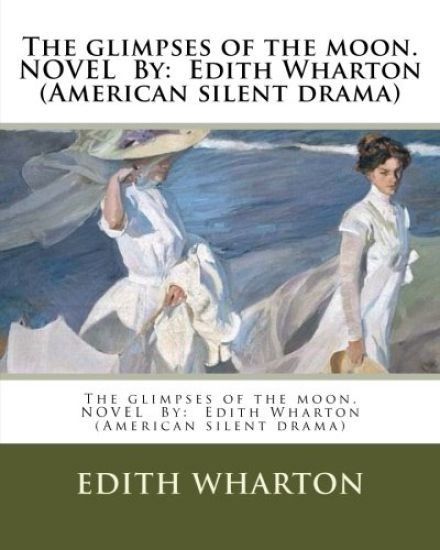
The glimpses of the moon.NOVEL By: Edith Wharton (American silent drama)

The glimpses of the moon.NOVEL By: Edith Wharton (American silent drama)

Edith Wharton

Createspace Independent Publishing Platform
2016
nidottu
The Glimpses of the Moon is a lost 1923 American silent drama film directed by Allan Dwan and starring Bebe Daniels. It was produced by Famous Players-Lasky and distributed by Paramount Pictures. The film is based upon the 1922 Edith Wharton novel The Glimpses of the Moon. Edith Wharton born Edith Newbold Jones; January 24, 1862 - August 11, 1937) was a Pulitzer Prize-winning American novelist, short story writer, and designer. She was nominated for the Nobel Prize in Literature in 1927, 1928 and 1930. Wharton combined her insider's view of America's privileged classes with a brilliant, natural wit to write humorous, incisive novels and short stories of social and psychological insight. She was well acquainted with many of her era's other literary and public figures, including Theodore Roosevelt. Edith Wharton was born Edith Newbold Jones to George Frederic Jones and Lucretia Stevens Rhinelander at their brownstone at 14 West Twenty-third Street in New York City. She had two much older brothers, Frederic Rhinelander, who was sixteen, and Henry Edward, who was eleven. She was baptized April 20, 1862, Easter Sunday, at Grace Church. To her friends and family she was known as "Pussy Jones". The saying "keeping up with the Joneses" is said to refer to her father's family. She was also related to the Rensselaer family, the most prestigious of the old patroon families. She had a lifelong lovely friendship with her Rhinelander niece, landscape architect
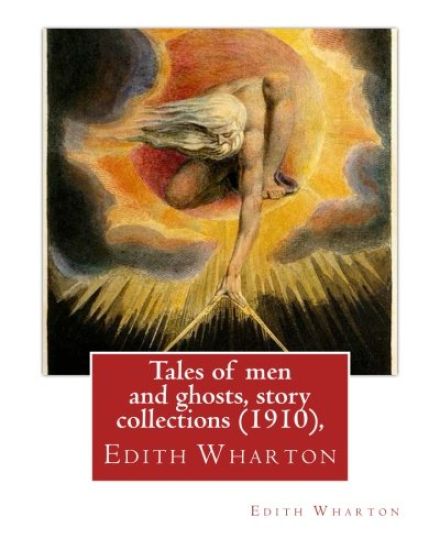
Tales of men and ghosts (1910), By Edith Wharton (Short story collections)

Tales of men and ghosts (1910), By Edith Wharton (Short story collections)

Edith Wharton

Createspace Independent Publishing Platform
2016
nidottu
Edith Wharton ( born Edith Newbold Jones; January 24, 1862 - August 11, 1937) was a Pulitzer Prize-winning American novelist, short story writer, and designer. She was nominated for the Nobel Prize in Literature in 1927, 1928 and 1930. Wharton combined her insider's view of America's privileged classes with a brilliant, natural wit to write humorous, incisive novels and short stories of social and psychological insight. She was well acquainted with many of her era's other literary and public figures, including Theodore Roosevelt. Edith Wharton was born Edith Newbold Jones to George Frederic Jones and Lucretia Stevens Rhinelander at their brownstone at 14 West Twenty-third Street in New York City. She had two much older brothers, Frederic Rhinelander, who was sixteen, and Henry Edward, who was eleven. She was baptized April 20, 1862, Easter Sunday, at Grace Church. To her friends and family she was known as "Pussy Jones". The saying "keeping up with the Joneses" is said to refer to her father's family. She was also related to the Rensselaer family, the most prestigious of the old patroon families. She had a lifelong lovely friendship with her Rhinelander niece, landscape architect Beatrix Farrand of Reef Point in Bar Harbor, Maine. EDITH WHARTON (1862-1937) was one of the most remarkable women of her time, and her immense commercial and critical success-most notably with her novel "The Age of Innocense" (1920), which won a Pulitzer Prize-have long overshadowed her small but distinguished body of supernatural fiction. Some of her finest fantastic and detective work (which oft times overlap) was first collected in 1909 in "Tales of Men and Ghosts." The psychological horror is as important as the literal one here, and subtle ambiguities characterized by the best of Henry James's work (such as "The Turn of the Screw") are also present in Wharton's character studies, such as "The Bolted Door." Is the protagonist a murderer, or is he mad? In the end it may not matter, for it is his descent into madness and obsession that gives the story its chilling frisson. Other tales present men (or ghosts, or what men believe to be ghosts) in a variety of lights, from misunderstood monsters to vengeful spirits to insecure artists. If you have never read Edith Wharton's fantasy work before, you will be captivated and delighted. Without a doubt, this is a landmark book, and an important addition to the Wildside Fantasy Classics line.
The descent of man, and other stories, By Edith Wharton (Short story collections)

The descent of man, and other stories, By Edith Wharton (Short story collections)

Edith Wharton

Createspace Independent Publishing Platform
2016
nidottu
Edith Wharton ( born Edith Newbold Jones; January 24, 1862 - August 11, 1937) was a Pulitzer Prize-winning American novelist, short story writer, and designer. She was nominated for the Nobel Prize in Literature in 1927, 1928 and 1930. Wharton combined her insider's view of America's privileged classes with a brilliant, natural wit to write humorous, incisive novels and short stories of social and psychological insight. She was well acquainted with many of her era's other literary and public figures, including Theodore Roosevelt. Edith Wharton was born Edith Newbold Jones to George Frederic Jones and Lucretia Stevens Rhinelander at their brownstone at 14 West Twenty-third Street in New York City. She had two much older brothers, Frederic Rhinelander, who was sixteen, and Henry Edward, who was eleven. She was baptized April 20, 1862, Easter Sunday, at Grace Church. To her friends and family she was known as "Pussy Jones". The saying "keeping up with the Joneses" is said to refer to her father's family. She was also related to the Rensselaer family, the most prestigious of the old patroon families. She had a lifelong lovely friendship with her Rhinelander niece, landscape architect Beatrix Farrand of Reef Point in Bar Harbor, Maine. Edith was born during the Civil War; she was three years old when the South surrendered. After the war, the family traveled extensively in Europe. From 1866 to 1872, the Jones family visited France, Italy, Germany, and Spain. During her travels, the young Edith became fluent in French, German, and Italian. At the age of ten, she suffered from typhoid fever while the family was at a spa in the Black Forest. After the family returned to the United States in 1872, they spent their winters in New York and their summers in Newport, Rhode Island. While in Europe, she was educated by tutors and governesses. She rejected the standards of fashion and etiquette that were expected of young girls at the time, intended to enable women to marry well and to be displayed at balls and parties. She thought these requirements were superficial and oppressive. Edith wanted more education than she received, so she read from her father's library and from the libraries of her father's friends. Her mother forbade her to read novels until she was married, and Edith complied with this command......
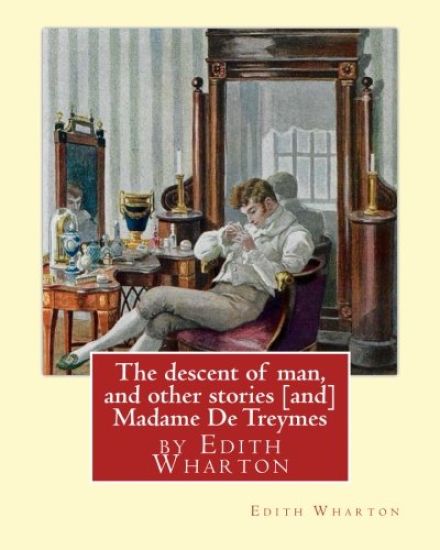
The descent of man, and other stories [and] Madame De Treymes: by Edith Wharton (Short story collections)
The descent of man, and other stories and] Madame De Treymes (Short story collections) Edith Wharton ( born Edith Newbold Jones; January 24, 1862 - August 11, 1937) was a Pulitzer Prize-winning American novelist, short story writer, and designer. She was nominated for the Nobel Prize in Literature in 1927, 1928 and 1930. Wharton combined her insider's view of America's privileged classes with a brilliant, natural wit to write humorous, incisive novels and short stories of social and psychological insight. She was well acquainted with many of her era's other literary and public figures, including Theodore Roosevelt. Edith Wharton was born Edith Newbold Jones to George Frederic Jones and Lucretia Stevens Rhinelander at their brownstone at 14 West Twenty-third Street in New York City. She had two much older brothers, Frederic Rhinelander, who was sixteen, and Henry Edward, who was eleven. She was baptized April 20, 1862, Easter Sunday, at Grace Church. To her friends and family she was known as "Pussy Jones". The saying "keeping up with the Joneses" is said to refer to her father's family. She was also related to the Rensselaer family, the most prestigious of the old patroon families. She had a lifelong lovely friendship with her Rhinelander niece, landscape architect Beatrix Farrand of Reef Point in Bar Harbor, Maine. Edith was born during the Civil War; she was three years old when the South surrendered. After the war, the family traveled extensively in Europe. From 1866 to 1872, the Jones family visited France, Italy, Germany, and Spain. During her travels, the young Edith became fluent in French, German, and Italian. At the age of ten, she suffered from typhoid fever while the family was at a spa in the Black Forest. After the family returned to the United States in 1872, they spent their winters in New York and their summers in Newport, Rhode Island. While in Europe, she was educated by tutors and governesses. She rejected the standards of fashion and etiquette that were expected of young girls at the time, intended to enable women to marry well and to be displayed at balls and parties. She thought these requirements were superficial and oppressive. Edith wanted more education than she received, so she read from her father's library and from the libraries of her father's friends. Her mother forbade her to read novels until she was married, and Edith complied with this command.
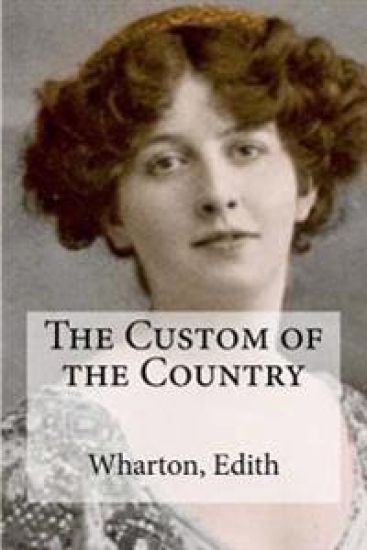
The Custom of the Country

The Custom of the Country

Edith Wharton

Createspace Independent Publishing Platform
2016
nidottu
The Spraggs, a family of midwesterners from the fictional city of Apex who have made money through somewhat shady financial dealings, arrive in New York City at the prompting of their beautiful, ambitious, but socially-naive daughter, Undine. She marries Ralph Marvell, a member of an old New York family that no longer enjoys significant wealth. Before her wedding, Undine encounters an acquaintance from Apex named Elmer Moffatt, a character with "a genuine disdain for religious piety and social cant", as the scholar Elaine Showalter observes. Undine begs him not to do anything that will endanger her wedding to Ralph. Elmer agrees.
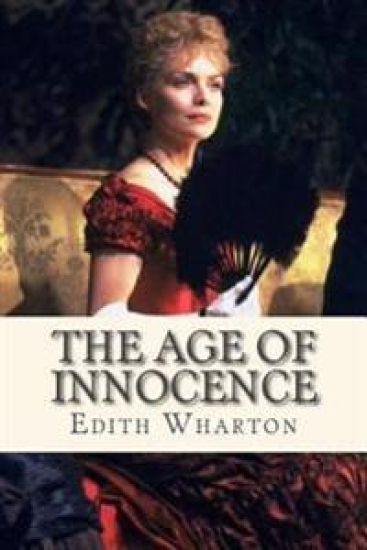
The Age of Innocence

The Age of Innocence

Edith Wharton

Createspace Independent Publishing Platform
2016
nidottu
As young Newland Archer, lawyer and man about town, gazes up at his soon-to-be fianc , May Welland, in the Mingott-family opera box, he is disconcerted by the arrival of May's cousin, the Countess Ellen Olenska, who has left her profligate but wealthy Polish husband.
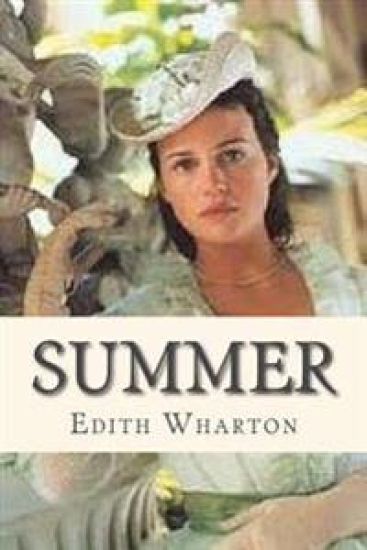
Summer

Summer

Edith Wharton

Createspace Independent Publishing Platform
2016
nidottu
Summer's heroine is Charity Royall, foster child of one of her small, rural New England village's leading citizens, Lawyer Royall. Charity is just that, a charity-child, brought into the village from the nearby "Mountain", a loose community of social outcasts.
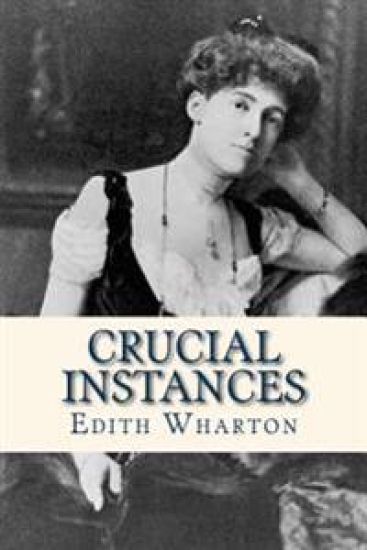
Crucial Instances, By Edith Wharton ( Short story collections ) 1901

Crucial Instances, By Edith Wharton ( Short story collections ) 1901

Edith Wharton

Createspace Independent Publishing Platform
2016
nidottu
Crucial Instances is Edith Wharton's classic 1901 short story collection. The book contains a collection of seven stories, including: The Duchess at Prayer The Angel at the Grave The Recovery Copy: A Dialogue The Rembrandt The Moving Finger The Confessional Edith Wharton ( born Edith Newbold Jones; January 24, 1862 - August 11, 1937) was a Pulitzer Prize-winning American novelist, short story writer, and designer. She was nominated for the Nobel Prize in Literature in 1927, 1928 and 1930. Wharton combined her insider's view of America's privileged classes with a brilliant, natural wit to write humorous, incisive novels and short stories of social and psychological insight. She was well acquainted with many of her era's other literary and public figures, including Theodore Roosevelt. Edith Wharton was born Edith Newbold Jones to George Frederic Jones and Lucretia Stevens Rhinelander at their brownstone at 14 West Twenty-third Street in New York City. She had two much older brothers, Frederic Rhinelander, who was sixteen, and Henry Edward, who was eleven. She was baptized April 20, 1862, Easter Sunday, at Grace Church. To her friends and family she was known as "Pussy Jones". The saying "keeping up with the Joneses" is said to refer to her father's family. She was also related to the Rensselaer family, the most prestigious of the old patroon families. She had a lifelong lovely friendship with her Rhinelander niece, landscape architect Beatrix Farrand of Reef Point in Bar Harbor, Maine. Edith was born during the Civil War; she was three years old when the South surrendered. After the war, the family traveled extensively in Europe. From 1866 to 1872, the Jones family visited France, Italy, Germany, and Spain. During her travels, the young Edith became fluent in French, German, and Italian. At the age of ten, she suffered from typhoid fever while the family was at a spa in the Black Forest. After the family returned to the United States in 1872, they spent their winters in New York and their summers in Newport, Rhode Island. While in Europe, she was educated by tutors and governesses. She rejected the standards of fashion and etiquette that were expected of young girls at the time, intended to enable women to marry well and to be displayed at balls and parties. She thought these requirements were superficial and oppressive. Edith wanted more education than she received, so she read from her father's library and from the libraries of her father's friends. Her mother forbade her to read novels until she was married, and Edith complied with this command.....