
Kirjailija
Edmund Burke
Kirjat ja teokset yhdessä paikassa: 582 kirjaa, julkaisuja vuosilta 1968–2026, suosituimpiin kuuluu The Portable Edmund Burke. Vertaile teosten hintoja ja tarkista saatavuus suomalaisista kirjakaupoista.
582 kirjaa
Kirjojen julkaisuvuodet: 1968–2026.
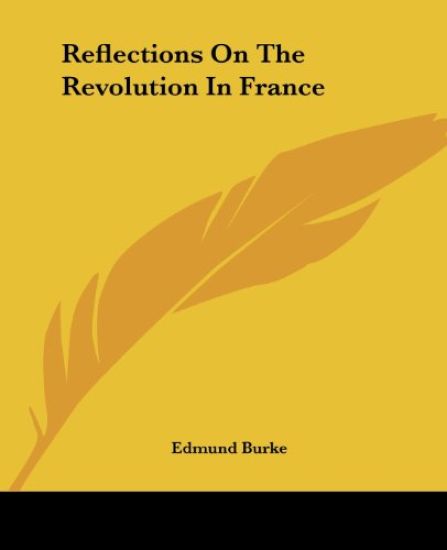


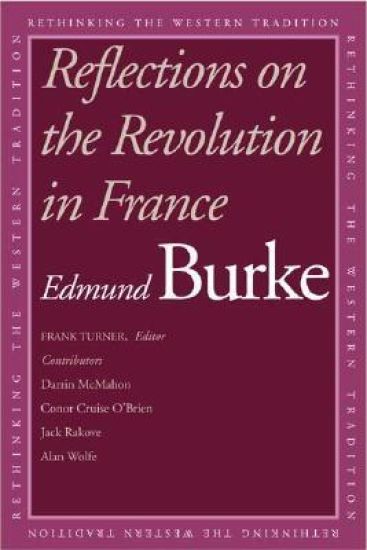
A new edition of Burke’s masterpiece accompanied by insightful essays that illuminate the perennial appeal of this work The most enduring work of its time, Reflections on the Revolution in France waswritten in 1790 and has remained in print ever since. Edmund Burke’s analysis of revolutionary change established him as the chief framer of modern European conservative political thought. This outstanding new edition of the Reflections presentsBurke’s famous text along with a historical introduction by Frank M. Turner and four lively critical essays by leading scholars. The volume sets the Reflections in the context of Western political thought, highlights its ongoing relevance to contemporary debates, and provides abundant critical notes, a glossary, and a glossary-index to ensure its accessibility. Contributors to the book examine various provocative aspects of Burke’s thought. Conor Cruise O’Brien explores Burke’s hostility to “theory,” Darrin McMahon considers Burke’s characterization of the French Enlightenment, Jack Rakove contrasts the views of Burke and American constitutional framers on the process of drawing up constitutions, and Alan Wolfe investigates Burke, the social sciences, and liberal democracy.

Reflections on the Revolution in France
Edmund Burke
Stanford University Press
2002
pokkari
Halvin toimitettuna 40,60 €
The French Revolution is a defining moment in world history, and usually it has been first approached by English-speaking readers through the picture painted of it by Edmund Burke. Reflections on the Revolution in France is a classic work in a range of fields from history through political science to literature, and securely holds its place among the canon of "great books." Yet its meaning is still contested and often misunderstood, equally by those who wish to admire or to denigrate Burke for his present-day relevance. This edition aims to locate Burke once again in his contemporary political and intellectual setting. Alone among recent versions, it reprints the text of the first edition of the Reflections, and shows how Burke amended it as his knowledge of the Revolution deepened. It is certain to become the standard edition for scholars and students alike. The editor's Introduction is much more extensive than that of any previous edition. It situates the Reflections in Burke's life and the development of his ideas, the history of English political thought, the debate about the French Revolution, and the debate the book itself inspired. But the Introduction is more than a compendium of information; it is a thoughtful, coherent interpretation of Burke and his book. The editor's notes are also fuller than those of any previous edition, glossing many literary and biblical allusions missed by previous editors. He also supplies an extended note on the text, a biographical guide, and a bibliography, helpfully presented in discursive form.

The French Revolution is a defining moment in world history, and usually it has been first approached by English-speaking readers through the picture painted of it by Edmund Burke. Reflections on the Revolution in France is a classic work in a range of fields from history through political science to literature, and securely holds its place among the canon of "great books." Yet its meaning is still contested and often misunderstood, equally by those who wish to admire or to denigrate Burke for his present-day relevance. This edition aims to locate Burke once again in his contemporary political and intellectual setting. Alone among recent versions, it reprints the text of the first edition of the Reflections, and shows how Burke amended it as his knowledge of the Revolution deepened. It is certain to become the standard edition for scholars and students alike. The editor's Introduction is much more extensive than that of any previous edition. It situates the Reflections in Burke's life and the development of his ideas, the history of English political thought, the debate about the French Revolution, and the debate the book itself inspired. But the Introduction is more than a compendium of information; it is a thoughtful, coherent interpretation of Burke and his book. The editor's notes are also fuller than those of any previous edition, glossing many literary and biblical allusions missed by previous editors. He also supplies an extended note on the text, a biographical guide, and a bibliography, helpfully presented in discursive form.
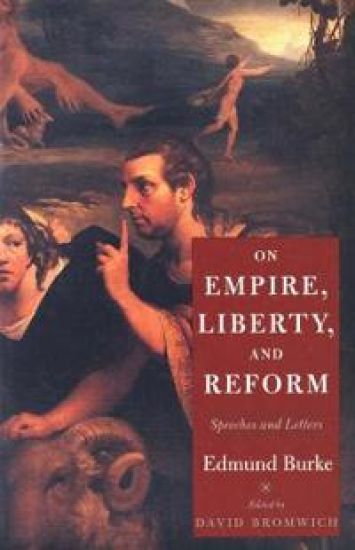
The great British statesman Edmund Burke had a genius for political argument, and his impassioned speeches and writings shaped English public life in the second half of the eighteenth century. This anthology of Burke’s speeches, letters, and pamphlets, selected, introduced, and annotated by David Bromwich, shows Burke to be concerned with not only preserving but also reforming the British empire. Bromwich includes eighteen works of Burke, all but one in its complete form. These writings, among them the “Speech on Conciliation with the American Colonies,” A Letter to the Sheriffs of Bristol, the “Speech at Guildhall Previous to the Election” of 1780, the “Speech on Fox’s India Bill,” A Letter to a Noble Lord, and several private letters, demonstrate the depth of Burke’s efforts to reform the empire in India, America, and Ireland. On these various fronts he defended the human rights of native peoples, the respect owed to partners in trade, and the civil liberties that the empire was losing at home while extending its power abroad.
Kenntnisse has been devised to meet the needs of modern courses in advanced German for students at undergraduate level. It is a highly flexible resource and can be used as core teaching material or as a supplementary text.
This topics-based textbook has been devised to meet the needs of modern courses in advanced German at undergraduate level. Features include:* focus on practical language skills, such as writing articles, preparing CVs, translating and interpreting* authentic contemporary texts and original audio material* oral language practice* grammar reinforcement. Kenntnisse can be used as core teaching material or as a supplementary text. The complete course comprises the student's book, 2x60 minute audio cassettes and a teacher's book.
A companion volume to the three-book set "Select Works of Edmund Burke", this text includes seven of Burke's major contributions to English political thinking on representation in parliament, on economics, on the political oppression of the peoples of India and Ireland and on enslavement.
Part of a three-volume set, this text presents selected work of Edmund Burke on English history and political thought. This first volume contains Burke's defence of the American colonists' complaints of British policy and includes "Thoughts on the Cause of the Present Discontents"(1770), "Speech on American Taxation"(1774), and "Speech on Conciliation"(1775). Volume Two in the set consists of Burke's "Reflections on the Revolution in France". Volume Three presents his "Letters on a Regicide Peace"(1795-1796). The text includes notes and introductory essays by E. J. Payne.
Originally published by Oxford University Press in the 1890s, the famed Payne edition of Select Works of Burke is universally revered by students of English history and political thought. Volume 2 consists of Burke's renowned Reflections on the Revolution in France. Faithfully reproduced in each volume are E. J. Payne's notes and introductory essays. Francis Canavan, one of the great Burke scholars of the twentieth century, has added forewords and a biographical note on Payne. In the companion volume, Miscellaneous Writings, Canavan has collected seven of Burke's major contributions to English political thinking on representation in Parliament, on economics, on the political oppression of the peoples of India and Ireland, and on the enslavement of African blacks. The volume concludes with a select bibliography on Edmund Burke. The volumes complement the Liberty Fund editions of Burke's A Vindication of Natural Society, edited by Frank N. Pagano, and Further Reflections on the Revolution in France, edited by Daniel E. Ritchie.