Kirjojen hintavertailu – 12 859 818 kirjaa ja 27 kauppaa

Kirjailija

Edmund Burke

Kirjat ja teokset yhdessä paikassa: 582 kirjaa, julkaisuja vuosilta 1968–2026, suosituimpiin kuuluu The Portable Edmund Burke. Vertaile teosten hintoja ja tarkista saatavuus suomalaisista kirjakaupoista.

582 kirjaa

Kirjojen julkaisuvuodet: 1968–2026.

Select Works of Edmund Burke, Volume 3

Select Works of Edmund Burke, Volume 3

Edmund Burke

Liberty Fund Inc
1999
nidottu
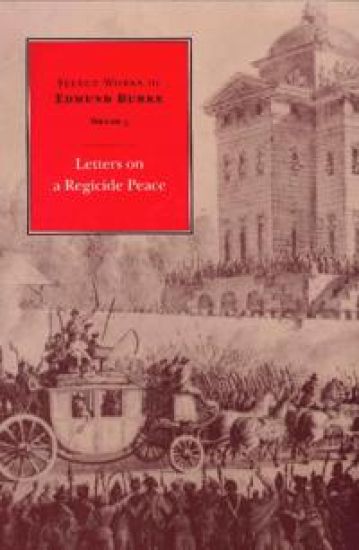
Part of a three-volume set, this text presents selected work of Edmund Burke on English history and political thought. This third volume presents his "Letters on a Regicide Peace"(1795-1796). The first volume contains Burke's defence of the American colonists' complaints of British policy and includes "Thoughts on the Cause of the Present Discontents"(1770), "Speech on American Taxation"(1774), and "Speech on Conciliation"(1775). Volume Two in the set consists of Burke's "Reflections on the Revolution in France". The text includes notes and introductory essays by E. J. Payne.
Select Works of Edmund Burke

Select Works of Edmund Burke

Edmund Burke

Liberty Fund Inc
1999
nidottu
In this companion volume to Select Works of Edmund Burke, Canavan has collected seven of Burke's major contributions to English political thinking on representation in Parliament, on economics, on the political oppression of the peoples of India and Ireland, and on the enslavement of African blacks. The volume concludes with a select bibliography on Edmund Burke.
Select Works of Edmund Burke, Volume 3

Select Works of Edmund Burke, Volume 3

Edmund Burke

Liberty Fund Inc
1999
sidottu
Part of a three-volume set, this text presents selected work of Edmund Burke on English history and political thought. This third volume presents his "Letters on a Regicide Peace"(1795-1796). The first volume contains Burke's defence of the American colonists' complaints of British policy and includes "Thoughts on the Cause of the Present Discontents"(1770), "Speech on American Taxation"(1774), and "Speech on Conciliation"(1775). Volume Two in the set consists of Burke's "Reflections on the Revolution in France". The text includes notes and introductory essays by E. J. Payne.
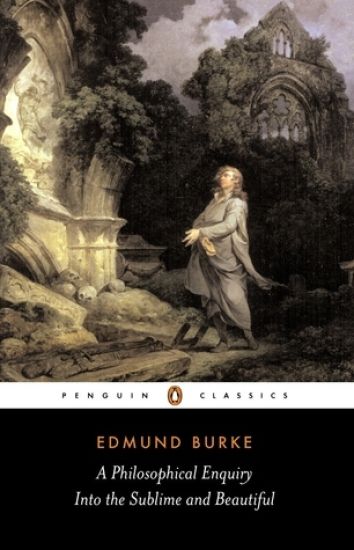
A Philosophical Enquiry into the Sublime and Beautiful

A Philosophical Enquiry into the Sublime and Beautiful

Edmund Burke

Penguin Classics
1998
pokkari

Halvin toimitettuna 20,30 €

Edmund Burke was one of the foremost philosophers of the eighteenth century and wrote widely on aesthetics, politics and society. In this landmark work, he propounds his theory that the sublime and the beautiful should be regarded as distinct and wholly separate states - the first, an experience inspired by fear and awe, the second an expression of pleasure and serenity. Eloquent and profound, A Philosophical Enquiry is an involving account of our sensory, imaginative and judgmental processes and their relation to artistic appreciation. Burke's work was hugely influential on his contemporaries and also admired by later writers such as Matthew Arnold and William Wordsworth. This volume also contains several of his early political works on subjects including natural society, government and the American colonies, which illustrate his liberal, humane views.
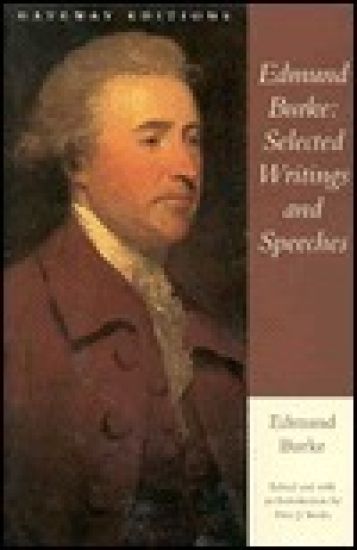
Edmund Burke: Selected Writings and Speeches

Edmund Burke: Selected Writings and Speeches

Edmund Burke

Regnery Publishing Inc
1997
pokkari
This is the most comprehensive anthology of works and speeches by the statesman and political philosopher Edmund Burke (1729-1797). Peter J. Stanlis, professor of humanities emeritus at Rockford College, has taken care to preserve the beauty of Burke's prose while selecting the most essential passages from his numerous writings. Stanlis's introduction gives important insight into Burke's early life, education, professional training, literary and political career, prose style, political philosophy, and more.
Pre-Revolutionary Writings

Pre-Revolutionary Writings

Edmund Burke

Cambridge University Press
1993
pokkari
This is the first collection of the writings of Edmund Burke which precede Reflections on the Revolution in France, and the first to do justice to the connections and breadth of Burke’s thought. A thinker whose range transcends formal boundaries, Burke has been highly prized by both conservatives and liberals, and this new edition charts the development of Burke’s thought and its importance as a response to the events of his day. Burke’s mind spanned theology, aesthetics, moral philosophy and history, as well as the political affairs of Ireland, England, America, India and France, and he united these concerns in his view of inequality. In the writings in this edition Burke indicated how societies embodying revealed religion and social hierarchy could sustain civilisation and political liberty. These thoughts reached their apogee in Reflections on the Revolution in France. This edition provides the student with all the necessary information for an understanding of the complexities of Burke’s thought. Each text is prefaced by a summary and notes to the texts elucidate the literary and historical references. An introduction and biographical and bibliographical essays help place these works in the context of Burke’s thought as a whole.
Edmund Burke

Edmund Burke

Edmund Burke

University of Notre Dame Press
1993
nidottu
In his Enquiry—which has been described as "certainly one of the most important aesthetic documents that eighteenth -century England produced"—the young Burke provided a systematic analysis of the 'sublime' and the 'beautiful,' together with a distinctive terminology which served to express certain facets of the changing sensibility of his time. The introduction traces the main sources of Burke's ideas and establishes the nature of his originality. The largest section of the editor's introduction, however, examines the influence of the Enquiry. Major writers like Johnson, Wordsworth and Thomas Hardy, painters such as Fuseli and Mortimer, and critics such as Diderot, Lessing and Kant, as well as many other minor figures, recognized Burke's new insights, and in varying degrees assimilated them. The second edition, revised by Burke himself, provides the copy-text, including changes between the first and second editions.
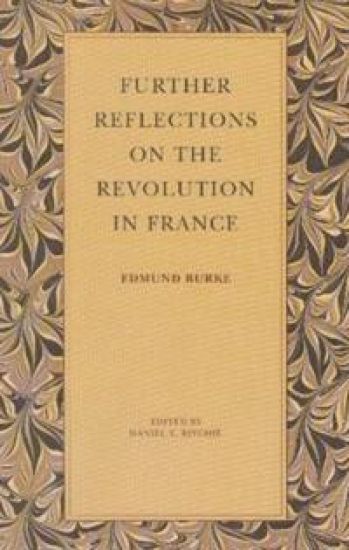
Further Reflections on the Revolution in France
In his famous "Reflections on the Revolution in France" (1790), Edmund Burke excoriated French revolutionary leaders for recklessly destroying France''s venerable institutions and way of life. But his war against the French intelligentsia did not end there, and Burke continues to take pen in hand against the Jacobins until his death in 1797. This collection brings together for the first time in unabridged form Burke''s writings on the French Revolution that anticipate, refine, and summarise the works in his famous "Reflection on the Revolution in France". There are seven items in this collection. Included are "Letter to a Member of the National Assembly", "Appeal from the New to the Old Whigs", and "A Letter to a Noble Lord". A foreword and headnotes to each selection point the reader to some of the key issues.
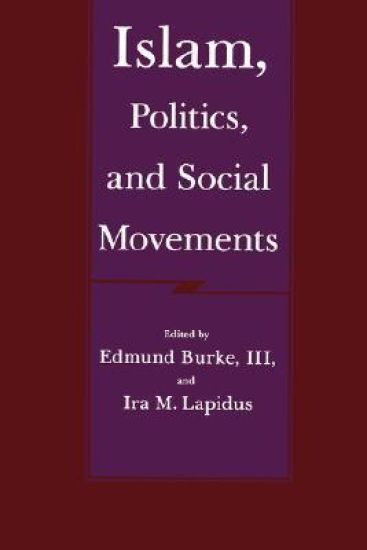
Islam, Politics, and Social Movements

Islam, Politics, and Social Movements

Edmund Burke; Ira M. (EDT) Lapidus

University of California Press
1990
pokkari
Taken together the essays in this work not only provide new research essential to the study of Islamic societies and Muslim peoples, but also set a new standard for the concrete study of local situations and illuminate the forces shaping the history of modern Muslim societies. This collection is unique in its sophisticated interpretation of the social protest and political resistance movements in Muslim countries during the nineteenth and twentieth centuries. The contributors take two principal approaches to the study of their subject. Utilizing "new cultural history," they explore how particular movements have deployed the cultural and religious resources of Islam to mobilize and legitimize insurgent political action. Others rely on "new social history" to study the economic, political, and social contexts in which movements of anti-colonial resistance and revolution have developed. This work brings together contributions from specialists on Islamic North Africa, Egypt, the Arab fertile crescent, Iran and India.
The Writings and Speeches of Edmund Burke: Volume VIII: The French Revolution 1790-1794
This is the first edition of Burke's famous Reflections on the Revolution in France to appear for twenty years. No edition of his other writings on the Revolution has appeared for almost a century. In these years, the background against which Burke wrote has been much studied, throwing new light on his motives for commentating on France, and the reasons why his writings were both widely read and widely rejected. Published two hundred years after the outbreak of the French Revolution, this edition shows that the issues raised by the most influential commentaries on that Revolution have yet to be resolved.
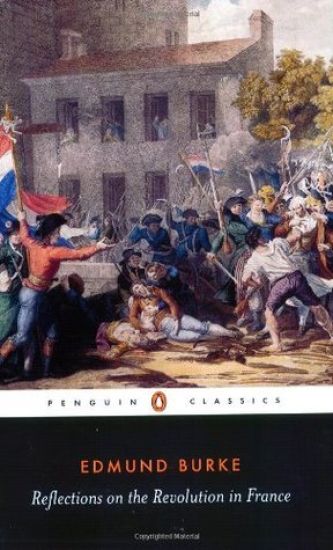
Reflections on the Revolution in France

Reflections on the Revolution in France

Edmund Burke

Penguin Classics
1982
pokkari

Halvin toimitettuna 17,00 €

Burke's seminal work was written during the early months of the French Revolution, and it predicted with uncanny accuracy many of its worst excesses, including the Reign of Terror. A scathing attack on the revolution's attitudes to existing institutions, property and religion, it makes a cogent case for upholding inherited rights and established customs, argues for piecemeal reform rather than revolutionary change - and deplores the influence Burke feared the revolution might have in Britain. Reflections on the Revolution in France is now widely regarded as a classic statement of conservative political thought, and is one of the eighteenth century's great works of political rhetoric.
Vindication of Natural Society

Vindication of Natural Society

Edmund Burke

Liberty Fund Inc
1982
nidottu
This is a new edition of Edmund Burke's first work, originally issued anonymously in 1756 as a letter attributed to 'a late noble writer'. In 1757 Burke produced a revised version with a new preface but still did not attach his name to the work. This Liberty Fund edition is based on the 1757 revision. The 'Vindication' is a political and social satire ridiculing the popular enlightenment notion of a pre-civil 'natural society'.
Edmund Burke

Edmund Burke

Edmund Burke

University of Notre Dame Press
1968
sidottu
In his Enquiry—which has been described as "certainly one of the most important aesthetic documents that eighteenth -century England produced"—the young Burke provided a systematic analysis of the 'sublime' and the 'beautiful,' together with a distinctive terminology which served to express certain facets of the changing sensibility of his time. The introduction traces the main sources of Burke's ideas and establishes the nature of his originality. The largest section of the editor's introduction, however, examines the influence of the Enquiry. Major writers like Johnson, Wordsworth and Thomas Hardy, painters such as Fuseli and Mortimer, and critics such as Diderot, Lessing and Kant, as well as many other minor figures, recognized Burke's new insights, and in varying degrees assimilated them. The second edition, revised by Burke himself, provides the copy-text, including changes between the first and second editions.