

Kirjailija
Edward Bulwer Lytton
Kirjat ja teokset yhdessä paikassa: 796 kirjaa, julkaisuja vuosilta 1990–2026, suosituimpiin kuuluu Lucretia. Vertaile teosten hintoja ja tarkista saatavuus suomalaisista kirjakaupoista.
Nimi esiintyy myös muodoissa: Edward Bulwer-Lytton, Edward Bulwer- Lytton, Edward Bulwer -Lytton
796 kirjaa
Kirjojen julkaisuvuodet: 1990–2026.
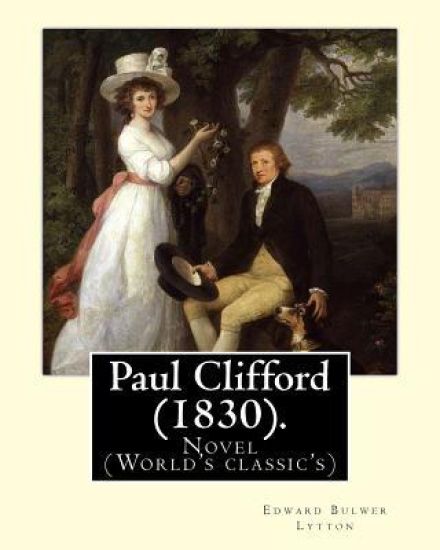
Paul Clifford (1830). By: Edward Bulwer Lytton: Novel (World's classic's)
Edward Bulwer Lytton
Createspace Independent Publishing Platform
2018
nidottu
Paul Clifford is a novel published in 1830 by English author Edward Bulwer-Lytton. It tells the life of Paul Clifford, a man who leads a dual life as both a criminal and an upscale gentleman. The book was successful upon its release. It is the source of the famous opening phrase "It was a dark and stormy night.. Paul Clifford tells the story of a chivalrous highwayman in the time of the French Revolution. Brought up not knowing his origins and living an evil life, Clifford is arrested for theft. The love of his life is Lucy Brandon. Brought before her uncle, Judge Brandon, for the robbery, it is unexpectedly revealed that Clifford is Brandon's son. That revelation complicates the trial, but Judge Brandon tries Clifford and condemns him to death. Clifford escapes from jail. With his lover and cousin, Lucy, he makes his way to America......... Edward George Earle Lytton Bulwer-Lytton, 1st Baron Lytton, PC (25 May 1803 - 18 January 1873) was an English novelist, poet, playwright, and politician. He was immensely popular with the reading public and wrote a stream of bestselling novels which earned him a considerable fortune. He coined the phrases "the great unwashed", "pursuit of the almighty dollar", "the pen is mightier than the sword", "dweller on the threshold", and the well-known and much-parodied opening line "It was a dark and stormy night". After his death, Bulwer-Lytton suffered a tremendous decline in reputation and today is best known for the "dark and stormy night" line and the Bulwer-Lytton Fiction Contest, to determine the "opening sentence of the worst of all possible novels." Life: Bulwer-Lytton was born on 25 May 1803 to General William Earle Bulwer of Heydon Hall and Wood Dalling, Norfolk and Elizabeth Barbara Lytton, daughter of Richard Warburton Lytton of Knebworth, Hertfordshire. He had two older brothers, William Earle Lytton Bulwer (1799-1877) and Henry (1801-1872), later Lord Dalling and Bulwer. When Edward was four, his father died and his mother moved to London. He was a delicate, neurotic child and was discontented at a number of boarding schools. But he was precocious and Mr. Wallington at Baling encouraged him to publish, at the age of fifteen, an immature work, Ishmael and Other Poems. In 1822 he entered Trinity College, Cambridge, where he met John Auldjo, but shortly afterwards moved to Trinity Hall. In 1825 he won the Chancellor's Gold Medal for English verse. In the following year he took his BA degree and printed, for private circulation, a small volume of poems, Weeds and Wild Flowers. He purchased a commission in the army in 1826, but sold it in 1829 without serving. In August 1827, he married Rosina Doyle Wheeler (1802-1882), a famous Irish beauty, but against his mother's wishes, who withdrew his allowance, so that he was forced to work for a living. They had two children, Lady Emily Elizabeth Bulwer-Lytton (1828-1848), and (Edward) Robert Lytton Bulwer-Lytton, 1st Earl of Lytton (1831-1891) who became Governor-General and Viceroy of British India (1876-1880). His writing and political work strained their marriage, while his infidelity embittered Rosina;in 1833 they separated acrimoniously and in 1836 the separation became legal. Three years later, Rosina published Cheveley, or the Man of Honour (1839), a near-libellous fiction bitterly satirising her husband's alleged hypocrisy. In June 1858, when her husband was standing as parliamentary candidate for Hertfordshire, she indignantly denounced him at the hustings. He retaliated by threatening her publishers, withholding her allowance, and denying her access to the children. Finally he had her committed to a mental asylum, but after a public outcry, she was released a few weeks later. This incident was chronicled in her memoir, A Blighted Life (1880)...................

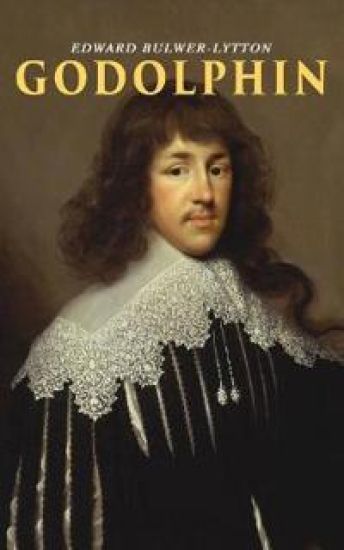
Godolphin: Special Edition
Edward Bulwer Lytton
Createspace Independent Publishing Platform
2018
nidottu
Godolphin is a satirical 19th century British romance novel about the life of an idealistic man, Percy Godolphin, and his eventual lover, Constance Vernon. Written as a frame narrative, Godolphin provides a satirical insight into the day-to-day lives of the early 19th century British elite. The story is told through the narration of two protagonists, Percy Godolphin and Constance Vernon, as they rise to prominence among the London elite. We are delighted to publish this classic book as part of our extensive Classic Library collection. Many of the books in our collection have been out of print for decades, and therefore have not been accessible to the general public. The aim of our publishing program is to facilitate rapid access to this vast reservoir of literature, and our view is that this is a significant literary work, which deserves to be brought back into print after many decades. The contents of the vast majority of titles in the Classic Library have been scanned from the original works. To ensure a high quality product, each title has been meticulously hand curated by our staff. Our philosophy has been guided by a desire to provide the reader with a book that is as close as possible to ownership of the original work. We hope that you will enjoy this wonderful classic work, and that for you it becomes an enriching experience.






Aus dem Buch: "Ein leichter Fu n herte sich dem Bette, und dem sterbenden Manne gegen ber stand ein M dchen, das sein dreizehntes Jahr hinter sich haben mochte. Aber ihre Z ge - die eine ausgezeichnete, man konnte sagen, f rstliche Sch nheit verriethen - waren entwickelt, wie bei einem Weibe von doppelten Alter; auf ihrem Gesichte zeigte sich keine Spur von dem Dufte, der weichen Unbestimmtheit des Kindes." Edward Bulwer-Lytton (1803-1873) war ein englischer Romanautor und Politiker des 19. Jahrhunderts.

The Caxtons are; Austin Caxton, a scholar engaged on a great work, 'The History of Human Error;' his wife Kitty, much his junior; his brother Roland, the Captain, who has served in the Napoleonic campaigns; the two children of the latter, Herbert and Blanche; and Austin's son, Pisistratus, who tells the story. The quiet country life of the family of Austin Caxton is interrupted by a visit to London. There Pisistratus, who has had a good school education, though he has not yet entered the university, is offered the position of secretary to Mr. Trevanion, a leader in Parliament. Lady Ellinor, Mr. Trevanion's wife, was loved as a girl by Roland and Austin Caxton; but she had passed them both by to make a marriage better suited to an ambitious woman. By a freak of fate Pisistratus now falls in love with her daughter Fannie; and when he finds that his suit is hopeless, he gives us his position under Mr. Trevanion, and enters Cambridge University, where his college course is soon closed by the financial troubles of his father. A further outline of this story would give no idea of its charm. The mutual affection of the Caxtons is finely indicated, and the gradations of light and shade make a beautiful picture. Never before had Bulwer writen with so light a touch and so gentle a humor, and this novel has been called the most brilliant and attractive of productions. His gentle satire of certain phrases of political life was founded, doubtless, on actual experience.
The Wit and Wisdom of E. Bulwer-Lytton
Edward Bulwer Lytton; Callie L. Bonney
Hansebooks
2018
nidottu


The Ring of Amasis. From the Papers of a German Physician
Edward Bulwer Lytton
Hansebooks
2018
nidottu
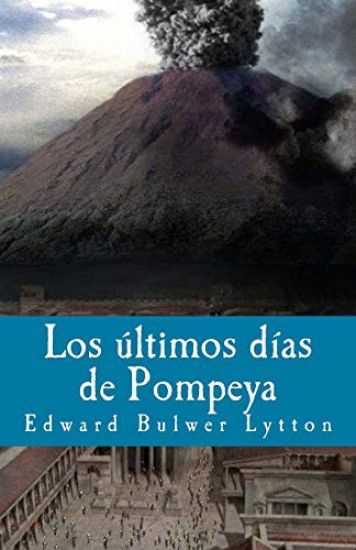
Los ultimos dias de Pompeya
Edward Bulwer Lytton
Createspace Independent Publishing Platform
2018
nidottu
Los ltimos d as de Pompeya fue escrita en 1834. Se trata una novela hist rica del romanticismo que narra los ltimos d as de la vida de unos cuantos habitantes de Pompeya, inmediatamente antes de la destrucci n de la ciudad que provoc la erupci n pliniana del Vesubio en el a o 79. Los personajes muestran la cultura de la Roma Antigua del siglo I. El protagonista, Glauco, representa la cultura griega, que ha sido subordinada por Roma, y Arbaces, su oponente, la antiqu sima e inm vil cultura Egipcia. Ione, mujer que se disputan Glauco y Arbaces, y Olinto es el principal representante de la religi n cristiana naciente, que se presenta bajo una mirada favorable pero no exenta de cr tica. La maga del Vesubio, aunque no posee poderes sobrenaturales, nos muestra el inter s del autor en el ocultismo, tema en el que se centrar a parte de su obra y, en particular, su ltima novela La raza que viene (The Coming Race or Vril: The Power of the Coming Race, 1871).

The Ring of Amasis. From the Papers of a German Physician
Edward Bulwer Lytton
Hansebooks
2018
nidottu


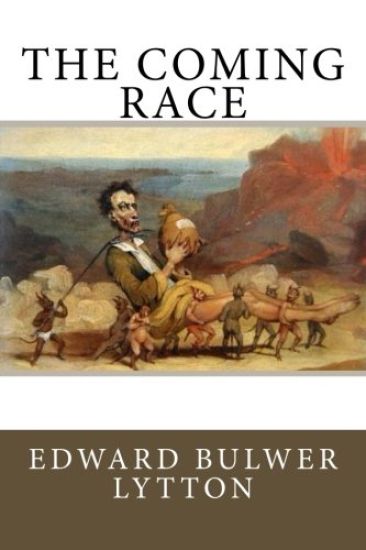
Edward George Earle Lytton Bulwer-Lytton, 1st Baron Lytton (1803-1873) was an English novelist, poet, playright, and politician. Lord Lytton was a florid, popular writer of his day, who coined such phrases as "the great unwashed", "pursuit of the almighty dollar", "the pen is mightier than the sword", and the infamous incipit "It was a dark and stormy night." . The Coming Race drew heavily on his interest in the occult and contributed to the birth of the science fiction genre. Unquestionably, its story of a subterranean race of men waiting to reclaim the surface is one of the first science fiction novels. The novel centres on a young, independently wealthy traveler (the narrator), who accidentally finds his way into a subterranean world occupied by beings who seem to resemble angels, who call themselves Vril-ya. The hero soon discovers that they are descendants of an antediluvian civilisation who live in networks of subterranean caverns linked by tunnels. The narrator suggests that in time, the Vril-ya will run out of habitable spaces underground and will start claiming the surface of the earth, destroying mankind in the process, if necessary.