

Kirjailija
Eleanor H. Porter
Kirjat ja teokset yhdessä paikassa: 305 kirjaa, julkaisuja vuosilta 1991–2026, suosituimpiin kuuluu Pollyanna. Vertaile teosten hintoja ja tarkista saatavuus suomalaisista kirjakaupoista.
Nimi esiintyy myös muodoissa: Eleanor H Porter
305 kirjaa
Kirjojen julkaisuvuodet: 1991–2026.
David has been living in the mountains with his father, a perfect life of love and music. When his father falls ill they head into town where they take refuge in a barn. When he is found the next morning with his father dead, the family learns that the boy knows nothing about any extended family. He cannot tell them anything about himself other than his first name, David. Reluctantly they take him in and teach David how to adjust to life in the village where he takes his violin with him wherever he goes, using music to express what he sees and feels. David and his music become the background of village life, changing the lives of those who experience it. This story was one of the bestselling novels in 1916, its eternal optimism bringing happiness to every reader. This addition is presented complete and unabridged with 12 full-page illustrations.
For most children being an orphan sent to live with your cold, stern, spinster aunt might be enough to dull their spirits. But not for 11-year-old Pollyanna Whittier. Thanks to "The Glad Game", an optimistic and positive attitude she learned from her father, Pollyanna begins to transform the town of Beldingsville, Vermont, into one of the most pleasant places to live in all the world. But when further tragedy strikes will Pollyanna's light begin to dull, or will she find a way to be glad no matter the circumstances? First published in 1913 this classic of children's literature has become a regularly referenced part of pop culture. This edition is presented complete and unabridged along with eight full-page illustrations.
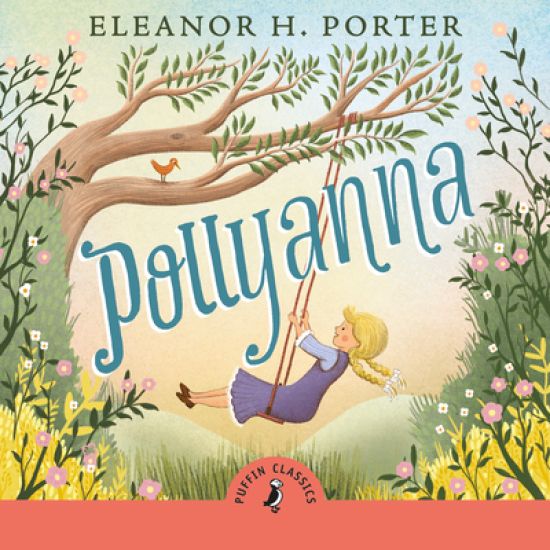
Brought to you by Puffin. As soon as Pollyanna arrives in Beldingsville to live with her strict and dutiful maiden aunt, she begins to brighten up everybody's life. The 'glad game' she plays, of finding a silver lining in every cloud, transforms the sick, the lonely and the plain miserable - until one day something so terrible happens that even Pollyanna doesn't know how to feel glad about it.© Eleanor Porter 1994 (P) Penguin Audio 2020
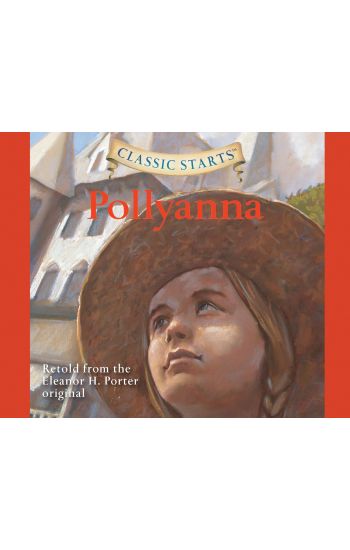
Following Sterling's spectacularly successful launch of its children's classic novels (240,000 books in print to date), comes a dazzling new series: Classic Starts. The stories are unabridged and have been rewritten for younger audiences. Classic Starts treats the world's beloved tales (and children) with the respect they deserve. "Once you start looking for the happy things, you don't think about the bad ones as much." That's the joyful way Pollyanna sees the world: no matter what happens, she plays her "Just Be Glad" game and finds the sunny side of any situation. But when she's orphaned and forced to live with her rigid Aunt Polly, will high-spirited Pollyanna succeed in melting her Aunt's cold heart?

Eleanor H. Porter's classic sequel to her adored novel, "Pollyanna". In "Pollyanna Grows Up", the maturing Pollyanna teaches her "Glad Game" to more of the townspeople and makes new friends, including Sadie and Jamie. When Pollyanna and her Aunt must support themselves following the death of Dr. Chilton, they take on boarders at their home, where we also learn more about the past of Pollyanna's old friend, Jimmy 'Bean'

"... there is something about everything that you can be glad about, if you keep hunting long enough to find it." ― Eleanor H. Porter, Pollyanna Pollyanna (1913) by American author Eleanor H. Porter is a classic that recounts the life of the title character Pollyanna Whittier, an eleven-year-old orphan. Pollyanna holds an optimistic and positive attitude towards life. She tends to find something to be glad about in every situation, no matter how bleak it may be. However, the plot takes an interesting turn when Pollyanna's robust optimism is put to the test when she is struck by a car and loses the use of her legs. This inspiring tale of utmost zeal, motivation and devotion will bring out the best in you
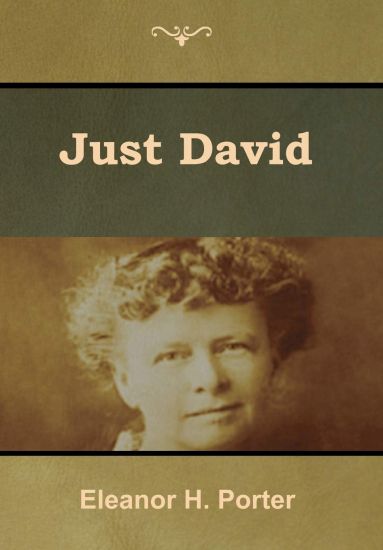
Originally published by Houghton Mifflin, it tells the story of a young boy, David, who must learn to adapt to living with others after the death of his recluse father; along the way, the villagers and his adoptive parents adopt as much or more to him. Though criticized by reviewers as "mush" and "too perfectly lovely, "the novel was very popular in the early half of the twentieth century in middle and high schools, and has recently seen a number of reprints. The novel is translated in Chinese (1959) and Russian (2005). Eleanor Emily Hodgman Porter (December 19, 1868 - May 21, 1920) was an American novelist, most known for Pollyanna (1913) and Just David (1916). Eleanor Emily Hodgman was born in Littleton, New Hampshire, on December 19, 1868, the daughter of Llewella French (n e Woolson) and Francis Fletcher Hodgman. She was trained as a singer, attending the New England Conservatory for several years. In 1892 she married John Lyman Porter and relocated to Massachusetts, after which she began writing and publishing her short stories and, later, novels. She died in Cambridge, Massachusetts, on May 21, 1920, and was buried at Mount Auburn Cemetery. Porter wrote mainly children's literature, adventure stories, and romance fiction. Her most famous novel is Pollyanna (1913), followed by a sequel, Pollyanna Grows Up (1915). Her adult novels include The Turn of the Tide (1908), The Road to Understanding (1917), Oh Money Money (1918), Dawn (1919), Keith's Dark Tower (1919), Mary Marie (1920) and Sister Sue (1921); her short-story collections include Across the Years (c. 1919), Money, Love and Kate (1923), and Little Pardner (1926). Porter achieved considerable commercial success: Pollyanna ranked eighth among best-selling novels in the United States during 1913, second during 1914, and fourth during 1915 (with 47 printings between 1915 and 1920); Just David ranked third in 1916; The Road to Understanding ranked fourth in 1917; and Oh Money Money ranked fifth in 1918. Just David, first published by Houghton Mifflin, tells the story of a young boy, David, who must learn to adapt to living with others after the death of his recluse father; along the way, the villagers and his adoptive parents adopt as much or more to him. Though criticized by reviewers as "mush" and "too perfectly lovely, "the novel was very popular in the early half of the twentieth century in middle and high schools, and has recently seen a number of reprints. The novel was transcribed in Braille in 1922, and translated in Chinese (1959) and Russian (2005). (wikipedia.org

Eleanor Emily Hodgman Porter (December 19, 1868 - May 21, 1920) was an American novelist, most known for Pollyanna (1913) and Just David (1916). Eleanor Emily Hodgman was born in Littleton, New Hampshire, on December 19, 1868, the daughter of Llewella French (n e Woolson) and Francis Fletcher Hodgman. She was trained as a singer, attending the New England Conservatory for several years. In 1892 she married John Lyman Porter and relocated to Massachusetts, after which she began writing and publishing her short stories and, later, novels. She died in Cambridge, Massachusetts, on May 21, 1920, and was buried at Mount Auburn Cemetery. Porter wrote mainly children's literature, adventure stories, and romance fiction. Her most famous novel is Pollyanna (1913), followed by a sequel, Pollyanna Grows Up (1915). Her adult novels include The Turn of the Tide (1908), The Road to Understanding (1917), Oh Money Money (1918), Dawn (1919), Keith's Dark Tower (1919), Mary Marie (1920) and Sister Sue (1921); her short-story collections include Across the Years (c. 1919), Money, Love and Kate (1923), and Little Pardner (1926). Porter achieved considerable commercial success: Pollyanna ranked eighth among best-selling novels in the United States during 1913, second during 1914, and fourth during 1915 (with 47 printings between 1915 and 1920); Just David ranked third in 1916; The Road to Understanding ranked fourth in 1917; and Oh Money Money ranked fifth in 1918. Just David, first published by Houghton Mifflin, tells the story of a young boy, David, who must learn to adapt to living with others after the death of his recluse father; along the way, the villagers and his adoptive parents adopt as much or more to him. Though criticized by reviewers as "mush" and "too perfectly lovely, "the novel was very popular in the early half of the twentieth century in middle and high schools, and has recently seen a number of reprints. The novel was transcribed in Braille in 1922, and translated in Chinese (1959) and Russian (2005). (wikipedia.org)


Pollyanna är en ung flicka som får flytta in hos sin rika och ytterst stränga moster när hennes far dör. Genom sin optimism och okuvliga tro på andra människors goda avsikter får hon inte bara sin bittra moster, utan även hela staden, att må bra och se ljust på framtiden. Eleanor Emily Porter, född Hodgman, (18681920), var en amerikansk författarinna som skrev femton romaner och ett tjugotal noveller, främst barnböcker och kärleksromaner. -







Pollyanna by Eleanor H. Porter. Pollyanna is a best-selling 1913 novel by Eleanor H. Porter that is now considered a classic of children's literature, with the title character's name becoming a popular term for someone with the same very optimistic outlook: a subconscious bias towards the positive is often described as the Pollyanna principle. The title character is Pollyanna Whittier, a young orphan who goes to live in the fictional town of Beldingsville, Vermont, with her wealthy but stern and cold spinster Aunt Polly, who does not want to take in Pollyanna but feels it is her duty to her late sister. Pollyanna's philosophy of life centers on what she calls "The Glad Game," an optimistic and positive attitude she learned from her father. The game consists of finding something to be glad about in every situation, no matter how bleak it may be. It originated in an incident one Christmas when Pollyanna, who was hoping for a doll in the missionary barrel, found only a pair of crutches inside. Making the game up on the spot, Pollyanna's father taught her to look at the good side of things-in this case, to be glad about the crutches because she didn't need to use them.