Kirjojen hintavertailu – 12 859 819 kirjaa ja 27 kauppaa
Kirjailija
Eleanor H. Porter
Kirjat ja teokset yhdessä paikassa: 305 kirjaa, julkaisuja vuosilta 1991–2026, suosituimpiin kuuluu Pollyanna. Vertaile teosten hintoja ja tarkista saatavuus suomalaisista kirjakaupoista.
Eleanor H. Porter is best known for writing children's books, including Pollyanna, however, Oh, Money Money is written for adults. It is the story of a millionaire who gives a large amount of money to his cousins and then comes to live with them incognito. Will one of the cousins be worthy of inheriting the rest of his money? Can he keep up his disguise?
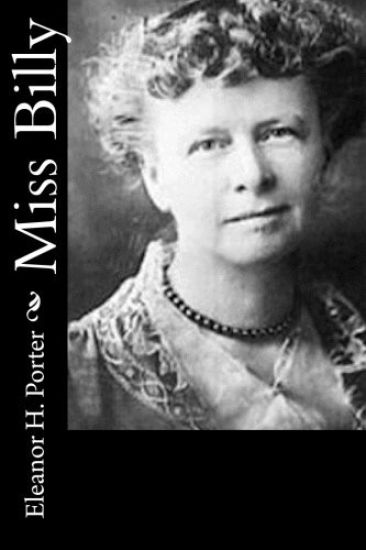
A young woman is orphaned and has no surviving family members to turn to. Desperate and alone, she reaches out to the only "family" she has left-a college chum of her father's, after whom she was named. Based on the name she signs at the bottom of the letter she sends to him, William Henshaw insists that she come to live with him and his brothers. When she arrives at the house and Henshaw realizes his error, everyone has some adjusting to do. Will this makeshift family be able to make it work?
Surprise a young reader in your life with this collection of charming and insightful short stories from the pen of author Eleanor H. Porter, best known for the widely acclaimed novel Pollyanna. Touching on an array of engaging subjects and timeless themes, these stories showcase Porter's gift for crafting memorable characters that often find themselves in unusual or trying circumstances that test their mettle.
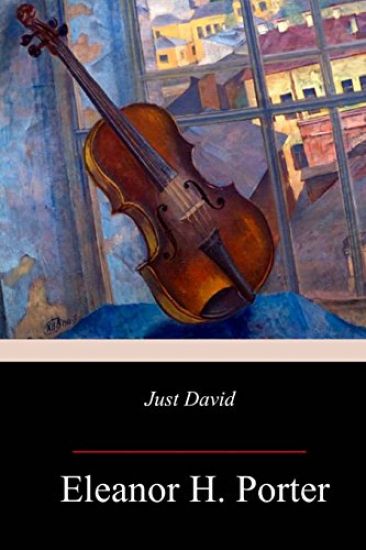
If you have a soft spot for Eleanor H. Porter's beloved novel Pollyanna, you should definitely add Just David to your reading list. Written just a few years after Porter penned her best-known work, this emotionally resonant and uplifting tale mines many of the same themes, albeit from a starkly different vantage-point. David is a young boy who has lived an extremely sheltered life in the mountains, with just his father and his beloved violin to keep him company. When his father is beset by a grave illness, David is thrust out of his idyllic existence and is forced to grapple with the reality of the outside world. Will this innocent be able to make it through this trying time with his virtue-and his life-intact?
Della Wetherby tripped up the somewhat imposing steps of her sister's Commonwealth Avenue home and pressed an energetic finger against the electric-bell button. From the tip of her wing-trimmed hat to the toe of her low-heeled shoe she radiated health, capability, and alert decision. Even her voice, as she greeted the maid that opened the door, vibrated with the joy of living." Good morning, Mary. Is my sister in?""Y-yes, ma'am, Mrs. Carew is in," hesitated the girl; "but-she gave orders she'd see no one.""Did she? Well, I'm no one," smiled Miss Wetherby, "so she'll see me. Don't worry-I'll take the blame," she nodded, in answer to the frightened remonstrance in the girl's eyes. "Where is she-in her sitting-room?""Y-yes, ma'am; but-that is, she said-" Miss Wetherby, however, was already halfway up the broad stairway; and, with a despairing backward glance, the maid turned away. In the hall above Della Wetherby unhesitatingly walked toward a half-open door, and knocked." Well, Mary," answered a "dear-me-what-now" voice. "Haven't I-Oh, Della " The voice grew suddenly warm with love and surprise. "You dear girl, where did you come from?""Yes, it's Della," smiled that young woman, blithely, already halfway across the room. "I've come from an over-Sunday at the beach with two of the other nurses, and I'm on my way back to the Sanatorium now. That is, I'm here now, but I sha'n't be long. I stepped in for-this," she finished, giving the owner of the "dear-me-what-now" voice a hearty kiss. Mrs. Carew frowned and drew back a little coldly. The slight touch of joy and animation that had come into her face fled, leaving only a dispirited fretfulness that was plainly very much at home there." Oh, of course I might have known," she said. "You never stay-here.""Here " Della Wetherby laughed merrily, and threw up her hands; then, abruptly, her voice and manner changed. She regarded her sister with grave, tender eyes. "Ruth, dear, I couldn't-I just couldn't live in this house. You know I couldn't," she finished gently. Mrs. Carew stirred irritably." I'm sure I don't see why not," she fenced. Della Wetherby shook her head." Yes, you do, dear. You know I'm entirely out of sympathy with it all: the gloom, the lack of aim, the insistence on misery and bitterness.""But I AM miserable and bitter.""You ought not to be.""Why not? What have I to make me otherwise?" Della Wetherby gave an impatient gesture." Ruth, look here," she challenged. "You're thirty-three years old. You have good health-or would have, if you treated yourself properly-and you certainly have an abundance of time and a superabundance of money. Surely anybody would say you ought to find SOMETHING to do this glorious morning besides sitting moped up in this tomb-like house with instructions to the maid that you'll see no one.""But I don't WANT to see anybody.""Then I'd MAKE myself want to." Mrs. Carew sighed wearily and turned away her head.
The final entry in Eleanor H. Porter's charming Billy series about a young orphan who finds love and acceptance in the family of her late father's college friend, Miss Billy Married concludes the trilogy with an account of the heroine's first few years as a newlywed. Through the ups and downs-including crossed wires with her new husband, difficulties in the domestic arena, and heartrending struggles with illness-Billy maintains the chipper attitude that has sustained her throughout all of life's difficulties.
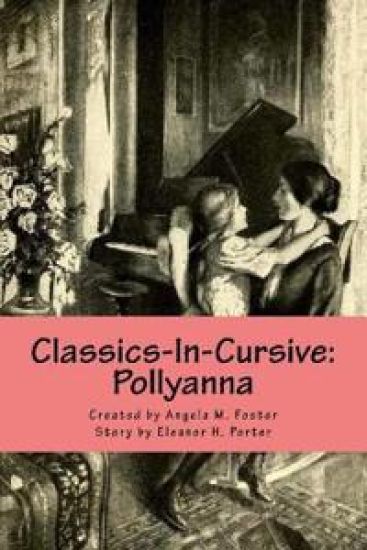
Pollyanna Whittier is an orphan who goes to live with her spinster Aunt Polly, who does not want to take in Pollyanna but feels it is her duty. Pollyanna is optimistic, has a positive attitude and introduces "The Glad Game" to many around her. The Classics-In-Cursive series publishes classic novels and story books in a cursive font. Why? There are so many "how to" and "practice" books out there for learning cursive handwriting, but what do you do after learning it? How do you keep the interest alive for many years to come? This is where the Classics-In-Cursive series comes in. It fills the large void by providing stories to read in cursive.
Pollyanna's novel was created in 1913 and is written by Eleanor H. Porter. Book action takes place in the United States at the turn of the 19th century. Tells the story of a girl who, after her father's death, goes to the home of a strict and despotic Aunt Polly. Pollyanna is nice and cheerful. Despite the tragedy she finds joy even in the most difficult situations. This best-selling novel is now considered a classic of children's literature. Pollyanna has been adapted for film several times. Some of the best known are Disney's 1960 version starring child actress Hayley Mills, who won a special Oscar for the role, and the 1920 version starring Mary Pickford. Our edition has a beautiful glossy cover and a blank page for dedication.
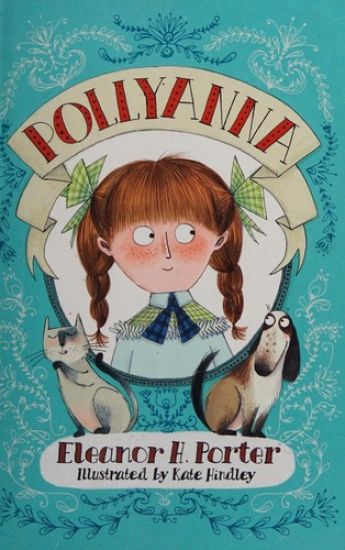
The orphan girl Pollyanna moves in with her strict aunt in New England. Despite a difficult start, Pollyanna’s exuberance and positivity affect everyone who meets her, and she spreads joy and love wherever she goes. But when tragedy strikes, Pollyanna finds her optimistic attitude tested, and she must learn to find happiness again. A heartwarming tale that has become one of the most loved children’s stories of all time, Eleanor H. Porter’s 1913 best-seller – the first in a long series of Pollyanna novels by the author and other writers – is a beautiful story with a powerful moral message.
Pollyanna is a best-selling 1913 novel by Eleanor H. Porter that is now considered a classic of children's literature, with the title character's name becoming a popular term for someone with the same very optimistic outlook. Also, the subconscious bias towards the positive is often described as the Pollyanna principle. The book was such a success that Porter soon produced a sequel, Pollyanna Grows Up (1915). Eleven more Pollyanna sequels, known as "Glad Books", were later published, most of them written by Elizabeth Borton or Harriet Lummis Smith. Further sequels followed, including Pollyanna Plays the Game by Colleen L. Reece, published in 1997.
Mrs. Carew stirred irritably. "I'm sure I don't see why not," she fenced. Della Wetherby shook her head. "Yes, you do, dear. You know I'm entirely out of sympathy with it all: the gloom, the lack of aim, the insistence on misery and bitterness." "But I AM miserable and bitter." "You ought not to be." "Why not? What have I to make me otherwise?" Della Wetherby gave an impatient gesture.
The lawyer stirred restlessly and pondered. "But, surely, my dear, isn't there some relative, somewhere?" he demanded. "How about your mother's people?" Billy shook her head. Her eyes filled again with tears. "There was only Aunt Ella, ever, that I knew anything about. She and mother were the only children there were, and mother died when I was a year old, you know." "But your father's people?" "It's even worse there. He was an only child and an orphan when mother married him. He died when I was but six months old. After that there was only mother and Aunt Ella, then Aunt Ella alone; and now-no one.
"Eh?" Arkwright laughed grimly. "Perhaps you thought of it yourself, then-I'll admit you're capable of it," he nodded, reaching for a cigar. "But it so happens you hit upon my family's favorite name for me." "Mary Jane You mean they actually call you that?" "Yes," bowed the big fellow, calmly, as he struck a light. "Appropriate -don't you think?" Calderwell did not answer. He thought he could not. "Well, silence gives consent, they say," laughed the other.
Pollyanna is a best-selling 1913 novel by Eleanor H. Porter that is now considered a classic of children's literature, with the title character's name becoming a popular term for someone with the same very optimistic outlook. Also, the subconscious bias towards the positive is often described as the Pollyanna principle. The book was such a success that Porter soon produced a sequel, Pollyanna Grows Up (1915). Eleven more Pollyanna sequels, known as "Glad Books", were later published, most of them written by Elizabeth Borton or Harriet Lummis Smith. Further sequels followed, including Pollyanna Plays the Game by Colleen L. Reece, published in 1997. Pollyanna has been adapted for film several times. Some of the best known are Disney's 1960 version starring child actress Hayley Mills, who won a special Oscar for the role, and the 1920 version starring Mary Pickford.
Classics for Your Collection: goo.gl/U80LCr --------- Upon the death of her father, Pollyanna is sent to live with her Aunt Polly, who - as she sees it - is doing her duty by her estranged dead sister's child. Pollyanna meets all sorts of new people, many of them worn down by their own challenging lives, and some of them emotionally distant as a result of lost lovers. She manages to transform not only her aunt but many other townspeople with the 'Glad Game' her father taught her. Always look for the silver lining in every cloud and you'll be bound to find it. Pollyanna, the eternal optimist, plays the 'glad game' where she always tries to find something to be glad about, no matter how challenging. Also, everyone who comes into contact with Pollyanna is happily inspired by her wonderful, positive outlook and becomes a more enlightened person because of it. ------- Pollyanna is a best-selling 1913 novel by Eleanor H. Porter that is now considered a classic of children's literature, with the title character's name becoming a popular term for someone with the same very optimistic outlook. Also, the subconscious bias towards the positive is often described as the Pollyanna principle. The book was such a success that Porter soon produced a sequel, Pollyanna Grows Up (1915). Eleven more Pollyanna sequels, known as "Glad Books", were later published, most of them written by Elizabeth Borton or Harriet Lummis Smith. Further sequels followed, including Pollyanna Plays the Game by Colleen L. Reece, published in 1997. Facts and Trivia: Pollyanna has been adapted for film several times. Some of the best known are Disney's 1960 version starring child actress Hayley Mills, who won a special Oscar for the role, and the 1920 version starring Mary Pickford. Scroll Up and Get Your Copy Timeless Classics for Your BookshelfClassic Books for Your Inspiration and Entertainment Visit Us at: goo.gl/U80LCr