Kirjojen hintavertailu – 12 903 724 kirjaa ja 27 kauppaa

Kirjailija

Elizabeth Edwards

Kirjat ja teokset yhdessä paikassa: 24 kirjaa, julkaisuja vuosilta 1981–2023, suosituimpiin kuuluu Raw Histories. Vertaile teosten hintoja ja tarkista saatavuus suomalaisista kirjakaupoista.

24 kirjaa

Kirjojen julkaisuvuodet: 1981–2023.

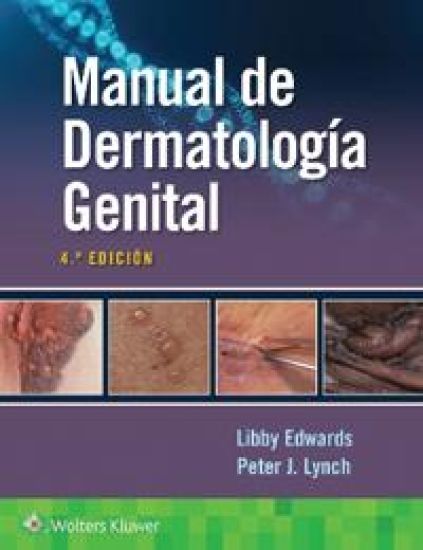
Manual de dermatología genital

Manual de dermatología genital

Elizabeth Edwards; Peter Lynch

LIPPINCOTT WILLIAMS AND WILKINS
2023
pokkari
Práctico y muy ilustrado, Manual de dermatología genital facilita a los clínicos de todos los niveles de experiencia el alcance de un diagnóstico preciso de las lesiones dermatológicas genitales, tanto habituales como infrecuentes. Con más de 500 fotografías a todo color ordenadas por aspecto para una rápida identificación, ofrece una magnífica orientación visual, incluso para afecciones no encontradas previamente. Esta referencia fácil de usar, ya en su 4.ª edición, es ideal para cualquier clínico que atienda a hombres y mujeres con afecciones en los genitales externos, incluidos dermatólogos, ginecólogos, y para urólogos, médicos de atención primaria, personal de enfermería especializado y asistentes médicos. Los libros de texto convencionales casi siempre ordenan y clasifican los trastornos según su causa (p. ej., infecciones) o fisiopatología (p. ej., enfermedades autoinmunes), y aunque esta organización puede ser intelectualmente satisfactoria, los doctores Libby Edwards y Peter J. Lynch la consideran de poca ayuda para los profesionales que se enfrentan a un trastorno desconocido. Por este motivo, han optado por un abordaje menos convencional y han ordenado los trastornos dermatológicos genitales en función de la morfología clínica. De este modo, el profesional puede consultar el capítulo adecuado, elaborar una lista de diagnósticos diferenciales, cotejar las fotografías, revisar la narrativa relacionada y, en casi todos los casos, establecer el diagnóstico más probable.

Genital Dermatology  Manual

Genital Dermatology Manual

Elizabeth Edwards; Peter Lynch

Wolters Kluwer Health
2022
pokkari
Selected as a Doody’s Core Title for 2025! Practical and highly illustrated, Genital Dermatology Manual, 4th Edition, by Drs. Libby Edwards and Peter J. Lynch, helps clinicians at all levels of experience arrive at an accurate diagnosis for both common and rare genital dermatologic lesions. More than 500 full-color photographs are arranged by appearance for rapid identification, offering superb visual guidance even for conditions not previously encountered. This easy-to-use reference is ideal for any clinician who sees men and women with disorders of the external genitalia, including dermatologists, gynecologists, urologists, primary care physicians, nurse practitioners, nurse midwives, and physician assistants. Arranges core chapters by disease presentation, such as patches and plaques, papules and nodules, and ulcers Includes variable morphologies, making it easier to arrive at a correct diagnosis even when encountering an atypical appearance of a common condition—for example, herpes simplex virus infection is discussed in chapters on blisters, erosions and ulcers, and special issues of immunosuppressed patients Updates include more clinical photographs throughout; an expanded therapy section including sinus tract un-roofing, vestibulectomy, lysis of adhesions and therapy of clitoral pseudocyst and phimosis; a new chapter on patient education; and new coverage of transgender and cosmetic issues Features chapters on special issues such as symptoms (itching and pain), immunosuppression, and pediatric, psychologic, and geriatric aspects of genital conditions Offers increased information on diagnostic and therapeutic procedures, as well as patient handouts suitable for copying and distribution Enrich Your eBook Reading Experience Read directly on your preferred device(s), such as computer, tablet, or smartphone. Easily convert to audiobook, powering your content with natural language text-to-speech.
Photographs and the Practice of History

Photographs and the Practice of History

Elizabeth Edwards

Bloomsbury Academic
2022
nidottu

Halvin toimitettuna 34,50 €

What is it to practice history in an age in which photographs exist? What is the impact of photographs on the core historiographical practices which define the discipline and shape its enquiry and methods? In Photographs and the Practice of History, Elizabeth Edwards proposes a new approach to historical thinking which explores these questions and redefines the practices at the heart of this discipline. Structured around key concepts in historical methodology which are recognisable to all undergraduates, the book shows that from the mid-19th century onward, photographs have influenced historical enquiry. Exposure to these mass-distributed cultural artefacts is enough to change our historical frameworks even when research is textually-based. Conceptualised as a series of ‘sensibilities’ rather than a methodology as such, it is intended as a companion to 'how to' approaches to visual research and visual sources. Photographs and the Practice of History not only builds on existing literature by leading scholars: it also offers a highly original approach to historiographical thinking that gives readers a foundation on which to build their own historical practices.
Photographs and the Practice of History

Photographs and the Practice of History

Elizabeth Edwards

Bloomsbury Academic
2022
sidottu
What is it to practice history in an age in which photographs exist? What is the impact of photographs on the core historiographical practices which define the discipline and shape its enquiry and methods? In Photographs and the Practice of History, Elizabeth Edwards proposes a new approach to historical thinking which explores these questions and redefines the practices at the heart of this discipline. Structured around key concepts in historical methodology which are recognisable to all undergraduates, the book shows that from the mid-19th century onward, photographs have influenced historical enquiry. Exposure to these mass-distributed cultural artefacts is enough to change our historical frameworks even when research is textually-based. Conceptualised as a series of ‘sensibilities’ rather than a methodology as such, it is intended as a companion to 'how to' approaches to visual research and visual sources. Photographs and the Practice of History not only builds on existing literature by leading scholars: it also offers a highly original approach to historiographical thinking that gives readers a foundation on which to build their own historical practices.
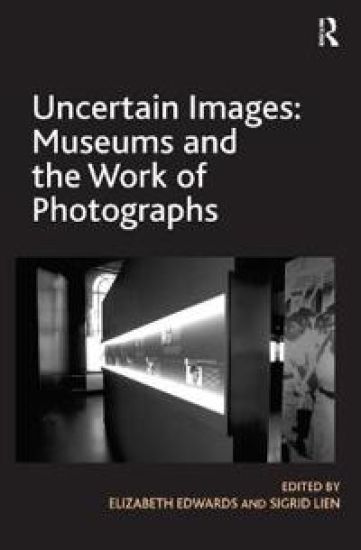
Uncertain Images: Museums and the Work of Photographs

Uncertain Images: Museums and the Work of Photographs

Elizabeth Edwards; Sigrid Lien

CRC Press Inc
2017
nidottu
Almost all museums hold photographs in their collections, and museum professionals and their audiences engage with photographs in a myriad of ways. Yet despite some three decades of critical museology and photographic theory, and an extensive debate on the politics of representation, outside art museums, almost no critical attention has been given specifically to the roles, purposes and lives of these photographs within museums. This book brings into focus the ubiquitous yet entirely unconsidered work that photographs are put to in museums. The authors' argument is that there is an economy of photographs in museums which is integral to the processes of the museum, and integral to the understanding of museums. The international contributors, drawn from curators and academics, reflect a range of visual and museological expertise. After an introduction setting out the range of questions and problems, the first part addresses broad curatorial strategies and ways of thinking about photographs in museums. Shifting the emphasis from curatorial practices and anxieties to the space of the gallery, this is followed by a series of case studies of exhibitionary practices and the museum strategies that support them. The third section focuses on the role of photographs in the museum articulation of ’difficult histories’. A final section addresses photograph collections in a digital environment. New technologies and new media have transformed the management, address and purposing in photographs in museums, from cataloguing practices to streaming on social media. These growing practices challenge both traditional hierarchies of knowledge in museums and the location of authority about photographs. The volume emerges from PhotoCLEC, a HERA funded project on museums and the photographic legacy of the colonial past in a postcolonial and multicultural Europe.
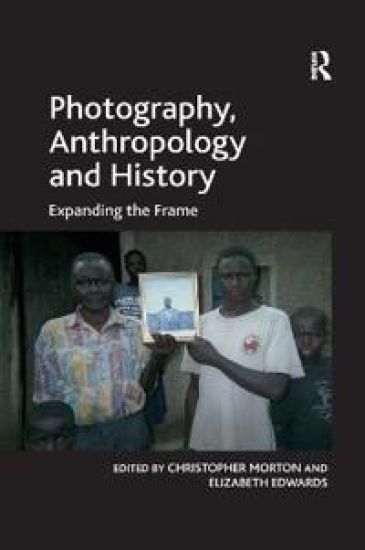
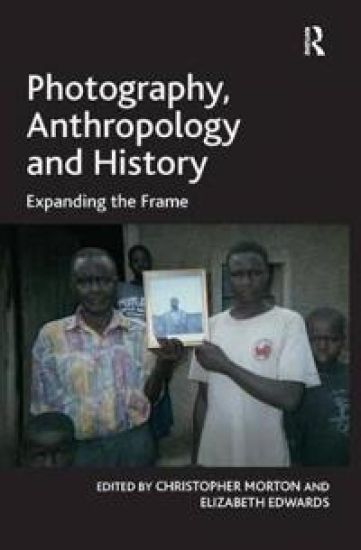
Photography, Anthropology and History

Photography, Anthropology and History

Elizabeth Edwards

Routledge
2016
nidottu
Photography, Anthropology and History examines the complex historical relationship between photography and anthropology, and in particular the strong emergence of the contemporary relevance of historical images. Thematically organized, and focusing on the visual practices developed within anthropology as a discipline, this book brings together a range of contemporary and methodologically innovative approaches to the historical image within anthropology. Importantly, it also demonstrates the ongoing relevance of both the historical image and the notion of the archive to recent anthropological thought. As current research rethinks the relationship between photography and anthropology, this volume will serve as a stimulus to this new phase of research as an essential text and methodological reference point in any course that addresses the relationship between anthropology and visuality.
The Journey of “A Good Type”

The Journey of “A Good Type”

David Odo; Elizabeth Edwards

Peabody Museum of Archaeology Ethnology,U.S.
2015
sidottu
When Japan opened its doors to the West in the 1860s, delicately hand-tinted photographic prints of Japanese people and landscapes were among its earliest and most popular exports. Renowned European photographers Raimund von Stillfried and Felice Beato established studios in Japan in the 1860s; the work was soon taken up by their Japanese proteges and successors Uchida Kuichi, Kusakabe Kimbei, and others. Hundreds of these photographs, collected by travelers from the Boston area, were eventually donated to Harvard s Peabody Museum of Archaeology and Ethnology, where they were archived for their ethnographic content and as scientific evidence of an exotic culture. In this elegant volume, visual anthropologist David Odo examines the Peabody s collection of Japanese photographs and the ways in which such objects were produced, acquired, and circulated in the nineteenth century. His innovative study reveals the images' shifting and contingent uses from tourist souvenir to fine art print to anthropological type record were framed by the desires and cultural preconceptions of makers and consumers alike. Understood as both images and objects, the prints embody complex issues of history, culture, representation, and exchange."
Uncertain Images: Museums and the Work of Photographs

Uncertain Images: Museums and the Work of Photographs

Elizabeth Edwards; Sigrid Lien

Ashgate Publishing Limited
2014
sidottu
Almost all museums hold photographs in their collections, and museum professionals and their audiences engage with photographs in a myriad of ways. Yet despite some three decades of critical museology and photographic theory, and an extensive debate on the politics of representation, outside art museums, almost no critical attention has been given specifically to the roles, purposes and lives of these photographs within museums. This book brings into focus the ubiquitous yet entirely unconsidered work that photographs are put to in museums. The authors' argument is that there is an economy of photographs in museums which is integral to the processes of the museum, and integral to the understanding of museums. The international contributors, drawn from curators and academics, reflect a range of visual and museological expertise. After an introduction setting out the range of questions and problems, the first part addresses broad curatorial strategies and ways of thinking about photographs in museums. Shifting the emphasis from curatorial practices and anxieties to the space of the gallery, this is followed by a series of case studies of exhibitionary practices and the museum strategies that support them. The third section focuses on the role of photographs in the museum articulation of ’difficult histories’. A final section addresses photograph collections in a digital environment. New technologies and new media have transformed the management, address and purposing in photographs in museums, from cataloguing practices to streaming on social media. These growing practices challenge both traditional hierarchies of knowledge in museums and the location of authority about photographs. The volume emerges from PhotoCLEC, a HERA funded project on museums and the photographic legacy of the colonial past in a postcolonial and multicultural Europe.
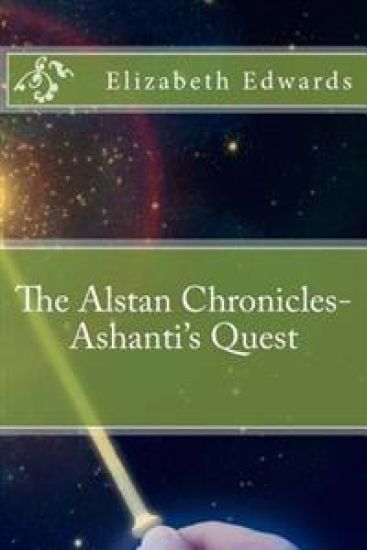
The Alstan Chronicles- Ashanti's Quest

The Alstan Chronicles- Ashanti's Quest

Elizabeth Edwards

Createspace Independent Publishing Platform
2013
pokkari
"Ashanti's Quest" is a children's fantasy novel from Elizabeth Edwards but can be enjoyed by adults and children alike. The novel tells the story of Alstan, a nation built both on land and in water, which comes under attack from the Dark Forces from the Voltan Mountains. 1000 years before, the Alstan general ignored prophecies which warned of a great war and his nation suffered the consequences. Now, as history threatens to repeat itself, the present general of Alstan determines not to make the same mistakes and consults the Book of Truths to save his nation. Against the wishes of her parents, Ashanti, a fourteen year old warrior apprentice, is sent on a quest to the Hetron Convention to bring back the Nagxov Orb, Alstan's only hope. She is pursued tirelessly by the Shadows of the Dark Forces and experiences many strange adventures along the way. Battling prejudice and doubt, she finally returns to Alstan with the orb. Through the unlikely assistance of her daydreaming younger sister and the arrogant prince of a neighbouring nation, Ashanti attempts to trick her enemy and fulfil the ancient prophecy. But is she to find that she is too late?" Ashanti's Quest" is the first in the series of "The Alstan Chronicles" but is also a complete story, to be enjoyed in its own right.
English-language Poetry from Wales 1789-1806

English-language Poetry from Wales 1789-1806

Elizabeth Edwards

University of Wales Press
2013
nidottu
In the period following the French revolution in 1789, Welsh poets continually reflected on the extraordinary new era in which they lived through their writing. Effortlessly ranging from Wales's deep and distant history to accounts of the most topical and urgent current affairs, their poems on war, Welshness, druids, parted lovers and sublime landscapes encompass the beautiful, the brutal and the mysterious. Facing a future that often seemed agonisingly uncertain, poets in Wales used their verses to voice their thoughts and feelings about events that had rocked the whole of Europe, and whose effects continued to be felt long after 1789. This new selection of poetry from Wales sets recently-discovered manuscript texts alongside little-known early printed poems, offering a full and accessible introduction to Welsh poetry in English in the period 1780-1820.
The Camera As Historian

The Camera As Historian

Elizabeth Edwards

Duke University Press
2012
sidottu
In the late nineteenth century and early twentieth, hundreds of amateur photographers took part in the photographic survey movement in England. They sought to record the material remains of the English past so that it might be preserved for future generations. In The Camera as Historian, the groundbreaking historical and visual anthropologist Elizabeth Edwards works with an archive of nearly 55,000 photographs taken by 1,000 photographers, mostly unknown until now. She approaches the survey movement and its social and material practices ethnographically. Considering how the amateur photographers understood the value of their project, Edwards links the surveys to concepts of leisure, understandings of the local and the national, and the rise of popular photography. Her examination of how the photographers negotiated between scientific objectivity and aesthetic responses to the past leads her to argue that the survey movement was as concerned with the conditions of its own modernity and the creation of an archive for an anticipated future as it was nostalgic about the imagined past. Including more than 120 vibrant images, The Camera as Historian offers new perspectives on the forces that shaped Victorian and Edwardian Britain, as well as on contemporary debates about cultural identity, nationality, empire, material practices, and art.
The Camera As Historian

The Camera As Historian

Elizabeth Edwards

Duke University Press
2012
pokkari
In the late nineteenth century and early twentieth, hundreds of amateur photographers took part in the photographic survey movement in England. They sought to record the material remains of the English past so that it might be preserved for future generations. In The Camera as Historian, the groundbreaking historical and visual anthropologist Elizabeth Edwards works with an archive of nearly 55,000 photographs taken by 1,000 photographers, mostly unknown until now. She approaches the survey movement and its social and material practices ethnographically. Considering how the amateur photographers understood the value of their project, Edwards links the surveys to concepts of leisure, understandings of the local and the national, and the rise of popular photography. Her examination of how the photographers negotiated between scientific objectivity and aesthetic responses to the past leads her to argue that the survey movement was as concerned with the conditions of its own modernity and the creation of an archive for an anticipated future as it was nostalgic about the imagined past. Including more than 120 vibrant images, The Camera as Historian offers new perspectives on the forces that shaped Victorian and Edwardian Britain, as well as on contemporary debates about cultural identity, nationality, empire, material practices, and art.
Resilience

Resilience

Elizabeth Edwards

Broadway Books (A Division of Bantam Doubleday Dell Publishing Group Inc)
2010
pokkari
The bestselling author of "Saving Graces" shares her inspirational message on the challenges and blessings of coping with adversity. She's one of the most beloved political figures in the country, and on the surface, seems to have led a charmed life. In many ways, she has. Beautiful family. Thriving career. Supportive friendship. Loving marriage. But she's no stranger to adversity. Many know of the strength she had shown after her son, Wade, was killed in a freak car accident when he was only sixteen years old. She would exhibit this remarkable grace and courage again when the very private matter of her husband's infidelity became public fodder. And her own life has been on the line. Days before the 2004 presidential election--when her husband John was running for vice president--she was diagnosed with breast cancer. After rounds of surgery, chemotherapy, and radiation the cancer went away--only to reoccur in 2007. While on the campaign trail, Elizabeth met many others who have had to contend with serious adversity in their lives, and in "Resilience," she draws on their experiences as well as her own, crafting an unsentimental and ultimately inspirational meditation on the gifts we can find among life's biggest challenges. This short, powerful, pocket-sized inspirational book makes an ideal gift for anyone dealing with difficulties in their life, who can find peace in knowing they are not alone, and promise that things can get better." " "From the Hardcover edition."
Photography, Anthropology and History

Photography, Anthropology and History

Elizabeth Edwards

Ashgate Publishing Limited
2009
sidottu
Photography, Anthropology and History examines the complex historical relationship between photography and anthropology, and in particular the strong emergence of the contemporary relevance of historical images. Thematically organized, and focusing on the visual practices developed within anthropology as a discipline, this book brings together a range of contemporary and methodologically innovative approaches to the historical image within anthropology. Importantly, it also demonstrates the ongoing relevance of both the historical image and the notion of the archive to recent anthropological thought. As current research rethinks the relationship between photography and anthropology, this volume will serve as a stimulus to this new phase of research as an essential text and methodological reference point in any course that addresses the relationship between anthropology and visuality.
Science Next

Science Next

Elizabeth Edwards

Bellevue Literary Press
2009
pokkari
"As we turn the page on eight years of cynical science policy in the White House, Science Next is exactly the book we need, with more provocative ideas per ounce than any volume you are likely to read this year."--Michael Pollan, author of In Defense of Food "Science Next addresses important topics in science policy in prose that is beautifully written, clear, and to the point."--Marion Nestle, author of Food Politics and What to Eat "Science Next illustrates the profound connections between science and many facets of our society. I have enjoyed hop-scotching through the book and others who are concerned about the need for evidence-based policies in government and industry will too."--Harold Varmus, Nobel Prize-winning author of The Art and Politics of Science "This elegant book lucidly covers an impressive amount of territory and sheds light on the current horizons of science. It links science and innovation policy. It bridges between the laboratory and the policy community. As such it will be invaluable to informed citizens, scientists and policy makers alike." --John Kao, author of Innovation Nation Emerging from the Bush era when right-wing ideology frequently trumped mainstream science in government, America needs bold new approaches to the most important issues of our time, such as global warming, stem cell research, national security, and improving communication in the digital age. This is the informed citizen's essential guide to science policy from the premier progressive think tank dedicated to improving the lives of Americans through ideas and action. With foreword by Elizabeth Edwards. Jonathan D. Moreno is editor-in-chief of the Center for American Progress' online magazine, Science Progress, and a professor of bioethics at the University of Pennsylvania. Rick Weiss came to CAP from The Washington Post, where he was a science and medical reporter for fifteen years.
Too Soon Old, Too Late Smart

Too Soon Old, Too Late Smart

Elizabeth Edwards; Gordon Livingston

Da Capo Press Inc
2008
pokkari

Halvin toimitettuna 20,90 €

After service in Vietnam, as a surgeon for the 11th Armored Cavalry Regiment in 1968-69, at the height of the war, Dr. Gordon Livingston returned to the U. S. and began work as a psychiatrist. In that capacity, he has listened to people talk about their lives-what works, what doesn't, and the limitless ways (many of them self-inflicted) that people find to be unhappy. He is also a parent twice bereaved in one thirteen-month period, he lost his eldest son to suicide, his youngest to leukemia. Out of a lifetime of experience, Gordon Livingston has extracted thirty bedrock truths: We are what we do. Any relationship is under the control of the person who cares the least. The perfect is the enemy of the good. Only bad things happen quickly. Forgiveness is a form of letting go, but they are not the same thing. The statute of limitations has expired on most of our childhood traumas. Livingston illuminates these and twenty-four others in a series of carefully hewn, perfectly calibrated essays, many of which focus on our closest relationships and the things that we do to impede or, less frequently, enhance them. Again and again, these essays underscore that we are what we do," and that while there may be no escaping who we are, we have the capacity to face loss, misfortune, and regret and to move beyond them-that it is not too late. Full of things we may know but have not articulated to ourselves, Too Soon Old, Too Late Smart offers solace, guidance, and hope to everyone ready to become the person they'd most like to be.
Raw Histories

Raw Histories

Elizabeth Edwards

Berg Publishers
2001
nidottu
Photographs have had an integral and complex role in many anthropological contexts, from fieldwork to museum exhibitions. This book explores how approaching anthropological photographs as 'history' can offer both theoretical and empirical insights into these roles. Photographs are thought to make problematic history because of their ambiguity and 'rawness'. In short, they have too many meanings. The author refutes this prejudice by exploring, through a series of case studies, precisely the potential of this raw quality to open up new perspectives. Taking the nature of photography as her starting point, the author argues that photographs are not merely pictures of things but are part of a dynamic and fluid historical dialogue, which is active not only in the creation of the photograph but in its subsequent social biography in archive and museum spaces, past and present. In this context, the book challenges any uniform view of anthropological photography and its resulting archives. Drawing on a variety of examples, largely from the Pacific, the book demonstrates how close readings of photographs reveal not only western agendas, but also many layers of differing historical and cross-cultural experiences. That is, photographs can 'spring leaks' to show an alternative viewpoint. These themes are developed further by examining the dynamics of photographs and issues around them as used by contemporary artists and curators and presented to an increasingly varied public. This book convincingly demonstrates photographs' potential to articulate histories other than those of their immediate appearances, a potential that can no longer be neglected by scholars and institutions.
Raw Histories

Raw Histories

Elizabeth Edwards

Berg Publishers
2001
sidottu
Photographs have had an integral and complex role in many anthropological contexts, from fieldwork to museum exhibitions. This book explores how approaching anthropological photographs as 'history' can offer both theoretical and empirical insights into these roles. Photographs are thought to make problematic history because of their ambiguity and 'rawness'. In short, they have too many meanings. The author refutes this prejudice by exploring, through a series of case studies, precisely the potential of this raw quality to open up new perspectives. Taking the nature of photography as her starting point, the author argues that photographs are not merely pictures of things but are part of a dynamic and fluid historical dialogue, which is active not only in the creation of the photograph but in its subsequent social biography in archive and museum spaces, past and present. In this context, the book challenges any uniform view of anthropological photography and its resulting archives. Drawing on a variety of examples, largely from the Pacific, the book demonstrates how close readings of photographs reveal not only western agendas, but also many layers of differing historical and cross-cultural experiences. That is, photographs can 'spring leaks' to show an alternative viewpoint. These themes are developed further by examining the dynamics of photographs and issues around them as used by contemporary artists and curators and presented to an increasingly varied public. This book convincingly demonstrates photographs' potential to articulate histories other than those of their immediate appearances, a potential that can no longer be neglected by scholars and institutions.