Kirjojen hintavertailu – 12 859 818 kirjaa ja 27 kauppaa
Kirjailija
Elizabeth Gaskell
Kirjat ja teokset yhdessä paikassa: 268 kirjaa, julkaisuja vuosilta 1976–2026, suosituimpiin kuuluu Ruth. Vertaile teosten hintoja ja tarkista saatavuus suomalaisista kirjakaupoista.
Elizabeth Cleghorn Gaskell, n e Stevenson (29 September 1810 - 12 November 1865), often referred to simply as Mrs Gaskell, was a British novelist and short story writer during the Victorian era. Her novels offer a detailed portrait of the lives of many strata of society, including the very poor, and are of interest to social historians as well as lovers of literature. Gaskell was also the first to write a biography of Charlotte Bronte, The Life of Charlotte Bronte, which was published in 1857.
One of literature's greatest romances, North and South by Elizabeth Gaskell is both an incisive social commentary and an electric portrayal of all-conquering love. This edition features an afterword by Kathryn White. North and South is part of the Macmillan Collector’s Library; a series of stunning, pocket-sized classics bound in real cloth with gold foiled edges and ribbon markers. These beautiful books make perfect gifts or a treat for any book lover. Forced to move from the rural tranquillity of southern England to the turbulent northern mill town of Milton, Margaret Hale takes an instant dislike to the dirt and noise that seems to characterize her new home and its inhabitants - even the handsome and charismatic cotton mill owner, John Thornton. But as she begins to settle in, and to understand the nature of the surrounding poverty and injustice, events conspire to throw her and Thornton together. Amidst the chaos of industrial unrest, they must learn to overcome the prejudices of class and circumstance and admit their feelings for one another.
Wives and Daughters is a novel by Elizabeth Gaskell, first published in the Cornhill Magazine as a serial from August 1864 to January 1866. It was partly written whilst Gaskell was staying with the salon hostess Mary Elizabeth Mohl at her home on the Rue de Bac in Paris. When Mrs Gaskell died suddenly in 1865, it was not quite complete, and the last section was written by Frederick Greenwood. The story is about Molly Gibson, the only daughter of a widowed doctor living in a provincial English town in the 1830s. PLOT: The novel opens with young Molly Gibson, who has been raised by her widowed father, Dr. Gibson. During a visit to the local aristocratic 'great house' of Lord and Lady Cumnor, Molly loses her way in the estate and falls asleep under a tree. Lady Cuxhaven (one of the daughters of the house) and Mrs. Kirkpatrick (an ex-governess to the Cumnor children) find Molly in her slumbering state and Molly is put to bed in Mrs. Kirkpatrick's room. There are allusions to the latter as Miss Clare, her maiden name. Clare appears to be a kind woman and assures Molly that she will wake her up when it is time for the entourage to leave. However, she forgets to do so and Molly is stranded in the mansion. She is distressed at the thought of spending the night at the mansion. To her relief, her father arrives to collect her. Seven years later, Molly is described as an attractive and rather unworldly young woman, which arouses the interest of one of her father's apprentices, Mr. Coxe. Mr Gibson discovers the young man's secret affection and sends Molly to stay with the Hamleys of Hamley Hall, a gentry family that purportedly dates from the Heptarchy but whose circumstances are now reduced. Molly forms a close attachment with Mrs. Hamley, who embraces her almost as a daughter. Molly also befriends the younger son, Roger. Molly is aware that, as the daughter of a professional man, she would not be considered a suitable match for the sons of Squire Hamley. The elder son Osborne, is expected to make a brilliant marriage after an excellent career at Cambridge: he is handsome, clever and more fashionable than his brother. However, he has performed poorly at university, breaking the hearts of his parents. Molly accidentally discovers his great secret: Osborne has married for love, to a French Roman Catholic ex-nursery maid, Aimee, whom he has established in a secret cottage as he is convinced that his father would never accept Aim e as his daughter-in-law. During Molly's absence from the house, Mr. Gibson contemplates a second marriage. He expects that marriage will improve his domestic comfort and provide Molly with a mother figure to shield her from influences such as Mr. Coxe. He finds Miss Clare ideally matched to his requirements and recalls her apparent kindness to Molly many years ago. Molly remembers her from their previous encounter and has little love for her. For her father's sake, she does her best to get on with her socially ambitious and selfish stepmother, but the home is not always happy. However, Molly does find an ally in her new stepsister, Cynthia, who is about the same age as Molly. The two girls are a study in contrasts: Cynthia is far more worldly and rebellious than Molly, who is naive and slightly awkward. Cynthia has been educated in France, and it gradually becomes apparent that she and her mother have secrets in their past, involving the land agent from the great house, Mr. Preston, who is rumoured to be a gambler and a scoundrel. Osborne Hamley's failures make his invalid mother's illness worse and widens the divide between him and his father, which is amplified by the considerable debts Osborne has run up in maintaining his secret wife. ... Elizabeth Cleghorn Gaskell, (n e Stevenson; 29 September 1810 - 12 November 1865), often referred to as Mrs Gaskell, was an English novelist and short story writer....
North and South is a social novel by English writer Elizabeth Gaskell. With Wives and Daughters (1865) and Cranford (1853), it is one of her best-known novels and was adapted for television twice (1975 and 2004). The later version renewed interest in the novel and attracted a wider readership. Gaskell's first novel, Mary Barton (1848), focused on relations between employers and workers in Manchester from the perspective of the working poor; North and South uses a protagonist from southern England to present and comment on the perspectives of mill owners and workers in an industrialising city. 1] The novel is set in the fictional industrial town of Milton in the north of England. Forced to leave her home in the tranquil, rural south, Margaret Hale settles with her parents in Milton. She witnesses the brutal world wrought by the Industrial Revolution, seeing employers and workers clashing in the first strikes. Sympathetic to the poor (whose courage and tenacity she admires and among whom she makes friends), she clashes with John Thornton: a nouveau riche cotton-mill owner who is contemptuous of his workers. The novel traces her growing understanding of the complexity of labour relations and their impact on well-meaning mill owners and her conflicted relationship with John Thornton. Gaskell based her depiction of Milton on Manchester, where she lived as the wife of a Unitarian minister. Plot: Nineteen-year-old Margaret Hale happily returns home from London to the idyllic southern village of Helstone after her cousin Edith marries Captain Lennox. She lived for almost 10 years in the city with Edith and wealthy Aunt Shaw to learn to be a young lady. Margaret has refused an offer of marriage from the captain's brother, Henry, am up-and-comng barrister. Her life is turned upside down when her father, the local pastor, leaves the Church of England and the rectory of Helstone as a matter of conscience; his intellectual honesty has made him a dissenter. At the suggestion of Mr. Bell, his old friend from Oxford, he settles with his wife and daughter in Milton-Northern (where Mr. Bell was born and owns property). The industrial town in Darkshire (a textile-producing region) manufactures cotton and is in the middle of the Industrial Revolution; masters and workers are clashing in the first organised strikes. 11] Margaret finds the bustling, smoky town of Milton harsh and strange, and she is upset by its poverty. Mr. Hale (in reduced financial circumstances) works as a tutor; one of his pupils is wealthy and influential manufacturer John Thornton, master of Marlborough Mills. From the outset, Margaret and Thornton are at odds with each other; she sees him as coarse and unfeeling, and he sees her as haughty. He is attracted to her beauty and self-assurance, and she begins to admire how he has risen from poverty. During the 18 months she spends in Milton Margaret gradually learns to appreciate the city and its hard-working people, especially Nicholas Higgins (a union representative) and his daughter Bessy, whom she befriends. Bessy is ill with byssinosis from inhaling cotton dust, which eventually kills her. Margaret's mother is becoming sicker, and a workers' strike is brewing..... Elizabeth Cleghorn Gaskell, (n e Stevenson; 29 September 1810 - 12 November 1865), often referred to as Mrs Gaskell, was an English novelist and short story writer. Her novels offer a detailed portrait of the lives of many strata of Victorian society, including the very poor, and are of interest to social historians as well as lovers of literature. Her first novel, Mary Barton, was published in 1848. Gaskell's The Life of Charlotte Bront , published in 1857, was the first biography of Bront . Some of Gaskell's best known novels are Cranford (1851-53), North and South (1854-55), and Wives and Daughters (1865)........
Cranford is one of the better-known novels of the 19th-century English writer Elizabeth Gaskell. It was first published, irregularly, in eight instalments, between December 1851 and May 1853, in the magazine Household Words, which was edited by Charles Dickens. It was then published, with minor revision, in book form in 1853. The book is narrated by Mary Smith, a young woman who frequently visits the town and, when away, remains abreast of events through correspondence with the other characters. The first chapter introduces the leading women of Cranford, idiosyncratic yet endearing characters who hope to preserve their lifestyles (and all-important social customs) from change. Rowena Fowler, possessor of a red silk umbrella, conservatively considers an heir while her infirm body has outlived her kin. Miss Betty Barker is also determined to preserve the past, but in the form of her cow, which she sews pyjamas for, as it lost all of its hair after falling into a lime-pit. As for Miss Deborah Jenkyns, she establishes the norms and customs by which the town must abide. However, when Captain Brown moves to town, he challenges the women's rules of politeness. First, he openly admits his own poverty. This is particularly awful to Miss Deborah Jenkyns, whom Brown also offends by finding Charles Dickens a better writer than Jenkyns' preferred "Dr. Johnson" (Samuel Johnson). Nevertheless, Brown's warm manner subdues his detractors' contention of his supposed social awkwardness; therefore, they allow him to bypass custom and visit before noon. Brown also has two daughters: Miss Brown, an ill-tempered woman with hardened features, and Miss Jessie, who has an innocent face and, like her father, is naive to Cranford's rules. For instance, Miss Jessie boasts that her uncle can provide her with large amounts of Shetland wool. When aristocratic Miss Jamieson overhears, she takes exception to Miss Jessie putting on airs..... Elizabeth Cleghorn Gaskell, (n e Stevenson; 29 September 1810 - 12 November 1865), often referred to as Mrs Gaskell, was an English novelist and short story writer. Her novels offer a detailed portrait of the lives of many strata of Victorian society, including the very poor, and are of interest to social historians as well as lovers of literature. Her first novel, Mary Barton, was published in 1848. Gaskell's The Life of Charlotte Bront , published in 1857, was the first biography of Bront . Some of Gaskell's best known novels are Cranford (1851-53), North and South (1854-55), and Wives and Daughters (1865).
Mary Barton is the first novel by English author Elizabeth Gaskell, published in 1848. The story is set in the English city of Manchester between 1839 and 1842, and deals with the difficulties faced by the Victorian working class. It is subtitled "A Tale of Manchester Life". Plot summary: The novel begins in Manchester, where we are introduced to the Bartons and the Wilsons, two working-class families. John Barton is a questioner of the distribution of wealth and the relations between rich and poor. Soon his wife dies-he blames it on her grief over the disappearance of her sister Esther. Having already lost his son Tom at a young age, Barton is left to raise his daughter, Mary, alone and now falls into depression and begins to involve himself in the Chartist, trade-union movement. Chapter 1 takes place in countryside where Moss Side is now. Mary takes up work at a dressmaker's (her father having objected to her working in a factory) and becomes subject to the affections of hard-working Jem Wilson and Harry Carson, son of a wealthy mill owner. She fondly hopes, by marrying Carson, to secure a comfortable life for herself and her father, but immediately after refusing Jem's offer of marriage she realises that she truly loves him. She therefore decides to evade Carson, planning to show her feelings to Jem in the course of time. Jem believes her decision to be final, though this does not change his feelings for her. Meanwhile, Esther, a "street-walker," returns to warn John Barton that he must save Mary from becoming like her. He simply pushes her away, however, and she's sent to jail for a month on the charge of vagrancy. Upon her release she talks to Jem with the same purpose. He promises that he will protect Mary and confronts Carson, eventually entering into a fight with him, which is witnessed by a policeman passing by. Not long afterwards, Carson is shot dead, and Jem is arrested for the crime, his gun having been found at the scene. Esther decides to investigate the matter further and discovers that the wadding for the gun was a piece of paper on which is written Mary's name. She visits her niece to warn her to save the one she loves, and after she leaves Mary realises that the murderer is not Jem but her father. She is now faced with having to save her lover without giving away her father. With the help of Job Legh (the intelligent grandfather of her blind friend Margaret), Mary travels to Liverpool to find the only person who could provide an alibi for Jem - Will Wilson, Jem's cousin and a sailor, who was with him on the night of the murder. Unfortunately, Will's ship is already departing, so that, after Mary chases after the ship in a small boat, the only thing Will can do is promise to return in the pilot ship and testify the next day. During the trial, Jem learns of Mary's great love for him. Will arrives in court to testify, and Jem is found "not guilty". Mary has fallen ill during the trial and is nursed by Mr Sturgis, an old sailor, and his wife. When she finally returns to Manchester she has to face her father, who is crushed by his remorse. He summons John Carson, Harry's father, to confess to him that he is the murderer. Carson is still set on justice, but after turning to the Bible he forgives Barton, who dies soon afterwards in Carson's arms. Not long after this Esther comes back to Mary's home, where she, too, soon dies. Jem decides to leave England, where, his reputation damaged, it would be difficult for him to find a new job. The novel ends with the wedded Mary and Jem, their little child, and Mrs Wilson living happily in Canada. News comes that Margaret has regained her sight and that she and Will, soon to be married, will visit.... Elizabeth Cleghorn Gaskell, (n e Stevenson; 29 September 1810 - 12 November 1865), often referred to as Mrs Gaskell, was an English novelist and short story writer.
Marie Barton: roman anglais / Mrs Gaskell; traduit avec l'autorisation de l'auteur par Mlle MorelDate de l'edition originale: 1882Ce livre est la reproduction fidele d'une oeuvre publiee avant 1920 et fait partie d'une collection de livres reimprimes a la demande editee par Hachette Livre, dans le cadre d'un partenariat avec la Bibliotheque nationale de France, offrant l'opportunite d'acceder a des ouvrages anciens et souvent rares issus des fonds patrimoniaux de la BnF. Les oeuvres faisant partie de cette collection ont ete numerisees par la BnF et sont presentes sur Gallica, sa bibliotheque numerique. En entreprenant de redonner vie a ces ouvrages au travers d'une collection de livres reimprimes a la demande, nous leur donnons la possibilite de rencontrer un public elargi et participons a la transmission de connaissances et de savoirs parfois difficilement accessibles. Nous avons cherche a concilier la reproduction fidele d'un livre ancien a partir de sa version numerisee avec le souci d'un confort de lecture optimal. Nous esperons que les ouvrages de cette nouvelle collection vous apporteront entiere satisfaction. Pour plus d'informations, rendez-vous sur www.hachettebnf.fr
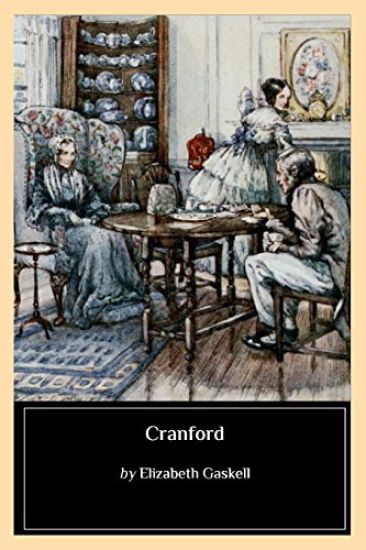
Classics for Your Collection: goo.gl/U80LCr --------- Cranford follows a group of women living in the small fictional town of Cranford. The women live in "genteel poverty" and have very old-fashioned mindsets about life and social niceties and norms. The book is told from the perspective of Mary Smith (or Elizabeth Gaskell), and focuses mainly on Miss Matty, a sweet-tempered older woman who is one of the pillars of society since the death of her older, revered sister Deborah Jenkyns. Cranford is a village of people who, at the risk of seeming pretentious, choose to ignore anything uncomfortable, anything that suggests lack. For example, the person who cannot afford a maid would hire someone temporarily when entertaining friends and pretend as if the maid is a permanent fixture, even though she is aware that everyone knows this is false. No one speaks of another's wants, so imagine the disdain when a newcomer, Captain Brown, arrives and cannot stop speaking simply and openly about his poverty. These small exchanges, highlighted by Gaskell's stylized prose, do add mirth to this ceremonial narrative. Gaskell has done something quite groundbreaking with this novel. As a town where its chief members are middle-class, single women who have little regard for the goings-on outside their insulated community, Cranford is almost matriarchal. And when compared with the world outside, Gaskell clearly suggests it is not Cranford that is to be found wanting. In fact, the way in which she highlights the lives of single women in the Victorian period is quite brilliant. Women who seem to be old-fashioned snobs prove to be strong, compassionate, caring, and self-sufficient. These women care for each other so much that it would make you feel awestruck. No one can read the little tales about Cranford and their tragedies and joys and not feel twitterpated. NO ONE. It's a perfect little lace-trimmed window into the soul of a town trapped in a very particular era, with a very particular state of mind. Overall, 'Cranford' is a delightful place to visit, and you will be sad when forced to leave (when you finish reading the book ) Scroll Up and Get Your Copy Timeless Classics for Your Bookshelf (Available at Amazon's CreateSpace) Classic Books for Your Inspiration and Entertainment Visit Us at: goo.gl/0oisZU
Classics for Your Collection: goo.gl/U80LCr --------- Cousin Phillis is a lovely little novella about a young man's coming of age and his growing friendship with his cousin Phillis who lives on a farm in Northern England and his boss Holdsworth who is an engineer. Gaskell is a wonderful painter of words and with deft strokes of her brush is able to impart to a contemporary reader what life in pastoral England in the mid-nineteenth century was like. She is able to convey in such a short book what life on a farm is like but also what life is like for the servants, the clergy, the upper classes and the professionals. She paints sympathetic portraits of all her characters and with compassion is able to see the world through their eyes which is mitigated by class, upbringing, gender, education and spiritual leanings. Against this lovely backdrop is the development of a quasi love triangle among young Paul, his cousin Phillis and the intelligent roguish Holdsworth. There are elements of restrained homosexual desire, heterosexual passions and the fine lines between platonic and romantic love. All this and there is not one passionate kiss among any of the trio. Characters Paul Manning (the narrator, Phillis's cousin) Mr Manning (Paul's father) Mr Edward Holdsworth Mr Holman (independent church minister) Mrs Holman Miss Phillis Holman Mr Ellison (Mr Manning's business partner) Miss Lucille Ventadur (at last Mr Holdsworth's wife) Betty (the servant at Holman house) Scroll Up and Get Your Copy Timeless Classics for Your Bookshelf (Available at Amazon's CreateSpace) Classic Books for Your Inspiration and Entertainment Visit Us at: goo.gl/0oisZU
Elizabeth Cleghorn Gaskell, 29 September 1810 - 12 November 1865), often referred to as Mrs Gaskell, was an English novelist and short story writer during the Victorian era. Her novels offer a detailed portrait of the lives of many strata of society, including the very poor, and are of interest to social historians as well as lovers of literature. Her first novel, Mary Barton, was published in 1848. Gaskell's The Life of Charlotte Bront , published in 1857, was the first biography about Bront . Some of Gaskell's best known novels are Cranford (1851-53), North and South (1854-55), and Wives and Daughters (1865). Gaskell was born Elizabeth Cleghorn Stevenson on 29 September 1810 at 93 Cheyne Walk, Chelsea. She was the youngest of eight children; only she and her brother John survived infancy. Her father, William Stevenson, was a Scottish Unitarian minister at Failsworth, Lancashire, but resigned his orders on conscientious grounds and moved to London in 1806 with the intention of going to India after he was appointed private secretary to the Earl of Lauderdale, who was to become Governor General of India. That position did not materialise, however, and instead Stevenson was nominated Keeper of the Treasury Records. His wife, Elizabeth Holland, came from a family from the English Midlands that was connected with other prominent Unitarian families, including the Wedgwoods, the Martineaus, the Turners and the Darwins. When she died 13 months after giving birth to her youngest daughter, 1] she left a bewildered husband who saw no alternative for Elizabeth but to be sent to live with her mother's sister, Hannah Lumb, in Knutsford, Cheshire