Kirjailija
Emilia Pardo Bazán
Kirjat ja teokset yhdessä paikassa: 487 kirjaa, julkaisuja vuosilta 1993–2026, suosituimpiin kuuluu Emilia Pardo Bazan. Vertaile teosten hintoja ja tarkista saatavuus suomalaisista kirjakaupoista.
Nimi esiintyy myös muodoissa: Emilia Pardo Bazan, Emilia Pardo-Bazan, Emilia Pardo Bazàn
487 kirjaa
Kirjojen julkaisuvuodet: 1993–2026.
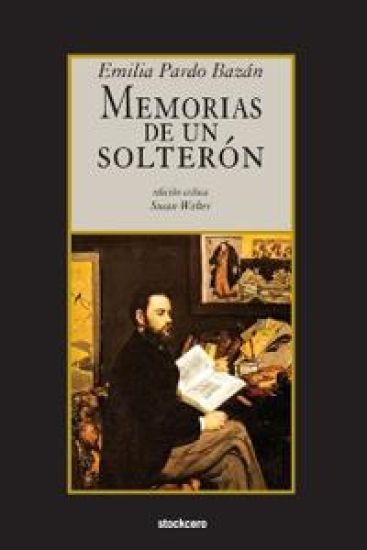
Emilia Pardo Baz n's Memoirs of a Bachelor (1896) - (Memorias de un solter n) is a novel that examines and questions the traditional roles assigned to men and women within society. Through an introspective narrative -in the voice of the male character- the author questions the idealized model of women as home angels, revealing its harmful effects on both women and men. The novel exposes the rigidity of traditional sexual roles, and suggests that such patterns hinder the possibility of establishing balanced, free, and fully satisfying marital relationships. First published as a serialized novel in La Espa a Moderna magazine, it was only republished in Spain during the author lifetime in volume XIV of her Complete Works; however, translations were published in England, Germany, Italy, and France, countries more receptive to progressive ideas than Spain. Following common practices in the novels of the time, some of the characters in Memorias... also appear in other novels by Pardo Baz n, such as the rebel Fe ta Neira, her sisters and father, main characters in the previous novel Do a Milagos (1894, included in The Cycle of Adam and Eve), as well as Baltasar Sobrado (previously in Do a Milagros and La tribuna, published in 1883). In her introductory study to this edition, Susan Walter (University of Denver) analyzes certain key themes (the role of women, the double moral standard, the dynamics of bourgeois marriage, gossip) in the context of Bourbon Restoration Spain (1874-1931), a long period of relative political stability. She also presents a brief biographical sketch of the author, the coordinates of the prescriptive model of feminine behavior known as the home angel, and information on female education at the time. A detailed set of footnotes facilitates comprehension for the modern reader, making this edition ideal for courses in both Peninsular Literature and Women's Studies.
Certàmen Literatio En ConmemoraciÃ3n Del Segundo Centenario Del Nacimiento De Fray Benito JerÃ3nimo FeijÃ3o
Emilia Pardo Bazàn
Hutson Street Press
2025
sidottu
Certàmen Literatio En ConmemoraciÃ3n Del Segundo Centenario Del Nacimiento De Fray Benito JerÃ3nimo FeijÃ3o
Emilia Pardo Bazàn
Hutson Street Press
2025
pokkari
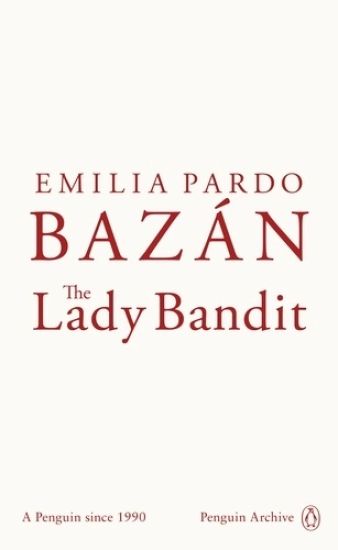
90 classic titles celebrating 90 years of Penguin BooksPriests with shotguns, scheming lovers and a necrophiliac gravedigger haunt the fables of Emilia Pardo Bazán, the formidable Spanish aristocrat, intellectual and feminist. These stories paint a rich and variegated image of Old Spain – sometimes tender, often provocative, always entertaining. But if you decide to visit, beware the Lady Bandit, whose strong, rough hands might grab your neck, and squeeze and squeeze and squeeze . . .
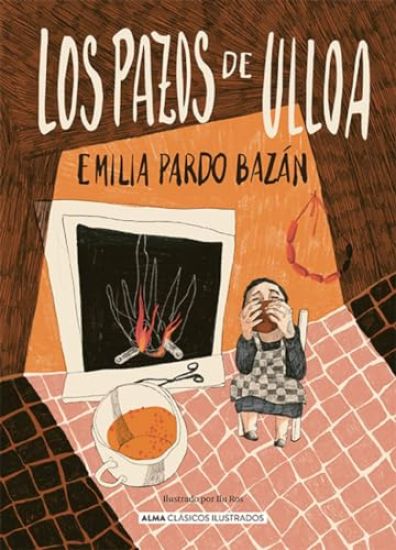
Juli n es un joven sacerdote que abandona su Santiago natal para ejercer de capell n en los Pazos de Ulloa. All encuentra un mundo primi-tivo y brutal, muy alejado de sus expectativas. La de los Ulloa es una casa en decadencia, donde reinan la lujuria y la deslealtad. Guiado por su ingenuidad, Juli n se propondr devolver los Pazos a la vida noble y cristiana, una iniciativa que tendr consecuencias inesperadas. Emilia Pardo Baz n escribi Los Pazos de Ulloa cuando ya era una autora consagrada y en ella ensay el naturalismo por el que abogaba. Un magn fico estudio de ambientes y personajes que hizo de esta la obra cumbre de la gran dama de las letras espa olas. Juli n is a young priest who leaves his native Santiago to work as chaplain in the Pazos de Ulloa. There he finds a primitive and brutal world, far removed from his expectations. The Ulloa family is a house in decline, where lust and disloyalty reign. Guided by his naivety, Juli n will set out to return the Pazos to the noble and Christian life, an initiative that will have unexpected consequences. Emilia Pardo Baz n wrote Los Pazos de Ulloa when she was already a consecrated author and in it she essayed the naturalism she advocated. A magnificent study of environments and characters that made this the masterpiece of the great lady of Spanish letters.
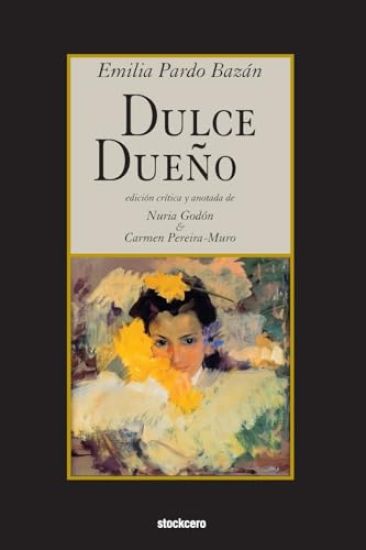
"Dulce due o" Sweet Master] (1911), the last novel by Emilia Pardo Baz n, challenges the rigid classifications imposed on the author throughout her literary career. It is an anti-dogmatic novel that transcends both literary and gender boundaries. Together with "La Quimera" (1905) and "La Sirena negra" (1908), "Dulce due o" forms the emblematic trilogy of Pardo Baz n's modernist phase. Her adoption and reworking of aesthetic elements -such as the refined use of light, color, sound, and silence; the pursuit of beauty; and the interplay of history, legends, and innovative worldviews- demonstrate her participation in modernist literature. At the same time, "Dulce due o" brings Pardo Baz n's novelistic trajectory to a close, prioritizing for the first time in her work the feminine perspective, since it has a woman protagonist, narrator, and author of the autobiography into which the text evolves. Grounded in a defense of individual freedom, the novel offers a bold response to the limitations and categorizations imposed on women in maternal, educational, sexual, scientific, political, and religious contexts. While acknowledging Pardo Baz n's significance as the introducer of naturalism in Spain, this critical edition seeks to move beyond reductive classifications that confine her to a specific generation, movement, and literary genre. Instead, it highlights her interdisciplinary contributions to modernism, her engagement with emerging genres like detective fiction, and her advocacy for women's voices. This edition proposes reading "Dulce due o" as a female Bildungsroman, featuring a dandy protagonist who must confront the societal gaze of those attempting to appropriate her individuality. The critical introduction offers a historical-cultural, narratological, feminist, and interdisciplinary approach that mirrors the rich and diverse cultural production of Emilia Pardo Baz n.
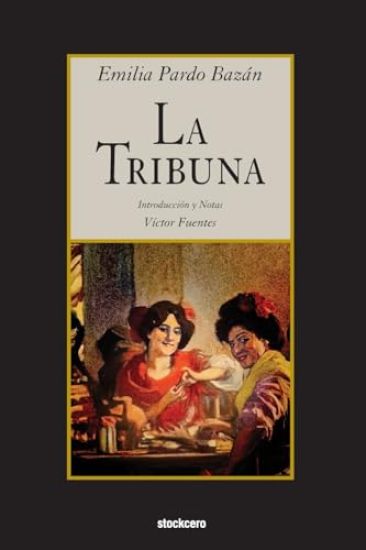
In La Tribuna (1883) author Emilia Pardo Baz n, while focusing on the cigarette workers proletarians' lives puts into practice the detailed documentation, the emphasis on environmental conditioning, genuineness, and the strength of passions, of "naturalism" as expressed in her essay La Cuesti n Palpitante. The topic of "the needy classes" had previously appeared in the Spanish pulp-novels, but Pardo Baz n's innovation is to include the hindsight of the workers' awareness of the class confrontation during the democratic, revolutionary six-year period, 1868-1874, and to do so with the observational perceptivity that highlights the understandable human and emotional aspects that account for ideological adhesions. Due to this, and in the words of the author, The Tribune dissatisfied both Tyrians and Trojans. The Republicans felt caricaturized, and the conservatives, musky people, revolted against the sincere and frank description of the people and working-class life. The main theme, the lives and struggle of the female cigarette workers at the Tobacco Factory in A Coru a, appears intertwined with an incipient feminism, reflected in the ups and downs in the relationship between Amparo, the young cigarette heroine, with the "gentleman" Baltasar, from whom Amparo expects not only love, but also human and social recognition. In La Tribuna Pardo Baz n reflects the paradoxical moral of exposing the human and emotional side that explains why it is "absurd that a people pin their hopes of redemption and happiness on forms of government that they do not know about, and to which they therefore attribute prodigious virtues and wondrous effects", which has confused more than one critic. In his introductory essay and notes V ctor Fuentes underlines this vision and highlights the value of La Tribuna as an exponent of a "Naturalism" deeply rooted in traditional Spanish Realism.
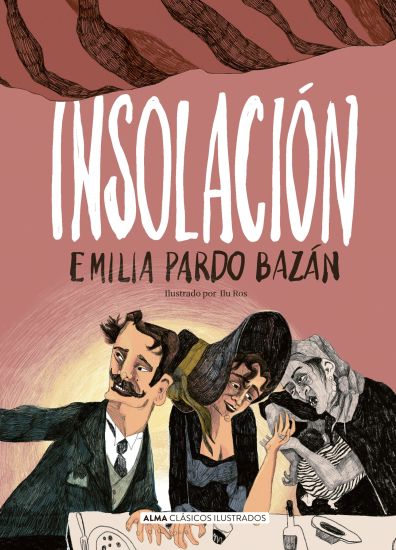
Emilia Pardo Baz n es considerada una de las autoras m s importantes del siglo XIX. De su pluma surgieron grandes obras como Los pazos de Ulloa y La madre naturaleza, pero fue con Insolaci n con la que escandaliz a la sociedad del momento. Esta obra narra la apasionada historia de amor entre Diego Pacheco --un donju n--, y As s Taboada, marquesa de Andrade --viuda, atractiva y respetable--, que se fragua durante las fiestas madrile as de San Isidro. Al conocer a Pacheco, As s se da cuenta de que, para poder recuperar su vida, antes debe atender a sus necesidades, huyendo del decoro y las exigencias sociales. Un canto a la sensualidad y la libertad de las mujeres, en una novela soberbia, fresca y amena, que no deja indiferente. Emilia Pardo Baz n is considered one of the most important authors of the nineteenth century. From his pen came great works such as Los pazos de Ulloa and La madre naturaleza, but it was with Insolaci n that he scandalized the society of the time. This work tells the passionate love story between Diego Pacheco --a donjuan--, and As s Taboada, Marchioness of Andrade --a widow, attractive and respectable--, which is forged during the Madrid festivities of San Isidro. When he meets Pacheco, As s realizes that, in order to recover his life, he must first attend to his needs, fleeing from decorum and social demands. A hymn to the sensuality and freedom of women, in a superb, fresh and enjoyable novel, which does not leave you indifferent.
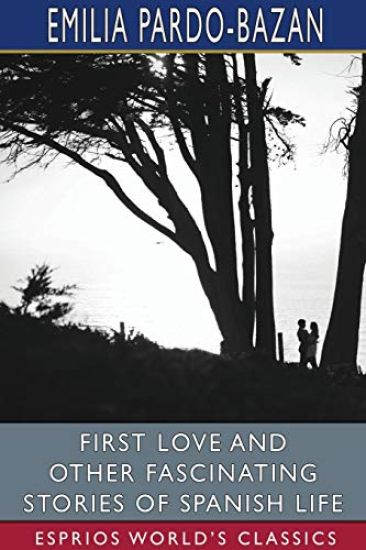
First Love and Other Fascinating Stories of Spanish Life (Esprios Classics)
Emilia Pardo-Bazan
Blurb
2024
pokkari
Emilia Pardo Baz n y de la R a-Figueroa (16 September 1851 - 12 May 1921), countess of Pardo Baz n, was a Spanish novelist, journalist, literary critic, poet, playwright, translator, editor and professor. She is known for introducing naturalism into Spanish literature, for her detailed descriptions of reality, and for her ground-breaking introduction of feminist ideas into the literature of her era. Her ideas about women's rights for education also made her a prominent feminist figure. In 1876 she won a literary prize offered by the municipality of Oviedo, for an essay entitled Estudio cr tico de las obras del padre Feijoo (Critical Essay on the Works of Father Feijoo), the subject of her essay being a Benedictine monk.