Kirjailija
Ernst Cassirer
Kirjat ja teokset yhdessä paikassa: 73 kirjaa, julkaisuja vuosilta 1906–2026, suosituimpiin kuuluu Substance and Function. Vertaile teosten hintoja ja tarkista saatavuus suomalaisista kirjakaupoista.
73 kirjaa
Kirjojen julkaisuvuodet: 1906–2026.
Jewish German philosopher Ernst Cassirer was a leading proponent of the Marburg school of neo-Kantianism. The essays in this volume provide a window into Cassirer’s discovery of the symbolic nature of human existence—that our entire emotional and intellectual life is configured and formed through the originary expressive power of word and image, that it is in and through the symbolic cultural systems of language, art, myth, religion, science, and technology that human life realizes itself and attains not only its form, its visibility, but also its reality. Thought and being are set in opposition and united in genuine correspondence by the symbolic strife between them that Cassirer calls Auseinandersetzung, which determines the ethical relationship of the self to the other.

Individuum und Kosmos in der Philosophie der Renaissance
Ernst Cassirer
Meiner Felix Verlag GmbH
2013
nidottu
Descartes Kritik der mathematischen und naturwissenschaftlichen Erkenntnis
Ernst Cassirer
Sarastro Gmbh
2012
pokkari
Zur Logik der Kulturwissenschaften. Fünf Studien
Ernst Cassirer
Meiner Felix Verlag GmbH
2011
nidottu
Werke. in Gemeinschaft Mit Hermann Cohen [Et Al.] Hrsg. Von Ernst Cassirer Volume 11
Ernst Cassirer; Immanuel Kant
Nabu Press
2010
pokkari
The Individual and the Cosmos in Renaissance Philosophy
Ernst Cassirer
University of Chicago Press
2010
nidottu
This provocative volume, one of the most important interpretive works on the philosophical thought of the Renaissance, has long been regarded as a classic in its field. Ernst Cassirer here examines the changes brewing in the early stages of the Renaissance, tracing the interdependence of philosophy, language, art, and science; the newfound recognition of individual consciousness; and the great thinkers of the period--from da Vinci and Galileo to Pico della Mirandola and Giordano Bruno. The Individual and the Cosmos in Renaissance Philosophy discusses the importance of fifteenth-century philosopher Nicholas Cusanus, the concepts of freedom and necessity, and the subject-object problem in Renaissance thought. "This fluent translation of a scholarly and penetrating original leaves little impression of an attempt to show that a 'spirit of the age' or 'spiritual essence of the time' unifies and expresses itself in all aspects of society or culture."--Philosophy
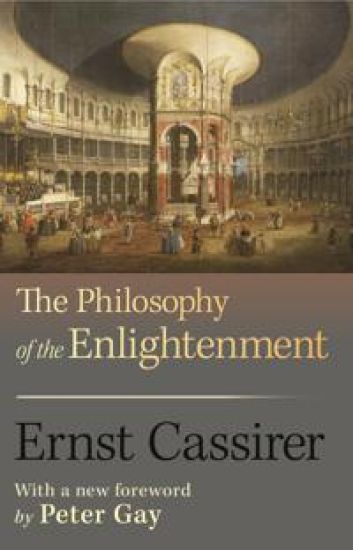
The Philosophy of the Enlightenment
Ernst Cassirer; Peter Gay
Princeton University Press
2009
pokkari
Halvin toimitettuna 38,30 €
In this classic work of intellectual history, Ernst Cassirer provides both a cogent synthesis and a penetrating analysis of one of history's greatest intellectual epochs: the Enlightenment. Arguing that there was a common foundation beneath the diverse strands of thought of this period, he shows how Enlightenment philosophers drew upon the ideas of the preceding centuries even while radically transforming them to fit the modern world. In Cassirer's view, the Enlightenment liberated philosophy from the realm of pure thought and restored it to its true place as an active and creative force through which knowledge of the world is achieved. In a new foreword, Peter Gay considers The Philosophy of the Enlightenment in the context in which it was written--Germany in 1932, on the precipice of the Nazi seizure of power and one of the greatest assaults on the ideals of the Enlightenment. He also argues that Cassirer's work remains a trenchant defense against enemies of the Enlightenment in the twenty-first century.
Schriften zur Philosophie der symbolischen Formen
Ernst Cassirer
Meiner Felix Verlag GmbH
2009
nidottu
Ernst Cassirers 1932 erschienene Darstellung der ? Philosophie der Aufklärung? zählt zu den herausragenden Standardwerken zur Bestimmung der Leitgedanken der Epoche. ? Die eigentliche >Philosophie< der Aufklärung ist und bleibt?, so Cassirer, ?etwas anderes als der Inbegriff dessen, was ihre führenden Denker [...] gedacht und gelehrt haben?. Entsprechend sah er das auszeichnende Merkmal seiner historischen Rekonstruktion der Epoche darin, ?daß sie nicht die Geschichte der einzelnen Denker und ihrer Lehren, sondern eine reine Geschichte der Ideen der Aufklärungszeit zu geben suchte, und daß sie diese Ideen selbst nicht nur in ihrer abstrakt-theoretischen Fassung darlegen, sondern in ihrer unmittelbaren Wirksamkeit aufzeigen und sichtbar machen wollte?.
Den tyske filosofen Ernst Cassirer (1874-1945) etablerer gjennom sin symbolfilosofi en ny ramme rundt erkjennelsen. Tekstene i utvalget utfordrer teoridannelsen på kulturvitenskapenes så vel som på naturvitenskapenes felt gjennom sin vektlegging av de formative og frambringende aspektene ved menings- og kunnskapsdannelsen. Nr. 54 i Cappelens upopulære skrifter.
Angeregt von Freunden und Kollegen, hat Ernst Cassirer im amerikanischen Exil mit diesem Werk eine Summe seines Denkens vorgelegt, in der seine Philosophie der symbolischen Formen in ihren Hauptgedanken fortgeführt wird, und zwar in einer Weise, die auch einem breiteren Kreis interessierter Leser zugänglich ist. Cassirer stellt die alte Frage nach dem Wesen des Menschen neu und beantwortet sie, indem er die klassische Antwort mit weitreichenden Folgen abwandelt: Er bestimmt den Menschen als ein Wesen, das Symbole schafft und sich durch Symbole mit seinesgleichen und der Welt verständigt. "Der Begriff der Vernunft ist höchst ungeeignet, die Formen menschlicher Kultur in ihrer Fülle und Mannigfaltigkeit zu erfassen [...]. Alle diese Formen sind symbolische Formen. Deshalb sollten wir den Menschen nicht als animal rationale, sondern als animal symbolicum definieren."
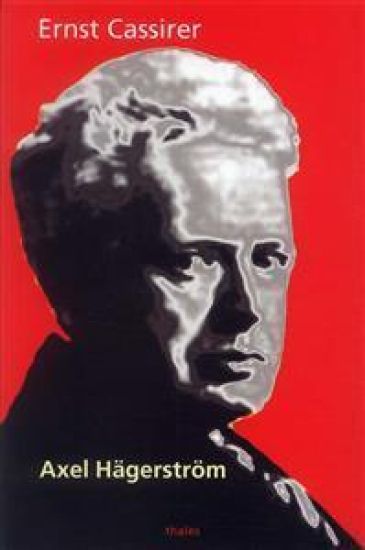
Axel Hägerström - en studie i samtida svensk filosofi
Ernst Cassirer
Bokförlaget Thales
2005
nidottu
Ernst Cassirer (1874-1945) är förmodligen den mest kände filosof som varit professor vid ett svenskt universitet. På flykt undan nazismen kom han till Sverige 1935, stannade i sex år och blev svensk medborgare. I sin studie över Axel Hägerström (1868-1939) ställer Cassirer sitt eget tänkande i relation till värdenihilismens upphovsman. Men boken ger inte bara en intressant belysning av Hägerströms filosofi, utan breddar och fördjupar dessutom bilden av Cassirers eget tänkande: inget av hans övriga verk innehåller en så utförlig diskussion av etik och rättsfilosofi. Intresset för Cassirers filosofi växer även internationellt. Hägerströmstudien är under utgivning i Tyskland och har nyligen översatts till franska.
Analyzes nonrational thought processes underlying grammar; Indian philosophy, modern poetry, etc.
Nachgelassene Manuskripte und Texte / Goethe Vorlesungen (1940-1941)
Ernst Cassirer
Felix Meiner Verlag
2003
sidottu
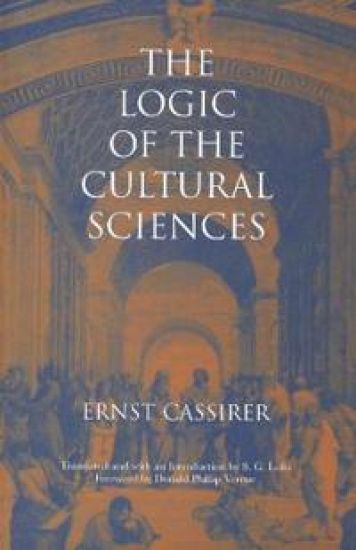
The Logic of the Cultural Sciences
Ernst Cassirer
Yale University Press
2000
pokkari
Halvin toimitettuna 38,70 €
This new translation of The Logic of the Cultural Sciences (formerly entitled The Logic of the Humanities) makes Ernst Cassirer’s classic study, long out of print, available to English readers. A German Jew living in exile at the beginning of the Second World War, Cassirer wrote this book—one of his clearest and most concise—in response to the crises besetting his era. It represented to him a rethinking and completion of his magnum opus The Philosophy of Symbolic Forms. S. G. Lofts’s translation stays close to the original German and accurately reflects the echoes of the philosophical debates of Cassirer’s day. In the book’s five linked studies, Cassirer considers the intellectual structure of the disciplines we commonly refer to as the humanities. He defines and justifies the basic philosophical perspective of the philosophy of symbolic forms, and he contributes a wealth of ideas to continuing debates about culture and what is unique in human nature.
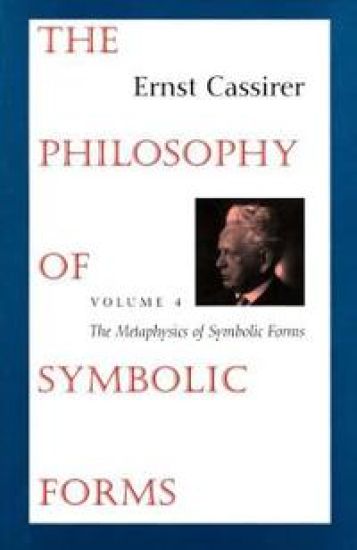
The Philosophy of Symbolic Forms
Ernst Cassirer
Yale University Press
1998
pokkari
Halvin toimitettuna 47,40 €
At his death in 1945, the influential German philosopher Ernst Cassirer left manuscripts for the fourth and final volume of his magnum opus, The Philosophy of Symbolic Forms. John Michael Krois and Donald Phillip Verene have edited these writings and translated them into English for the first time, bringing to completion Cassirer's major treatment of the concept of symbolic form. Ernst Cassirer believed that all the forms of representation that human beings use—language, myth, art, religion, history, science—are symbolic, and the concept of symbolic forms was the basis of his thinking on these subjects. In this volume, which contains one text written in 1928 and another in about 1940, Cassirer presents the metaphysics that is implicit in his epistemology and phenomenology of culture. The earlier text grounds the philosopher's conception of symbolic forms on a notion of human nature that makes a general distinction between Geist (mind) and life. In the later text, he discusses Basis Phenomena, an original concept not mentioned in any of his previous works, and he compares his own viewpoint with those of other modern philosophers, notably Bergson and Heidegger.